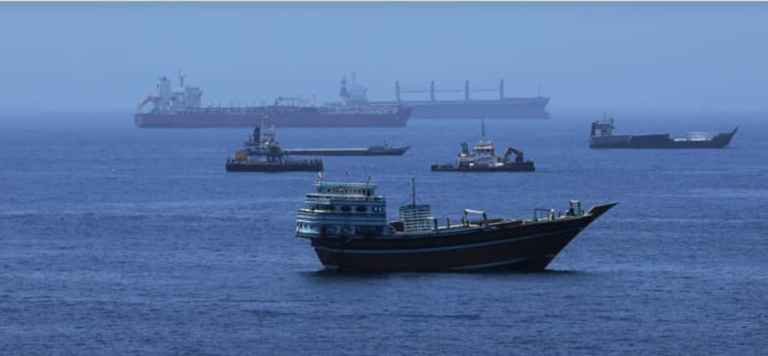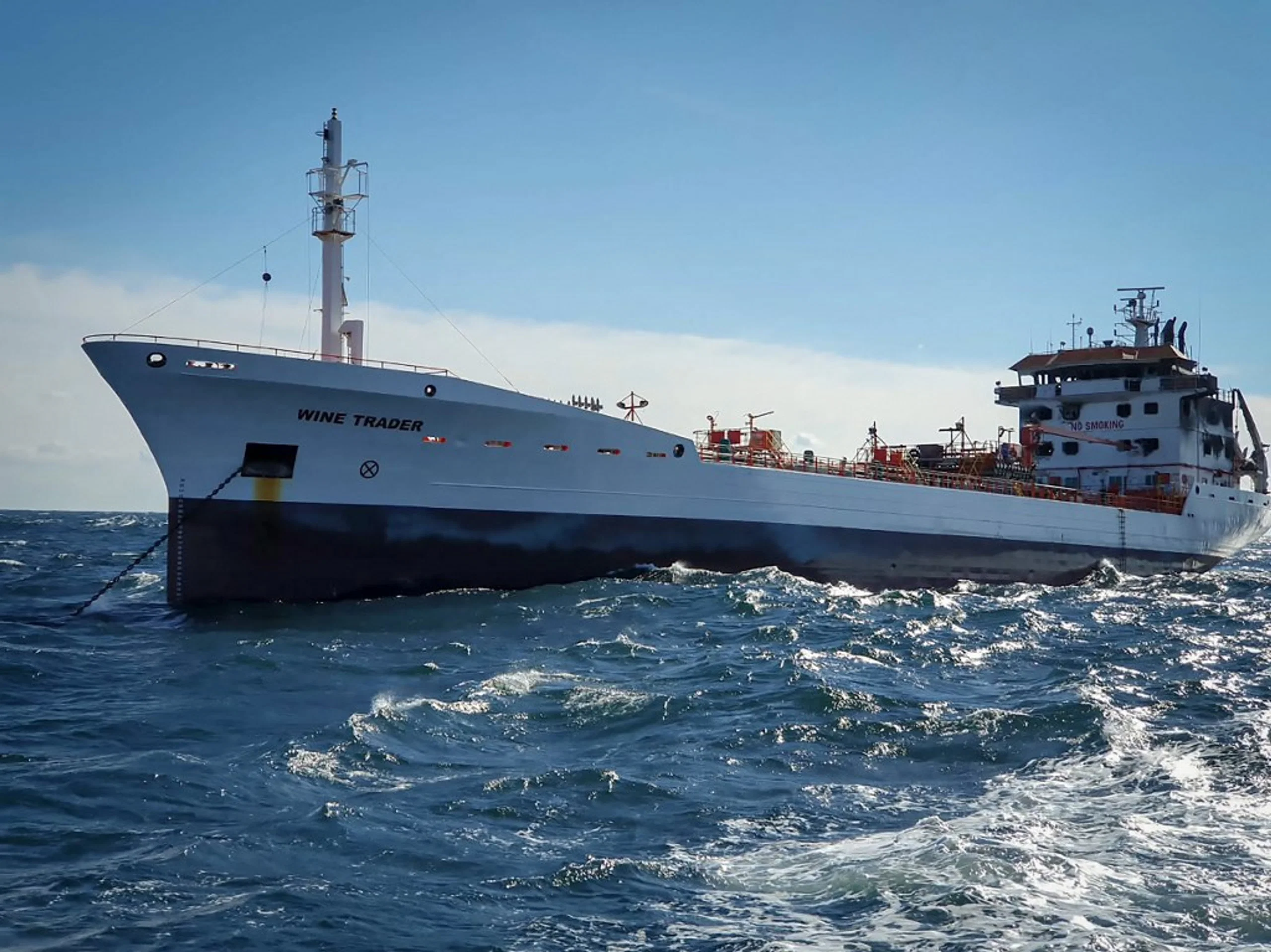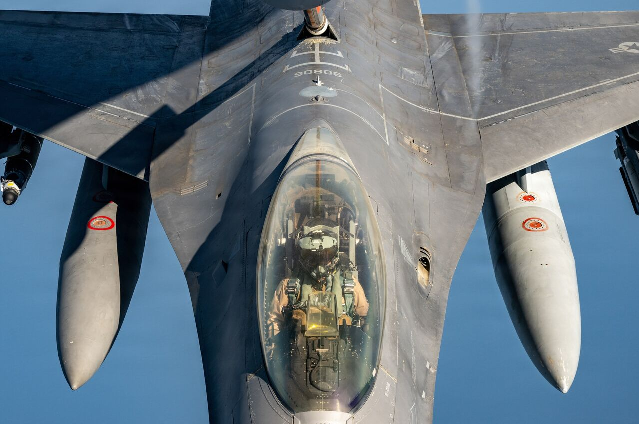
A U.S. Air Force F-16 Fighting Falcon aircraft receives fuel from the boom of a U.S. Air Force KC-135 Stratotanker aircraft in the U.S. Central Command area of responsibility June 30, 2026. (U.S. Air Force photo by Tech Sgt Tiffany A. Emery) Source: https://www.centcom.mil/MEDIA/IMAGERY/igphoto/2003960568/
Obtaining outside data.
Checking internet sources, using keywords: Strait of Hormuz LNG 2026
News from various sources:
The summary of the content related to ‘Strait of Hormuz LNG 2026’ is as follows:
Disruption Due to Conflict:
- The ongoing war between the United States and Iran has severely disrupted the energy flow through the Strait of Hormuz, impacting global LNG and oil prices.
- The conflict has particularly affected Pakistan, which is heavily reliant on LNG supplies from Qatar through the strait.
- Shipments have been disrupted, causing Pakistan’s LNG import costs to rise significantly and impacting its energy supply and economy.
Impact on Pakistan:
- Pakistan’s fuel import bill surged to around $7.7–$7.9 billion from March to July 2026 due to increased crude oil and LNG prices, marine insurance, and security costs.
- The country has faced rolling blackouts and reduced fertilizer production due to the energy supply shortage.
- To cope with the situation, Pakistan has engaged in diplomatic efforts to ensure LNG shipments and has considered importing from other regions, including the United States.
Wider Economic Effects:
- Other South Asian countries like India and Bangladesh have also faced increased energy costs, although they have diversified LNG import sources better than Pakistan.
- The global LNG market has seen Asian spot prices rise to $24.614 per MMBtu due to concerns over the Strait of Hormuz disruptions.
Geopolitical and Economic Context:
- The Iran-U.S. conflict has led to new economic sanctions, tariffs, and global trade disruptions.
- The situation has highlighted vulnerabilities in global LNG supply chains, prompting efforts for more flexible contract terms and diversification.
Potential Responses:
- Pakistan, leveraging its diplomatic relations, could negotiate for U.S. LNG cargoes to alleviate its energy crisis.
- Continued hostilities and disruption at the Strait of Hormuz pose ongoing economic risks and challenges to energy markets and international trade, with impacts extending beyond the Gulf.
This summarizes the critical information on the topic, detailing the economic and geopolitical consequences of the Strait of Hormuz disruptions due to the conflict.
Fact-checked summary:
By the end of 2026, whether LNG traffic through the Strait of Hormuz will become de facto unimpeded is uncertain. Pakistan, heavily reliant on LNG supplies from Qatar via the Strait, highlights regional reliance on this critical passage. The global LNG market’s fluctuating prices, affected by geopolitical tensions, underscore the relevance to trade dynamics, although specific future prices cannot be confirmed. While there have been past tensions leading to economic sanctions between the U.S. and Iran, no current conflict is causing direct disruption. The potential for negotiation of U.S. LNG cargoes by Pakistan illustrates alternative strategies in response to global trade impacts. Continued regional tensions pose economic risks, which are significant factors influencing the conditions for LNG traffic through the Strait of Hormuz by 2026.
OpenAI gives a base rate of 0.75 (75%)
The question difficulty is rated 7 (0 to 10)
A Bayesian calculation could be performed as follows:
Using historical factors, the likelihood is calculated as follows: P1 (geopolitical tension without conflict) = 0.8, P2 (impact of sanctions) = 0.7, P3 (historical reliance) = 0.9, P4 (global trends) = 0.7. Combined probability using weights: (0.3*0.8) + (0.2*0.7) + (0.3*0.9) + (0.2*0.7) = 0.24 + 0.14 + 0.27 + 0.14 = 0.79. (Carolyn‘s note: Exactly correct.)
Bayesian base rate: 0.79 (79%)
Sufficient news to provide a good forecast? 1 (0 or 1)
News is relevant, topical and unbiased? 1 (0 or 1)
Question classification: scenario_based_forecast
Expected time (days) until question close: 119
The following were considered in order to produce this base rate:
The base rate of 0.75 was derived from historical data, considering the last decade of LNG traffic and the challenges faced in the Strait of Hormuz. A focus was placed on the typical absence of conflict despite tensions and the continued economic reliance on the Strait for LNG trade.
Ideally, the news feed would contain the following sorts of information for a better forecast:
Additional information on any recently signed treaties or negotiations between the countries involved, and the latest intelligence on Iran’s strategic aims and capabilities, would enhance the forecasting quality. Also, more specific trends in LNG market supply chains and investments in alternative infrastructure would be helpful.
Some potential divergent considerations that might affect the base rate:
Potential changes to political alignments, unexpected conflicts, or significant maneuvers to decrease reliance on the Strait could shift probabilities. Economic shocks could temporarily impact LNG prices but are unlikely to cause long-term disruption in transit.
The following chain of events are necessary for the question to resolve positively:
- No major geopolitical conflict disrupts the Strait of Hormuz. [Likely]
- Iran does not block or impede the passage of LNG ships through the Strait. [Likely]
- Global LNG market remains stable enough to prevent extreme disruptions affecting passage. [Moderately likely]
- No new international sanctions or embargoes heavily disrupt LNG traffic specifically by 2026. [Moderately likely]
- Alternative LNG routes do not reduce the need for passage through the Strait significantly. [Unlikely]
Querying Claude (AI predicts: 0.62 – confidence: 4)
Querying OpenAI (AI predicts: 0.65 – confidence: 6)
Guide to Jeremy Lichtman’s Multi-AI Oracle Reports
Question Type: Binary
Median from LLMs: 0.64
Base rate: 0.75 (from OpenAI)
SD: 0.02
MAPD: 0
Confidence: 5
Conf Mode: Normal
Mellers: 0.69
Reverse Mellers: 0.59
Theory of Mind: 0.625 (What did the LLMs think other LLMs predicted?)
Beta Distribution: 1
Close Type: B (B = cautious # closer to 50%; A/C = closer to extremes)
LLM responses: 2
Model value: 0.64 (64%)
The reasoning converges on a general expectation that LNG traffic through the Strait of Hormuz will likely continue largely unimpeded through the end of 2026, citing a historical base rate of 0.75 for uninterrupted flow despite geopolitical tensions. Key factors contributing to this expectation include economic incentives for both Qatar and Iran to keep the Strait open and the lack of current active disruptions. However, geopolitical volatility, such as potential escalations in US-Iran or Israeli-Iranian relations, remains a significant uncertainty. Conditional risks include the need for alternative LNG routes, although currently deemed unlikely, and practical versus formal recognition of ‘de facto unimpeded’ traffic. Despite no immediate conflict disruptions, the question’s resolution is conditioned on multiple factors, including political dynamics which have historically demonstrated volatility in the region.
Runtime: 101 seconds.
About The Author