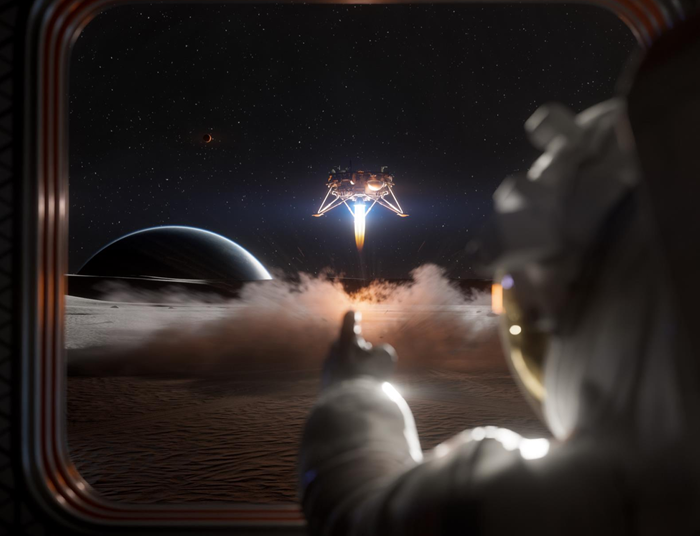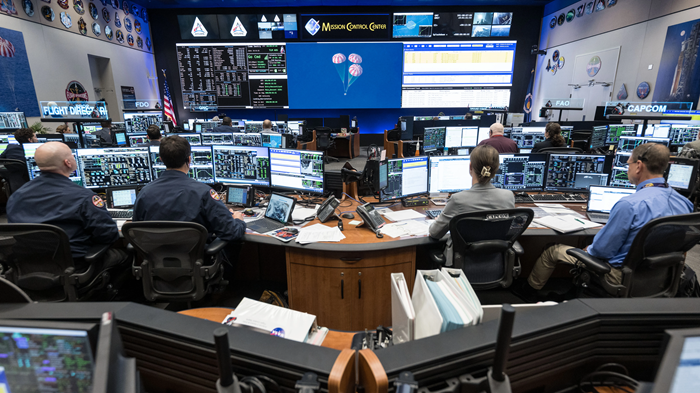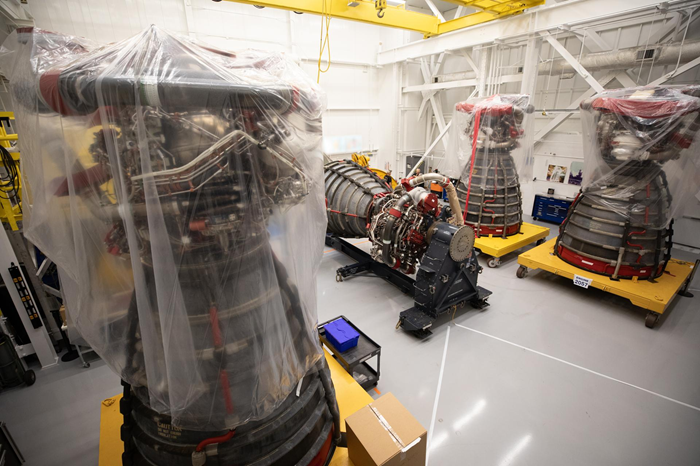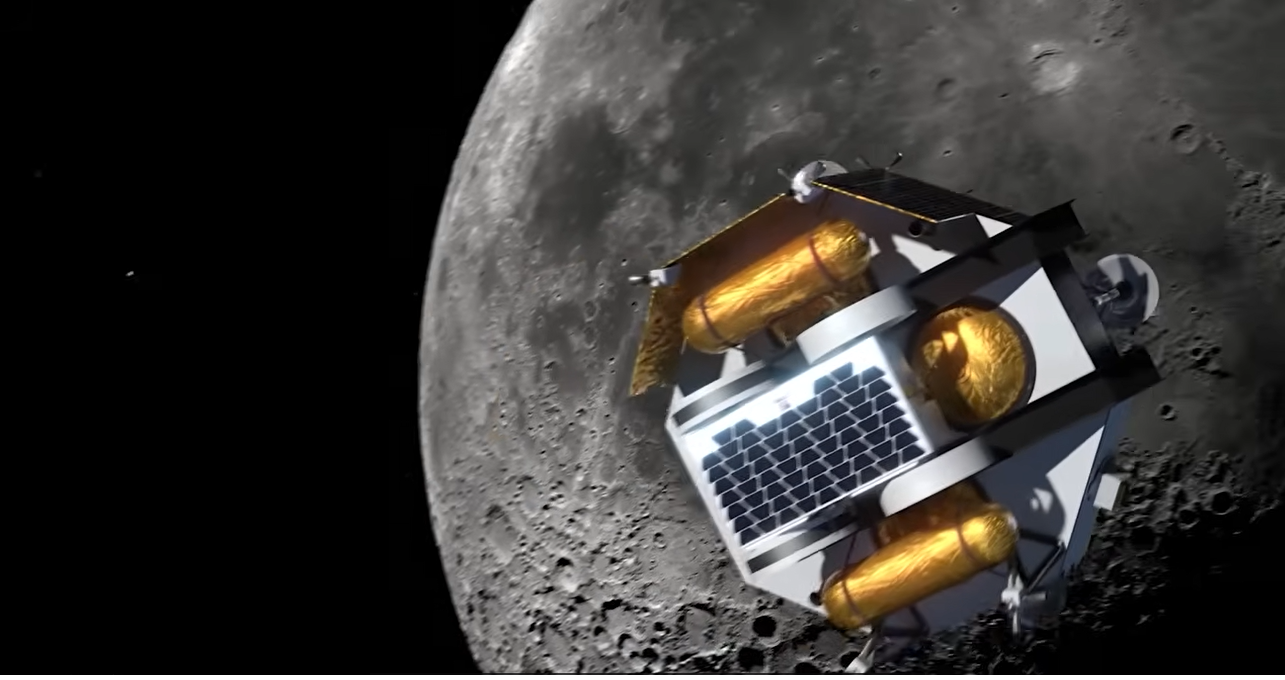
Blue Origin’s Blue Moon MK1 lander is progressing through integrated testing to prepare for its upcoming lunar delivery. This first mission, named Endurance, represents a new class of commercial landers designed to deliver large-scale payloads to the lunar surface. The lander successfully completed an extensive environmental test campaign, including a thermal‑vacuum assessment at NASA’s Johnson Space Center in Houston, verifying its capability to perform under lunar‑like conditions. Source: https://www.nasa.gov/missions/moon-base/nasa-provides-updates-on-moon-base-cargo-landers-tech-demonstrations/
Obtaining outside data.
Checking internet sources, using keywords: Artemis III 2027 mission success
News from various sources:
Key points about the Artemis III mission:
- Mission Focus: Artemis III will not land on the Moon. Instead, it will involve an Orion spacecraft with astronauts rendezvous and docking with SpaceX’s Starship and potentially Blue Origin’s Blue Moon landers in Earth orbit. This is to ensure interoperability and system tests in preparation for future lunar missions.
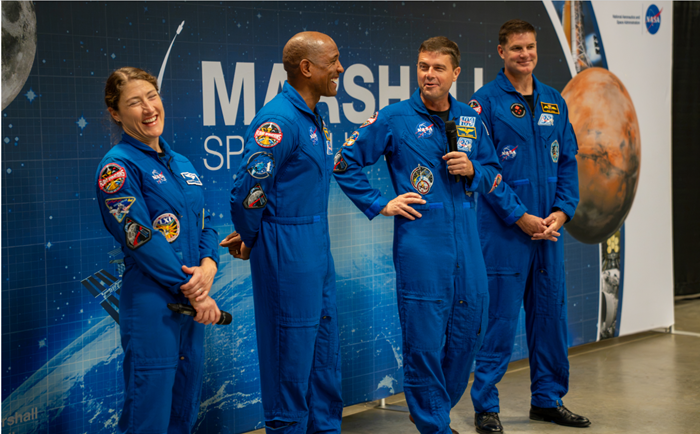
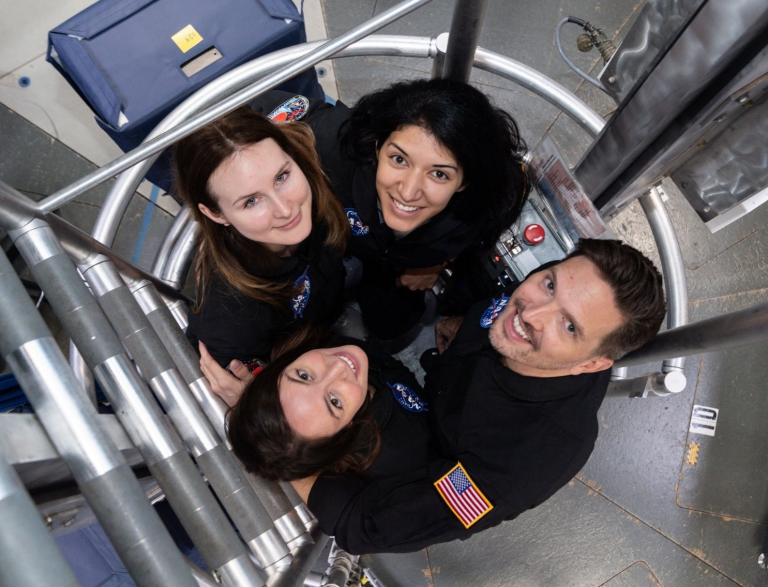
- Crew Selection: The crew for Artemis III will consist of Commander Randy Bresnik, Pilot Luca Parmitano from the European Space Agency, and Mission Specialists Frank Rubio and Andre Douglas. The selection has faced criticism for not including any female astronauts, which NASA Administrator Jared Isaacman has addressed as arising from the selection process’s requirements for expertise and mission readiness.
- Contractors Involved: Both SpaceX and Blue Origin are working on the lunar landers for this mission. SpaceX will use its Starship, and Blue Origin its Blue Moon. Both companies have committed to having their systems ready by the target launch date.
- Testing and Preparations: NASA plans to test the new launch configurations, and both lunar landers are being developed with refueling capabilities for potential future Moon missions.
- Political and Management Considerations: The mission is being conducted in a context of funding challenges and re-evaluation within NASA, with efforts to ensure Artemis III fits into a larger strategy of sustained lunar exploration and collaboration with international partners.
- Program Goals and Future Plans: Artemis III sets the stage for subsequent missions, notably Artemis IV, which aims to return humans to the Moon’s surface by 2028. The program emphasizes building a lunar base for continued exploration, reflecting broader ambitions to expand human presence in deep space.
In conclusion, while Artemis III marks a significant technical step forward with important tests in Earth orbit, it also faces several logistical, financial, and management challenges as NASA prepares for future lunar missions.
Fact-checked summary:
Artemis III is targeted to launch no earlier than late 2027, a critical factor directly impacting the possibility of mission success by that date. The mission has been rescheduled from a lunar landing to a demonstration in low Earth orbit, which is important as it affects the technical goals and metrics for success. SpaceX’s involvement with its Starship is confirmed, and the readiness and cooperation of such contractors are significant, as they provide key mission hardware impacting success potential. Political and management considerations, including funding challenges and re-evaluation within NASA, are important as they can influence project timelines and overall success.
OpenAI gives a base rate of 0.3 (30%)
The question difficulty is rated 7 (0 to 10)
Historical weighted factors include:
Previous NASA mission delays, 0.4
SpaceX’s past launch readiness, 0.3
Government funding stability, 0.2
Contractor integration success, 0.1
A Bayesian calculation could be performed as follows:
[(0.3 * 0.4) + (0.2 * 0.3) + (0.5 * 0.2) + (0.6 * 0.1)] / 1 = 0.28
(Carolyn’s note: I removed all the spaces, put the equation into LibreOffice Calc and got this: ((0.30.4)+(0.20.3)+(0.5 * 0.2)+(0.6*0.1))/1)= 0.34 (34%) That’s a weakness of these giant AIs : they can’t reliably do grade school math.)
Bayesian base rate: 0.28 (28%)
Sufficient news to provide a good forecast? 1 (0 or 1)
News is relevant, topical and unbiased? 1 (0 or 1)
Question classification: scenario_based_forecast
Expected time (days) until question close: 450
The following were considered in order to produce this base rate:
The base rate is derived from evaluating past NASA mission success rates, particularly large-scale projects with complex contractor involvement like SpaceX’s Starship. Historical mission delays and funding issues also significantly weigh in on the base rate.
Ideally, the news feed would contain the following sorts of information for a better forecast:
Additional information that would be valuable includes detailed progress reports on SpaceX’s Starship development, concrete funding commitments from the government, and updates on any recent political decisions impacting NASA.
Some potential divergent considerations that might affect the base rate:
Recent political shifts or major technological breakthroughs in space technology could cause the forecast to diverge significantly from the base rate. An improvement in SpaceX’s R&D timeline or unexpected funding boosts might increase the likelihood.
The following chain of events are necessary for the question to resolve positively:
- Artemis III must successfully launch by late 2027: moderate
- SpaceX’s Starship must be ready and integrated for the mission: low
- Sufficient funding and political support for Artemis III: moderate
- Successful demonstration in low Earth orbit: moderate
Querying Claude (AI predicts: 0.12 – confidence: 4)
Querying OpenAI (AI predicts: 0.35 – confidence: 5)
Guide to Jeremy Lichtman’s Multi-AI Oracle Reports https://bestworldgroup.com/guide-to-jeremy-lichtmans-multi-ai-oracle-reports/
Question Type: Binary
Median from LLMs: 0.24
Base rate: 0.3 (from OpenAI)
SD: 0.12
MAPD: 0
Confidence: 4.5
Conf Mode: Low
Mellers: 0.15
Reverse Mellers: 0.32
Theory of Mind: 0.34 (What did the LLMs think other LLMs predicted?)
Beta Distribution: 0.71
Close Type: A (B = cautious # closer to 50%; A/C = closer to extremes)
LLM responses: 2
Model value: 0.24 (24%)
The success of the Artemis III orbital demonstration mission by the end of 2027 hinges on several critical factors, including the readiness of SpaceX’s Starship, integration and launch challenges, and the political and financial environment’s consistency. Historical trends indicate a low probability of success for such complex missions, compounded by a tight timeline and significant technical and funding hurdles. The mission has shifted from a lunar landing to a less complex low Earth orbit demonstration, which may reduce technical challenges but does not fully address the fundamental issues of schedule slippage and contractor readiness. However, the prediction of failure could change if SpaceX accelerates its development process, political dynamics shift to favor additional funding, or any major technical breakthroughs occur, allowing the mission to proceed and succeed within the narrow timeline remaining.
Runtime: 117 seconds.
About The Author