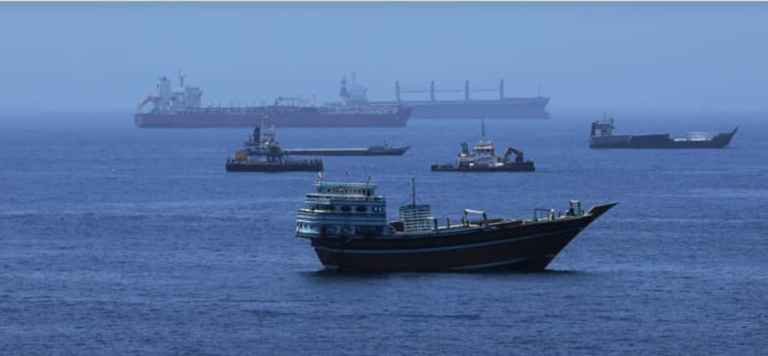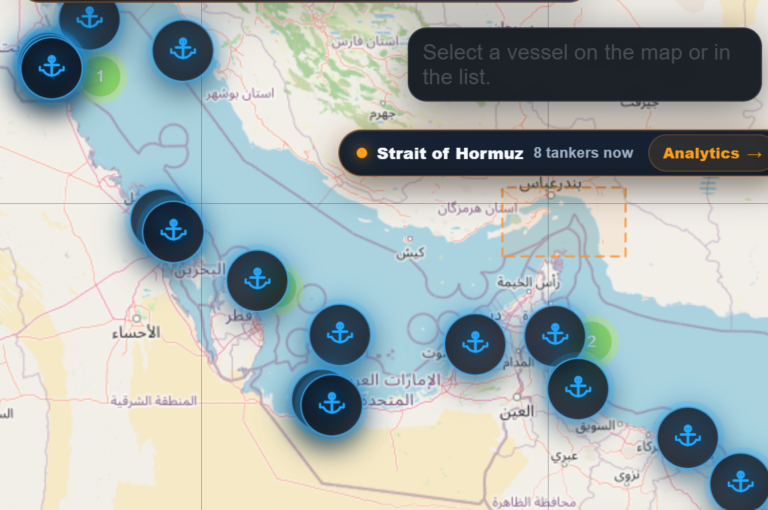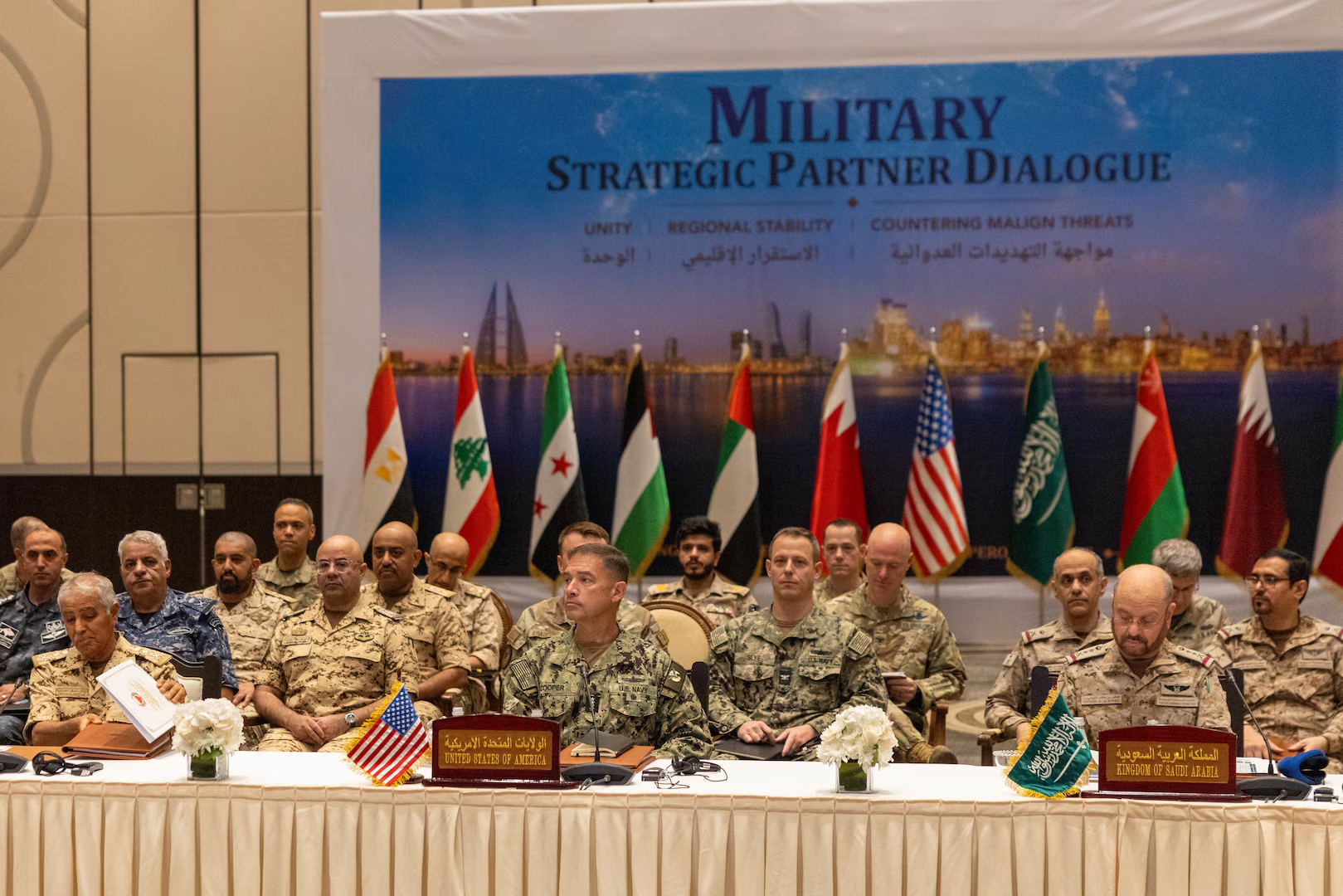
U.S. Central Command (CENTCOM) led a regional security dialogue hosted by the Bahrain Defense Force, July 1, for regional defense leaders from 12 nations. Adm. Brad Cooper, CENTCOM commander, and senior military officials from Bahrain, Egypt, Jordan, Kuwait, Lebanon, Oman, Qatar, Saudi Arabia, Syria, the United Arab Emirates, and Yemen discussed the current regional security environment and opportunities for enhancing defense collaboration across the region. Leaders underscored their shared commitment to the free flow of commerce through the Strait of Hormuz.
Grok response:
Current status (as of July 30, 2026): The Strait of Hormuz remains effectively closed or severely restricted to commercial and LNG traffic due to the ongoing Iran conflict that began in late February 2026. Live trackers report only ~10 transits per day (vs. normal 60–140), with explicit “CLOSED” status since Feb 27/28, 2026. Limited sporadic LNG movements (e.g., a few Qatari or Japan-linked tankers) have occurred amid attacks and restrictions, but traffic is far below pre-war levels and not described as reopened to all international maritime LNG traffic.[1]
No major news outlets have reported a full reopening as of the latest data. A temporary June 2026 US-Iran agreement led to brief traffic recovery, but renewed strikes and attacks in early July caused traffic to slow or halt again.[2]
Key recent sources (July 2026):
- Strait of Hormuz Live Traffic Tracker — Real-Time Shipping (hormuzstraitmonitor.com)
Published/updated: July 30, 2026.
Live monitor explicitly lists Strait Status as CLOSED (152 days since Feb 27). Reports 10 ships/24h (11.4% of normal), 1.6M DWT throughput (16% of average), with ongoing crisis tracking.[1] - Strait of Hormuz Closed, Day 151 | Live Tracker & Monitor (straits.live)
Published/updated: July 30, 2026.
States “effectively no, it is closed to commercial shipping as of 30 July 2026.” Notes 10 ships on July 23 vs. ~88/day normal; mentions limited Qatar LNG shipment after prior attacks.[3] - Traffic slows through Strait of Hormuz as Iran tensions flare (Reuters)
Published: July 10, 2026 (updated July 10).
LNG tankers have made limited passages, but overall daily traffic dropped to lowest levels since late June (e.g., 10 ships on one day vs. pre-conflict 125–140). Traffic far below pre-war averages despite some Japan-linked vessels.[2] - 2026 Strait of Hormuz crisis (Wikipedia)
Updated: July 30, 2026.
Shipping traffic “largely blocked by Iran since 28 February 2026.” Details recent July attacks on LNG and oil tankers; notes temporary June reopening attempts that did not restore full normal operations.[4] - LNG traffic through Hormuz grinds to a halt again (Gas Outlook)
Published: July 14, 2026.
Crossings totaled just 14 on July 12 (lowest in a month); Iran declared the strait “closed” amid ongoing restrictions and low energy shipments.[5] - Oil Tanker Traffic Through Strait of Hormuz Falls to Zero (WANA)
Published: July 22, 2026.
No crude oil tankers or LNG carriers transited on the reported Tuesday despite US claims of openness; data shows near-total halt in energy shipments.[6] - Strait of Hormuz: What has happened since the US-Iran MoU on June 17 (Al Jazeera)
Published: July 9, 2026.
Only 513 ships transited in first 18 days post-June agreement (avg. 28/day vs. pre-war much higher); fresh attacks on LNG tankers in early July reversed recovery.[7] - Ships Are Moving In and Out of the Persian Gulf, Easing Oil… (New York Times)
Published: July 6, 2026.
Traffic recovering modestly after June cease-fire but remained significantly lower than pre-war; recent Iranian attacks on unpermitted ships caused pullback.[8] - LNG Tankers Resume Hormuz Crossings Amid Tensions (MarineLink)
Published: July 10, 2026.
Some LNG carriers (e.g., GasLog Shanghai, Qatar-linked vessels) resumed limited transits, but overall context is renewed fighting and slowed traffic.[9] - Strait of Hormuz Closure 2026: What It Means… (Carraglobe)
Published: May 8, 2026 (updated context through July 2026).
Describes effective closure to routine commercial shipping as of late July 2026; notes force majeure on LNG and persistent disruptions despite any partial agreements.[10]
Summary of movement toward resolution: There are no reports of a full reopening to all international LNG traffic in the final days before the July 31, 2026 deadline. Trackers and news from July 29–30 continue to describe severe restrictions and “closed” status. Limited LNG activity exists but does not meet the criteria of reopening “to all” without halt or severe restriction. No expert or official announcements indicate an imminent full reopening in the next 24 hours.
=== Forecast Result ===
An analysis of the situation regarding the Strait of Hormuz indicates that a resolution of “Yes” is exceedingly unlikely. The prediction is based on the following structured reaso
1. Analysis of the Resolution Criteria
The question resolves “Yes” if, before July 31, 2026, “major news outlets report that the Strait of Hormuz has reopened to all international maritime LNG traffic.” This is further defined as LNG traffic being “no longer halted or severely restricted.” Given today’s date is July 30, 2026, this leaves approximately one day for such an event to occur and be reported. The criteria are stringent, requiring:
- Reporting by a major news outlet.
- Specific language of “reopening” to “all” international LNG traffic.
- A substantive change in conditions, meaning traffic is no longer “severely restricted.”
2. Assessment of the Current Situation (as of July 29-30, 2026)
The provided research paints a clear and consistent picture that directly contradicts the conditions for a “Yes” resolution:
- Traffic is Severely Restricted: Overall vessel traffic is at “crisis-era lows,” with only 39 total transits in the week of July 20-26, down from 82 the prior week. On some recent days, tanker crossings have dropped to just one per day. This is a fraction of the pre-war norm of roughly 88 vessels per day. Live trackers as of July 30 confirm this, reporting a “CLOSED” status and traffic at just over 10% of normal levels.
- LNG Traffic is Effectively Halted: Visible LNG traffic has been described as “essentially halted.” Recent LNG movements are explicitly framed as rare, tentative, and exceptional, not as a generalized reopening.
- The transit of the Qatari carrier Al Areesh was the first in nearly three weeks and described as a “cautious resumption.”
- An ADNOC LNG carrier crossed with its AIS transponder turned off, a “rare crossing” indicative of high risk, not an open commercial environment.
- Risk Environment Remains High: Maritime intelligence sources like Lloyd’s List and Dryad Global assess the situation as high-risk and state that a “near-term recovery in traffic is unlikely.” They explicitly note that the Strait is “not currently functioning as a normal commercial transit environment.” This is attributed to the lack of any material shift in the political positions of the primary conflict actors.
3. Likelihood of a State Change Before the Deadline
For the question to resolve “Yes,” a monumental and rapid shift in the geopolitical and military landscape would need to occur within the next day. This would likely require a sudden peace agreement or a decisive military action that fully secures the chokepoint.
- Political/Diplomatic Path: The research indicates that diplomatic efforts have not progressed; in fact, a previous memorandum has broken down. A sudden, effective, and publicly announced agreement materializing and being implemented within hours is highly improbable.
- Military Path: A military operation that could secure the strait for “all” international traffic in such a short period is not feasible.
- Reporting Lag: Even if such a breakthrough occurred, it would take time for shipping operators to verify the safety, for a meaningful number of LNG carriers to resume transit, and for major news outlets to confirm and report a full “reopening.” This entire sequence is impossible to complete within the given timeframe.
4. Key Assumptions and Confidence
My forecast rests on three key assumptions, the failure of which I assess as extremely improbable:
- No Sudden Diplomatic Breakthrough: I assume no surprise peace deal that instantly reopens the strait will be announced and implemented today. The probability of this assumption being wrong is less than 1%.
- Reporting Reflects Reality: I assume the consistent reports of low traffic and high risk from numerous credible sources are accurate. The probability of this being wrong is less than 1%.
- Strict Interpretation of “Reopened to All”: I assume the resolution will hinge on the plain meaning of the criteria, which isolated, “cautious” transits do not satisfy. The probability of an overly loose interpretation causing a “Yes” resolution is also less than 1%.
Conclusion
The default state is that the Strait of Hormuz remains severely restricted. The evidence for this is overwhelming, current, and consistent across all provided sources. The timeframe for a complete reversal of this situation is far too short to be considered credible. The few observed LNG transits are exceptions that prove the rule of restriction, not the beginning of a reopening. Therefore, the probability of the event occurring as defined is exceptionally low.
Probability: 1%
End
About The Author