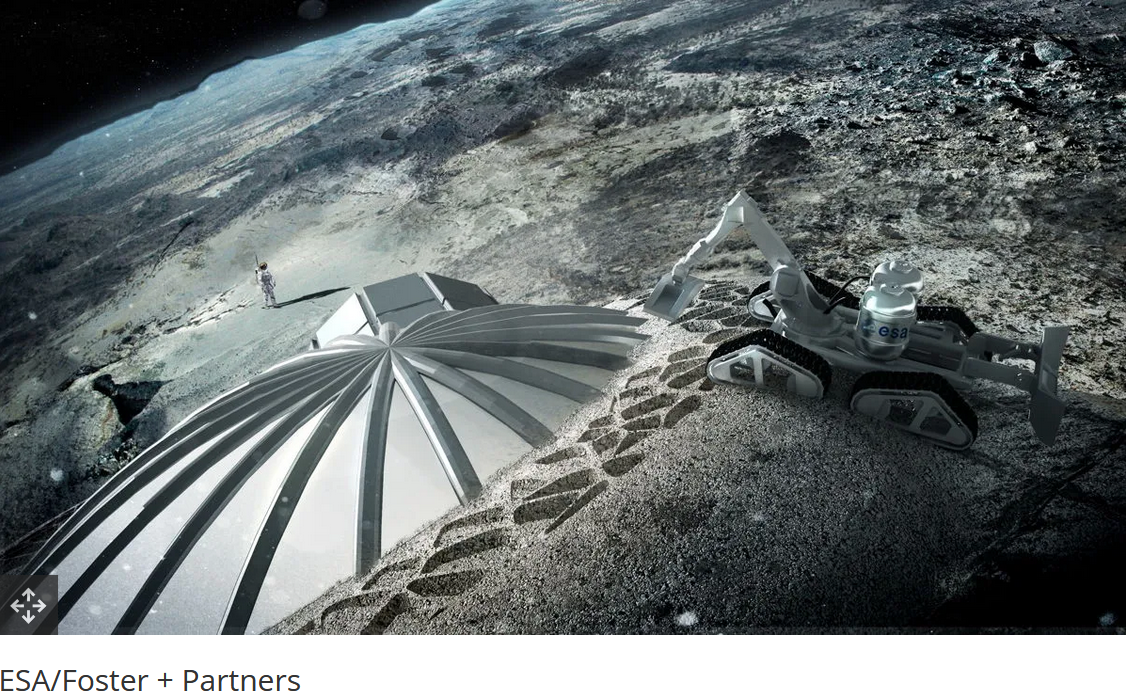
Lunar base as envisioned at Space.com. Source: https://www.space.com/21583-moon-base-lunar-colony-photos.html
Obtaining outside data.
Checking internet sources, using keywords: Artemis III orbital demonstration 2027
News from various sources:
The content gathered offers details about NASA’s ongoing efforts and plans related to the Artemis III mission. Here’s a concise summary of the relevant points concerning the “Artemis III orbital demonstration scheduled for 2027”
- Mission Overview: Artemis III is part of NASA’s Artemis program, designed to test lunar systems in low Earth orbit before attempting a manned lunar landing in the Artemis IV mission.
- Schedule Changes: NASA has delayed the Artemis III mission to no earlier than late 2027 due to delays in the development of lunar landers by SpaceX and Blue Origin.
- Mission Objectives: Unlike the original plan to land at the Moon’s south pole, Artemis III will now involve launching an Orion capsule to rendezvous with and potentially dock with the lunar landers in Earth orbit, akin to the Apollo 9 mission, which precluded the Apollo 11 moon landing.
- Contractors: SpaceX and Blue Origin are under multibillion-dollar contracts to develop human-rated lunar landers for Artemis missions. Both companies assert their landers will be ready by late 2027.
- Technological Preparations: NASA is focusing on ensuring interoperability between the Orion spacecraft and the lunar landers in Earth orbit. The mission will also incorporate testing of systems needed for future lunar exploration, such as spacesuits and upper stages for launch vehicles.
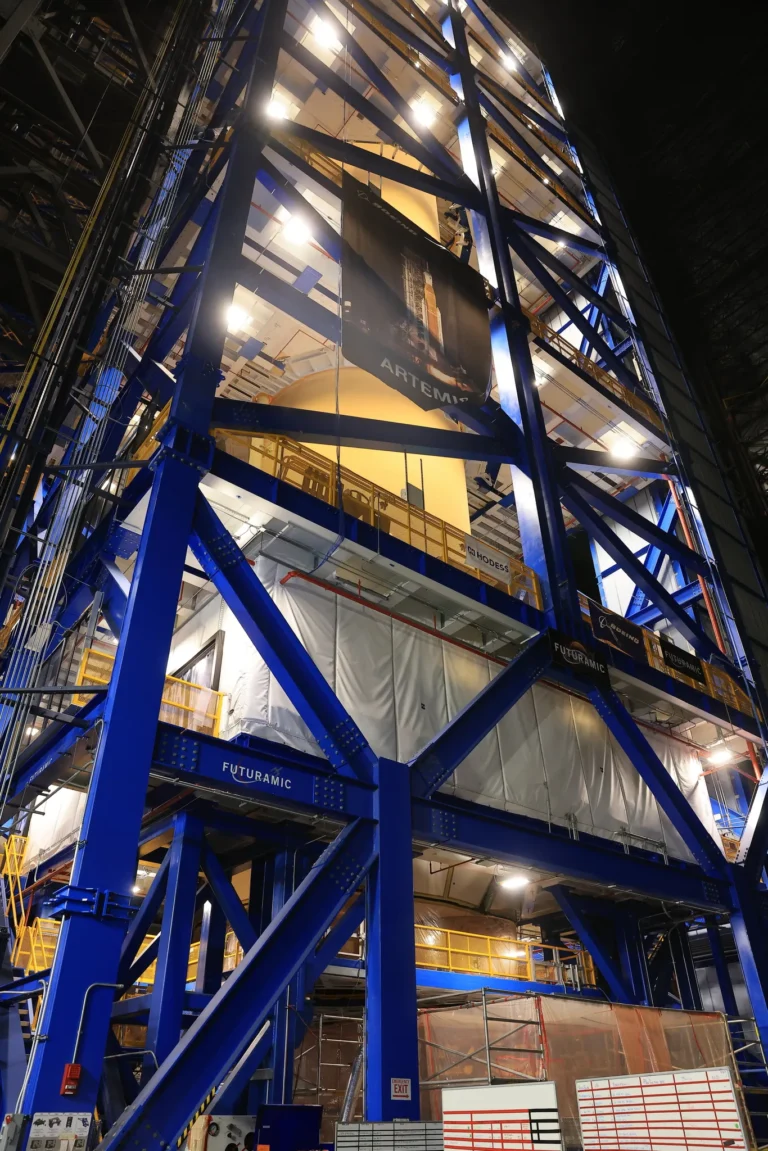
- Infrastructure Updates: NASA is preparing the core stage for Artemis III’s Space Launch System (SLS) rocket at Kennedy Space Center, a crucial step toward the planned 2027 launch.
This plan involves testing critical systems ahead of a human landing attempt in later Artemis missions, prioritizing these preparations due to high stakes involved in deep space human exploration. The delay and recalibration ensure enhanced safety and success prospects for future Artemis missions.
Conclusion:
Artemis III is a critical part of NASA’s Artemis program, targeting a manned lunar landing and testing lunar systems in low Earth orbit in preparation for future missions like Artemis IV. The mission has been rescheduled to no earlier than late 2027 due to development delays in lunar landers by SpaceX and Blue Origin, which is crucial as the timeline directly impacts mission success. Both companies are working under multibillion-dollar contracts and aim for their landers to be ready by late 2027, which is vital for meeting the mission deadline. NASA is actively focusing on ensuring interoperability between the Orion spacecraft and lunar landers, as well as testing systems necessary for future lunar exploration, all of which are important for the mission’s technical readiness. Additionally, preparations for the Space Launch System (SLS) rocket are underway at Kennedy Space Center, with the core stage development being a key step toward launching in 2027, highlighting the importance of the launch vehicle’s readiness in relation to the mission’s timeline
OpenAI gives a base rate of 0.3
The question difficulty is rated 8 (0 to 10)
A Bayesian calculation could be performed as follows:
Using the historical factors, calculate the conditional likelihood of Artemis III successfully landing by late 2027. Consider the possibility of current delays and assess the probability of each necessary event occurring and their interdependencies. For example, calculate (0.7 * 0.6 * 0.5 * 0.6) = 0.126 as a weighted likelihood given the factors.
Bayesian base rate: 0.126
Sufficient news to provide a good forecast? 1 (0 or 1)
News is relevant, topical and unbiased? 1 (0 or 1)
Question classification: scenario_based_forecast
Expected time (days) until question close: 570
The following were considered in order to produce this base rate:
The base rate was considered by reviewing the history of NASA mission timelines, specifically the frequency of delays in major space projects and the historical success rate of lunar missions.
Ideally, the news feed would contain the following sorts of information for a better forecast:
Additional information on funding guarantees post-2027, full technical details on the integration status of the lunar systems, and progress reports from SpaceX and Blue Origin would improve forecasting confidence.
Some potential divergent considerations that might affect the base rate:
Newer technologies and increased competition among commercial space companies may accelerate development timelines more efficiently than historical trends reflect. Conversely, complex integration issues and unforeseen project difficulties could further delay the mission.
The following chain of events are necessary for the question to resolve positively:
- NASA completes interoperability testing between the Orion spacecraft and lunar landers. Likely
- SpaceX and Blue Origin successfully develop and test their lunar landers by late 2027. Somewhat Likely
- The Space Launch System (SLS) rocket is ready and tested successfully at Kennedy Space Center. Likely
- No significant technical or funding setbacks occur between now and late 2027. Somewhat Likely
Querying Claude (AI predicts: 0.08 – confidence: 4)
Querying Mistral (AI predicts: 0.55 – confidence: 6)
Querying OpenAI (AI predicts: 0.45 – confidence: 6)
Explanations of the statistical measures listed below.
Question Type: Binary
Median from LLMs: 0.45
Base rate: 0.3 (from OpenAI)
SD: 0.2
MAPD: 0.31333333333333
Confidence: 6
Conf Mode: Low
Mellers: 0.43
Reverse Mellers: 0.47
Theory of Mind: 0.15 (What did the LLMs think other LLMs predicted?)
Beta Distribution: 0.19
Close Type: B (B = cautious # closer to 50%; A/C = closer to extremes)
LLM responses: 3
Model value: 45%
The likelihood of the Artemis III orbital demonstration mission succeeding by the end of 2027 is challenged by several significant technological and logistical obstacles. Major dependencies include the readiness of the Space Launch System (SLS), the development completion of the SpaceX Starship Human Landing System (HLS) and Blue Origin’s lunar lander, as well as their interoperability with Orion. Historical data suggests a low base rate for on-time success of NASA’s complex space missions, compounded by past delays in the Artemis program itself. While there is potential for accelerated progress due to the involvement of commercial partners like SpaceX and Blue Origin, ongoing technical challenges, budget uncertainties, and potential political shifts introduce substantial risks. The ‘orbital demonstration mission’ could potentially be more achievable if the scope is limited to a simpler configuration, such as just the Orion and SLS in lunar orbit. However, achieving full system demonstration including lander readiness and interoperability remains unlikely within the tight timeline unless significant advances are made in the coming months.
Runtime: 104 seconds.
About The Author