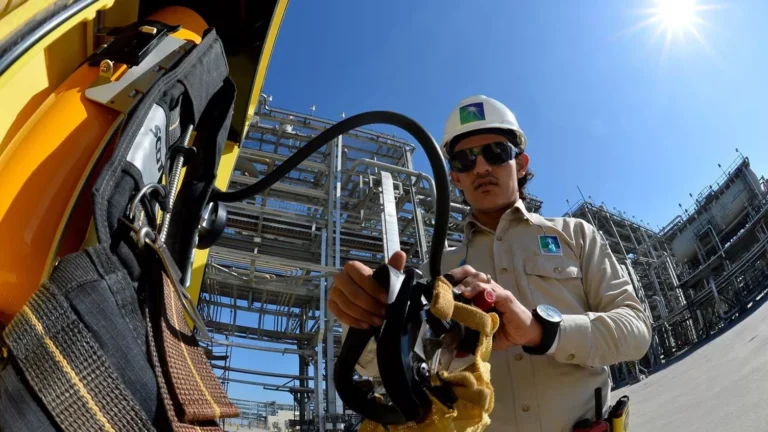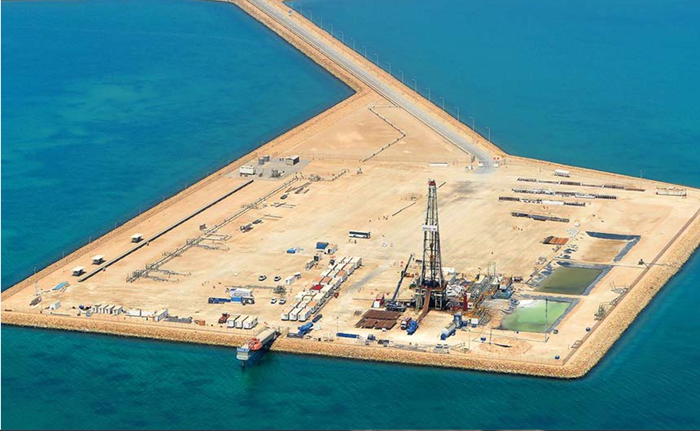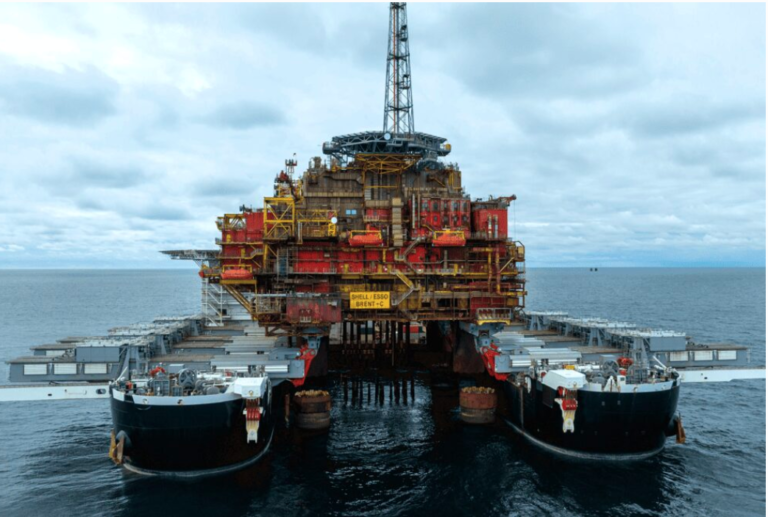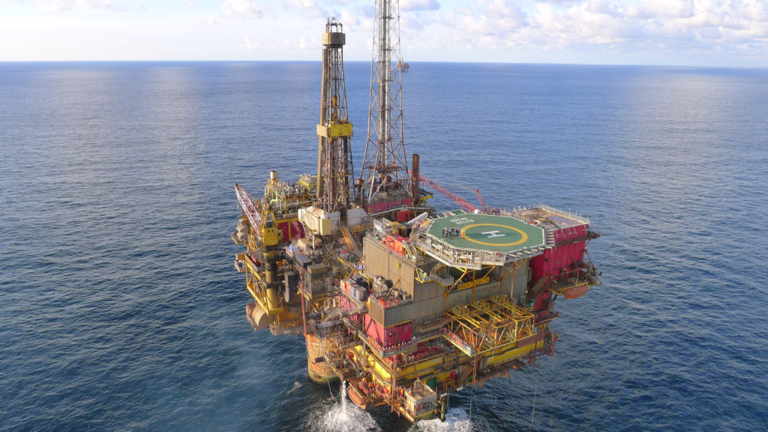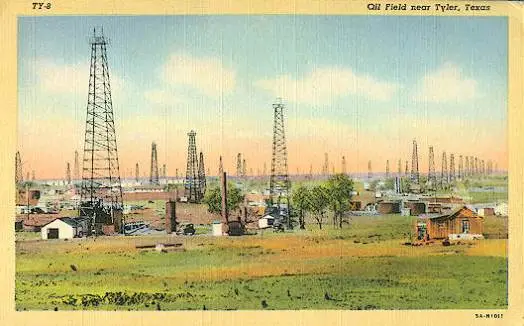
Postcard showing a portion of the East Texas Oilfield near Tyler. Source: https://www.tshaonline.org/handbook/entries/east-texas-oilfield
Obtaining outside data.
Checking internet sources, using keywords: Brent Crude price 2026
News from various sources:
The content provides a detailed overview of the Brent Crude oil price situation as of May 2026, focusing on factors influencing market movements and forecasts for the future. Here are the main points extracted and summarized
Current Price Status:
- As of early May 2026, Brent crude oil prices have experienced fluctuations, with a noted recent price of $113.17, slightly down from a high of $115 earlier in the week.
Geopolitical Tensions:
- The ongoing Middle East crisis, particularly involving the Strait of Hormuz, has been a significant driver of oil price movements. Escalating tensions between the United States and Iran, including military confrontations and threats, continue to unsettle the market.
- Recent events include an attack by Iran on a key UAE oil facility and proposals for military actions in the region by the U.S.
Market Reactions and Forecasts:
- Analysts predict varying outcomes based on geopolitical developments. Some projections suggest Brent prices could rise significantly if disruptions persist. For example, Citi has forecasts ranging from $80 to as high as $150 per barrel if tensions continue.
- Barclays has revised its Brent forecast to $100 per barrel for 2026, considering the sustained obstruction in the Strait of Hormuz.
Technical Analysis:
- Technical indicators show mixed signals with different patterns such as a double-top or an inverted head-and-shoulders pattern. A move above $114.31 could indicate a stronger bullish momentum, potentially pushing prices to $120 and beyond.
Supply Concerns:
- There are growing concerns over the drawdown of oil inventories and supply disruptions. Even as the U.S. increases exports, global oil reserves may weaken further if tensions continue.
- Ongoing negotiations and geopolitical dynamics, such as the UAE possibly exiting OPEC and other strategic moves, are influencing forecasts and market stabilization efforts.
Financial Institutions’ Outlook:
- Multiple investment banks have raised their Brent price forecasts for 2026 due to ongoing supply risks. UBS and others point towards potential extreme price scenarios above $200 per barrel, emphasizing considerable uncertainty and market volatility linked to the geopolitical climate.
Overall, Brent crude prices are heavily influenced by geopolitical events, particularly in the Middle East, with high volatility expected to persist as the market reacts to ongoing tensions and potential disruptions in oil supply chains.
Fact-checked summary:
As of early May 2026, Brent crude oil prices have fluctuated around $113.17 per barrel. Geopolitical tensions, particularly in the Middle East involving the Strait of Hormuz, have been significant drivers of these price movements, as such instability historically influences oil markets. Additionally, Citi forecasts a price range from $80 to $150 per barrel if tensions persist, while Barclays has revised its forecast to $100 per barrel for 2026, reflecting expert analysis of market conditions. Supply concerns, particularly regarding drawdowns in oil inventories and potential disruptions, further exert pressure on long-term price stability. Collectively, these elements suggest that the price of Brent crude is more likely to remain elevated than to fall below $50 per barrel by 2026.
OpenAI gives a base rate of 0.1 (10%)
The question difficulty is rated 7 (0 to 10)
A Bayesian calculation could be performed as follows:
To calculate the Bayesian outcome, we’ll combine the historical factors with current news. Starting with the base rate of 0.1 that considers necessary events are unlikely, we adjust this using a weighted sum of historical factors which underpin current market conditions with geopolitical tensions (0.3), oil price volatility (0.25), economic conditions (0.15), alternative energy impact (0.1), and OPEC+ decisions (0.2). Recent news from Middle East tensions and expert forecasts make a decrease below $50 improbable, suggesting a revised probability of roughly 0.15.
Bayesian base rate: 0.15 (15%)
Sufficient news to provide a good forecast? 1 (0 or 1)
News is relevant, topical and unbiased? 1 (0 or 1)
Question classification: scenario_based_forecast
Expected time (days) until question close: 240
The following were considered in order to produce this base rate:
The base rate was derived by considering the historical occurrence of Brent crude falling below significant price markers during geopolitical volatility and supply issues. Historically, when similar tensions or supply issues occurred, prices remained high, thus making it unlikely for the price to drop significantly unless external economic or supply factors shift dramatically.
Ideally, the news feed would contain the following sorts of information for a better forecast:
Additional information such as specific forecasts or market analyses from other major financial institutions, the latest state of oil reserves, increased or decreased demand signals from large economies would aid in refining the forecast. Monitoring further updates on alternatives to oil might also impact demand projections.
Some potential divergent considerations that might affect the base rate:
Key factors that could cause divergence from the base rate include new technological advances reducing oil demand faster than anticipated, unanticipated geopolitical resolutions leading to increased supply, or an unexpected sharp downturn in global economic conditions reducing oil demand drastically.
The following chain of events are necessary for the question to resolve positively:
- Geopolitical tensions, particularly in the Middle East, need to ease or be resolved peacefully, which is unlikely given current conditions (low likelihood).
- Global oil supply must significantly increase, surpassing current inventories and restoring excess supply which seems unlikely in the near-term (low likelihood).
- Major innovations or shifts in alternative energies significantly reduce global oil demand, with minimal geopolitical or supply disruptions, which is possible but less probable in a short timeframe (moderate likelihood).
- A major global economic recession reduces demand for oil significantly, though current economic indicators do not forecast this in the short-term (low likelihood).
Querying Claude (AI predicts: 0.03 – confidence: 6)
Querying Mistral (AI predicts: 0.15 – confidence: 7)
Querying OpenAI (AI predicts: 0.05 – confidence: 7)
Explanations of the statistical measures listed below.
Question Type: Binary
Median from LLMs: 0.05
Base rate: 0.1 (from OpenAI)
SD: 0.05
MAPD: 0.08
Confidence: 7
Conf Mode: Normal
Mellers: 0.01
Reverse Mellers: 0.13
Theory of Mind: 0 (What did the LLMs think other LLMs predicted?)
Beta Distribution: 0.84
Close Type: A (B = cautious # closer to 50%; A/C = closer to extremes)
LLM responses: 3
Model value: 5%
The consensus among the AI models suggests that the likelihood of Brent crude prices falling below $50 per barrel by the end of 2026 is low, given the current trading price of $113.17 per barrel. Historical data indicates that such significant price drops occur only under extraordinary circumstances, such as a global economic recession, a massive surge in supply, or a resolution to current geopolitical tensions, particularly in the Middle East. Current market forecasts, ranging from $80 to $150 per barrel, reflect these risks and the prevailing inflationary pressures on oil prices. Despite the potential for technological advances in alternative energy or unexpected geopolitical changes to alter supply and demand dynamics, these are considered unlikely to materialize quickly enough to impact the market significantly within the remaining months of 2026.
Runtime: 111 seconds.
About The Author