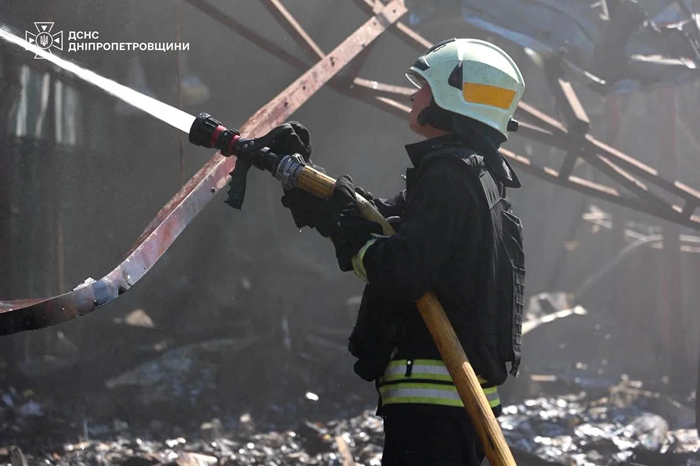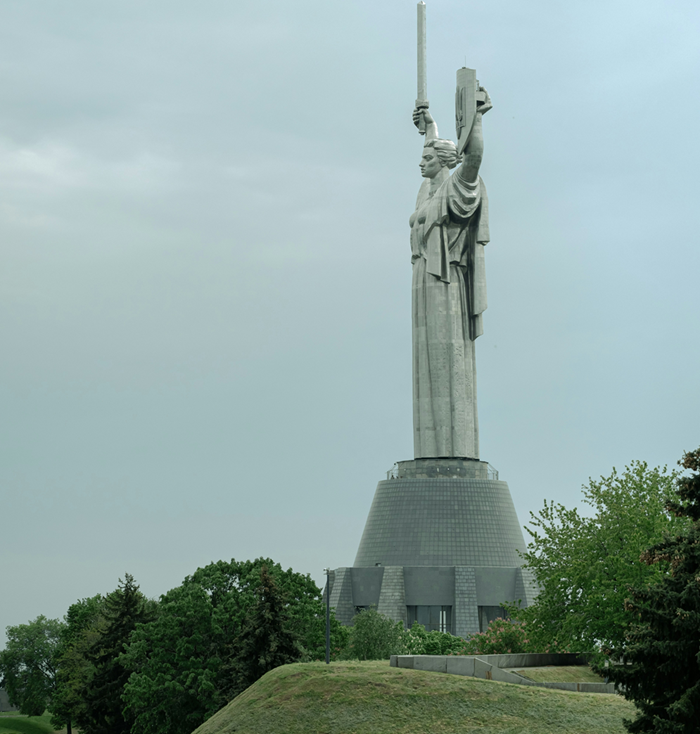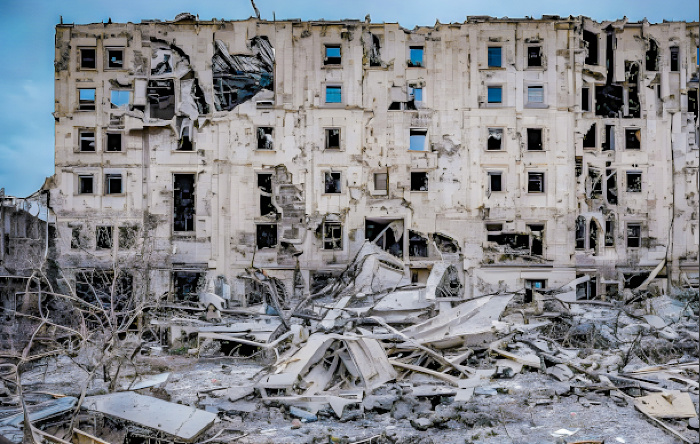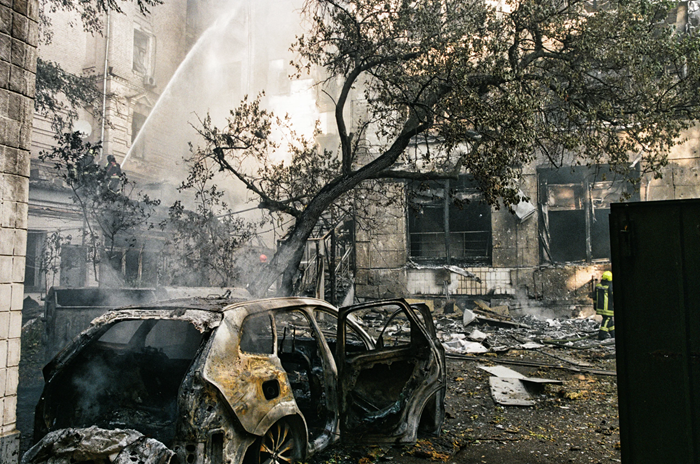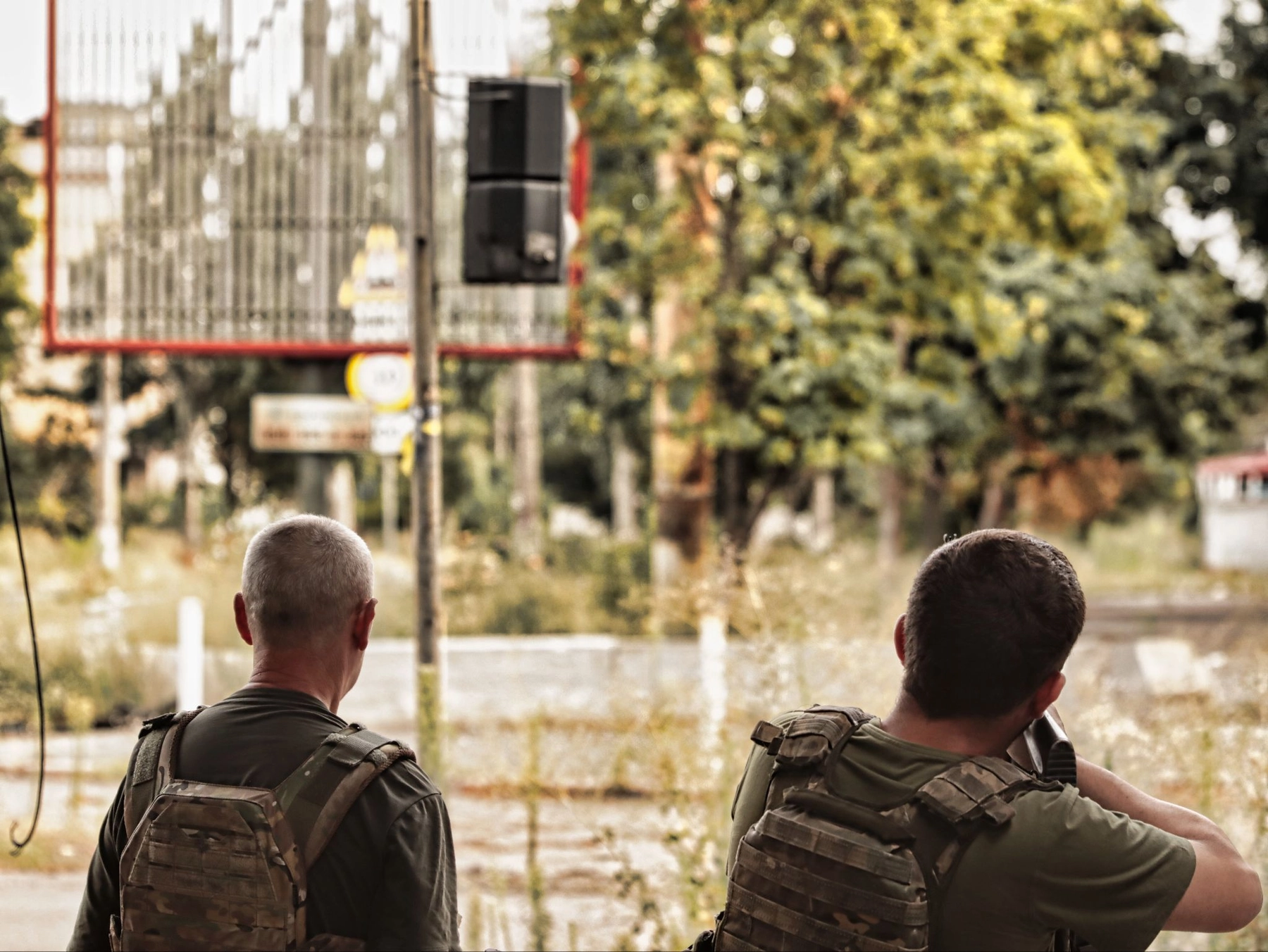
Two Ukrainian Marines from the 34th Marine Brigade “Borysfen,” part of a mobile air-defense team, watch for Russian drones from a position in Kherson’s Red Zone. Kherson, Ukraine, Aug. 3, 2026. (Photo by Korbinian Leo Kramer) Source: https://www.kyivpost.com/post/83134
Grok response:
10 Citations
- Zelenskiy’s top aide says Ukraine-Russia talks may be possible in September | Reuters. News report on potential revival of negotiations. Published August 27, 2026. Ukrainian Presidential Office head Kyrylo Budanov said talks between Ukrainian and Russian teams, possibly including U.S. representatives, could occur in September as Ukraine aims to revive stalled U.S.-led efforts. Talks have been paused since February due to territorial disputes and U.S. focus on Iran, with the last trilateral round in February. Zelensky has submitted new proposals including a ceasefire.[1]
- Russian Offensive Campaign Assessment, August 22, 2026 | Institute for the Study of War. Daily military analysis of the conflict. Published August 22, 2026. Putin used a United Russia party speech to frame the party as committed to victory in Ukraine and rejected Ukraine/Europe peace proposals as “exotic” and “unacceptable,” insisting negotiations must reflect “ground realities.” He appears to rely on missile campaigns amid Ukrainian interceptor shortages to force capitulation. Zelensky continues to express willingness for compromises aligned with battlefield realities.[2]
- Putin says Russia will press on with front-line campaign regardless of Ukraine proposals | Reuters. Report on Putin’s television interview. Published June 28, 2026. Putin rejected a Ukrainian proposal to halt long-range strikes, stating Russia will fully capture Donetsk, Luhansk, Kherson, and Zaporizhzhia regardless. He acknowledged Russian fuel shortages from Ukrainian drone attacks but called for faster air defense production. Putin framed Ukrainian attacks as diversions from Russia’s core objectives of “liberating” Donbas and Novorossiya.[3]
- Russia’s Military Missed 15 of Putin’s Deadlines to Seize Donbas, ISW Says | Kyiv Post. Analysis of Russian military timelines. Published August 25, 2026. Putin has issued at least 15 deadlines for fully seizing Donbas since 2022, none of which Russian forces have met; they currently control about 80% of Donetsk Oblast. Advances have slowed significantly in 2026, with net territorial losses in some months, making capture of remaining fortress-belt cities like Kramatorsk and Sloviansk by end-2026 extremely unlikely. Fighting over Donbas is expected to continue into 2027 according to some Russian military sources.[4]
- Russia x Ukraine ceasefire agreement by December 31, 2026? | Polymarket (via Prediction Bubbles). Prediction market data. Published/updated around June-August 2026. Markets implied roughly 15% probability of a Russia-Ukraine ceasefire by December 31, 2026 (with even lower odds, around 0.5-8.5%, for earlier dates like August or October). Related markets showed low single-digit to low-teen percentages for a broader peace deal or territorial cession by Ukraine in 2026. Volume was in the hundreds of thousands of dollars, reflecting trader skepticism amid stalled diplomacy.[5]
- Endgame: The State of the Russian Economy | Kiel Institute report. Economic analysis of wartime Russia. Published June 10, 2026. Russia’s economy has not collapsed but structural foundations have eroded, with growth stalling, fiscal buffers exhausted, and Q1 2026 budget deficit already exceeding full-year targets. High interest rates stifle civilian sectors while military spending is propped up; export revenues (especially oil, hit by Ukrainian “drone sanctions”) are now the key variable for war sustainability. China supplies 35% of trade and most sanctioned military components, but Russia accepts deep discounts as a captive supplier.[6]
- Zelensky sees window for US mediation to end Ukraine war | RTE. Report on Zelensky’s comments. Published August 25, 2026. Zelensky identified a window from the December 2026 G20 summit in the U.S. until summer 2027 for U.S. mediation, with a one-page draft of suggestions (including a ceasefire and a third-party-administered free economic zone in Donbas) prepared with U.S. and European officials. The Kremlin questioned the feasibility of a free economic zone, insisting on full cession of four claimed regions. U.S. envoys last visited Moscow in January.[7]
- Russia’s Putin announces Orthodox Easter ceasefire, Ukraine’s Zelenskiy agrees | Reuters. Report on a short humanitarian pause. Published April 9, 2026 (updated April 10). Putin ordered a 32-hour ceasefire from April 11-12 for Orthodox Easter, with troops to halt action on all fronts, and Zelensky confirmed Ukraine would observe it. Similar to a 2025 Easter pause, both sides later accused each other of thousands of violations, particularly on the front line while long-range strikes largely paused. The truce was described as exclusively humanitarian and temporary.[8]
- Ukraine-Russia Talks End With Little Progress and Hints of Impasse | The New York Times. Account of early-2026 negotiations. Published February 5, 2026. Trilateral talks in Abu Dhabi (U.S., Russia, Ukraine) ended after just three hours with scant progress beyond a 314-person prisoner swap (the first since October 2025). U.S. envoy Steve Witkoff claimed additional progress anticipated, but core issues like Donbas territory remained unresolved. Talks followed earlier January rounds and occurred amid Russian strikes on Ukraine’s power grid.[9]
- Sanctions and the Russian Economy: 2025 Year-End Assessment by KSE Institute | Kyiv School of Economics. Year-in-review of sanctions impact. Published January 30, 2026. 2025 saw intensified sanctions targeting oil/gas earnings, with Europe immobilizing €210 billion in Russian assets and the U.S. disrupting oil majors amid low global prices. Russia’s war-fueled boom ended, with rising deficits, tight monetary policy weighing on activity, and unorthodox financing needed. Challenges including suppressed revenues and soaring spending are expected to persist into 2026.[10]
Rundown of Relevant News and Context (as of late August 2026)
As of late August 2026, no comprehensive ceasefire or armistice covering the entire front or pausing the war as a whole has been officially declared between Russia and Ukraine. Intense fighting continues, with 250 combat clashes reported on August 27 alone, Russian forces losing approximately 1,630 personnel in 24 hours (cumulative Russian losses claimed at ~1.48 million since February 2022), and both sides conducting large-scale drone/missile strikes. Russia launched a “massive” overnight barrage on August 26-27 targeting nine Ukrainian cities, ports, energy, and industrial sites (killing at least two civilians), while Ukraine struck Russian oil refineries, logistics, and drone facilities. Russian advances have slowed dramatically (e.g., averaging far below 2025 rates, with some net losses in August), focused on Pokrovsk/Dobropillia in Donetsk but insufficient to seize remaining Ukrainian-held Donbas fortress-belt cities by year-end.[11]
=== Forecast Result ===
Based on the current situation as of late August 2026, there is no active bilateral ceasefire process: Russia has publicly rejected Ukraine’s proposals, talks are described as “on hold,” and both sides remain engaged in active offensive operations. While Ukraine and Western mediators are pushing new ceasefire concepts, Russia’s maximalist demands make a broad armistice or durable ceasefire unlikely in the next four months.
The main chance for a “Yes” comes from the resolution criteria counting temporary or regional ceasefires as well. Such ceasefires have occurred in 2026 around Easter and Victory Day, but they were earlier in the year and were seasonal/event-driven. There is no strong historical pattern of a similar bilateral ceasefire being declared between September and December in previous years. The December G20 summit and possible resumption of talks add some upside, but the default path remains continued fighting through year-end.
Weighing prediction-market signals around 15% for a substantive ceasefire agreement by year-end, plus a modest additional allowance for temporary/regional ceasefire declarations that would satisfy the broader resolution criteria, I arrive at an overall probability slightly above the market benchmark.
Probability: 18%
End
About The Author