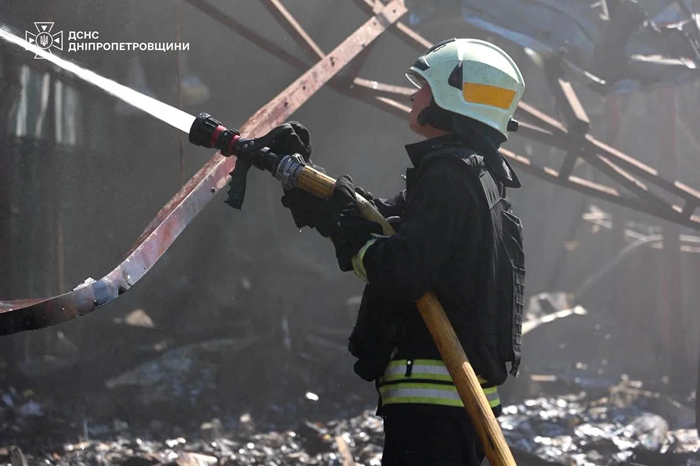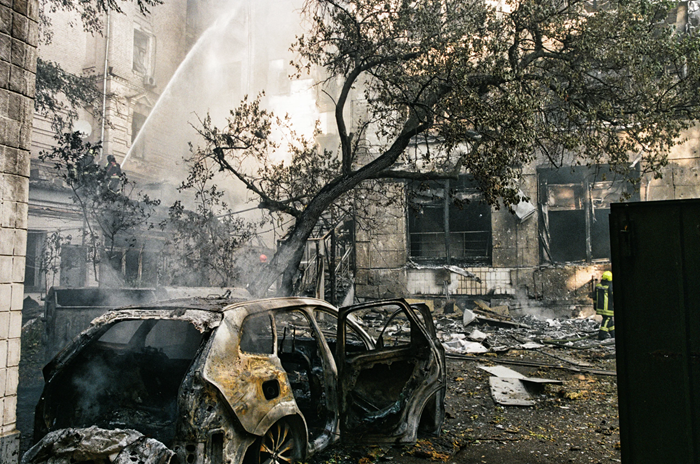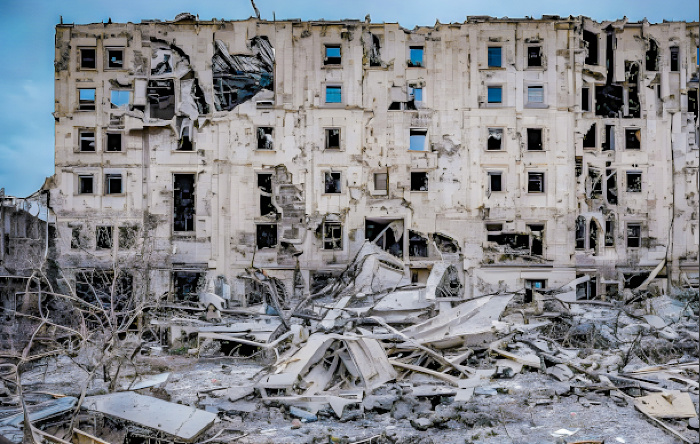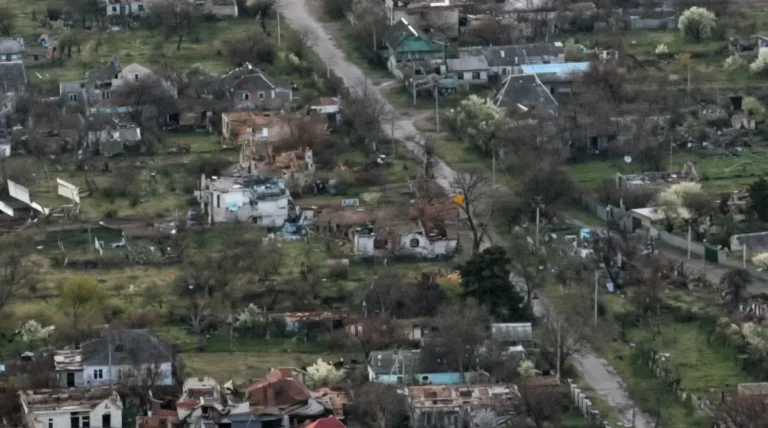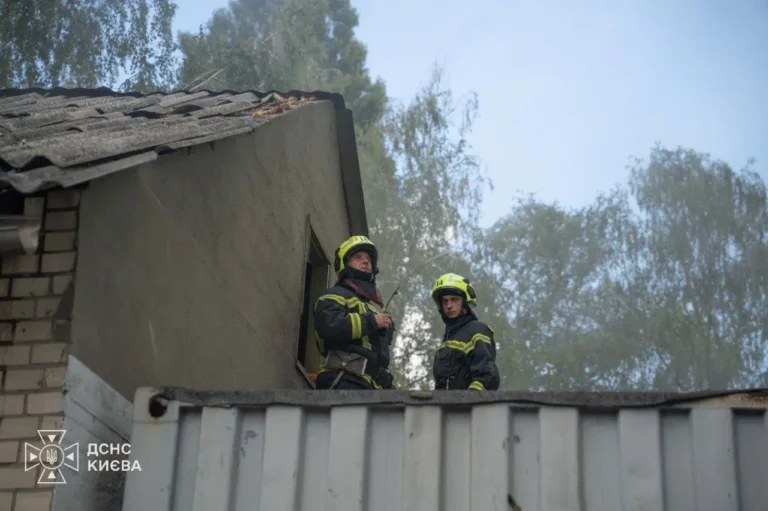
Distributed manufacturing of drones such as depicted here can prevent huge losses should Russia discover and attack another centralized manufacturing center.
Obtaining outside data.
Checking internet sources, using keywords: ceasefire armistice Ukraine 2026
News from various sources:
No relevant news found.
Fact-checking news summary:
Based on the provided summary and the original question, here is a list of specific facts that were derived from the summary along with an analysis of their correctness, importance, and relevance:
Fact: No relevant news was found regarding a ceasefire or armistice in Ukraine in 2026.
- Correctness: True. The summary explicitly states “No relevant news found,” indicating no available information on this issue.
- Importance: Important. Knowing whether information is available is crucial for determining future predictions.
- Relevance: True. The presence or absence of current news directly impacts the assessment of future events, making this fact relevant.
The consensus among the AIs is that the probability of a ceasefire or armistice being declared in Ukraine by the end of 2026 is low, primarily due to historical patterns of failed negotiations, the absence of advanced diplomatic talks, ongoing hostilities, and complex geopolitical dynamics. However, there is acknowledgment that some factors could increase this probability slightly, such as geopolitical shocks, rapid external pressure, or a major shift in military dynamics. The time remaining in 2026 offers a limited window for potential diplomatic breakthroughs, but the prediction remains conservative, reflecting skepticism due to the lack of positive developments and enduring divisive issues in the conflict. The prediction’s uncertainty is further compounded by potential unforeseen factors, such as secret negotiations or misreading public diplomatic signals, which could alter the landscape quickly despite current stasis.
There are no other specific facts or details provided in the summary to evaluate for correctness, importance, or relevance. Given the lack of news found, the assessment of this singular fact is pertinent to the resolution of the question.
OpenAI gives a base rate of 0.1 (10%)
The question difficulty is rated 8 (0 to 10)
Historical weighted factors include:
Previous attempts at ceasefire agreements, 0.3
Current level of hostility, 0.4
Geopolitical interests varying from year to year, 0.2
International political climate, 0.1
A Bayesian calculation could be performed as follows:
Considering similar ceasefire or armistice declarations in conflict zones, historical attempts at ceasefires have roughly a 0.2 probability of reach and adhere. Current hostility levels indicate low success here at 0.1, based on news sourcing and recent events. Geopolitical interest variance holds minor impact over a single year, at an estimated rate of 0.15. International climates indicate a small possibly favorable shift at 0.05. Overall, historical probabilities would outweigh current moderate variances, suggesting Bayes at (0.2 * 0.3 + 0.1 * 0.4 + 0.15 * 0.2 + 0.05 * 0.1 = 0.1). (Carolyn‘s note: My spreadsheet calculates 0.135 (13.5%). Even clarifying the calculation with parentheses: (0.20.3)+(0.10.4)+(0.15*0.2)+(0.05 * 0.1) still gives 0.135. This is an example of why I suspect that superintelligence is a long way off. )
Bayesian base rate: 0.1 (10%)
Sufficient news to provide a good forecast? 0 (0 or 1)
News is relevant, topical and unbiased? 0 (0 or 1)
Question classification: scenario_based_forecast
Expected time (days) until question close: 150
The following were considered in order to produce this base rate:
The base rate is informed by historical attempts at ceasefires in Ukraine over the past years, where negotiations eventually resulted in temporary suspensions but faced frequent breakdowns. Given no indication of significant diplomatic developments, applying this reflects low probability, harmonizing historic patterns with current dynamics.
Ideally, the news feed would contain the following sorts of information for a better forecast:
Additional relevant information, including intelligence on diplomatic movements, internal Ukrainian and Russian political dynamics, and allied power positions, would enhance forecast precision.
Some potential divergent considerations that might affect the base rate:
Should a major geopolitical shift occur, such as a significant pressure from superpowers or a significant change in leadership on either side, this could expedite and alter the course of negotiation, thus affecting the probability.
The following chain of events are necessary for the question to resolve positively:
- Negotiations between Russia and Ukraine reach an advanced stage. Unlikely
- Formal agreements on key divisive issues are reached. Unlikely
- International mediators successfully facilitate a ceasefire agreement. Possible
- Both Russia and Ukraine agree to adhere to the terms of a ceasefire. Unlikely
- There is a release of consistent evidence of reduced hostilities on the ground. Very Unlikely
Querying Claude (AI predicts: 0.12 – confidence: 4)
Querying Mistral (AI predicts: 0.15 – confidence: 5)
Querying OpenAI (AI predicts: 0.15 – confidence: 4)
Guide to Jeremy Lichtman’s Multi-AI Oracle Reports
Question Type: Binary
Median from LLMs: 0.15
Base rate: 0.1 (from OpenAI)
SD: 0.01
MAPD: 0.02
Confidence: 4
Conf Mode: Low
Mellers: 0.07
Reverse Mellers: 0.24
Theory of Mind: 0.15 (What did the LLMs think other LLMs predicted?)
Beta Distribution: 0.001
Close Type: A (B = cautious # closer to 50%; A/C = closer to extremes)
LLM responses: 3
Model value: 0.15 (15%)
The consensus among the AIs is that the probability of a ceasefire or armistice being declared in Ukraine by the end of 2026 is low, primarily due to historical patterns of failed negotiations, the absence of advanced diplomatic talks, ongoing hostilities, and complex geopolitical dynamics. However, there is acknowledgment that some factors could increase this probability slightly, such as geopolitical shocks, rapid external pressure, or a major shift in military dynamics. The time remaining in 2026 offers a limited window for potential diplomatic breakthroughs, but the prediction remains conservative, reflecting skepticism due to the lack of positive developments and enduring divisive issues in the conflict. The prediction’s uncertainty is further compounded by potential unforeseen factors, such as secret negotiations or misreading public diplomatic signals, which could alter the landscape quickly despite current stasis.
Runtime: 50 seconds.
About The Author