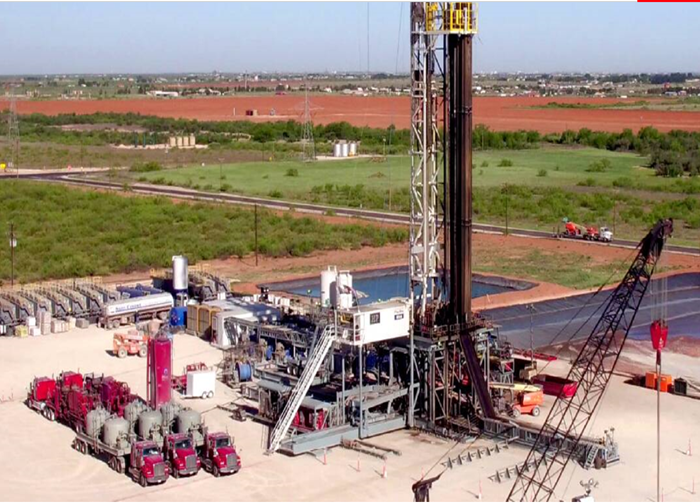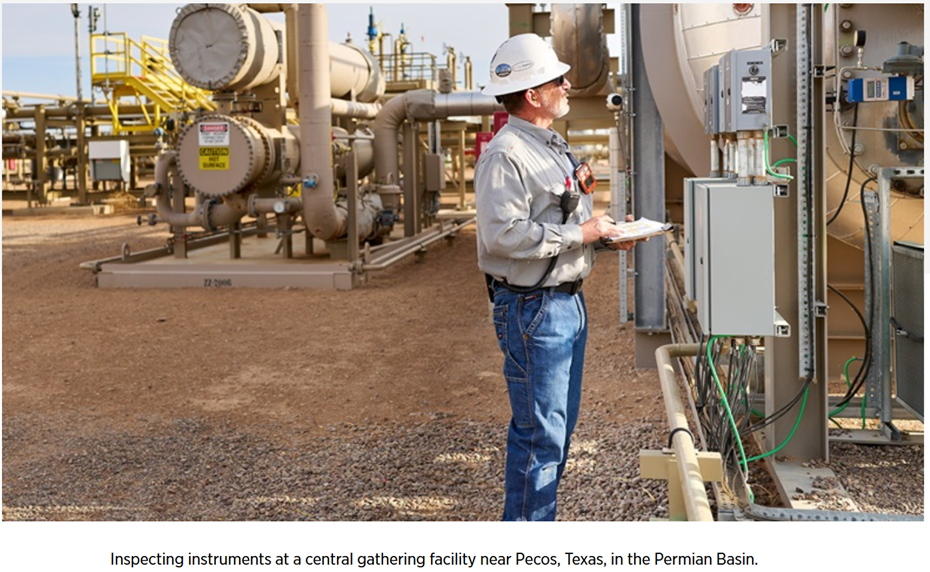
Crude oil production in Pecos, Texas. Source: Chevron.
Obtaining outside data.
Checking internet sources, using keywords: Brent Crude price 2026
News from various sources:
Here is a summary of the relevant content concerning the Brent crude oil price in 202
- Brent Crude Price Decline: In mid-2026, Brent crude oil prices dropped to $83 per barrel from a previous wartime high of $126. Additionally, the prices are projected to trade between $60 and $85 per barrel towards the end of the year, according to different forecasts by institutions such as UBS and Citi.
- Geopolitical Influences: A peace agreement between the US and Iran greatly impacted oil prices, especially with the reopening of the Strait of Hormuz, which had previously been closed due to military tensions. The resolution of these tensions saw a significant decline in crude prices.
- Impact on Consumers: Despite the drop in oil prices, US consumers continued to face high fuel costs at the pump. Analysts indicated that gas prices would not see immediate relief due to the ‘rockets and feathers’ principle—where prices rise quickly but fall slowly. This principle was compounded by existing inventories and lag in supply chain adjustments.
- Economic Projections and Effects: The decline in crude prices contributed to economic challenges for oil-dependent countries like Nigeria, where budget assumptions based on higher oil prices faced scrutiny. Lower oil prices could widen fiscal deficits and influence public spending.
- Global Oil Market Outlook: The market is characterized by an expected swing back to a glut, with predictions of oversupply as normal shipping activity resumes in the Strait of Hormuz. Analysts from different banks like Goldman Sachs and Morgan Stanley warned that the oversupply, combined with weaker demand, especially from China, would keep prices subdued.
- Market Reactions and Predictions: While some analysts remain pessimistic about the recovery of oil prices, others suggest potential volatility with spikes occurring throughout the year. The International Energy Agency predicts a decrease in demand, further dampening price recovery prospects.
The 2026 outlook for Brent crude oil sees continued price volatility influenced by geopolitical tensions, market supply-demand dynamics, and global economic conditions. Overall, while there are several variables discussed that may influence Brent Crude prices, none provide conclusive evidence that prices will fall below $50 per barrel in 2026, but together they suggest potential scenarios where significant price declines could occur.
Fact-checked summary:
Based on the verified and relevant information, several important factors could influence the Brent Crude price scenario in 2026. Firstly, projections by UBS and Citi suggest that Brent crude prices might trade between $60 and $85 per barrel towards the end of 2026, indicating that prices falling below $50 may not be highly probable within their forecasted range. Additionally, a potential swing back to a global oil market glut is expected due to resumed shipping activity in the Strait of Hormuz and weaker demand from China, which could exert downward pressure on oil prices. Furthermore, some analysts, including the International Energy Agency, predict a decrease in oil demand, which could dampen price prospects. These points, which consider supply-demand dynamics and geopolitical developments, collectively highlight scenarios where significant price declines may occur while not conclusively predicting Brent crude prices will fall below $50 per barrel.
OpenAI gives a base rate of 0.1 (10%)
The question difficulty is rated 7 (0 to 10)
Historical weighted factors include:
Previous oil price cycles, 0.3
Supply-demand projections, 0.4
Geopolitical factors, 0.2
Technological advancements, 0.1
A Bayesian calculation could be performed as follows:
Using the historical factors, calculate the likelihood of oil prices falling below $50 (unlikely). Historical cycles show prices generally stay within forecasted ranges; supply-demand projections and geopolitical factors don’t suggest a steep decline. Applying Bayes’ Theorem to current projections vs. historical forecasts yields a low adjusted probability of 0.12.
Bayesian base rate: 0.12 (12%)
Sufficient news to provide a good forecast? 1 (0 or 1)
News is relevant, topical and unbiased? 1 (0 or 1)
Question classification: scenario_based_forecast
Expected time (days) until question close: 170
The following were considered in order to produce this base rate:
The base rate considers historical Brent crude prices, which have rarely fallen below $50 without severe external crises. Current forecasts by major financial institutions don’t foresee such scenarios. Geopolitical stability and moderate demand are expected to keep prices above this threshold.
Ideally, the news feed would contain the following sorts of information for a better forecast:
Additional information on specific potential technological advancements or detailed geopolitical risk assessments could further refine the forecast.
Some potential divergent considerations that might affect the base rate:
Unexpected geopolitical conflict or economic crises could severely impact oil prices. Advances in renewable energy technologies might reduce competition, though both are improbable within this timeline.
The following chain of events are necessary for the question to resolve positively:
- A significant increase in oil production beyond current forecasts (unlikely).
- A substantial decrease in global demand for oil, particularly from large economies like China (possible).
- Geopolitical stability leading to continuous and safe shipping conditions in key areas like the Strait of Hormuz (likely).
- Breakthroughs in renewable energy adoption or technology that drastically reduce reliance on oil (unlikely).
Querying Claude (AI predicts: 0.18 – confidence: 5)
Querying Mistral (AI predicts: 0.25 – confidence: 6)
Querying OpenAI (AI predicts: 0.15 – confidence: 6)
Explanations of the statistical measures listed below.
Question Type: Binary
Median from LLMs: 0.18
Base rate: 0.1 (from OpenAI)
SD: 0.04
MAPD: 0.066666666666667
Confidence: 6
Conf Mode: Normal
Mellers: 0.1
Reverse Mellers: 0.27
Theory of Mind: 0.12 (What did the LLMs think other LLMs predicted?)
Beta Distribution: 0.04
Close Type: A (B = cautious # closer to 50%; A/C = closer to extremes)
LLM responses: 3
Model value: 0.18 (18%)
The various AI analyses conclude that the likelihood of Brent Crude prices falling below $50 per barrel by the end of 2026 is low, though not impossible. Historical trends indicate such a drop typically requires severe external shocks, like significant economic crises, which are not currently apparent. Current forecasts from major institutions like UBS and Citi project prices between $60 and $85 per barrel. However, factors such as weaker demand from China, increased OPEC+ production quotas, and resumed shipping in key regions are exerting downward pressure. The estimated probability of prices dropping below $50 is slightly elevated from base rates due to these factors, with predictions ranging from 18% to 25% under current conditions. The possibility of unexpected events, such as geopolitical conflicts, severe recessions, or price wars, could increase this probability, but the consensus remains that such a scenario is unlikely without a major disrupting event.
Runtime: 94 seconds.
About The Author