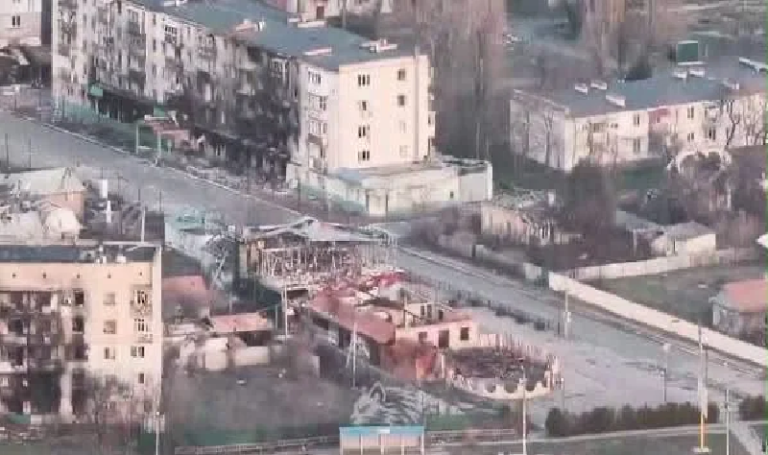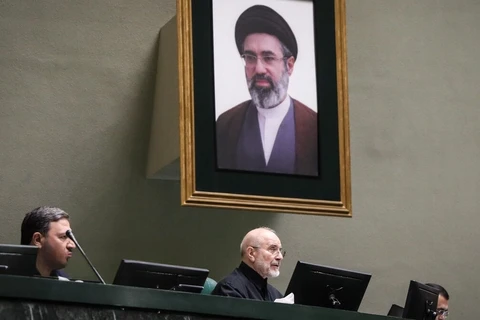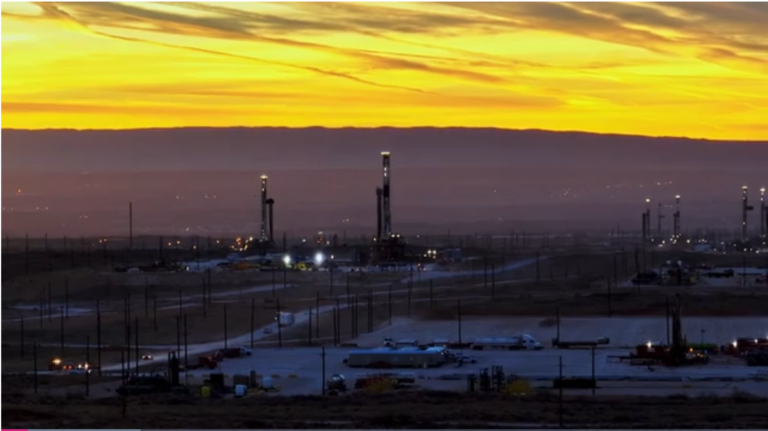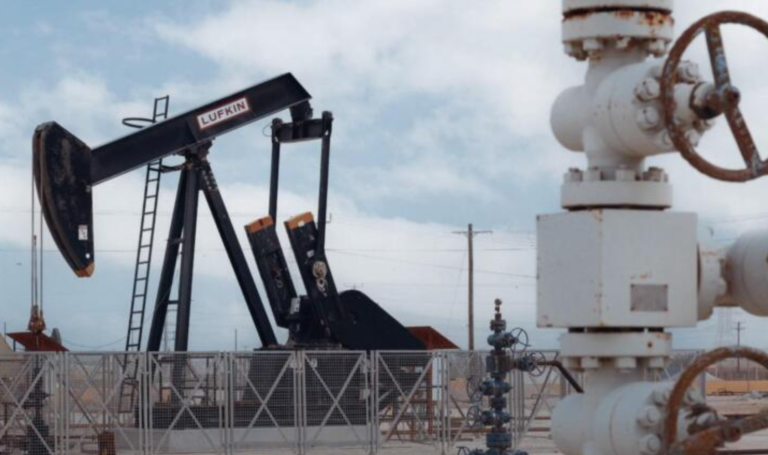
A man looks out at ships off the coast of Bandar Abbas, Iran near the Strait of Hormuz, October 24, 2026. Source: https://www.iranintl.com/en/202610279331
DeepSeek research response, prepared October 29, 2026
Summary:
October has seen the worst month on record for ship attacks, and QatarEnergy has extended force majeure to customers through the end of 2026. No gCaptain article has used the phrase “de facto unimpeded”; its most recent Hormuz coverage (Oct 25) describes record attack levels and ~4 total transits/day versus ~85 pre-war. The one live path to “Yes” is the Qatar-mediated “seven-day plan,” which Iran’s foreign minister said on Oct 28 is under active discussion — but it is conditioned on the US lifting its naval blockade, ending hostilities and unfreezing assets, and the June MOU track record is poor.
News Sources:
“Iran says discussing plan with mediators to end war, reopen Hormuz” — Arab News (AFP), Oct 29, 2026
https://www.arabnews.jp/en/middle-east/iran-says-discussing-plan-with-mediators-to-end-war-reopen-hormuz-3001140
The key positive catalyst, dated today: Foreign Minister Abbas Araghchi said Iran is “in close and ongoing contact with intermediaries” to implement its seven-day plan, under which Hormuz would reopen on day six if the US ends hostilities, lifts the naval blockade, eases oil export restrictions and unfreezes assets in the first five days. Axios reported Qatar is pushing a diplomatic deal to restart US–Iran talks and prevent renewed war after the US midterms on Nov 3, offering UN inspector access in exchange for sanctions relief. Importantly, the article also states “diplomatic efforts to resolve the crisis remain stalled, especially since the collapse of a June deal.”
“Qatar to Buy LNG From Woodside as It Scours for US Supply” — gCaptain (Bloomberg), Oct 29, 2026
https://gcaptain.com/qatar-to-buy-lng-from-woodside-as-it-scours-for-us-supply/
Yesterday’s gCaptain story is a strong negative indicator: QatarEnergy is signing 20-year US LNG purchase deals because it cannot replace volumes “locked inside the Persian Gulf,” with some Ras Laffan capacity damaged and “it will take years to repair them.” It states QatarEnergy “recently extended force majeure on deliveries to some buyers in Europe and Asia through the end of the year,” and that while more Qatari LNG left the region in October, “there’ve been worries about potential cuts if the US renews strikes against Iran after the midterm elections next week.” An exporter extending force majeure into year-end is inconsistent with unimpeded traffic.
“Global LNG Supply and Shipping Tracker: Rise of Dark Transits” — Macrostream summary of J.P. Morgan Global Markets Strategy, Oct 27–28, 2026
https://www.macrostream.ai/articles/6ae13ee94cb55abc0af00e21
The most current quantitative read on volumes, and the most bullish counterpoint: Kpler data show Qatar had ~20 LNG transits in September and ~18 so far in October, versus zero laden transits in August; the UAE has run at near-full utilization with 6–7 transits/month since August. Combined Qatar+UAE capacity utilization is estimated at ~42%, up sharply but still far below normal. It explains why LNG lags crude: LNG carriers have roughly double the hull value of crude tankers, so war-risk insurance is harder and costlier to obtain, and STS transfers require cryogenic equipment. Note the tension with item 6’s Vortexa count (5 confirmed transits/week) — much of the “recovery” is unobservable dark transit.
“As Attacks Mount, Shipping Faces an Uncomfortable Question: Are Safety Rules Fit for War?” — gCaptain, Oct 25, 2026
https://gcaptain.com/as-attacks-mount-shipping-faces-an-uncomfortable-question-are-safety-rules-fit-for-war/
This is the most recent substantive gCaptain status assessment and it points strongly against resolution: October 2026 is “the worst month on record for attacks on merchant ships in and around the Strait of Hormuz.” The Washington Institute recorded 28 confirmed/reported attacks in October and 113 since Feb 28; IMO lists ~120 incidents and UKMTO 135 by Oct 16; 22+ seafarers killed by September. It also cites IMF PortWatch showing only 4 transits of the Strait on Oct 18 versus a pre-war average of ~85 per day — a level far from “de facto unimpeded.”
.Additional high-value sources
.Polymarket — “Will Strait of Hormuz traffic return to normal by December 31?” (accessed Oct 29, 2026)
https://polymarket.com/es/predictions/hormuz
Snapshot: ~19% YES (“No” ~81%) on traffic returning to normal by Dec 31, on ~$14M volume; a related market, “Which month will Strait of Hormuz traffic return to normal?”, shows 83% on “No return to normal in 2026.” Caveat: these contracts reference IMF PortWatch transit-call thresholds for all vessel traffic, not LNG specifically, and settlement definitions differ from this question’s gCaptain/”de facto unimpeded” standard — so treat directionally, not as a direct read.
“The Iran War Just Added $39 Billion to the World’s LNG Bill” — OilPrice.com, Oct 25, 2026
https://oilprice.com/Energy/Natural-Gas/The-Iran-War-Just-Added-39-Billion-to-the-Worlds-LNG-Bill.html
Rystad Energy’s 2026 modeling explicitly assumes “Qatari and UAE LNG deliveries will be unavailable from March through the end of 2026.” Under that scenario global LNG importers pay $39bn more while buying 60.7 Mt less; Europe loses 20.6 Mt of the 24.7 Mt of Qatari LNG scheduled for 2026 and pays ≥$12bn more. This is a mainstream-consultancy base case that implicitly prices the answer to this question as “No.”
Data table: LNG transits through Hormuz, 2026
| Period | LNG cargoes / transits | Context |
|---|---|---|
| Pre-war (to Feb 27) | ~3 cargoes/day (~90/month); ~20% of global LNG | Qatar ~77–82 Mt/yr; UAE ~6 Mt/yr |
| March 2026 | 0 LNG vessels (S&P Global CAS) | War began Feb 28; strait declared closed Mar 4 |
| June 2026 | 15 cargoes (Kpler) | Post-June 18 MOU brief opening |
| July 2026 | Near halt after Qatari tanker struck | Exports “virtually at a standstill” |
| August 2026 | Qatar: zero laden transits; exports only to Kuwait | STS transfers begin off Oman mid-August |
| September 2026 | 19 (S&P) / 21 (Kpler) — highest since war; Qatar 1.6 Mt | Still <25% of pre-war; ~1/3 went to Kuwait |
| October 2026 | Qatar ~18 transits (JPM/Kpler, to ~Oct 27); Vortexa 5 confirmed in week to ~Oct 18 (4-wk avg 12, only 2 laden); Kpler projected Qatar exports 0.6 Mt | Worst attack month on record; 28 attacks to Oct 23 |
| Total vessel transits | 4 on Oct 18 (IMF PortWatch) vs. ~85/day pre-war | ~90%+ decline persists |
=== Forecast Result ===
=== Reasoning ===
The resolution criterion is narrow and demanding: by 31 Dec 2026, gCaptain must characterize LNG traffic through Hormuz as “de facto unimpeded,” meaning no longer halted or severely restricted. As of 29 Oct 2026, the evidence strongly points the other way: LNG flows are still roughly 75–80% below pre-war levels, QatarEnergy has extended force majeure on some deliveries through year-end, October has been the worst month on record for attacks, and gCaptain’s own recent reporting frames LNG movement as a fragile, risk-laden rebound rather than normal or unimpeded traffic.
The main upside path is a rapid US–Iran/Qatar-mediated reopening, especially around or after the US midterms. Iran has described a seven-day plan, and some diplomatic momentum exists. However, the required conditions—US lifting the naval blockade, ending hostilities, easing sanctions, and unfreezing assets—have repeatedly failed in earlier ceasefire/MOU attempts. Even if a broad deal were announced, LNG normalization would likely lag because of war-risk insurance, damaged Qatari liquefaction capacity, dark transits, ship-to-ship workarounds, and existing force majeure. With only about nine weeks remaining, the window for both a breakthrough and gCaptain explicitly validating unrestricted LNG flow is small.
Key assumptions that could change the forecast:
- A near-term full reopening deal occurs and is implemented rapidly: low-to-moderate likelihood, perhaps around 10–15%.
- Even if a deal occurs, gCaptain describes LNG traffic as truly unimpeded rather than still cautious/recovering: only moderately likely within the remaining weeks.
- The resolver interprets “de facto unimpeded” loosely enough to include a major but incomplete recovery: some risk, but the explicit “no longer halted or severely restricted” language argues against a loose reading.
Given the strong current negative evidence, the short remaining time, and the qualitative but stringent gCaptain-based resolution standard, I place the probability well below the general “normal Hormuz traffic” market sentiment. The chance is not negligible because of the active diplomatic track, but it remains unlikely.
Data sufficiency: Sufficient
Probability: 8%
End
About The Author