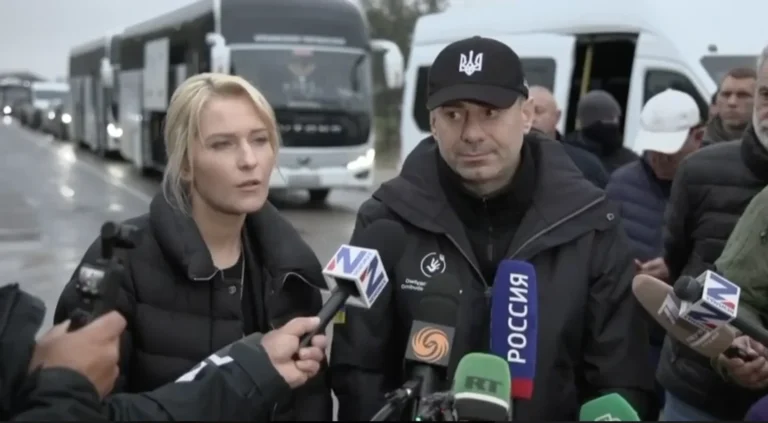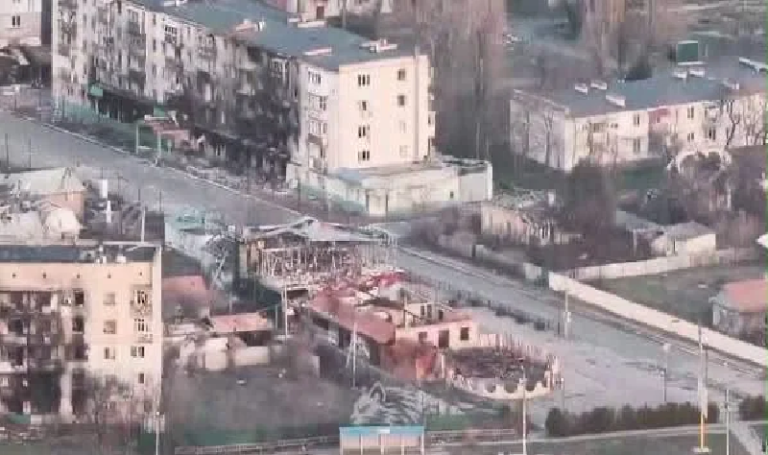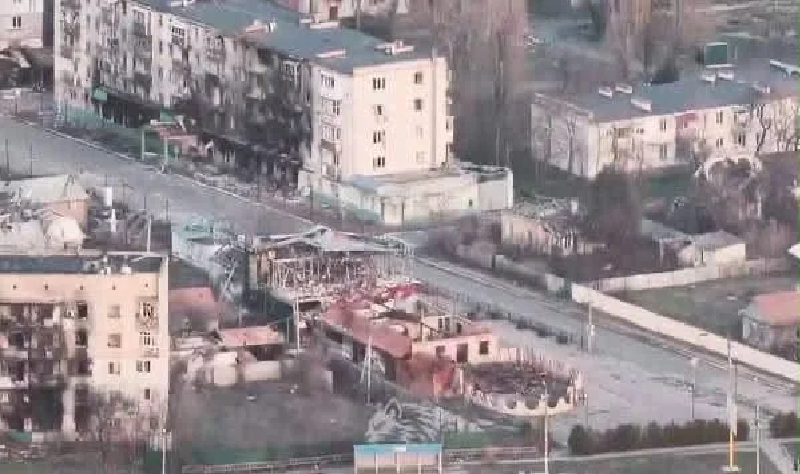
Danage in Oleshky, Ukraine (Photo by Andrij Sybiha/Facebook)
Perplexity response:
## Relevant sources
“Russia, Ukraine begin localised ceasefire to allow for humanitarian operation in Oleshky” — Reuters, October 27, 2026.
Reuters reported that the localized ceasefire had begun, with both governments saying it was in effect. Russia’s Defense Ministry said it had stopped shelling toward Kherson to facilitate the humanitarian operation. This is the clearest contemporaneous confirmation that a ceasefire was actually implemented, rather than only announced. [26]
“A ceasefire in a Ukrainian city is holding, officials say, as Moscow and Kyiv await U.S.-led talks” — Associated Press, October 28, 2026.
AP reported that the six-day ceasefire in and around Oleshky had held through its first night. The truce was intended to deliver food and medicine to roughly 2,000 residents and evacuate civilians. Fighting continued elsewhere, demonstrating that this was a local ceasefire rather than a nationwide cessation of hostilities. [20]
“After years under fire, a rare quiet settles over Ukrainian city as truce holds” — Associated Press, October 28, 2026.
AP reported that the localized ceasefire had produced a period of calm in Oleshky after years of fighting. The truce extended to the other side of the Dnipro River in the Kherson region and was linked to deliveries of medicine, food, and water. Its continued observance provided additional confirmation that the agreement was functioning on the ground. [16]
“Aid mission set to enter Oleshky as a localized Russia-Ukraine truce holds for a third day” — Associated Press, October 29, 2026.
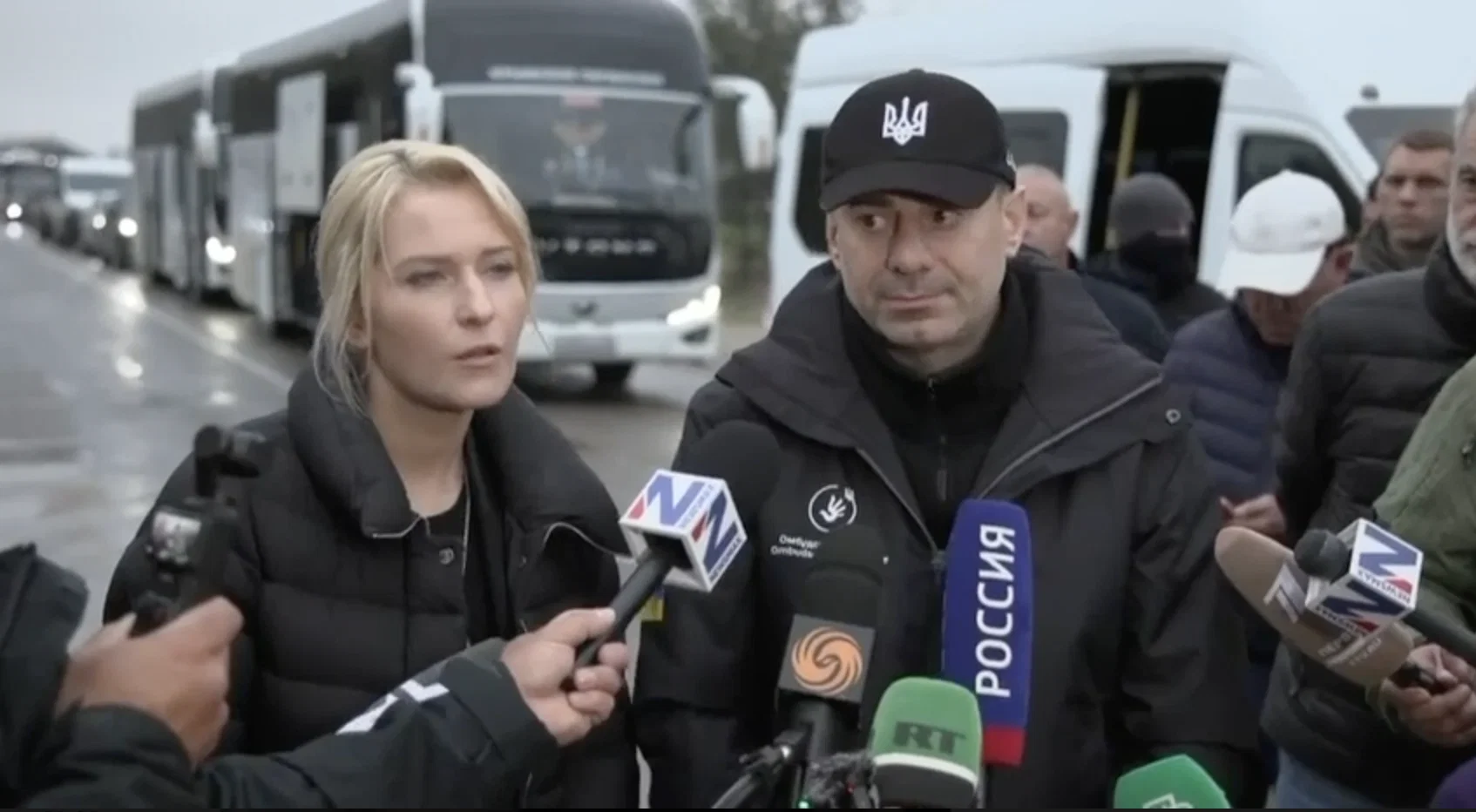
AP reported that the ceasefire had lasted 54 hours without reported violations, according to Ukrainian ombudsman Dmytro Lubinets. Mine-clearing was underway before humanitarian aid entered the city. The report strengthens the case that the ceasefire was bilateral, sustained, and officially recognized by officials on both sides. [28]
“Russia, Ukraine say Oleshky demining operations complete, humanitarian operation to proceed” — Reuters, October 29, 2026.
Reuters reported that demining around Oleshky had been completed and that aid delivery and civilian departures were ready to begin. The operation was being conducted under the previously agreed localized ceasefire. This indicates practical implementation of the agreement rather than a purely political announcement. [25]
“Russia and Ukraine say Oleshky aid operation and evacuations under way” — Reuters, October 30, 2026.
Reuters reported that an aid convoy had arrived in Oleshky and that residents were being given the opportunity to leave. The report stated that the local ceasefire had come into force on Tuesday and was brokered with U.S. involvement. As of October 30, the ceasefire remained sufficiently intact to support the humanitarian operation. [19]
“Potential Russia-Ukraine talks face steep obstacles to peace” — Associated Press, October 24, 2026, updated October 30.
AP reported that the localized ceasefire was accompanied by a renewed U.S.-backed diplomatic effort. The broader talks face major obstacles because Moscow and Kyiv continue to hold incompatible positions on territory, security guarantees, and the terms of ending the war. Thus, the evidence strongly supports a localized ceasefire but is less favorable to a comprehensive armistice covering the entire front. [12]
Assessment
The resolution is already satisfied: Yes. A ceasefire was officially declared and implemented between Russia and Ukraine in Oleshky beginning October 27, 2026. The resolution explicitly says that a ceasefire may cover only one region of the front, so the fact that fighting continued elsewhere does not disqualify it.
Anthropic Binary response:
Looking at this question, I need to carefully parse both the resolution criteria and the background definition, which are unusually permissive compared to how these questions are typically interpreted in prediction markets.
Key observation on resolution criteria:
The question’s own background text explicitly states: “A ceasefire is temporary or might only cover one region of the front.” This is a deliberately broad definition built into the question itself — much broader than stricter definitions used elsewhere (e.g., Polymarket’s rules explicitly excluding localized/humanitarian pauses).
Evidence already in hand (as of Oct 30, 2026):
- May 9-11, 2026: A mutually confirmed, officially announced 3-day ceasefire covering “all kinetic activity” nationwide, confirmed on record by both Kremlin aide Ushakov and Zelensky, including a prisoner exchange.
- October 27 – Nov 1, 2026 (Oleshky/Kherson): An officially declared, mutually implemented regional ceasefire, confirmed by both Russian and Ukrainian defense ministries and human rights commissioners, actively holding as of Oct 30 (today), with Reuters and AP repeatedly using the term “ceasefire.”
Both of these events precisely match the question’s own stated definition of a qualifying ceasefire (temporary, and/or regional). Multiple major outlets (Reuters, AP, Anadolu, AFP) have explicitly used the word “ceasefire” to describe these events.
Forward-looking factors (added upside):
- Abu Dhabi technical talks expected Nov 10+ could yield further ceasefire announcements.
- Historical pattern of holiday truces (Orthodox Christmas, Easter) suggests a plausible Dec 2026 ceasefire announcement even if Oleshky-style deals lapse.
- Diplomatic momentum (Witkoff-Putin meeting, Zelensky’s openness to freezing the line) increases chances of at least another temporary/regional truce before Dec 31.
Key uncertainty/risk to flag:
- Resolvers might apply a stricter “spirit” interpretation (general/nationwide pause) despite the literal background text, given the question emphasizes Korean-armistice-style framing elsewhere. This is the single largest risk to a YES resolution, but the explicit parenthetical clarifying “might only cover one region” strongly pushes against this stricter reading.
- There’s some chance the Oleshky truce or any other 2026 ceasefire is reported as having “failed” or “collapsed” rapidly, though even collapsed ceasefires were still “declared.”
Assumption stress-test:
- Assumption 1: Resolvers will honor the literal background text (regional/temporary counts) — if wrong (~15% chance), this likely flips to NO.
- Assumption 2: Already-reported events (May, Oct) count as happening “in 2026” satisfying the criteria regardless of the “must happen after today” framing — if wrong (~10% chance that only forward-looking events count and no new ones occur), this could also reduce the probability, though forward-looking probability of a new truce remains fairly high regardless.
Combining the strong textual/evidentiary case with residual resolution-ambiguity risk, I settle on a high but not certain probability.
Data sufficiency: Sufficient
Probability: 92%
=== Forecast Result ===
=== Reasoning ===
Looking at this question, I need to carefully parse the resolution criteria and timing constraints.
Key interpretive issue: The background explicitly defines a qualifying “ceasefire” as something that “is temporary or might only cover one region of the front” — this is a notably broad/low bar compared to e.g. the Polymarket contract (which explicitly excludes localized/humanitarian pauses). The resolution criteria mirrors this: “Resolves Yes if either a ceasefire or armistice is officially declared… at any point in 2026.”
Timing constraint: The event must occur between today (Oct 30, 2026) and Dec 31, 2026. Already-concluded events (the May 9–11 three-day ceasefire, the initial Oleshky declaration on Oct 23) predate the “today” cutoff, though the Oleshky truce is still active as of Oct 30 and scheduled to run through Nov 1.
Relevant dynamics for the Nov–Dec window:
- The Oleshky truce (ending nominally Nov 1) has strong political incentives behind it (Melania Trump-brokered, ongoing humanitarian need for ~1,700-2,000 trapped residents) — extension or a similar follow-on local truce elsewhere is plausible.
- Abu Dhabi technical talks are expected on/after Nov 10 — given the pattern of repeated partial/temporary ceasefire declarations throughout 2026 (Easter truce, May 3-day truce, October “energy ceasefire,” Oleshky truce), another officially announced (even if partial) ceasefire emerging from or alongside these talks is quite plausible.
- Historical precedent exists for Christmas/New Year truce declarations (Orthodox Christmas pauses in prior years), which could recur in late December within the window.
- Base rate: 2026 has already produced ~3 distinct “officially declared” temporary/regional ceasefire events in ~10 months — a reasonably high frequency suggesting another is likely in a 2-month window.
Countervailing factors:
- Genuine armistice/comprehensive ceasefire remains very unlikely given entrenched positions (Donbas withdrawal demands, NATO rollback demands, incompatible security guarantee asks).
- Resolution ambiguity: a resolver might apply spirit-of-the-question stricter standards despite the broad literal text, given the background emphasizes a meaningful war-ending pause (Korean armistice analogy).
- Negotiating dynamics are fragile; talks have collapsed multiple times in 2026.
Key uncertain assumptions:
- Resolver applies the broad literal definition (regional/temporary ceasefires count) rather than requiring a general ceasefire — if strict interpretation is used, probability drops substantially (~25-30% range instead).
- Oleshky-style arrangements continue/extend or recur elsewhere — moderately likely given incentives.
- Abu Dhabi talks produce at least a symbolic/partial ceasefire announcement — uncertain but plausible given precedent.
Weighing the broad resolution language against realistic resolver interpretation risk and the volatile/unpredictable nature of negotiations, I estimate a moderately high but not extreme probability.
Data sufficiency: Sufficient
Probability: 64%
End
About The Author