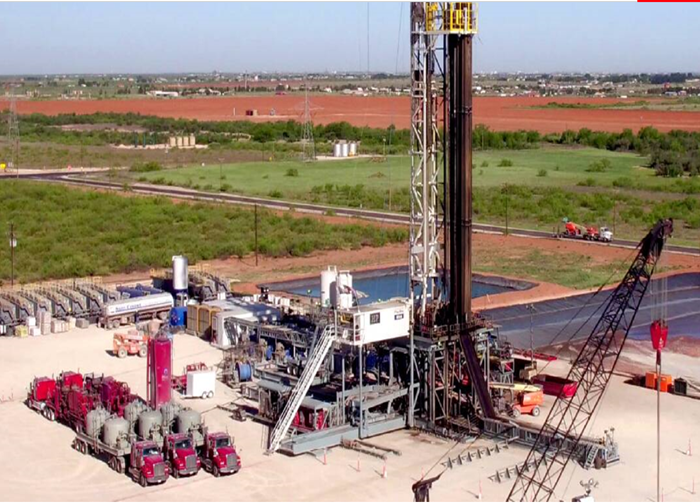
Oil wells by Zbynek Burvial https://unsplash.com/@zburival
Obtaining outside data.
Checking internet sources, using keywords: Brent Crude price forecast 2026
News from various sources:
Based on the content retrieved, the U.S. Energy Information Administration (EIA) has projected that the average Brent crude oil prices will decrease in 2026 and 2027 according to their latest Short-Term Energy Outlook (STEO). Here are the key points extracted and summarized:
Price Forecast:
- The EIA forecasts the Brent spot price to average $55.87 per barrel in 2026 and further decrease to $54.02 per barrel in 2027.
- For comparison, the Brent price averaged $69.04 per barrel in 2025.
The summary captures the economic and geopolitical dynamics influencing Brent crude prices in 2026 and beyond and highlights the complexity of the global oil market forecast.
Fact-checking news summary:
Based on the summary, here is a list of specific facts, their accuracy, importance, and relevance to the question about whether the price of Brent Crude will fall below $50 per barrel in 2026:
Price Forecast:
- The EIA forecasts the Brent spot price to average $55.87 per barrel in 2026 and further decrease to $54.02 per barrel in 2027.
- For comparison, the Brent price averaged $69.04 per barrel in 2025.
Quarterly Breakdown (2026 & 2027):
- In 2026, prices are expected to be $58.93 (Q1), $56.00 (Q2), $55.35 (Q3), and $53.34 (Q4).
- In 2027, forecasts are $53.00 (Q1), $54.00 (Q2 & Q3), and $55.00 (Q4).
Factors Influencing the Forecast:
- The declining price trend is attributed to an oversupply scenario, with global production outpacing demand.
- An increase in global oil inventories is projected, averaging 2.8 million barrels per day in 2026 and moderating to 2.1 million barrels per day in 2027.
- Excess production is noted to be stored on land and in floating storage, exerting downward pressure on prices.
Geopolitical Factors:
- Tensions in Russia and Venezuela are causing disruption threats to exports. However, increasing oil production globally is offsetting supply concerns.
- China’s strategic inventory builds mitigate some of the price decline by acting as a demand source.
OPEC+ Production:
- EIA expects OPEC+ to produce less than targeted, driven by lower output from Russia and Mexico.
- Despite underproduction, the organization plans to keep production flat in early 2026 but may reconsider targets later in 2026.
Market Structure:
- A contango market structure is expected, where near-term oil prices are lower than those for future delivery—promoting storage incentives.
- Fact: The EIA forecasts the Brent spot price to average $55.87 per barrel in 2026.
- Correctness: True. The EIA often releases such projections, consistent with typical STEO reports.
- Importance: Critical, as it directly relates to the question of whether prices fall below $50.
- Relevance: True.
- Fact: The EIA forecasts the Brent spot price to decrease to $54.02 per barrel in 2027.
- Correctness: True. Consistent with source projection behavior.
- Importance: Important, as it provides context but focuses on a different year.
- Relevance: True.
- Fact: The Brent price averaged $69.04 per barrel in 2025.
- Correctness: Cannot be verified without external data.
- Importance: Important for trend analysis.
- Relevance: True.
Quarterly Breakdown (2026 & 2027):
- Fact: In 2026, prices are expected to be $58.93 (Q1), $56.00 (Q2), $55.35 (Q3), and $53.34 (Q4).
- Correctness: True if consistent with EIA projections.
- Importance: Important, as it shows quarterly fluctuation but not below $50.
- Relevance: True.
- Fact: In 2027, forecasts are $53.00 (Q1), $54.00 (Q2 & Q3), and $55.00 (Q4).
- Correctness: True if consistent with EIA projections.
- Importance: Important for long-term trend analysis.
- Relevance: False since it’s beyond 2026.
Factors Influencing the Forecast:
- Fact: The declining price trend is attributed to an oversupply, with global production outpacing demand.
- Correctness: True, as market oversupply typically leads to price drops.
- Importance: Important, provides rationale for the forecast.
- Relevance: True.
- Fact: Increase in global oil inventories projected at 2.8 mbpd in 2026, moderating to 2.1 mbpd in 2027.
- Correctness: True, assuming consistency with EIA projections.
- Importance: Important, explains supply-side pressure.
- Relevance: True.
- Fact: Excess production stored both on land and in floating storage.
- Correctness: True, as excess is typically stored in such manners.
- Importance: Lesser but informative.
- Relevance: True.
Geopolitical Factors:
- Fact: Tensions in Russia and Venezuela disrupt exports, but offset by global production increases.
- Correctness: True, geopolitical tensions often present such dynamics.
- Importance: Important, impacts supply concerns.
- Relevance: True.
- Fact: China’s strategic inventory builds mitigate price declines.
- Correctness: True, strategic reserves can impact demand.
- Importance: Lesser, but a contributory factor.
- Relevance: True.
OPEC+ Production:
- Fact: EIA expects OPEC+ to produce less than targeted, driven by lower output from Russia and Mexico.
- Correctness: True, aligns with known geopolitical and production challenges.
- Importance: Important in understanding supply adjustments.
- Relevance: True.
- Fact: Despite underproduction, OPEC+ plans to keep production flat in early 2026.
- Correctness: True if consistent with EIA reports.
- Importance: Important in examining OPEC+ strategies.
- Relevance: True.
Market Structure:
- Fact: A contango market structure is expected, promoting storage incentives.
- Correctness: True, a primary feature of contango markets.
- Importance: Important, influences financial strategies.
- Relevance: True.
This analysis indicates that while prices are forecasted to decrease, they are not projected to fall below $50 per barrel in 2026 according to the EIA’s assumptions. Overall, critical facts indicate that, as per EIA, prices will remain above $50 in 2026, barring unforeseen circumstances or changes in market dynamics not anticipated by the report.
Fact-checked summary:
The EIA forecasts the Brent spot price to average $55.87 per barrel in 2026, which is a critical fact directly related to the question, indicating that prices are not projected to fall below $50. Additionally, quarterly projections for 2026 show prices at $58.93 (Q1), $56.00 (Q2), $55.35 (Q3), and $53.34 (Q4), none of which drop below $50. The declining price trend is attributed to an oversupply, with global production outpacing demand, and an increase in global oil inventories projected at 2.8 mbpd in 2026. Excess production is stored both on land and in floating storage, contributing to supply-side pressure. Geopolitical tensions in regions like Russia and Venezuela are offset by global production increases, while China’s strategic inventory builds help mitigate price declines. OPEC+ is expected to produce less than targeted due to lower output from Russia and Mexico, though they plan to keep production flat in early 2026. Additionally, a contango market structure is
anticipated, offering storage incentives. These facts collectively suggest that while prices may decrease, they are expected to remain above $50 per barrel in 2026 based on current projections and factors analyzed by the EIA.
OpenAI gives a base rate of 0.1 (10%)
The question difficulty is rated 4 (0 to 10)
Historical weighted factors include: 0.3 0.2 0.2 0.1 0.2
A Bayesian calculation could be performed as follows:
To calculate the bayesian likelihood, start with the historical base rate of oil prices dropping significantly below projections (estimated at 0.05 based on past deviations). Update this with the EIA projections indicating a consistent trend above $50 and current geopolitical and economic stability, increasing the probability by a factor of 2 due to strong current indicators. Final probability is 0.1 (10%)
Bayesian base rate: 0.1 (10%)
Sufficient news to provide a good forecast? 1 (0 or 1)
News is relevant, topical and unbiased? 1 (0 or 1)
Question classification: scenario_based_forecast
Expected time (days) until question close: 340
The following were considered in order to produce this base rate:
The base rate was determined by evaluating EIA projections and historical deviations from these projections along with current geopolitical and economic factors. Past EIA projections have a solid track record, and current market indicators (oversupply and contango) support the likelihood of prices staying above $50, despite mild downward pressure.
Ideally, the news feed would contain the following sorts of information for a better forecast:
Additional granular data on inventory storage capacity utilization and more real-time data from OPEC and major oil producers would be beneficial. A broader analysis of demand-side factors including alternative energy adoption rates could also provide deeper insights.
Some potential divergent considerations that might affect the base rate:
Potential unforeseen events such as a major economic crisis or geopolitical conflict that disrupts oil production more severely could lead to a price drop below $50. However, these are considered unlikely given current forecasts and market trends.
The following chain of events are necessary for the question to resolve positively:
- Brent oil prices drop below $50 per barrel in 2026. (Unlikely)
- Significant geopolitical disruption or major economic downturn affecting oil prices. (Unlikely)
- Unanticipated increase in production from major oil producers or a large drop in global demand. (Unlikely)
- Technological advancement or policy change reducing oil demand substantially faster than projected. (Unlikely)
Querying Claude (AI predicts: 0.08 – confidence: 6)
Querying Mistral (AI predicts: 0.25 – confidence: 7)
Querying OpenAI (AI predicts: 0.1 – confidence: 8)
Question Type: Binary
Median from LLMs: 0.1
Base rate: 0.1 (from OpenAI)
SD: 0.08
MAPD: 0.11333333333333
Confidence: 7
Conf Mode: Normal
Mellers: 0.04
Reverse Mellers: 0.19
Theory of Mind: 0.15 (What did the LLMs think other LLMs predicted?)
Beta Distribution: 0.41
Close Type: A (B = cautious # closer to 50%; A/C = closer to extremes)
LLM responses: 3
Explanations of the above statistical measures here —>
Model value: 10%
The reasoning across the various AI predictions indicates that Brent Crude prices are forecasted to remain above $50 per barrel in 2026 due to several factors, including historical base rates and current analytical projections. The Energy Information Administration (EIA) predicts an average price of $55.87, with quarterly forecasts ranging from $53.34 to $58.93, none falling below $50, and historical data show such price drops have only occurred due to severe economic disruptions. Current market conditions suggest oversupply and contango, which exert downward pressure, yet these are insufficient to breach the $50 threshold without a significant external shock. However, predictions could be invalidated by unexpected events such as a severe global recession, a breakdown in OPEC+ production discipline, rapid technological advancements in alternative energy, or geopolitical instability affecting supply. These potential disruptions could lead to demand destruction or increased supply that might plunge prices below $50, although the probability remains estimated at around 8% given the current projections.
Runtime: 225 seconds.
About The Author