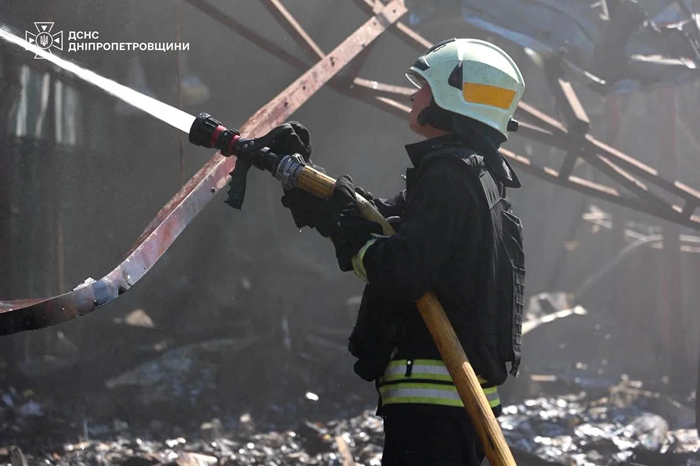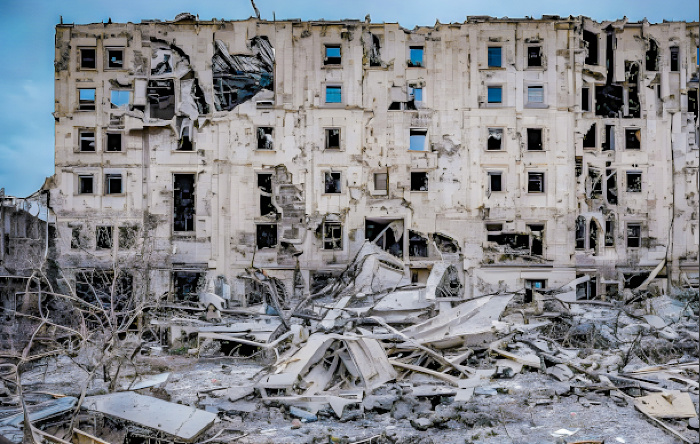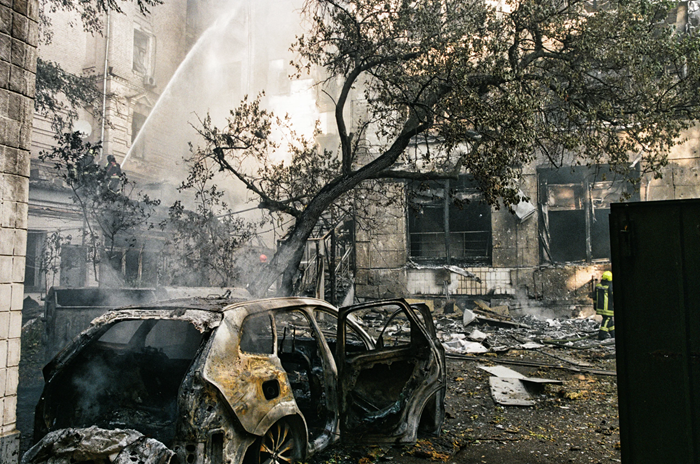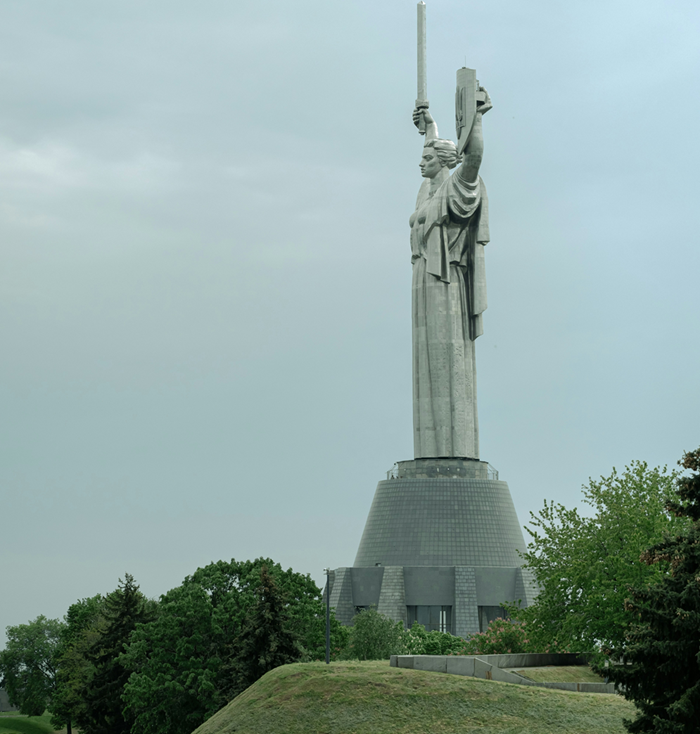
Rodina-Mat: Mother Ukraine, a monumental statue in Kyiv, Ukraine. Courtesy Volodymyr Leush https://unsplash.com/@volodymyr_leush
Grok response:
Here is a list of 10 key recent sources on the Russia-Ukraine war status, ceasefire/armistice prospects, and related diplomacy as of early October 2026:
- Kremlin’s Peskov agrees with Marco Rubio about Ukraine stalemate (The Jerusalem Post / Reuters, published October 9, 2026)
Kremlin spokesman Dmitry Peskov stated Russia agrees the conflict is in a stalemate and emphasized seeking a comprehensive, long-term solution rather than temporary or limited ceasefires. He noted no immediate prospect for a three-way Putin-Zelensky-Trump summit. US envoys were set to meet Ukrainian representatives in Miami to discuss unified proposals.[1] - Exclusive: Putin puts a price on Trump’s Ukraine energy truce — Kyiv fears the cost (Kyiv Independent, published October 9, 2026)
Russia has privately signaled willingness to discuss an energy ceasefire but demands US sanctions relief and links it to a Black Sea ceasefire. Publicly, Moscow rejects sectoral or limited pauses, insisting on a broader settlement. Ukrainian officials are seeking clarity on these demands during upcoming US meetings.[2] - Ukraine–U.S.–Russia: where is the negotiation track headed? (Ukrinform, published September 26, 2026)
Discussions during Zelensky’s UN visit highlighted tracks for energy infrastructure halts, Black Sea security/grain exports, and broader diplomacy involving the US, India, Turkey, and others. Both sides have expressed interest in limited energy and grain ceasefires, though Russia publicly rejects pauses without addressing core issues. Ukraine remains open to reciprocal steps if Russia shows genuine intent.[3] - US, Russia confirm Trump’s latest Ukraine peace push is falling apart (Kyiv Independent, published October 8, 2026)
US Secretary of State Marco Rubio stated no prospect of a negotiated settlement exists currently, citing Russia’s insistence on full control of Donetsk Oblast without further fighting. Moscow has rejected ceasefires and shown little interest in further US-mediated talks. Ukraine continues to propose a ceasefire along current lines.[4] - Ukraine will support energy ceasefire if US ensures Moscow’s intent, Zelenskiy says (Reuters, published September 14, 2026)
Zelensky indicated Ukraine is ready for a mutual halt on energy infrastructure strikes as a potential first de-escalatory step, provided the US can confirm Russia’s genuine willingness for a long-term end to the war. Trump had publicly claimed both sides agreed to such a pause. No broader commitments were detailed at that stage.[5] - Ukraine Working on Five Ceasefire Tracks With Partners, Foreign Ministry Says (Kyiv Post, published October 7, 2026)
Ukraine is advancing five tracks: a full unconditional ceasefire (agreed in principle in March 2025), Black Sea security, food exports, an India-led energy initiative, and a US-backed energy ceasefire. All require Russian agreement, which remains absent. Kyiv views them as realistic and mutually beneficial.[6] - Russia’s Putin rules out ceasefire with Ukraine during speech in Moscow (Al Jazeera, published October 1, 2026)
Putin rejected proposals for a limited ceasefire on long-range strikes, calling them ridiculous and emphasizing Russia’s response to Ukrainian energy facility attacks. He reiterated preference for talks leading to a neutral Ukraine but tied any deal to Russia’s interests. Ongoing Russian strikes on Ukrainian cities continued amid the remarks.[7] - Russia and Ukraine Agree to Three-Day Ceasefire, Trump Says (Wall Street Journal, published May 8, 2026)
A temporary three-day ceasefire (with prisoner exchanges) was announced for early May 2026 around Victory Day, representing one of the short pauses in fighting during the war. Both sides later accused each other of violations as it ended. This was not a full or lasting armistice.[8] - Trump’s Ukraine-Russia peace gambit begins to unravel. Again (Kyiv Independent, published October 5, 2026)
Efforts for a trilateral meeting and limited agreements (energy, Black Sea, POWs) have faced delays and uncertainty, with Moscow showing little urgency. Zelensky expressed support for US-organized meetings but stressed the need for Russian participation. No full ceasefire has materialized from these pushes.[9] - Russia rejects limited Black Sea truce (Hurriyet Daily News, published October 3, 2026)
Moscow dismissed piecemeal Black Sea ceasefire proposals from Turkey and the UN, insisting on a comprehensive settlement while accusing Kyiv of avoiding broader talks. Ukraine has received multiple proposals (US, India, Turkey, Egypt) and favors combining energy and maritime elements. Russia maintains openness to dialogue only on its terms.[10]
Recent context (as of October 9, 2026): No official ceasefire or armistice has been declared between Russia and Ukraine in 2026. Diplomatic efforts center on limited sectoral pauses (primarily energy infrastructure and Black Sea navigation/grain), but Russia repeatedly rejects temporary or fragmented measures in favor of a comprehensive deal addressing its maximalist demands, including territorial control (especially full Donetsk), Ukrainian neutrality, and sanctions relief.[1][4][7] Ukraine has signaled openness to multiple formats, including a full frontline ceasefire along current lines, but awaits Russian reciprocity.[6]
Talks mediated or influenced by the US (under Trump) have produced proposals and planned meetings (e.g., Miami envoys, potential trilateral), yet progress has stalled amid ongoing heavy Russian strikes on Ukrainian energy and civilian targets, Ukrainian long-range responses, and battlefield stalemate perceptions.[2][11] Earlier in 2026, short temporary truces (e.g., three days in May) occurred but did not lead to broader agreements.[8]
Authoritative reporting from outlets like Reuters, Kyiv Independent, and others shows Russia’s public stance hardening against limited pauses while privately engaging on energy issues tied to larger concessions; no major breakthrough or declaration has occurred through early October.
=== Forecast Result ===
Rationale
I interpret this as a new declaration after October 9 and before the end of 2026, rather than an event anywhere in the calendar year. Approximately 83 days remain. A brief or limited bilateral ceasefire could qualify; it need not end the war or be successfully observed.
No declaration remains the most likely outcome, but the broad resolution criteria leave a meaningful chance of Yes.
Evidence weighting
- Strongest negative evidence: The supplied Reuters reporting from October 8 says Moscow rejects limited ceasefires and sees no immediate prospect of a leaders’ summit. Russia’s territorial demands remain incompatible with Ukraine’s position. This is more consequential than the mere existence of negotiations.
- Strongest positive evidence: The Miami discussions offer a concrete diplomatic opportunity, and energy infrastructure or Black Sea arrangements require less agreement than a comprehensive settlement. Ukraine’s willingness is established; Russian acceptance is the missing ingredient.
- Potentially important, but less certain: The October 9 Kyiv Independent report describes private Russian bargaining over an energy ceasefire and sanctions relief. This suggests public rejection might partly be negotiating posture. I give this some weight, but not as much as the recent Reuters reporting.
- Limited additional information: Several supplied articles repeat the same diplomatic developments or Reuters statements. They are not independent confirmations. Continuing strikes demonstrate ongoing hostilities, but do not rule out a subsequent declaration—or a ceasefire that is quickly violated.
- Weak background claims: The assertions about economic collapse and mercenary recruitment do not establish that Russia must accept a truce within this short window. I do not use them as major drivers.
The supplied May ceasefire report conflicts with the summary claiming no ceasefire occurred in 2026. It would not resolve this forward-looking question, but, if accurate, it supports the possibility of another short, largely symbolic agreement.
Key assumptions and uncertainty
These are judgmental scenario estimates, not statistically fitted probabilities:
- Russia’s rejection of limited ceasefires remains substantive through year-end, absent a major diplomatic reset.
I assign a 30% probability that this assumption is wrong. Private bargaining, sanctions concessions, and reciprocal protection of energy infrastructure could produce flexibility. Without a major reset, I estimate a qualifying declaration at 12% if resistance persists, versus 55% if Moscow becomes meaningfully willing to bargain. - No sudden development creates a decisive new opening before the deadline.
I assign a 7% probability that this assumption is wrong. A substantial policy concession, battlefield development, or leadership-level initiative could accelerate agreement. In that favorable-reset scenario, I estimate a 75% chance of a qualifying declaration.
Combining those scenarios gives approximately:
0.93(0.70\times0.12+0.30\times0.55)+0.07\times0.75
=0.284
Most of the Yes probability comes from a limited or brief ceasefire, not a comprehensive armistice. This also avoids treating entrenched hostility as proof that no qualifying announcement can occur.
Timing estimates
Cumulative probabilities of a new qualifying declaration, measured from today:
| Deadline | Probability |
|---|---|
| October 31, 2026 | 9% |
| November 30, 2026 | 19% |
| December 31, 2026 | 28% |
| March 31, 2027 | 45% |
The immediate diplomatic initiative creates some near-term opportunity, but an agreement may require several negotiating rounds. The longer-horizon estimate is more uncertain and is not part of the question’s resolution window.
Data sufficiency: Sufficient
Probability: 28%
End
About The Author