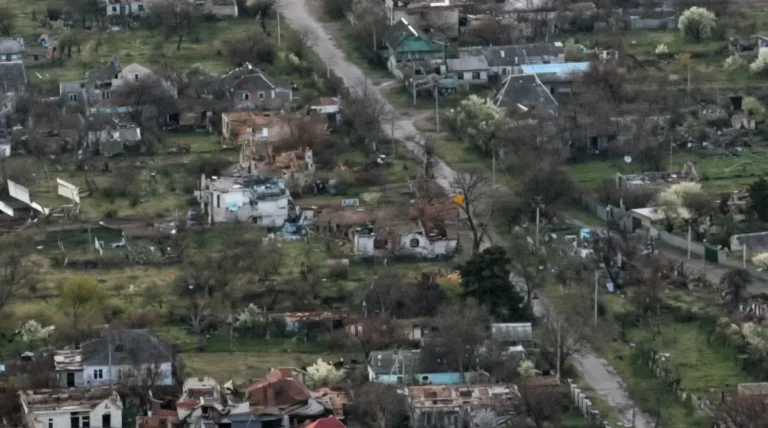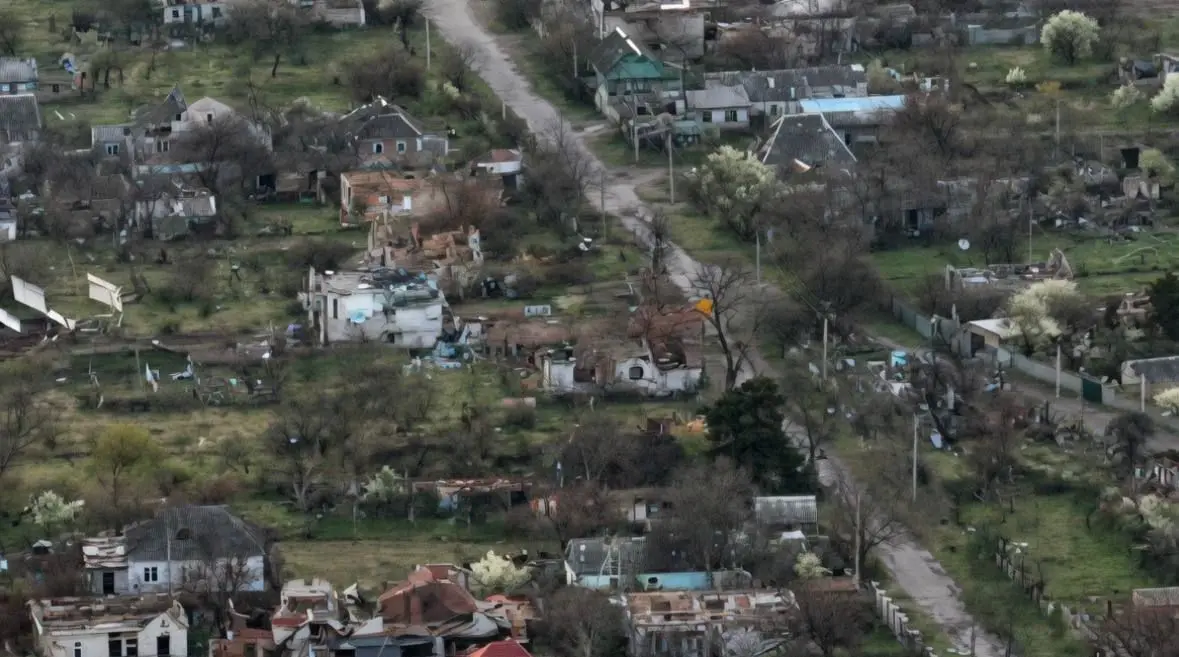
Aerial view of Oleshky, a Russian-occupied town in Ukraine's Kherson Oblast, in a photo published on May 2, 2026. (@UAOleshki2026 / Telegram) Source: "Editorial: The world must force Russia to end mass starvation in occupied Oleshky" https://kyivindependent.com/editorial-the-world-must-force-russia-to-end-mass-starvation-in-occupied-oleshky/
Deepseek Binary response:
The current situation as of mid-September 2026 shows no officially declared nationwide ceasefire or armistice between Russia and Ukraine. However, diplomatic activity has intensified, with US-mediated trilateral talks planned for October 2026 and active discussions around a limited energy-infrastructure ceasefire. Both sides have signaled conditional openness: Ukraine demands US guarantees of Russian sincerity, while Russia calls the idea “good” but attaches conditions. A premature claim by President Trump of an energy truce was denied by both Moscow and Kyiv, indicating the deal is not yet finalized.
The resolution criteria explicitly allow temporary or region-specific ceasefires, not just comprehensive armistices. This broadens the scope significantly. The most plausible path to a “Yes” is a sectoral ceasefire on energy infrastructure, which could be declared before winter. Other paths include a broader freeze along the current front line or a temporary humanitarian pause. However, core territorial disputes (especially Donbas) and deep mutual mistrust remain major obstacles.
Prediction markets for a Russia-Ukraine ceasefire by end of 2026 have shown around 55% implied probability. While this is a strong signal, it may be somewhat inflated by optimism around US diplomatic pressure and the upcoming US midterm elections. Expert assessments remain skeptical of a comprehensive deal, but the question’s allowance for limited ceasefires makes a positive resolution more attainable.
Weighing the active negotiations, the winter energy pressure, the market signal, and the structural obstacles, I estimate the probability of at least one qualifying ceasefire or armistice declaration between today and December 31, 2026, at approximately 50%.
0ata sufficiency: Sufficient
Probability: 50%
Grok response:
10 Key Citations
1. Title: Ukraine and Russia Say There Is No Energy Truce, Despite Trump’s Claims
Description: New York Times report on U.S. President Trump’s announcement of an energy infrastructure ceasefire.
Date: September 15, 2026
Summary: Neither Russia nor Ukraine confirmed agreement to halt strikes on energy targets, contrary to Trump’s social media claim. Kremlin spokesman Peskov called it a “very good idea” but noted limited market impact, while Zelensky conditioned Ukrainian compliance on U.S. guarantees of Russia’s genuine intent to end the war. Strikes continued immediately after the announcement.[1]
2. Title: Ukraine: A new push for peace
Description: UK House of Commons Library briefing on recent U.S. diplomatic efforts.
Date: September 15, 2026
Summary: U.S. Special Envoy Steve Witkoff and Jared Kushner visited Moscow and Kyiv in early September to revive talks after earlier 2026 postponements due to U.S.-Iran conflict. Trilateral talks in the UAE are proposed for October 2026, accepted in principle, though seniority of Russian participants remains unclear. Territory remains the core unresolved issue, with Zelensky noting it requires leader-level resolution.[2]
3. Title: Ukraine, Russia set for new round of US-mediated talks
Description: Deutsche Welle report on upcoming negotiations.
Date: September 13, 2026
Summary: Both sides signaled readiness for October trilateral talks under U.S. mediation following Witkoff/Kushner visits. Putin continues demanding more territory than currently controlled, particularly in Donbas; Ukraine seeks de-escalation on energy and grain instead of a full ceasefire. Last talks in January-February 2026 produced prisoner exchanges but no territorial breakthrough.[3]
4. Title: Peace negotiations in the Russo-Ukrainian war (2022–present)
Description: Wikipedia compilation of 2026 diplomatic activity.
Date: Updated September 16, 2026
Summary: Trilateral meetings occurred in Abu Dhabi (January-February) and Geneva (February), yielding a 314-prisoner exchange but no ceasefire or territorial deal. Russia demanded remaining Donbas, Kherson, and Zaporizhzhia areas plus Ukrainian neutrality. Brief 32-hour Easter truce in April and failed May Victory Day pause occurred amid continued fighting.[4]
5. Title: Russian Offensive Campaign Assessment, September 17, 2026
Description: Institute for the Study of War (ISW) daily battlefield analysis.
Date: September 17, 2026
Summary: Ukraine’s Operation Vivaldi in the Lyman direction disrupted Russian plans to encircle Donetsk’s “Fortress Belt” (Slovyansk-Kramatorsk area) from the north. Ukrainian forces restored elements of tactical maneuver via strikes degrading Russian EW. Russian advances remain slow and limited, with no confirmed major gains that day.[5]
6. Title: Zelensky Says Putin Wants All of Ukraine, Rejects ‘Win-Win’ Peace Concept
Description: Kyiv Post coverage of Zelensky’s CBC interview.
Date: September 16, 2026
Summary: Zelensky argued Putin’s goals extend beyond additional territory to absorbing Ukraine itself, rejecting any “win-win” given casualties. He stated the core problem is changing Putin’s mindset rather than conceding “kilometers.” U.S. envoys were asked not to disclose negotiation details publicly.[6]
7. Title: Putin welcomes Trump’s peace envoys but has no intention of ending the war
Description: Atlantic Council analysis of September 2026 talks.
Date: September 8, 2026
Summary: Putin’s meeting with U.S. envoys produced no progress; he emphasized “root causes” (code for Ukrainian capitulation, demilitarization, and neutrality). Zelensky acknowledged the war may continue into 2027. Russia offered only a limited pause on strikes against capitals during talks, not a broader ceasefire.[7]
8. Title: Is Russia’s ‘war economy’ finally feeling the pinch?
Description: Al Majalla economic overview.
Date: September 1, 2026
Summary: War spending reached ~5.1-7.3% of GDP in 2025 (~$140-210 billion), with 2026 budget showing plateauing but still dominant military outlays. Civilian sectors (metallurgy, autos, construction) contracted while defense grew; social spending share fell. Industrial output growth slowed to 1% projected for 2025.[8]
9. Title: Why a fresh wave of North Korean soldiers may fight in Russia’s war in Ukraine
Description: BBC report on North Korean deployments.
Date: September 13, 2026 (published 14 September)
Summary: Ukraine estimates 8,500 North Korean troops currently in Russia (mostly Kursk rear/border roles, plus drone operators and a missile unit). Zelensky warned of up to 50,000 more; previous ~12,000-16,000 incurred heavy casualties (~3,000 killed). North Korea supplies artillery, missiles, and factory workers, making Russia dependent for sustainment.[9]
10. Title: Russia x Ukraine ceasefire by end of 2026?
Description: Polymarket prediction market page.
Date: Accessed/updated around September 2026
Summary: One active market with ~$2.68 million volume priced an official, mutually agreed halt in military engagement by December 31, 2026, at 55% probability. Rules require public announcement by both sides (humanitarian pauses or informal deals do not count); resolution based on official statements or consensus media reporting. Other related markets showed lower near-term odds.[10]
=== Forecast Result ===
=== Reasoning ===
The relevant baseline is no qualifying nationwide ceasefire or armistice, with active fighting continuing and the main territorial and security disputes unchanged. The remaining window is only about three and a half months, so a comprehensive armistice would require a major political breakthrough rather than gradual trend continuation.
The more plausible positive pathway is a limited but officially declared ceasefire, particularly concerning energy infrastructure or another sector of the conflict. October trilateral talks, winter energy concerns, U.S. pressure, and Russia’s limited battlefield gains create meaningful opportunities for such an agreement. However, the recent “energy truce” claim was not confirmed by either party, and strikes continued; this is evidence that diplomatic signaling has not yet translated into enforceable commitments.
I would assign roughly a 15% chance to a broad, war-wide ceasefire or armistice during the remaining period, and roughly a 30% chance to an officially announced localized or sectoral ceasefire that satisfies the wording. These pathways are not fully independent, yielding an overall estimate near the mid-40s. The prediction market’s reported 55% price is informative, but its apparently stricter requirement for a mutually agreed halt in military engagement makes it somewhat higher than my estimate for this question after accounting for the recent failure of the energy proposal.
The most important assumptions are:
- October talks remain merely exploratory rather than producing a formal commitment. I estimate a substantial, roughly 65% chance that this assumption holds; failure would sharply reduce the forecast.
- Russia continues treating territorial concessions as a prerequisite for a broad ceasefire. The chance that this position materially softens before year-end appears low, around 20–25%; if it does soften, the probability of a qualifying event would rise substantially.
- The resolution criteria accept a formally declared localized or sectoral ceasefire. I regard this interpretation as more likely than not, around 70%, given the background’s explicit inclusion of temporary or geographically limited ceasefires. If major outlets require a broad halt across the front, the forecast would fall considerably.
Conditional on no major battlefield or political shock, the approximate cumulative chances would be 15% by mid-October, 30% by the end of November, and 44% by the resolution date. The final estimate is therefore below even odds, but not close to the low probability appropriate for a full peace agreement, because a narrow official ceasefire remains a realistic late-year outcome.
Data sufficiency: Sufficient
Probability: 44%
End
About The Author