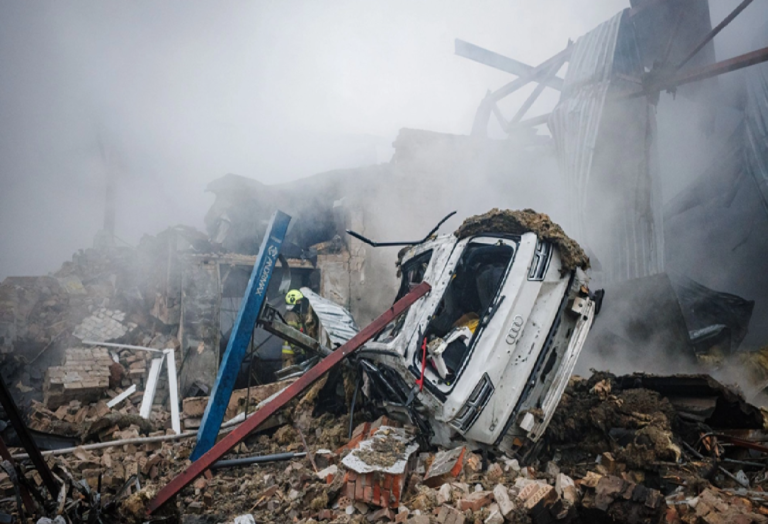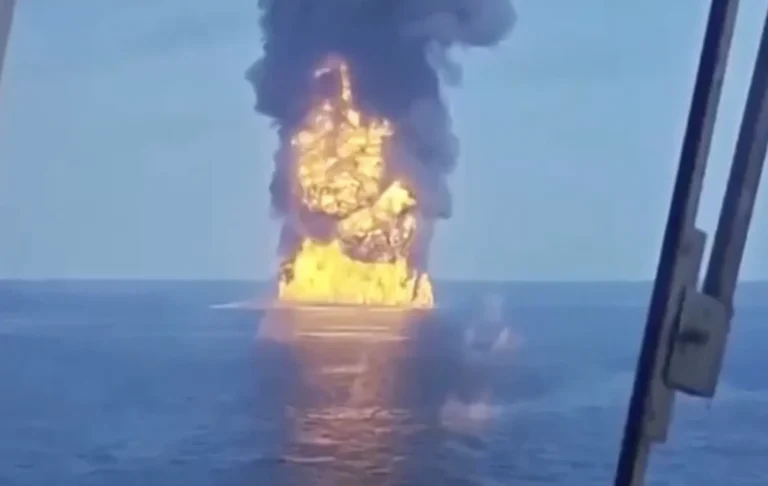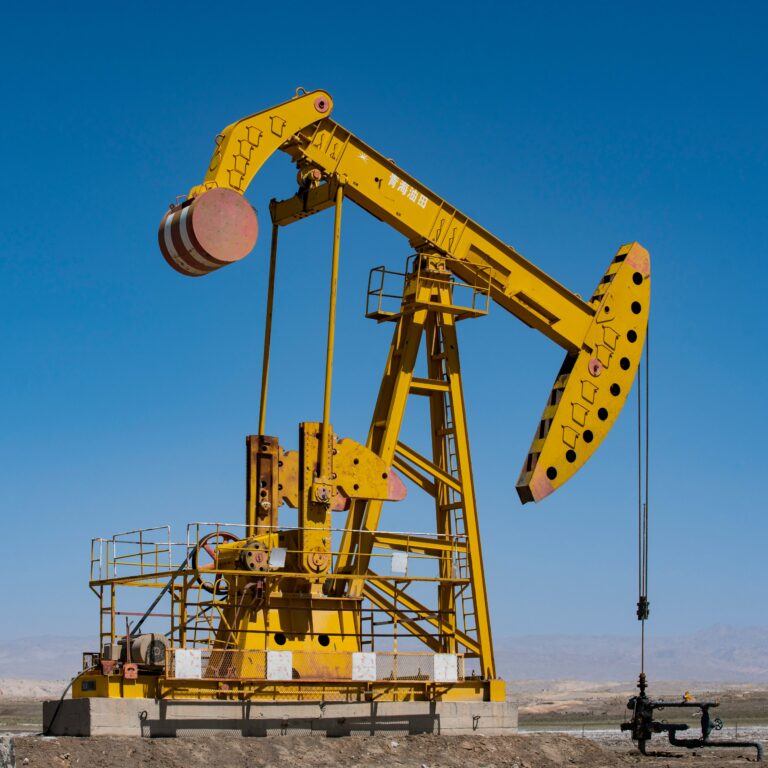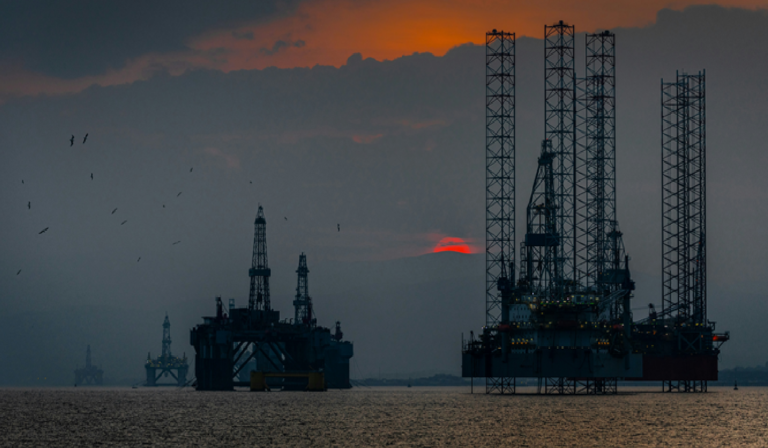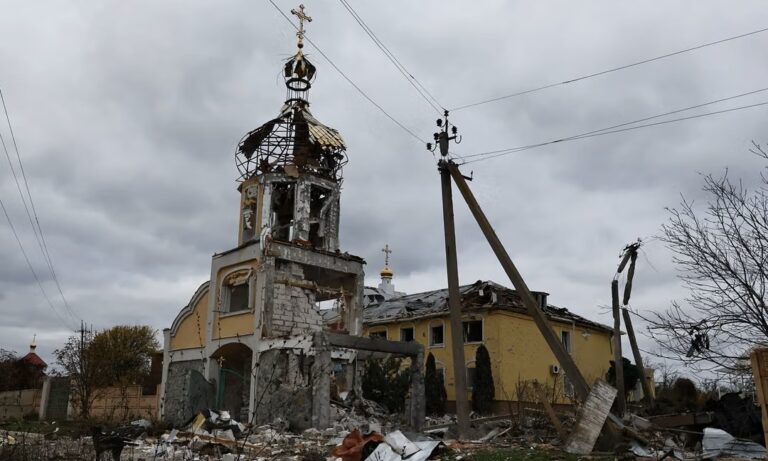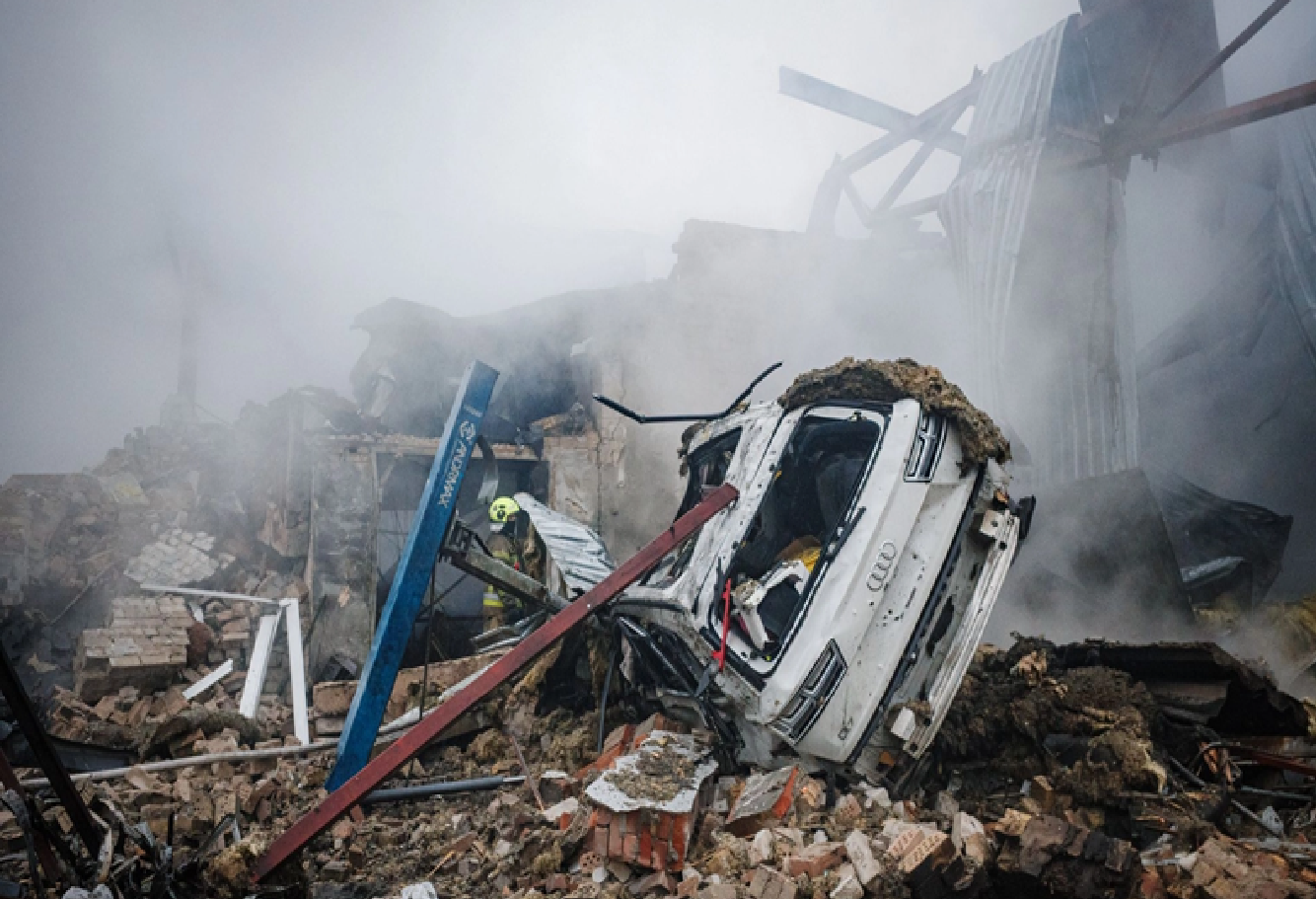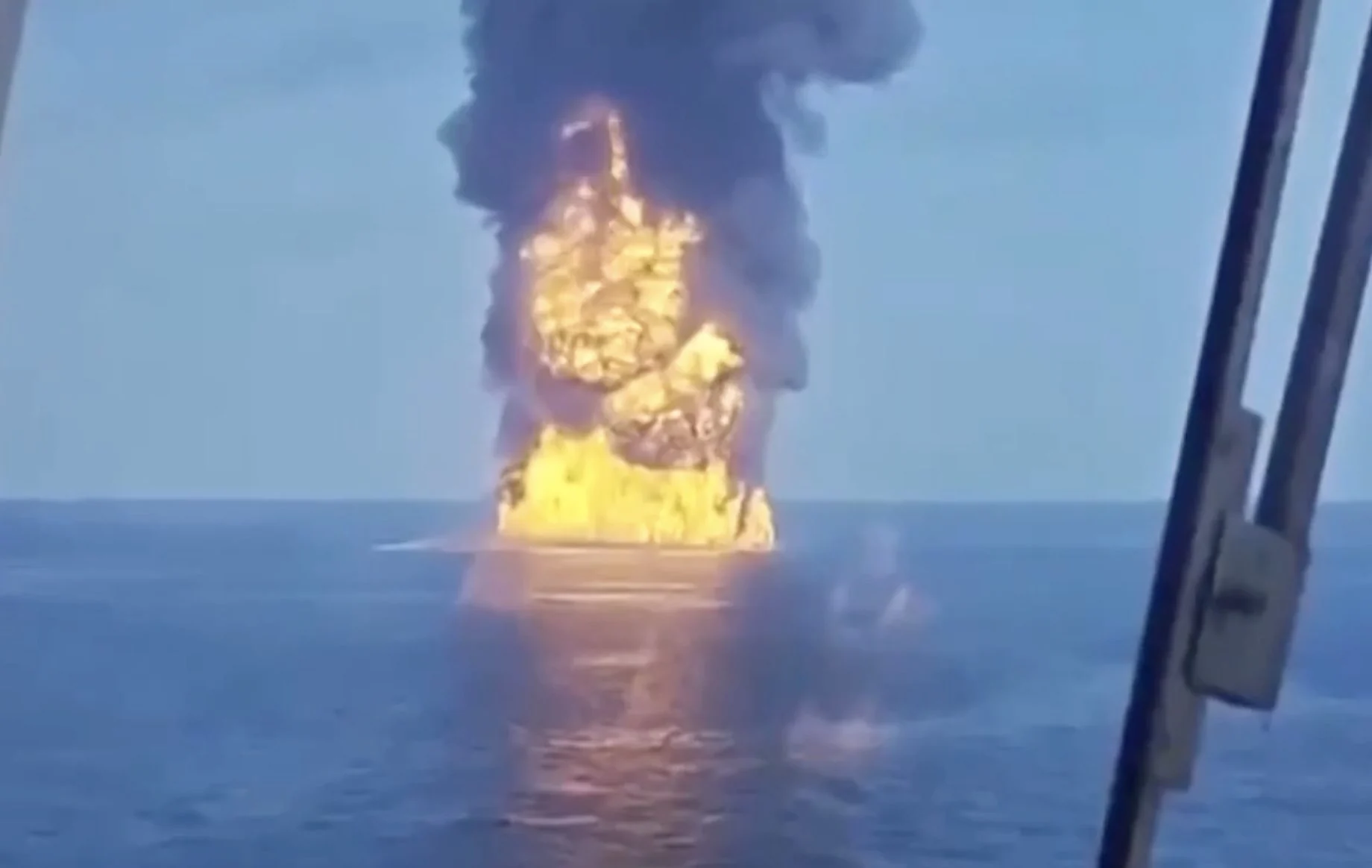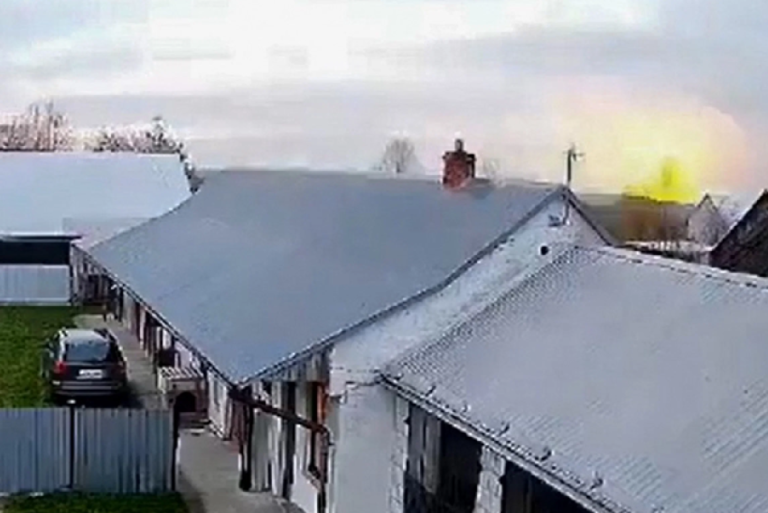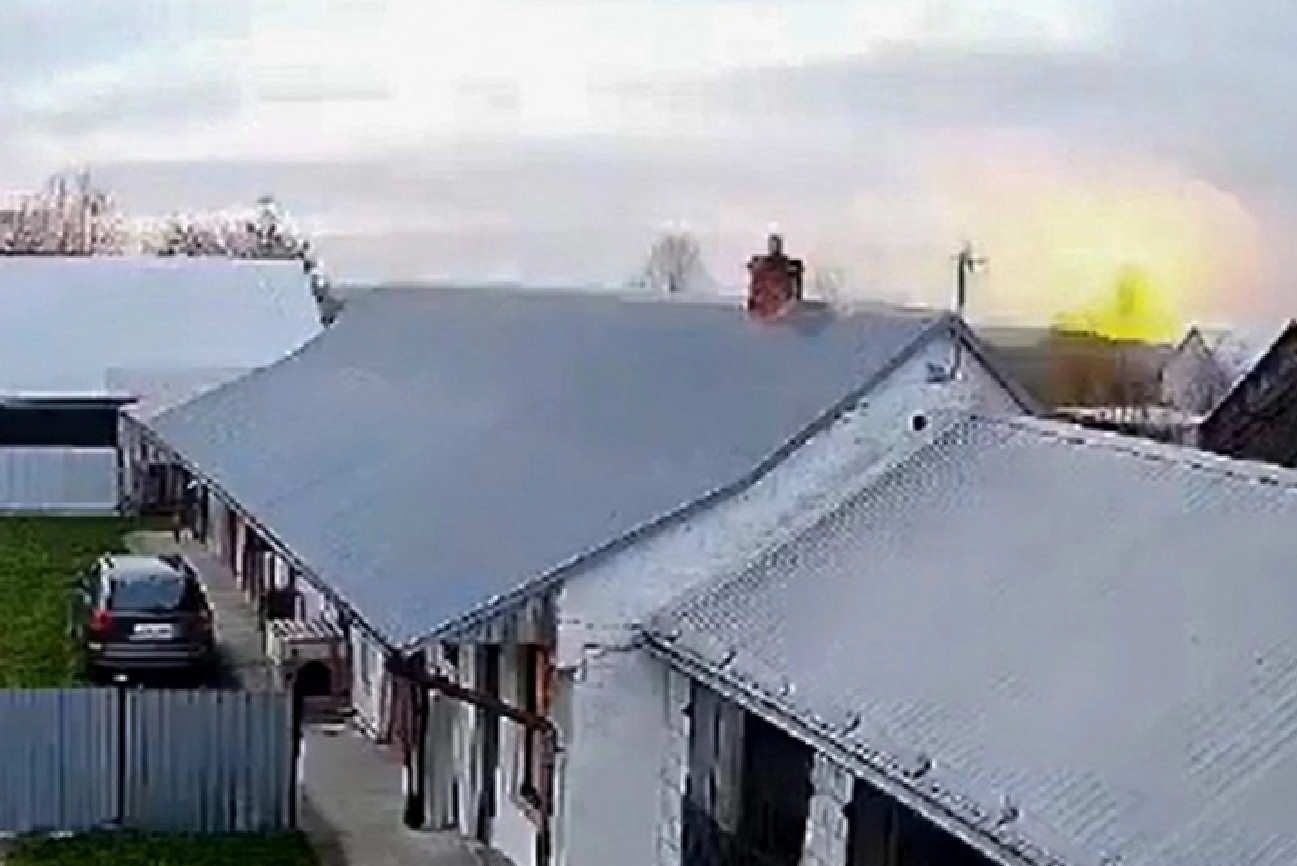
This screen recording of a surveillance camera footage made on early morning on November 20, 2026 and posted on social media platforms shows a flash of an explosion near Chmielek, in Bilgoraj County in eastern Poland, some 300 km from Warsaw. Warsaw on November 20, 2026 said at least one Russian missile hit south-east Poland during Moscow’s attack on Ukraine, adding that authorities were investigating three impact sites, with a drone and a possible second missile also suspected. (Photo by various sources / AFP) Source: https://www.kyivpost.com/post/90721
Perplexity response:
Ten most relevant recent sources
- “Putin rules out Black Sea, energy truce after Crimea bridge strike” — Reuters — published November 19, 2026.
Putin said Russia would no longer consider moratoria on strikes against Black Sea shipping or energy infrastructure after attacks on the Crimea Bridge. He threatened retaliation and stated that “after the strikes on the Crimean Bridge, there will be no agreements.” This is a significant negative update for a partial ceasefire, although it does not formally rule out a broader future ceasefire or armistice. [16] - “Russian Offensive Campaign Assessment, November 18, 2026” — Institute for the Study of War — published November 19, 2026.
ISW assessed that Russian forces suffered their highest monthly losses of the war in October 2026 and averaged 2,269 daily casualties in November. It reported that Russia’s daily casualty rate was exceeding its recruitment rate and that increasingly high financial incentives were failing to produce enough volunteers. These pressures could eventually increase Moscow’s incentive to negotiate, but the report does not indicate that Russia has accepted a ceasefire. [17] - “Ukraine Straddles Diverging Fronts” — Royal United Services Institute — published November 18, 2026.
RUSI reported that Russia was sustaining attacks in the Donbas while failing to achieve its operational objectives despite a major commitment of manpower and artillery. It estimated Russian losses at more than 35,000 personnel per month and said Russia was now losing personnel faster than it was recruiting them. At the same time, Russia was still pursuing battlefield objectives for 2027, suggesting that military exhaustion had not yet translated into a decision to halt the war. [24] - “Europe ready for talks with Russia on ending war in Ukraine, leaders say” — BBC — published November 19, 2026.
European leaders said they were prepared to participate in negotiations aimed at ending the war. The report said Putin had discussed a possible ceasefire in several areas but abandoned the idea after the attack on the Crimea Bridge. This indicates that limited ceasefire concepts remained under discussion, but no ceasefire or armistice had been declared as of the article’s publication. [11] - “Russia–Ukraine–U.S. Talks in Abu Dhabi Yield Little Progress” — Jamestown Foundation — published November 16, 2026.
The November Abu Dhabi talks produced an agreement in principle for a large prisoner exchange. They did not produce a breakthrough on a ceasefire, territorial issues, or postwar security arrangements. The talks therefore created diplomatic contact but not a resolution-qualifying ceasefire or armistice. [2] - “US envoy Kushner says making progress on Ukraine deal” — Reuters — published November 16, 2026.
U.S., Russian, and Ukrainian officials resumed high-level negotiations in Abu Dhabi after a nine-month gap. U.S. envoy Jared Kushner and Steve Witkoff said there had been progress and that Europe would participate in a subsequent round, but Russia had not yet agreed to European participation. The continuation of talks is a positive indicator for a possible later agreement, while the disagreement over the negotiating format shows that the process remained unsettled. [10] - “Russian demands are ‘absurd,’ ceasefire must come first, Kallas says” — The Kyiv Independent — published November 16, 2026.
EU foreign-policy chief Kaja Kallas said negotiations should begin with a ceasefire and described Moscow’s demands as unacceptable. The report said Russia continued to demand Ukrainian territorial concessions in Donbas, which Kyiv rejected. This reflects a persistent sequencing dispute: Ukraine and its European partners want a halt in fighting first, while Russia has resisted a temporary truce without a broader settlement. [8] - “Coalition of the Willing calls on Russia to accept winter energy truce” — The Kyiv Independent — published November 19, 2026.
European governments and Ukraine called for a winter ceasefire covering energy infrastructure and a separate arrangement for safe Black Sea food shipments. The proposal was presented as a confidence-building measure during peace negotiations. Russia had shown no interest in the energy truce, and Putin’s statements on November 19 further weakened the near-term prospects for such a limited ceasefire. [26] - “Ukraine: From War To Peace and Recovery” — Razumkov Centre — published November 16, 2026.
The report said Russia was continuing costly operations aimed at reaching the administrative borders of Donetsk Oblast and that battlefield conditions remained highly damaging. It also described a local, relatively prolonged ceasefire associated with the evacuation of residents from Oleshky near Kherson. That local arrangement may demonstrate that narrow humanitarian pauses are possible, but the report treated expansion to a full-front ceasefire as uncertain rather than imminent. [3] - “Russia’s colossal losses in Ukraine will not push Putin toward peace” — Atlantic Council — published November 17, 2026.
The analysis cited leaked Russian statistical data indicating more than 450,000 Russian military deaths since the full-scale invasion and described Russia’s 2026 territorial gains as minimal. It also reported signs of a shrinking recruitment pool and mounting economic pressure. Its central judgment was that these losses had not yet caused Putin to move toward peace, cautioning against assuming that battlefield or economic deterioration would automatically produce a ceasefire. [18]
Current resolution-relevant status
As of the latest reports available on November 20, 2026, there is no reported Russia–Ukraine ceasefire or armistice covering the entire war. The year has seen diplomatic negotiations, prisoner-exchange agreements, proposals for energy and Black Sea truces, and at least one local humanitarian pause, but the Abu Dhabi talks did not produce a ceasefire and Russia continued rejecting temporary pauses. [2][3][26]
The strongest evidence against a 2026 declaration is Russia’s continued rejection of temporary ceasefires, its insistence on a comprehensive settlement and territorial concessions, and Putin’s November 19 decision to withdraw support for possible energy and Black Sea moratoria. [16][19] The strongest evidence in favor is the resumption of U.S.-mediated negotiations, European readiness to join future talks, Russia’s worsening casualty and recruitment balance, and the existence of limited local ceasefire arrangements. [10][17][24]
Forecasting-relevant assessment
The key distinction is between pressure toward negotiations and an official declaration satisfying the resolution criteria. Current reporting shows meaningful movement toward additional talks and potentially narrower humanitarian agreements, but not toward a signed or officially declared nationwide ceasefire or armistice. A local ceasefire could qualify only if major news outlets report it as an officially declared ceasefire between Russia and Ukraine; the available reporting describes the Oleshky pause as a local humanitarian arrangement rather than a general armistice.
=== Forecast Result ===
=== Reasoning ===
Looking at this question, I need to carefully parse the resolution mechanics given the explicit framing instructions.
Key interpretive issue: The resolution criteria technically states “at any point in 2026,” and the research documents two events that could arguably already satisfy this:
- May 9-11, 2026: A mutually-confirmed 3-day ceasefire with prisoner exchange (Reuters, BBC)
- Oct 27-Nov 1, 2026: The Oleshky localized humanitarian ceasefire (AP, confirmed by both sides)
However, the explicit system instruction states “The event must happen after today [2026-11-20] and before the resolution date [2026-12-31].” Since this question is evidently still being asked as a live, unresolved question despite these earlier events having occurred, I interpret this as requiring a new ceasefire/armistice declaration between now and year-end, rather than retroactive credit for earlier 2026 events.
Forward-looking assessment (Nov 20 – Dec 31, 2026):
Negative signals:
- Putin explicitly rejected further truces (Black Sea, energy) on Nov 19, 2026, following the Crimea Bridge strike — a very recent hardening
- Abu Dhabi talks (mid-Nov) produced no ceasefire breakthrough, only a prisoner-exchange agreement in principle
- Russia continues demanding full Donbas; Ukraine refuses — core sequencing dispute unresolved
- NYT/Western intelligence assessments suggest Putin intends to fight through at least spring 2027
- European spy chiefs and analysts remain skeptical of near-term deals
Positive signals:
- Precedent exists: two brief ceasefires already occurred in 2026, showing structural willingness under US (Trump administration) pressure
- Diplomatic engagement continuing (Kushner/Witkoff reporting “progress”)
- Coalition of the Willing pushing for winter energy truce
- Russian battlefield/manpower attrition is worsening, creating long-term pressure (though not necessarily near-term)
- Historical/symbolic timing (Christmas/New Year) sometimes prompts humanitarian gestures
Base rate calculation: Two ceasefire-type events occurred in ~10.5 months of 2026 (~0.19/month). For the remaining ~6 weeks, naive Poisson expectation suggests ~20-25% probability of another occurring. Adjusting downward for Putin’s very recent (Nov 19) explicit rejection of truces, and the entrenched disagreement over Donbas as a precondition, I lower this somewhat.
Key uncertain assumptions:
- Whether judges will count a narrow/local humanitarian pause (like Oleshky) as satisfying “ceasefire” (~70% likely yes, given background explicitly allows regional/temporary ceasefires)
- Whether Putin’s Nov 19 rejection is a durable policy shift or a negotiating tactic that could reverse quickly (~50/50)
- Whether the question is truly forward-looking only, or whether past 2026 events already secured YES status (if the latter, probability would be ~95%+)
Given the dominant recent signal (Putin hardening his stance just days before the forecast date) combined with continuing but inconclusive diplomacy, and short remaining window, I estimate moderate-low probability for a new qualifying declaration in the final 6 weeks of 2026.
Data sufficiency: Sufficient
Probability: 16%
End
About The Author