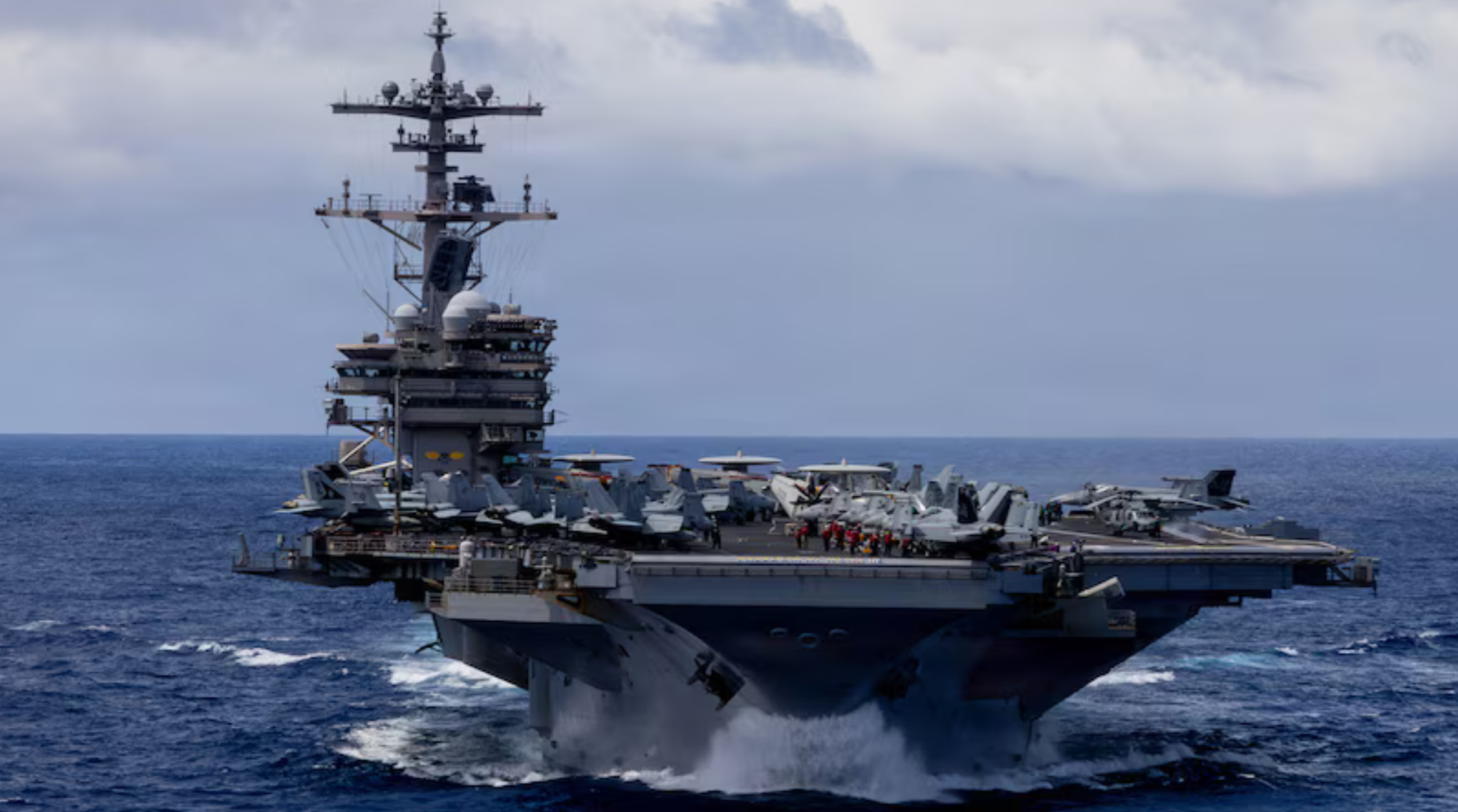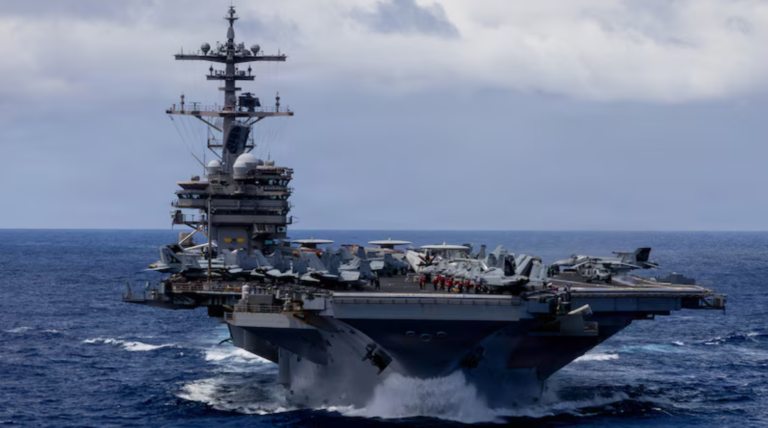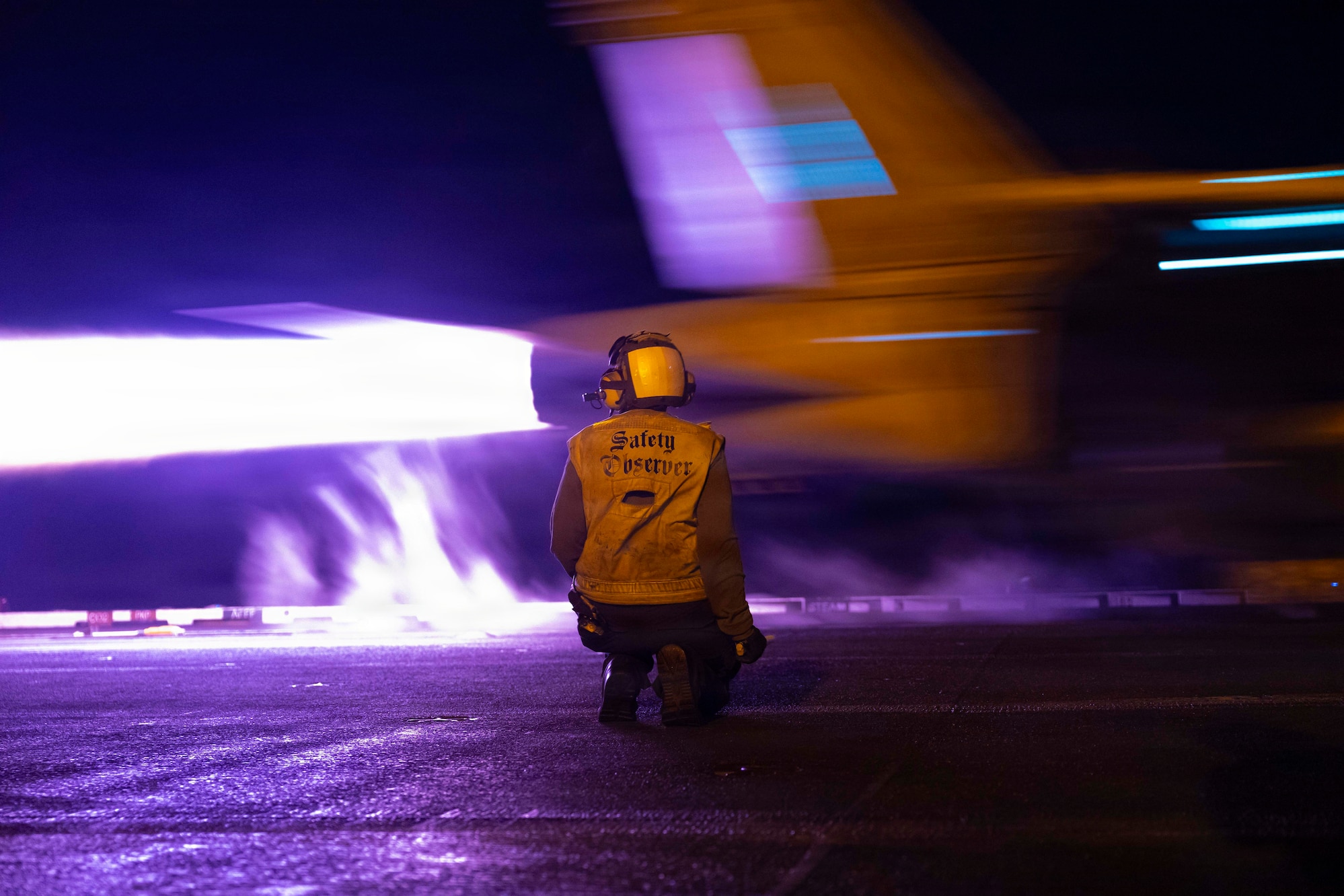
USS George H.W. Bush (CVN 77) Conducts Night Flight Operations. A U.S. Sailor conducts flight operations aboard Nimitz-class aircraft carrier USS George H.W. Bush (CVN 77), July 29, 2026. George H.W. Bush is deployed to the U.S. 5th Fleet area of operations to support maritime security and stability in the Middle East. (U.S. Central Command photo)
Grok response:
10 Citations
- Japan’s Mitsui OSK Sees Risk to Hormuz Shipping Through Year-End (gCaptain, September 3, 2026): The CEO of Mitsui OSK Lines stated it is difficult to see operations resuming in any form by the end of the year due to intensified US-Iran clashes. Japanese shipowners have largely avoided the region, and previous assumptions of phased resumption from October now appear delayed. This highlights ongoing high risk for tankers even as some oil transits continue at reduced levels.
- Qatari, UAE LNG Cargoes Transferred Via Ship-to-Ship Outside Strait of Hormuz (gCaptain / Reuters, September 2, 2026): Three LNG cargoes from Qatar and UAE were transferred via STS outside the strait in August for delivery to India and Japan, as direct transits remain disrupted. This unusual workaround for LNG (unlike oil) follows attacks and the collapse of prior ceasefires. It underscores that exporters are using alternative methods because visible Hormuz transits for LNG have been at a standstill.
- No LNG tankers cross Strait of Hormuz since July 11 amid escalating US-Iran conflict (Kpler, September 2, 2026): No LNG carriers have transited since the Adnoc-operated Al Hamra on July 11, following Iranian attacks on vessels. 21 LNG carriers remain inside the Gulf, with traffic recovering briefly in June (40 transits) but then stalling. This data shows LNG flows, critical for ~20% of global supply from Qatar/UAE, remain severely constrained.
- Global LNG and natural gas prices surge as US and Iran resume hot war (Hellenic Shipping News, October 8, 2026): Kpler Insight revised its forecast to a prolonged conflict, expecting Strait traffic to remain severely constrained through the rest of 2026 and recover in Q1 2027. Qatar Ras Laffan loadings slowed, UAE exports halted, and global LNG supply forecasts were cut. This indicates no near-term unimpeded LNG traffic as hostilities resumed.
- Strait of Hormuz Trade Tracker (WTO Data Lab, June 29, 2026): After a June 17 US-Iran MoU, shipping entered a cautious restart, but LNG shipments showed no meaningful progress with the 7-day moving average near zero and no AIS-traceable outbound LNG transits. Crude saw limited restart while LNG remained at a standstill. The MoU eased some pressure but did not restore confidence or regular LNG flows.
- The Battle for Hormuz Will Reshape the Global LNG Market (CSIS, August 5, 2026): The June 17 MoU collapsed in July with Iranian targeting of shipping; Iran seeks control/fees while the US wants it free/open. Qatar exported ~40 loaded tankers in June during a window but attacks can close it quickly, with crossings down 70% from the truce period. Prolonged disruption could prevent Qatar from meeting even reduced 2026 export targets.
- Hormuz Disruption to Stall 2026 LNG Trade, Demand to Rise by 2050 (gCaptain / Reuters / Shell, June 30, 2026): Shell said Hormuz disruptions could keep global LNG trade flat in 2026 (shutting in ~20% of monthly supply) if flows do not normalize in three months, with growth resuming in 2027. Asian imports were down ~4% in H1 2026. Market resilience from other supplies limited price spikes compared to 2022.
- More LNG Tankers Passing Through Hormuz Since Truce (Natural Gas Intel, June 25, 2026): Vessel crossings rose after the June 17 deal (241 ships in 8 days vs. 90 prior), including 13 LNG vessels (some loaded from Qatar/UAE). Daily traffic peaked at 55 ships, still well below pre-war 100+ per day, with more vessels transiting without going dark. Recovery was tentative and LNG lagged other cargoes due to insurance/risk.
- Qatar Sends First LNG Shipment Through Hormuz in Three Weeks (gCaptain / Bloomberg, July 30, 2026): The Al Areesh transited with AIS on after a July 7 attack paused journeys, signaling possible resumption of deliveries. QatarEnergy had paused after the Al Rekayyat strike. This was a limited, isolated movement amid ongoing tensions rather than normalized traffic.
- Middle East Producers Push on With Oil and LNG Loadings Despite Ship Attacks (gCaptain / Reuters, June 29, 2026): Loadings continued despite weekend attacks straining the interim deal, with some ballast LNG tankers appearing and loaded ones exiting. A US official noted agreement to halt hostilities and renew talks. LNG remained more cautious than oil, with operators using dark sailing or approved routes.
The Strait of Hormuz, which handled about 20% of global LNG trade pre-war (mostly Qatar and UAE exports to Asia), saw LNG traffic effectively halted after the US-Israeli strikes on Iran began around February 28, 2026. Iran responded by restricting or closing the waterway, leading to force majeure declarations, damaged infrastructure at Ras Laffan (some trains requiring years to repair), and a sharp drop in Qatari/UAE LNG exports. Pre-war daily transits were often 100-138 vessels; they fell dramatically, with LNG particularly affected due to high insurance costs, vessel value, and safety concerns.[1]
Limited, sporadic LNG movements occurred via “dark” (AIS-off) voyages, Iran-approved northern routes hugging the coast, or during brief ceasefire windows (e.g., June 17 MoU leading to some ballast tankers returning and a handful of laden transits). However, these were far below normal, often followed by attacks that reversed progress. By July, after further strikes (including on the Al Rekayyat), LNG transits stopped; the last known was July 11. Exporters turned to rare ship-to-ship (STS) transfers outside the strait in August to move cargoes. As of early September 2026, 21 LNG carriers were still inside the Gulf, and Kpler data showed no new transits.[2]
The conflict has featured repeated MoUs, ceasefires, and collapses, with tit-for-tat strikes, mines in lanes, dual (Iranian vs. US/Omani) transit regimes, and debates over governance/fees. Oil transits have been more resilient at times (e.g., millions of barrels daily in some periods), but LNG has lagged significantly. Shipping executives, such as Mitsui OSK’s CEO in early September, assessed that resumption of operations in any form by year-end 2026 was unlikely due to elevated risks. Kpler’s October update similarly projected severe constraints through the remainder of 2026, with recovery into Q1 2027. Shell noted in June that even a three-month normalization would leave 2026 LNG trade flat.[3]
gCaptain, the designated resolution source, has extensively covered these developments—including first limited Qatar shipments, dark voyages, STS workarounds, attacks, and expert warnings of prolonged disruption—but has not reported de facto unimpeded LNG traffic (i.e., no longer halted or severely restricted). Recent articles emphasize ongoing attacks, workarounds, and year-end risks rather than normalization. Analysts from CSIS, Oxford Energy, Wood Mackenzie, and others have modeled scenarios ranging from quicker reopenings (now missed) to extended disruption into 2027, with infrastructure damage adding lasting constraints. Prediction markets earlier in the summer priced low odds for near-term normalization, consistent with the pattern of fragile truces. Overall, as of the latest available reports (into October 2026), LNG traffic remains severely restricted with no clear path to unimpeded status by year-end, though isolated movements and diplomatic efforts continue.
=== Forecast Result ===
The current evidence strongly favors a No resolution. LNG traffic has been effectively absent since July, exporters continue force majeure and cancellations into October and November, Iran is expanding vessel blacklists, and shipowners reportedly do not expect even limited operations to resume by year-end. LNG carriers are also more risk-sensitive than oil tankers because of their high value, cargo hazards, insurance exposure, and limited ability to use workarounds.
There are roughly four months remaining, so a diplomatic or military breakthrough is still possible. A ceasefire could produce a rapid increase in transits, as occurred briefly after the June agreement. However, “de facto unimpeded” is a higher bar than isolated voyages or dark sailing: it likely requires routine international LNG traffic without severe restriction. Damage to infrastructure and the persistence of contractual force majeure make normalization by December substantially less likely than a temporary or partial reopening.
The main assumptions that could change the forecast are:
- No durable ceasefire or settlement occurs: I assign about a 20% chance that this assumption fails. A sustained agreement could quickly allow escorted or otherwise regular LNG movements.
- LNG-specific risk remains materially higher than oil-shipping risk: about a 15% chance this is wrong. If mine clearance, naval guarantees, or insurance arrangements make LNG passage acceptable, traffic could resume faster than current exporter behavior implies.
- gCaptain applies the criterion strictly to routine, unrestricted traffic: about a 15% chance this is wrong. A brief period of multiple direct transits might be described favorably even if volumes remained below pre-war norms, but the stated criterion says severely restricted traffic should not qualify.
Balancing the possibility of a sudden diplomatic reversal against the very short remaining window and the unusually severe LNG-specific disruption, I put the chance of a qualifying resolution in the high-single digits.
Probability: 8%
End
About The Author