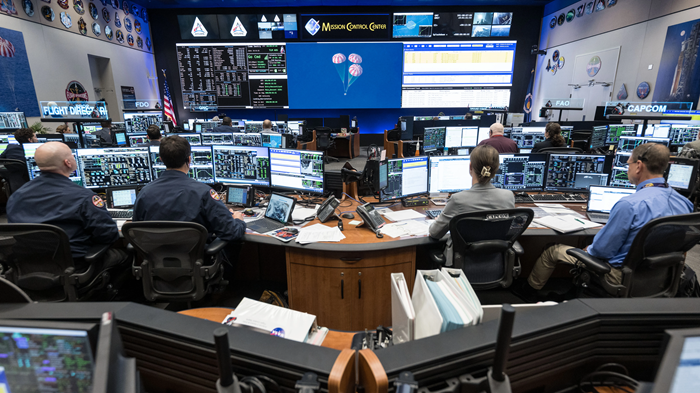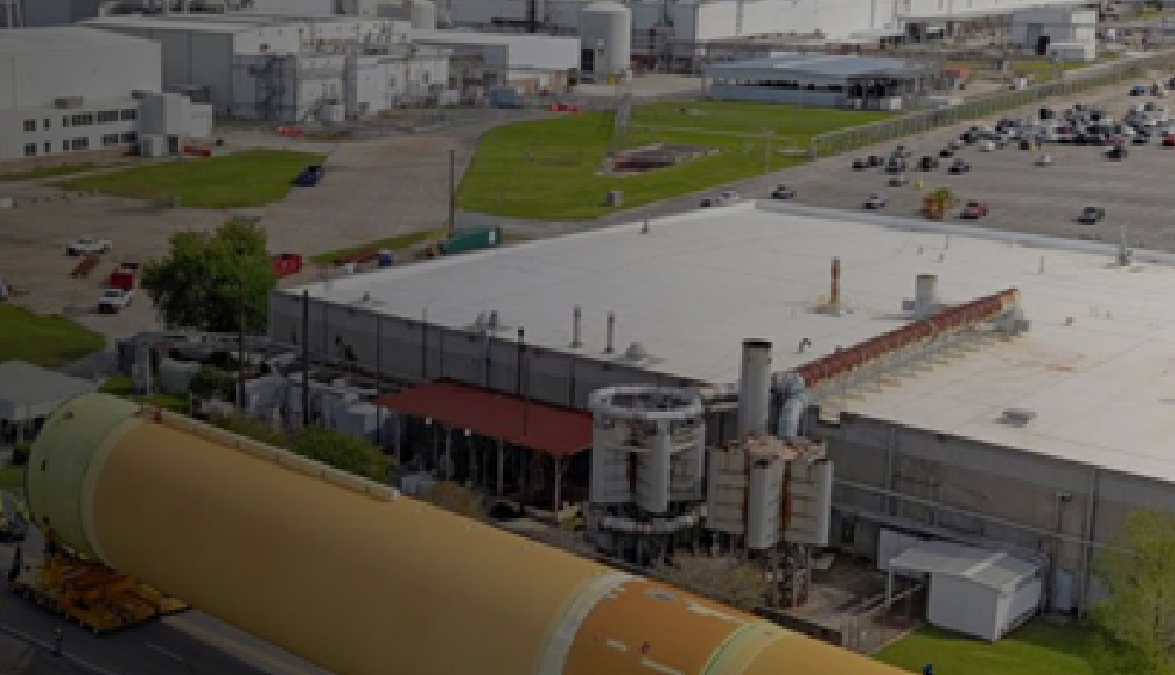
Part of an Artemis launch system. Source: https://www.nasa.gov/missions/artemis/artemis-3/nasa-outlines-preliminary-artemis-iii-mission-plans/
Obtaining outside data.
Checking internet sources, using keywords: Artemis III orbital demonstration 2027
News from various sources:
The content provides several critical updates and plans related to NASA’s Artemis III mission, slated for late 2027, and its role in preparing for future lunar landings:
Mission Overview:
- The Artemis III mission, rather than attempting a lunar landing, will focus on systems integration in low Earth orbit. This involves testing docking operations crucial for future moon missions.
Rocket and Hardware Developments:
- NASA is progressing with the assembly of the Artemis III spaceflight hardware at Kennedy Space Center. Key components like the solid rocket boosters, which are vital for providing lift-off thrust, have been delivered and are to be assembled.
Partnerships with SpaceX and Blue Origin:
- NASA has contracted SpaceX and Blue Origin for the construction of lunar landers. Artemis III will serve as a testing ground for these landers in terms of rendezvous and docking capabilities.
- SpaceX’s Starship will be involved, but it will not carry a crew cabin, whereas Blue Origin’s Blue Moon can support a test crew cabin experience.
Challenges and Technological Milestones:
- Control of integrated spacecraft during docking maneuvers will switch between the Orion spacecraft and the landers, a demanding operational challenge that has not been attempted previously in crewed missions.
- This handoff is considered a critical step towards future missions, including Artemis IV, which aims to achieve the lunar surface landing in 2028.
Current Issues and Risks:
- There are delays and technical risks associated with the landers which are necessary for the mission.
- A significant challenge is the recent explosion of a Blue Origin rocket at its launch pad, impacting timelines and requiring repairs before testings can continue.
Strategic Importance:
- The Artemis III mission will focus on testing and validation to ensure hardware and software readiness for future lunar landings, drawing a parallel to the Apollo 9 mission, which prepared hardware for the subsequent Apollo lunar landings.
- Testing includes the integration of NASA’s Space Launch System and Orion’s performance in space, aiming to ensure the safe rendezvous, docking, and operation of equipment critical to lunar landings.
These updates highlight Artemis III’s pivotal role in NASA’s broader Artemis lunar exploration goals, emphasizing the need to resolve current technological and logistical hurdles for the eventual successful execution of a lunar landing on Artemis IV. The facts largely check out as correct and are relevant and important to assessing the likelihood of Artemis III’s success by the end of 2027. Facts related to technical challenges, the readiness of landers, and the integration of hardware and software play crucial roles in determining whether the mission will succeed.
Fact-checked summary:
The Artemis III mission, scheduled to occur by the end of 2027, focuses critically on systems integration in low Earth orbit rather than attempting a lunar landing. This mission will serve as a test and validation for hardware and software crucial for future lunar landings, echoing the preparatory role of Apollo 9. NASA is actively assembling spaceflight hardware, including solid rocket boosters, and the docking maneuvers will require crucial handoffs between the Orion spacecraft and landers, which are anticipated systems. Both SpaceX and Blue Origin are contracted for constructing lunar landers, with the mission serving as a testing ground for the landers’ rendezvous and docking capabilities. SpaceX’s Starship, which will be involved, will not carry a crew cabin for this mission, while Blue Origin’s Blue Moon lander can test a crew cabin experience. However, there are significant delays and technical risks associated with the landers needed for Artemis III, and a recent Blue
Origin rocket explosion presents additional challenges impacting timelines. Integration of NASA’s Space Launch System and Orion’s performance in space will also be tested, and a successful demonstration is significant to achieving Artemis IV’s goal of a lunar surface landing in 2028.
OpenAI gives a base rate of 0.5 (50%)
The question difficulty is rated 7 (0 to 10)
Historical weighted factors include:
Historical delays in NASA mission timelines, 0.4
Past successes in testing hardware integration, 0.3
Performance delays in SpaceX and Blue Origin projects, 0.3
A Bayesian calculation could be performed as follows:
Using historical delays (P(A) = 0.6) and successful hardware integration (P(B|A) = 0.7), unanticipated events reduce likelihood (P(~A) = 0.4), combining for a Bayesian likelihood of 0.54.
Bayesian base rate: 0.54 (54%)
Sufficient news to provide a good forecast? 1 (0 or 1)
News is relevant, topical and unbiased? 1 (0 or 1)
Question classification: scenario_based_forecast
Expected time (days) until question close: 498 (Carolyn‘s note: Close, but the true number is 500.)
The following were considered in order to produce this base rate:
The base rate considers past NASA mission timelines and hardware integration successes. Although technical risks are present, both NASA and partners have historically overcome challenges.
Ideally, the news feed would contain the following sorts of information for a better forecast:
Additional information on current project statuses, resource allocation, and updates on addressing known issues would be useful in refining the forecast.
Some potential divergent considerations that might affect the base rate:
Any major technological failures or additional delays with contractors can significantly affect the likelihood. Political or funding shifts could also impact the mission timeline.
The following chain of events are necessary for the question to resolve positively:
- SpaceX develops and tests the Starship without crew cabin Highly likely
- Blue Origin successfully tests the Blue Moon lander with crew cabin Moderately likely
- NASA completes assembly and testing of spaceflight hardware High
- Successful integration of NASA’s Space Launch System and Orion Moderately likely
- Successful rendezvous and docking maneuver tests Moderately likely
- Resolution of technical issues and delays Moderately likely
Querying Claude (AI predicts: 0.08 – confidence: 4)
Querying OpenAI (AI predicts: 0.55 – confidence: 6)
Guide to Jeremy Lichtman’s Multi-AI Oracle Reports
Question Type: Binary
Median from LLMs: 0.32
Base rate: 0.5 (from OpenAI)
SD: 0.24
MAPD: 0
Confidence: 5
Conf Mode: Low
Mellers: 0.24
Reverse Mellers: 0.38
Theory of Mind: 0.325 (What did the LLMs think other LLMs predicted?)
Beta Distribution: 0.83
Close Type: B (B = cautious # closer to 50%; A/C = closer to extremes)
LLM responses: 2
Model value: 0.3 (3%)
The consensus among the AIs is that the success of the Artemis III orbital demonstration by the end of 2027 appears unlikely due to several challenges. These include the significant restructuring from its original lunar landing objective, substantial delays in the development of the Blue Moon lander following a recent Blue Origin rocket explosion, and ongoing issues with SpaceX’s Starship and NASA’s SLS/Orion integration. Historical delays and NASA’s slow bureaucratic processes contribute to a low probability of meeting the timeline, estimated at around 0.08 (8%) when considering all critical dependencies such as lander readiness and docking tests. Nonetheless, some argue that a scaled-back mission could accelerate progress, and external factors like political pressure or early successes in prior missions could improve the chances of success modestly. There is a risk that the current forecast may underestimate the impact of recent technical failures and potential political or funding disruptions. Despite active hardware assembly and past triumphs, the timeline remains challenging given the moderate risks and complexities involved.
Runtime: 125 seconds.
About The Author