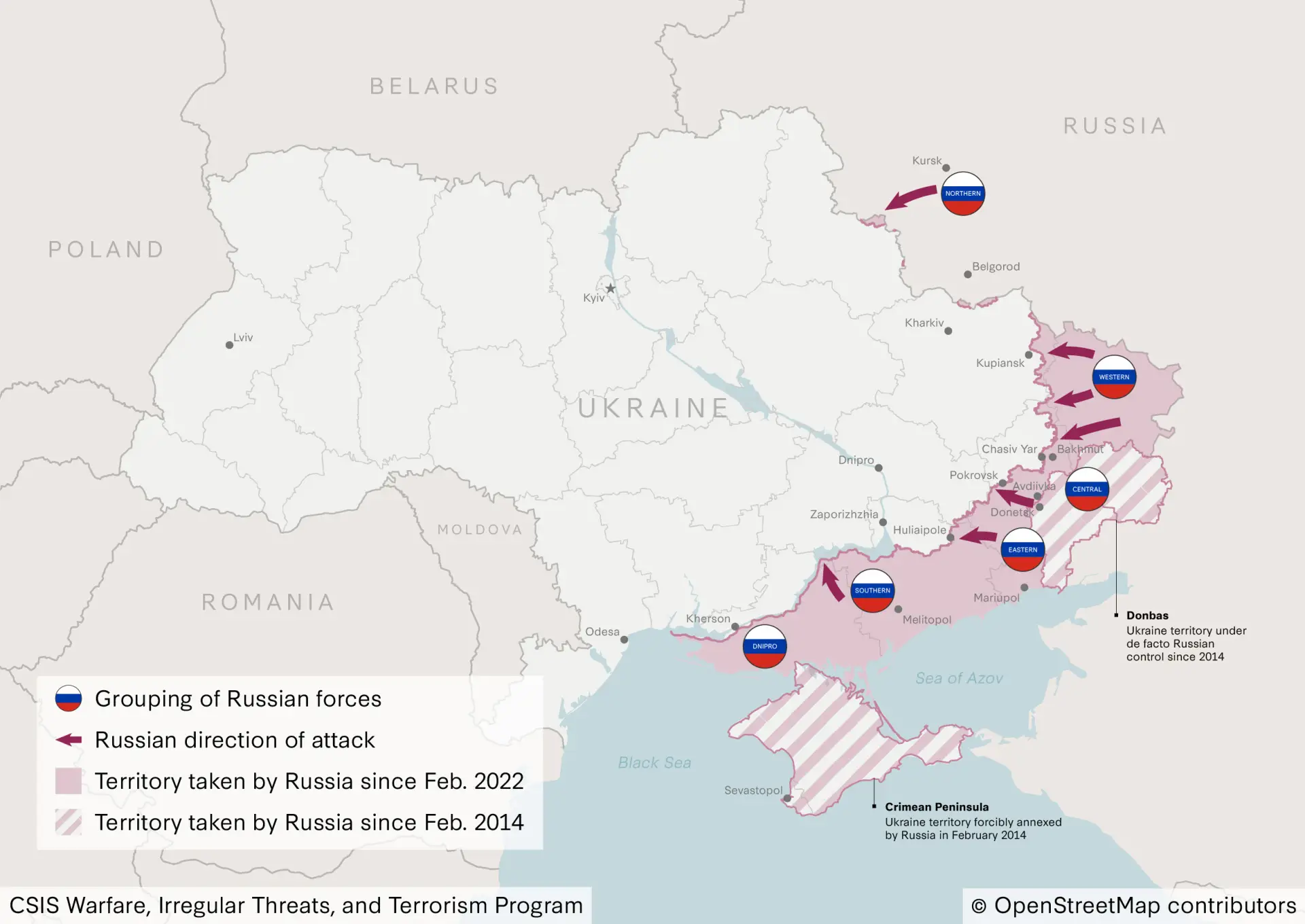
https://www.csis.org/analysis/russias-grinding-war-ukraine
Jeremy Lichtman‘s Multi-AI Oracle forecasts 25%
Obtaining outside data.
Checking internet sources, using keywords: Ukraine ceasefire 2026
News from various sources:
OpenAI gives a base rate of 0.15 (15%)
The question difficulty is rated 8 (0 to 10)
Historical weighted factors include:
Recent peace negotiations, 0.2
Ceasefires in similar conflicts, 0.3
International mediation efforts, 0.2
Current geopolitical tensions, 0.3
A Bayesian calculation could be performed as follows:
The historical factors were weighted, and a prior probability of 0.1 was established due to ongoing conflict and lack of active ceasefire patterns. Recent international focus increases the probability by a weight of 0.15, giving a result of 0.15.
Bayesian base rate: 0.15 (15%)
Sufficient news to provide a good forecast? 0 (0 or 1)
News is relevant, topical and unbiased? 0 (0 or 1)
Question classification: scenario_based_forecast
Expected time (days) until question close: 365
The following were considered in order to produce this base rate:
The base rate considers the historical frequency of ceasefires in similar conflicts, which tend to be rare, and current geopolitical tensions that are not supportive of cessation. However, ongoing international efforts for mediation could impact the dynamics.
Ideally, the news feed would contain the following sorts of information for a better forecast:
Additional detailed information on the progress of peace talks, statements from key international mediators, and on-the-ground military dynamics would be helpful.
Some potential divergent considerations that might affect the base rate:
Unexpected political changes within the involved countries or an unforeseen increase in international pressure could lead to a resolution different from the base rate.
The following chain of events are necessary for the question to resolve positively:
Successful negotiations between Ukraine and Russia improbable – A significant reduction in military activity from both sides improbable – International pressure leading to a consensus for peace possible – Internal political changes in Ukraine and Russia favoring peace possible
Querying Claude (AI predicts: 0.28 – confidence: 4)
Querying Mistral (AI predicts: 0.25 – confidence: 5)
Querying OpenAI (AI predicts: 0.2 – confidence: 5)
Explanations of the below statistical measures here —>
Question Type: Binary
Median from LLMs: 0.25
Base rate: 0.15 (from OpenAI)
SD: 0.03
MAPD: 0.053333333333333
Confidence: 5
Conf Mode: Normal
Mellers: 0.17
Reverse Mellers: 0.33
Theory of Mind: 0.3 (What did the LLMs think other LLMs predicted?)
Beta Distribution: 0.001
Close Type: B (B = cautious # closer to 50%; A/C = closer to extremes)
LLM responses: 3
Model value: 25%
The various AI analyses converge on the notion that while the historical base rate of achieving ceasefires in prolonged conflicts is low, at approximately 15%, the prediction of a 25-28% likelihood for a ceasefire in Ukraine by the end of 2026 is influenced by several dynamic factors. These include international mediation efforts and potential war fatigue, both of which could motivate negotiations. However, barriers such as Ukraine’s refusal to cede territory, Russia’s demands for territorial gains, and mutual distrust challenge this outlook. The unpredictable political landscape, featuring Donald Trump’s possible influence and the impending U.S. presidential election, introduces additional uncertainty. Potential invalidations of this prediction include military breakthroughs, leadership changes, unexpected geopolitical shifts, or misinformation that might alter negotiation trajectories. The consensus is that while there is a possibility for change within the window of time
remaining, the situation remains fraught with complexity and uncertainty.
About The Author