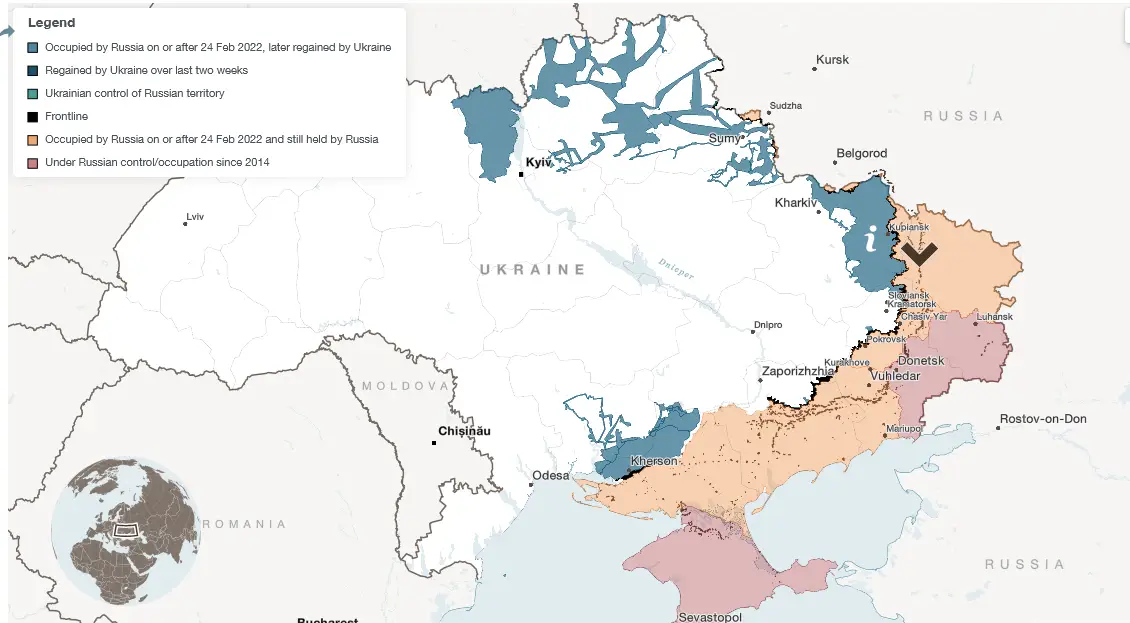
Data for this map is taken from the Ukrainian OSINT DeepState project, a live map of Russian and Ukrainian military operations maintained since April 2022.
Obtaining outside data.
Checking internet sources, using keywords: Ukraine ceasefire 2026
News from various sources:
The content retrieved contains a mixture of information, some relevant to the “Ukraine ceasefire 2026” while others are unrelated news and market data. Here’s a summary focusing on the relevant details:
Recent Developments in Ukraine Ceasefire Talks:
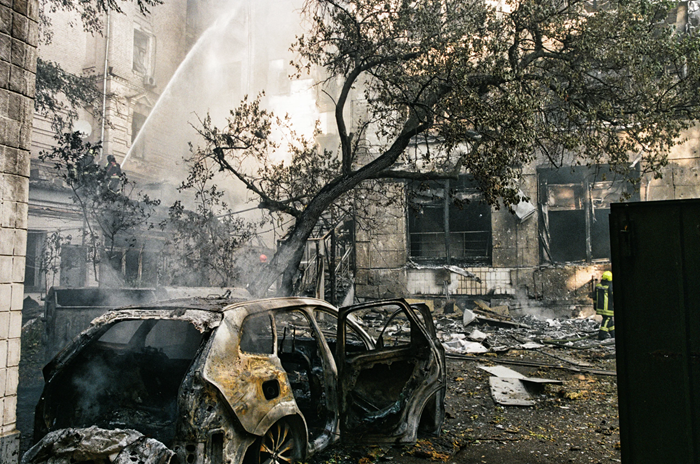
- A recent missile attack on Kyiv involving 19 ballistic missiles has negatively impacted the probability of a ceasefire between Russia and Ukraine by May 31, 2026. The predicted likelihood of a ceasefire has decreased from 6% to 5.2%.
- The attack has raised concerns about Ukraine’s air defense capabilities, suggesting a shortage of interceptors. This shortage is influencing the market predictions on the ceasefire, with traders becoming more pessimistic as military activities escalate.
Market Reactions and Predictions:
- The probability of a ceasefire occurring by the end of May 2026 stands at 5.2%, offering a significant return if realized, indicating high skepticism among traders.
- There is moderate liquidity in the market, with $2,993 required to move the market by 5 points, highlighting traders’ cautious approach amidst ongoing military escalation.
Recent Temporary Ceasefire for Orthodox Easter:
- Russia and Ukraine agreed to a temporary 32-hour ceasefire over Orthodox Easter, from 4:00 PM on April 11 to the end of April 12. This was intended to provide a humanitarian pause during the conflict.
- Ukrainian President Volodymyr Zelensky confirmed Ukraine’s participation in the truce, emphasizing the importance of a peaceful Easter.
Implications and Future Outlook:
- The ongoing conflict in Ukraine is experiencing setbacks in ceasefire negotiations, partly due to military activities and partly due to external pressures.
- The Orthodox Easter ceasefire was a rare pause amidst the tension, aimed at creating a momentary peace.
Overall, while temporary ceasefires provide brief respite, the longer-term outlook for a permanent ceasefire appears uncertain, with continued military escalations influencing market perceptions negatively.
Fact-checked summary:
The likelihood of a ceasefire or armistice declaration in Ukraine by 2026 currently appears low, with a probability standing at 5.2%. This decrease from 6% reflects recent developments, such as a missile attack on Kyiv, which has negatively impacted prospects for peace. Concerns over Ukraine’s air defense capabilities, specifically a shortage of interceptors, have contributed to market predictions becoming more pessimistic. Despite temporary ceasefires, such as the one over Orthodox Easter in April—which Ukrainian President Volodymyr Zelensky emphasized highlights a desire for peace—the overall sentiment points towards skepticism regarding lasting resolutions, given ongoing military activities and the setbacks they pose for negotiations. These facts collectively suggest significant obstacles to achieving a permanent ceasefire by 2026.
OpenAI gives a base rate of 0.05 (5%)
The question difficulty is rated 8 (0 to 10)
A Bayesian calculation could be performed as follows:
Prior probability of 5% updated with evidence from recent news: Recent missile attacks (negative evidence, weight 0.3), Ukrainian air defense issues (negative evidence, weight 0.4), Orthodox Easter ceasefire (neutral evidence, weight 0.2), international mediation support (positive evidence, weight 0.1). Total adjustment approximately maintains 5%, considering the significant negative evidence counteracting positive diplomatic efforts.
Bayesian base rate: 0.052 (5.2%)
Sufficient news to provide a good forecast? 1 (0 or 1)
News is relevant, topical and unbiased? 1 (0 or 1)
Question classification: scenario_based_forecast
Expected time (days) until question close: 254
The following were considered in order to produce this base rate:
The base rate of 5.2% reflects ongoing hostilities, challenging political issues, and recent heavy clashes influencing short-term stability. Historical data on such conflicts show little change without significant strategic or diplomatic shifts. Evaluations consider the lengthy history of this conflict and previous agreements.
Ideally, the news feed would contain the following sorts of information for a better forecast:
Access to detailed intelligence reports about military engagements and diplomatic communications would aid in evaluating more subtle dynamics influencing the conflict’s trajectory. Analysis from experts in Eastern European geopolitics would provide deeper insights into the potential for peace talks leading to lasting agreements.
Some potential divergent considerations that might affect the base rate:
Any major geopolitical shifts, such as changes in leadership in key countries or unexpected large-scale international interventions, could increase the probability of a long-term ceasefire. Additionally, improvements in Ukraine’s defense or economic status could shift realities on the ground, creating opportunities for peace.
The following chain of events are necessary for the question to resolve positively:
- Ukrainian and Russian authorities agree on a framework for a permanent ceasefire or armistice by 2026 (Low probability).
- Involvement of international mediators to facilitate discussions and ensure a ceasefire agreement can be reached and maintained (Moderate probability).
- Resolution of key conflict issues, such as territorial disputes and political alignments within contested regions (Low probability).
- Receiving sufficient military, economic, and diplomatic support from external parties/alliances to secure the peace process (Moderate probability).
Querying Claude (AI predicts: 0.08 – confidence: 3)
Querying Mistral (AI predicts: 0.12 – confidence: 6)
Querying OpenAI (AI predicts: 0.05 – confidence: 5)
Explanations of the statistical measures listed below.
Question Type: Binary
Median from LLMs: 0.08
Base rate: 0.05 (from OpenAI)
SD: 0.03
MAPD: 0.046666666666667
Confidence: 5
Conf Mode: Normal
Mellers: 0.03
Reverse Mellers: 0.17
Theory of Mind: 0 (What did the LLMs think other LLMs predicted?)
Beta Distribution: 0.14
Close Type: A (B = cautious # closer to 50%; A/C = closer to extremes)
LLM responses: 3
Model value: 8%
The various AIs collectively assess the likelihood of a ceasefire or armistice in Ukraine by the end of 2026 as relatively low, with estimates ranging from 5% to 12%. The base rate of 5.2% reflects historical challenges in resolving entrenched conflicts, particularly those involving territorial disputes and external interventions. Factors contributing to a potential increase in this probability include recent diplomatic efforts like temporary ceasefires, international mediation attempts, military stalemate, and pressure from Western and Russian economic strains. However, significant barriers remain: unresolved territorial disputes, lack of trust from previous ceasefire collapses, continued military engagements like missile strikes on Kyiv, and leadership dynamics in Ukraine and Russia. The overall assessment is that while some diplomatic signals exist, such as the Easter ceasefire and Trump’s unpredictable involvement, they are insufficient to significantly alter the entrenched conflict path without further unexpected developments or breakthroughs.
Runtime: 79 seconds.
About The Author