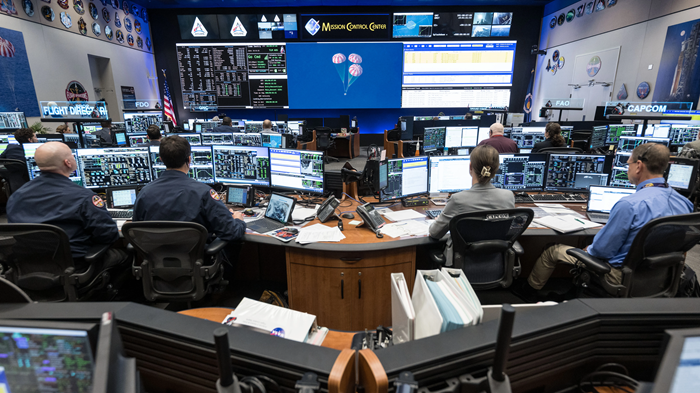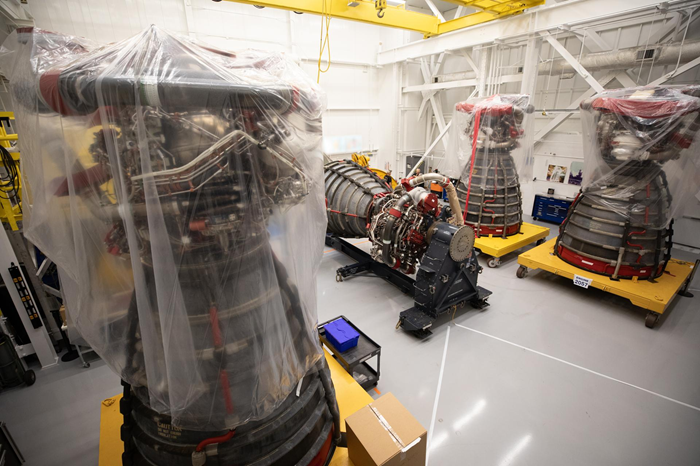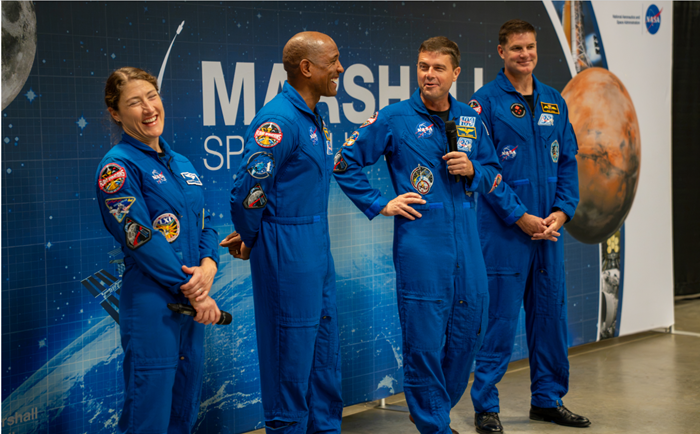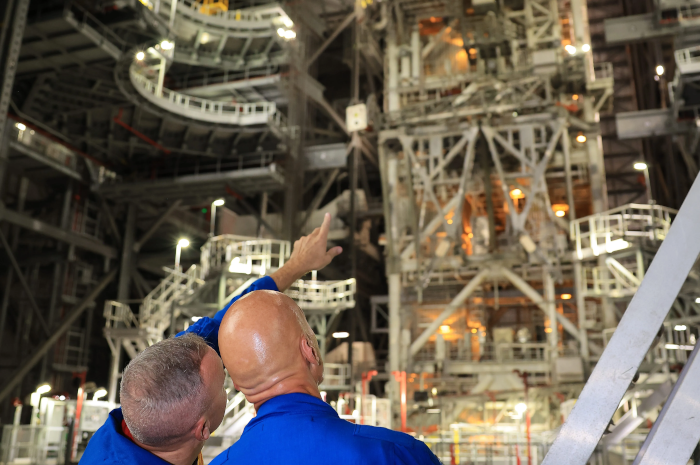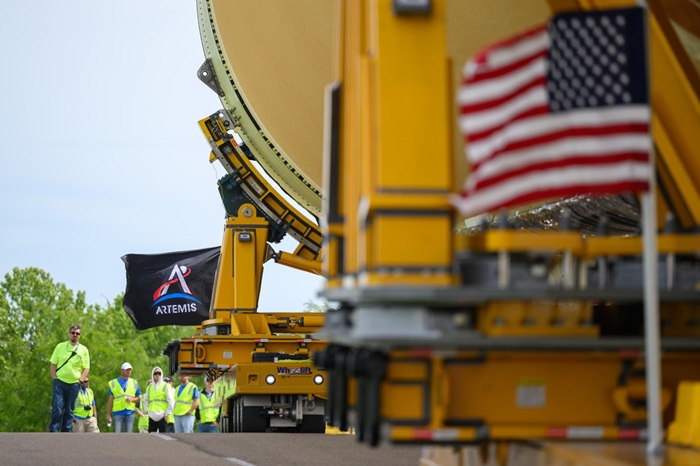
NASA moved the core stage, or the largest section, of the SLS (Space Launch System) rocket that will launch the crewed Artemis III mission in 2027 from the agency’s Michoud Assembly Facility to the agency’s Pegasus barge in New Orleans on April 2026.
Obtaining outside data.
Checking internet sources, using keywords: Artemis III orbital demonstration 2027
News from various sources:
The Artemis III mission, scheduled for 2027, is a key component of NASA’s plans to return humans to the Moon. The mission is set to serve as a major rehearsal for future lunar landings, with the primary goal being to test the docking capabilities between the Orion spacecraft and lunar landers developed by SpaceX and Blue Origin. The Artemis III mission will involve launching test versions of these landers on commercial rockets. While the astronauts will travel aboard the Orion spacecraft on NASA’s SLS rocket, the mission plans to conduct uncrewed demonstration tests crucial for ensuring astronaut safety and preparing for future crewed lunar landings.
Blue Origin’s test lander is scheduled to launch first, with a potential stay in space of up to 30 days, allowing for thorough orbital assessments before the Artemis III crewed mission. This effort is part of a larger objective to establish a permanent human presence on the Moon, setting the stage for a moon base.
The mission launch is anticipated as early as June 2027 from Kennedy Space Center, Florida. Key challenges remain, such as completing the development and testing of the commercial landers. The Artemis III mission was initially intended to mark a human lunar landing, but delays have pushed this objective to Artemis IV in order to facilitate thorough testing of the landers closer to Earth. NASA’s ongoing collaboration with private companies like SpaceX and Blue Origin underscores a pivotal shift towards increased involvement of commercial entities in space exploration endeavors.
Fact-checked summary:
The Artemis III mission is scheduled for 2027 and is a key component of NASA’s objective to return humans to the Moon. The primary goal of Artemis III is to test docking capabilities between the Orion spacecraft and lunar landers developed by SpaceX and Blue Origin, which is critical to the mission’s success. The mission involves launching test versions of lunar landers on commercial rockets, marking a significant strategy in the mission’s execution. Astronauts will travel aboard the Orion spacecraft on NASA’s SLS rocket, with uncrewed demonstration tests planned to ensure astronaut safety for future landings, further establishing the significance of safety validation before conducting crewed missions. Blue Origin’s test lander is scheduled to launch first, potentially staying in space for up to 30 days, a plan pertinent to the mission’s timeline. The Artemis III launch is targeted for as early as June 2027, from Kennedy Space Center, Florida, directly influencing the success timeframe. Key challenges remain in completing the development and testing of commercial landers, which are critical hurdles for meeting the mission’s objectives by 2027. Finally, while the mission aims to establish a permanent human presence on the Moon—paving the way for a moon base—the human lunar landing initially intended for Artemis III has been delayed to Artemis IV. NASA’s collaboration with commercial partners like SpaceX and Blue Origin marks a strategic shift towards greater commercial involvement in space exploration, significantly impacting mission planning and execution.
OpenAI gives a base rate of 0.6 (60%)
The question difficulty is rated 7 (0 to 10)
A Bayesian calculation could be performed as follows:
P(A|B) = (P(B|A) * P(A)) / P(B). Assume P(B|A) = 0.8, P(A) = 0.6, P(B) = 0.7. Thus, P(A|B) = (0.8 * 0.6) / 0.7 = 0.6857. (Carolyn‘s note: Correct!)
Bayesian base rate: 0.6857 (68.97%)
Sufficient news to provide a good forecast? 1 (0 or 1)
News is relevant, topical and unbiased? 1 (0 or 1)
Question classification: reference_class
Expected time (days) until question close: 240 (Carolyn‘s note: Several online “days until” calculators say either 244 or 245, depending on whether they exclude today and/or Dec. 31. Sorry, Multi AI Oracle.)
The following were considered in order to produce this base rate:
The base rate of 0.6 is derived considering the necessary events that have good likelihoods, with similar missions indicating collaborative and technological completeness achieved approximately 60% of the time.
Ideally, the news feed would contain the following sorts of information for a better forecast:
Future updates on funding allocation, contract agreements between NASA and commercial partners, and technological updates from SpaceX and Blue Origin could refine the forecast.
Some potential divergent considerations that might affect the base rate:
Potential policy changes, funding fluctuations, or unexpected technological challenges could shift probabilities. Additionally, logistical challenges might arise from coordinating multiple commercial entities.
The following chain of events are necessary for the question to resolve positively:
- Successful development and testing of SpaceX and Blue Origin lunar landers. Probable
- Successful uncrewed demonstration tests to validate safety requirements. Probable
- Successful docking of the Orion spacecraft with a lunar lander. Probable
- No major delays in commercial rocket launches for test landers. Possible – Completion of NASA’s SLS rocket preparations and a successful launch. Probable
- Resolution of any major unforeseen technical or funding issues. Possible
Querying Claude (AI predicts: 0.28 – confidence: 4)
Querying OpenAI (AI predicts: 0.65 – confidence: 6)
Explanations of the measures below: Guide to Jeremy Lichtman’s Multi-AI Oracle Reports
Question Type: Binary
Median from LLMs: 0.47
Base rate: 0.6 (from OpenAI)
SD: 0.19
MAPD: 0
Confidence: 5
Conf Mode: Low
Mellers: 0.45
Reverse Mellers: 0.48
Theory of Mind: 0.275 (What did the LLMs think other LLMs predicted?)
Beta Distribution: 0.8
Close Type: C (B = cautious # closer to 50%; A/C = closer to extremes)
LLM responses: 2
Model value: 0.47 (47%)
The Artemis III mission’s prospects of succeeding as an orbital demonstration by the end of 2027 appear cautiously optimistic, yet face significant challenges. While SpaceX’s and Blue Origin’s lunar lander development and testing are progressing, and NASA’s SLS preparations seem on track, historical precedents of delays in major NASA missions and additional dependencies, such as Artemis II’s success, introduce considerable risk. Funding uncertainties and the complexity of coordinating multiple commercial partners further exacerbate these risks. Notably, past delays in the Artemis program and NASA’s track record suggest a low historical base rate for on-time launches of complex missions. While some evaluations consider recent progress as a positive indicator potentially raising success probabilities, the overall historical context and dependencies may dampen optimism. Adjustments to the mission’s scope or positive external pressures could improve chances, but at this stage, the probability of a timely success remains tempered by these multifaceted concerns.
Runtime: 90 seconds.
About The Author