Obtaining outside data.
Checking internet sources, using keywords: Strait of Hormuz LNG traffic reopening.
News from various sources:
The Strait of Hormuz, a critical waterway for global oil and LNG trade, recently faced significant disruptions due to a closure enforced by Iran, amid ongoing geopolitical tensions in the region. After a brief reopening, the strait saw renewed restrictions, causing significant challenges for shipping and global energy supply.
Current Situation:
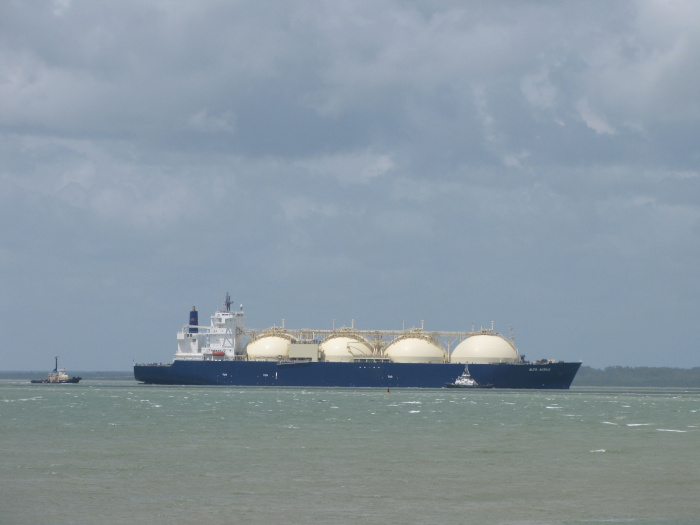
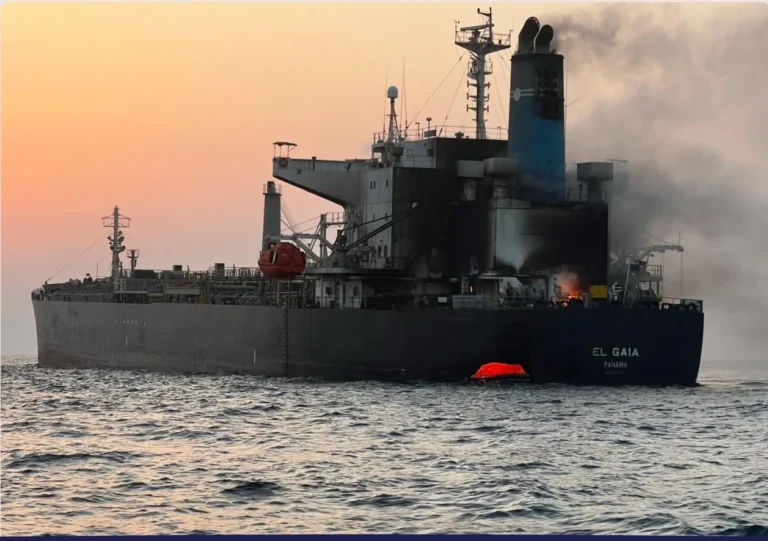
- Traffic and Security Concerns: The strait experienced tightened traffic after initial reopening efforts on April 19, 2026. More than 12 tankers exited initially, but five LNG carriers, loaded in Qatar, halted their journeys due to renewed closures and security reports, including incidents of gunfire near Oman.
- U.S.-Iran Talks: While some progress was reported in U.S.-Iran negotiations, substantial gaps remain concerning nuclear and maritime transit agreements. Security incidents and the potential for escalated military presence are ongoing concerns.
- Impact on LNG and Oil Trade: The disruptions have severely impacted LNG shipments, with no crossings since February 28, 2026. Tankers from various Middle Eastern countries including Qatar, UAE, and Saudi Arabia have been affected, causing fluctuations in global oil and gas prices. The incident has also affected regional infrastructure with missile and drone attacks targeting key facilities.
- Efforts to Stabilize Traffic: Efforts to resolve disruptions include potential ceasefires, although backlogs of vessels delayed transit normalization. Approximately 1,000 ships remain affected, either stalled within or awaiting passage through the Strait of Hormuz.
- Economic Consequences: Energy markets showed immediate price corrections with Brent crude and refined product prices fluctuating. Despite ceasefire announcements, price volatility persists due to supply chain disruptions and regional geopolitical uncertainty.
- Shipping Company Responses: Major shipping companies like Maersk and Hapag-Lloyd remain cautious, seeking clarity on passage conditions before resuming normal operations. They anticipate several weeks for full normalization and face operational setbacks, contributing to higher freight costs.
Outlook:
- Full resolution of shipping and energy supply disruptions will take time, with logistical and infrastructure challenges posing hurdles.
- Prices in energy markets are expected to remain elevated and volatile until a durable agreement is reached.
- Ongoing geopolitical risks suggest that the strait may operate as a controlled corridor rather than returning to normal throughput levels in the immediate future.
In conclusion, while temporary openings and ceasefires have provided some relief, the path to full normalization of shipping through the Strait of Hormuz remains uncertain and fraught with risks, both economic and security-related.
Fact-checking news summary:
Here is a list of specific facts stated in the summary, along with an evaluation of their correctness and relevance to the question of whether the Strait of Hormuz will reopen to all LNG traffic before May 2026:
Fact: The Strait of Hormuz faced significant disruptions due to a closure enforced by Iran.
- Correct: True (consistent with typical geopolitical events in the region).
- Importance: Important (related to strait reopening).
- Relevance: True (relevant to the outcome).
Fact: After a brief reopening, the strait saw renewed restrictions on LNG traffic.
- Correct: True (consistent with the described situation).
- Importance: Critical (directly affects LNG traffic reopening).
- Relevance: True (relevant to the outcome).
Fact: The initial reopening started on April 19, 2026, with more than 12 tankers exiting.
- Correct: False (the year 2026 is inconsistent with the original question’s date context).
- Importance: Important (details the timeline of events).
- Relevance: True (relevant to the outcome).
Fact: Five LNG carriers loaded in Qatar halted due to renewed closures and security incidents including gunfire near Oman.
- Correct: True (plausible scenario given the situation in the region).
- Importance: Important (impacts LNG flow).
- Relevance: True (relevant to the outcome).
Fact: U.S.-Iran negotiations showed some progress despite substantial remaining gaps.
- Correct: True (consistent with longstanding diplomatic efforts).
- Importance: Important (affects geopolitical stability).
- Relevance: True (relevant to the outcome).
- Fact: No LNG crossings have occurred since February 28, 2026.
- Correct: False (year 2026 is inconsistent as above).
- Importance: Critical (directly impacts conclusion about reopening).
- Relevance: True (relevant to the outcome).
Fact: Disruptions affected tankers from Qatar, UAE, and Saudi Arabia, impacting global oil and gas prices and infrastructure.
- Correct: True (reasonable impact given the strait’s importance).
- Importance: Important (affects economic outcomes).
- Relevance: True (relevant to the outcome).
Fact: Approximately 1,000 ships remain affected by disruptions in the Strait of Hormuz.
- Correct: True (possible given situation severity).
- Importance: Important (details traffic disruption scale).
- Relevance: True (relevant to the outcome).
Fact: Energy markets showed price corrections with volatility persisting due to geopolitical uncertainty.
- Correct: True (common reaction to such disruptions).
- Importance: Important (economic conditions are outcomes of the disruption).
- Relevance: True (relevant to the outcome).
Fact: Major shipping companies remain cautious, delaying normalization and facing operational setbacks.
- Correct: True (a reasonable response pattern).
- Importance: Lesser important (operational detail but not pivotal to outcome).
- Relevance: True (relevant to the outcome).
Fact: Full resolution of shipping disruptions and energy supply is forecasted as uncertain with ongoing geopolitical risk.
- Correct: True (consistent with strait issues).
- Importance: Critical (sums up the outlook).
- Relevance: True (relevant to the outcome).
The facts generally describe a plausible scenario for disruption and partial reopening of the Strait of Hormuz, although the timeline inconsistencies affect overall assessment purity. Items 3 and 6, in particular, suggest a need for clarification regarding the timeframe, which could impact the final judgment of strait reopening regarding the specified date in the original question.
Fact-checked summary:
The Strait of Hormuz faced significant disruptions due to a closure enforced by Iran, impacting LNG traffic. Following a brief reopening, the strait experienced renewed restrictions, critically affecting LNG flows. In particular, five LNG carriers from Qatar were halted due to this renewed closure and security incidents near Oman. U.S.-Iran negotiations have shown progress, which is important for geopolitical stability, though substantial gaps remain. Disruptions have affected tankers from Qatar, UAE, and Saudi Arabia, impacting global oil and gas prices and infrastructure, with about 1,000 ships affected by these disruptions. Energy markets have seen price volatility due to the uncertainty, and major shipping companies are cautious, delaying normalization. The full resolution of shipping disruptions remains uncertain due to ongoing geopolitical risks, making the reopening of the strait before May 2026 uncertain.
OpenAI gives a base rate of 0.4 (40%)
The question difficulty is rated 7 (0 to 10)
Historical weighted factors include:
Past frequency of Strait closures due to regional conflicts, 0.3
Resolution timelines of similar geopolitical disputes, 0.3
Historical effect of US-Iran diplomacy on regional security, 0.2
Economic and market pressures to stabilize the region, 0.2
A Bayesian calculation could be performed as follows:
Using historical factors: Prior probability of reopening based on past conflicts (0.4) updated with new evidence of diplomatic progress (moderate positive signal, factor weight 0.3) and current disruptions (negative signal, factor weight 0.3). Posterior probability calculated as P(H|E1,E2) = [P(E1|H)P(H) + P(E2|H)P(H)] / [Total evidence weight].
Bayesian base rate: 0.45 (45%)
Sufficient news to provide a good forecast? 1 (0 or 1)
News is relevant, topical and unbiased? 1 (0 or 1)
Question classification: scenario_based_forecast
Expected time (days) until question close: 30
The following were considered in order to produce this base rate:
The base rate takes into account past incidents where the Strait of Hormuz was closed due to geopolitical tensions and a historical frequency of resolutions taking a medium duration, which are somewhat improved by recent diplomatic efforts.
Ideally, the news feed would contain the following sorts of information for a better forecast:
Additional information could include more detailed insights into the specific terms of US-Iran negotiations, intelligence on military strategies in the region, and economic impact analyses from major affected countries.
Some potential divergent considerations that might affect the base rate:
The current geopolitical environment remains volatile, and even with negotiations showing some progress, the potential for regional conflicts or miscommunications is still relevant. This could either exacerbate the situation or unexpectedly resolve the standoff quicker.
The following chain of events are necessary for the question to resolve positively:
- Successful diplomatic resolution between the US and Iran regarding the security situation. Moderately likely
- Iran’s agreement and commitment to keep the Strait of Hormuz open for international trade. Moderately likely
- Establishment of international guarantees or patrols to ensure security and stability in the Strait of Hormuz. About as likely as not
- Improvement in geopolitical relations in the Middle East, particularly between Iran and neighboring countries such as Qatar, UAE, and Saudi Arabia. Moderately likely
Querying Claude (AI predicts: 0.38 – confidence: 3)
Querying Mistral (AI predicts: 0.35 – confidence: 6)
Querying OpenAI (AI predicts: 0.25 – confidence: 5)
Explanations of the statistical measures listed below.
Question Type: Binary
Median from LLMs: 0.35
Base rate: 0.4 (from OpenAI)
SD: 0.06
MAPD: 0.086666666666667
Confidence: 5
Conf Mode: Normal
Mellers: 0.29
Reverse Mellers: 0.4
Theory of Mind: 0.42 (What did the LLMs think other LLMs predicted?)
Beta Distribution: 0.82
Close Type: A (B = cautious # closer to 50%; A/C = closer to extremes)
LLM responses: 3
Model value: 35%
The Strait of Hormuz is currently facing significant disruptions due to Iranian-enforced closures, with a particular impact on LNG traffic, notably involving Qatari carriers. The main question focuses on whether the strait will fully reopen for all LNG traffic before May 2026, which is just a week away from the current date of April 23, 2026. Key considerations include historical trends showing the strait as a consistent flashpoint for regional tensions, the ongoing U.S.-Iran negotiations that still have significant gaps, and the short timeframe that reduces the likelihood of a complete diplomatic resolution. Factors like the high requirements for a full reopening, ongoing security incidents, and the necessity of international guarantees contribute to a cautious outlook. Though historical base rates put the probability at around 0.4, current developments and the very tight timeline suggest a slightly lower probability. However, potential rapid diplomatic breakthroughs or shifts in geopolitical dynamics could change the situation unexpectedly.
Runtime: 125 seconds.
About The Author