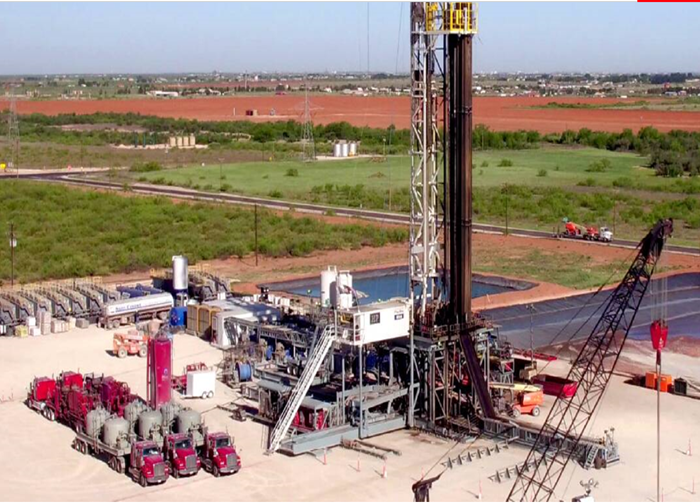
Coiled Tubing is a continuous length of steel pipe used for various well interventions. Oilwell Group offers coiled tubing services that minimize rig time and maximize well access for cleaning, acidizing, and downhole tool deployment. Source: OWS https://www.oilwellgroup.net/en-us Coiled Tubing is a continuous length of steel pipe used for various well interventions. Oilwell Group offers coiled tubing services that minimize rig time and maximize well access for cleaning, acidizing, and downhole tool deployment. Source: OWS https://www.oilwellgroup.net/en-us
Perplexity response:
Assessment for $50 Price Target
Lowest Projected Prices for 2026: Even in the most bearish scenarios from major forecasters, Q4 2026 prices are projected at $71-$88 per barrel. This represents the floor of current forecasts, implying roughly $21-46 per barrel decline from projected Q4 lows.
Implied Requirements for Sub-$50 Prices: For Brent to trade below $50 at any point in 2026 would require one or more of:
- Unexpected supply surge beyond the gradual recovery assumptions built into models
- Significant demand destruction not currently forecast
- Faster-than-expected Strait resolution combined with demand collapse
- Recession scenario not reflected in current energy outlooks
Historical Context: Brent last traded regularly in the $40-50 range during the 2020 COVID crash; reaching those levels again in 2026 would require a comparable demand shock.
The search results show no forecasts from major institutions (EIA, Goldman Sachs, Citi, or Qatar) projecting prices below $50 for any point in 2026, even in adverse scenarios.
Grok response:
- Title: Crude oil and petroleum product prices increased sharply… (EIA Today in Energy)
Description: EIA report on Q1 2026 oil price surge.
Published: April 7, 2026
Summary: Brent crude oil finished Q1 2026 at $118/bbl after sharp increases. Prices rose due to supply disruptions. No mention of prices below $50 in 2026.[1] - Title: Goldman Sachs raises 2026 Brent crude average price forecast… (Reuters)
Description: Goldman Sachs updates Brent forecast upward due to supply issues.
Published: March 23, 2026
Summary: GS raised 2026 Brent average to $85/bbl from $77. Attributed to prolonged Middle East disruptions. Lowest implied scenarios still above $50.[3] - Title: Oil Price Forecast for 2026 (J.P. Morgan Global Research)
Description: JP Morgan bearish outlook despite spikes.
Published: February 27, 2026
Summary: Expects Brent average $60/bbl in 2026 due to supply exceeding demand. Recent geopolitical spikes noted but downward pressure anticipated. No below-$50 projection.[4] - Title: Short-Term Energy Outlook (EIA STEO)
Description: EIA’s latest monthly forecast as of April 2026.
Published: April 7, 2026 (release date)
Summary: Brent averaged $103/bbl in March 2026, peaks at $115 in Q2, averages $96 for full 2026 year. Falls below $90 in Q4 but no sub-$50. Updated upward from prior $79 estimate due to Hormuz disruptions.[5] - Title: EIA Boosts 2026 Brent Oil Price Projection to $96 (Rigzone)
Description: Coverage of EIA STEO update.
Published: April 15, 2026
Summary: EIA now forecasts $96 average Brent for 2026, up 22% from February. Q1 average $81, peak $115 Q2. Reflects Strait of Hormuz supply risks.[6] - Title: Brent crude oil – Price – Chart – Historical Data – News (Trading Economics)
Description: Resolution source with current and historical data.
Published: April 21, 2026 (latest data)
Summary: Current Brent price $95.08/bbl on April 21, 2026; no 2026 YTD data shows below $50. Recent volatility: surged 5%+ on Hormuz tensions, slipped below $95 ahead of talks. Forecasts: $97.98 end-Q2, $109.59 in 12 months. - Title: OIL PRICE FORECAST 2026… (Longforecast.com)
Description: Detailed monthly Brent forecast for 2026.
Published: Recent (ongoing model)
Summary: May 2026 forecast: high $107.65, low $82.70, average $95.07. Annual projections stay above $80. No sub-$50 scenarios.[7] - Title: Brent Oil Futures Historical Prices (Investing.com)
Description: Recent daily historical data for April 2026.
Published: Ongoing
Summary: April 13-16, 2026: prices ranged 94-100 USD/bbl (e.g., Apr 16 low 94.62). March 2026 average ~$70.89 per Statista cross-ref. YTD lows well above $50.[8][9] - Title: Oil Market Report – April 2026 (IEA)
Description: IEA monthly outlook.
Published: ~April 14, 2026
Summary: Demand contraction due to Iran war; OPEC+ production down sharply. No specific Brent price forecast below $50; focuses on supply losses pushing prices up. Global demand growth revised down but supply risks dominant.[10] - Title: BofA raises Brent oil price forecast for 2026… (Oil & Gas 360)
Description: Bank of America updates on Hormuz disruptions.
Published: March 16, 2026
Summary: BofA raised 2026 Brent average to $77.50 from $61. Standard Chartered similar upward revision. Geopolitical risks cited; no bearish sub-$50 views.[11]
Current Status and Historical Data (YTD 2026)
As of April 21, 2026, Brent Crude trades at $95.08/bbl per the resolution source (Trading Economics), down 0.74% daily but up significantly YTD amid volatility. No sources indicate Brent has traded below $50/bbl at any point in 2026 to date. Recent daily lows (e.g., April 16: $94.62; April 21: ~$94.77) are far above $50, with March 2026 averaging $70.89-$103/bbl and Q1 ending at $118/bbl.[1][9][8] Earlier 2026 prices saw a sharp Q1 rise from ~$81 average in Q1 start, driven by Strait of Hormuz escalations and US-Iran tensions.[6]
Past year (2025-2026): 2025 annual average ~$69-75/bbl per EIA/others; 2026 YTD high ~$118 (Q1 end), low not below ~$70 (March avg). Volatility elevated: 5%+ daily swings in April 2026 on Hormuz news (surge to $96 then slip to $95). No specific volatility metrics (e.g., VIX equivalent) detailed, but implied by forecast revisions.
Forward-Looking Guidance and Consensus
Wall Street and agency consensus points to 2026 Brent averages of $60-$96/bbl, with lows projected above $50-$80:
- EIA (Apr 7 STEO): $96 avg 2026 ($115 Q2 peak, <$90 Q4); upward from Feb $79 due to supply tightness.[5]
- Goldman Sachs (Mar/Apr): $85 avg 2026; Q2 trimmed to $90.[3]
- JP Morgan (Feb): $60 avg, bearish on oversupply post-spikes.[4]
- BofA/HSBC/UBS: $72-$80 avgs, raised on disruptions.[11]
- Longforecast: Monthly lows $82+ through mid-2026.[7]
- IEA/OPEC (Apr reports): Supply cuts (OPEC+ -2.4 mb/d), demand soft but geopolitics supportive; no sub-$50 risks highlighted.[10]
Futures curve (e.g., Jun 2026 ~$95, Dec ~$85) slopes downward but stays elevated.[12] Seasonality: Oil often dips Q3/Q4 on maintenance/refining, but 2026 Hormuz/Iran risks bias upward; EIA notes Q4 easing but not crash-level.
Key Influences and Recent Updates
Prices surged 40%+ YTD on Middle East supply risks (Hormuz attacks, Iran-US talks), overriding demand weakness (IEA: -80 kb/d contraction).[10] Expert consensus (EIA, banks) sees persistent $70+ floor from cuts/non-OPEC declines; no authoritative source forecasts sub-$50 in 2026. Bearish pre-disruption views ($50s) revised up; recent updates (Apr EIA/GS) reinforce higher path. No movement toward Yes resolution observed.
Extracted resolution criteria links:
[‘https://tradingeconomics.com/commodity/brent-crude-oil‘]
=== Forecast Result ===
=== Reasoning ===
The starting point strongly favors No.
Brent is around $95 on the resolution source now, and the question is not whether it ends 2026 below $50, but whether it touches below $50 at any point between now and year-end. That matters because oil is volatile, but it still needs a very large move: roughly a 47% drop from current levels.
What the current evidence says:
- Current spot level is far above the threshold.
- The forward/analyst consensus is for easing later in 2026, but mostly into the $70s to high $80s, not the $40s.
- Even relatively bearish institutional views in the research cluster around a 2026 average near $60-$85, with lows generally still above $50.
- The recent price spike is tied to Hormuz / Middle East disruption. If that premium fully unwinds, prices can fall a lot — but “a lot” from $95 does not automatically mean sub-$50.
So the question becomes: what combination of shocks gets Brent from the mid-90s to below $50 within about eight months?
Most plausible paths to a Yes:
- Geopolitical premium disappears quickly and overshoots downward.
- A global growth scare or recession slashes demand.
- OPEC+ discipline breaks or a de facto price war emerges.
- Some combination of the above.
That combination is possible, but it is not the base case.
Base-rate view
Brent below $50 is not an ordinary fluctuation from a starting point near $95. It has historically been associated with:
- major oversupply episodes,
- aggressive producer competition,
- or crisis-level demand shocks like 2020.
Those things happen, but not frequently within an eight-month window.
Timeframe breakdown
Because this is a barrier-touch question, it helps to think by sub-period:
- By end of Q2: very unlikely. Prices would need to collapse almost immediately from current levels.
- By end of Q3: still unlikely, but materially more possible if conflict risk fades and macro weakens.
- By end of 2026: highest chance, because there is enough time for recession/oversupply dynamics to compound.
My rough path is:
- by end-Q2: around 2%
- by end-Q3: around 7%
- by end-2026: around 12%
Key assumptions that could be wrong
The assumptions whose failure would most increase the Yes probability:
- The unwind of the current geopolitical premium bottoms in the $60s-$70s, not the $40s.
Chance this assumption is wrong: about 20%. - There is no sharp global recession / demand shock in the remainder of 2026.
Chance this assumption is wrong: about 12%. - OPEC+ or major producers do not trigger a large supply-driven price war.
Chance this assumption is wrong: about 15%.
If even two of those fail together, the probability of a sub-$50 touch rises a lot. But the joint occurrence is still meaningfully less likely than the market simply normalizing into the $70-$90 range.
Given the large distance to the threshold, the lack of major forecasts near $50, and the still-real possibility of a macro/producer shock, I land low but not tiny.
Probability: 12%
About The Author