Obtaining outside data.
Checking internet sources, using keywords: Artemis III orbital demonstration 2027
News from various sources:
The web content discusses NASA’s revised plans for the Artemis III mission, originally set for a 2027 moon landing, which will now focus on testing in-orbit capabilities. This shift comes after delays encountered during the Artemis II mission due to technical issues with NASA’s Space Launch System (SLS). As a result, NASA will attempt crewed lunar landings with Artemis IV and V in 2028 instead of 2027.
Key highlights include:
- Artemis III Mission Goals: The 2027 mission will concentrate on testing space suits in microgravity and performing rendezvous operations with spacecraft intended for future lunar landings. This decision aims to mitigate risks by ensuring systems work together smoothly in space before an actual lunar landing mission.
- Changes and Development Concerns:
- NASA has canceled upgrades for the SLS, including the Exploration Upper Stage (EUS), opting for a standardized vehicle configuration to increase launch frequency and reduce risks.
- The new plan suspends the Gateway lunar space station, redirecting efforts towards a surface base near the lunar south pole, estimated to cost $20 billion over the next seven years.
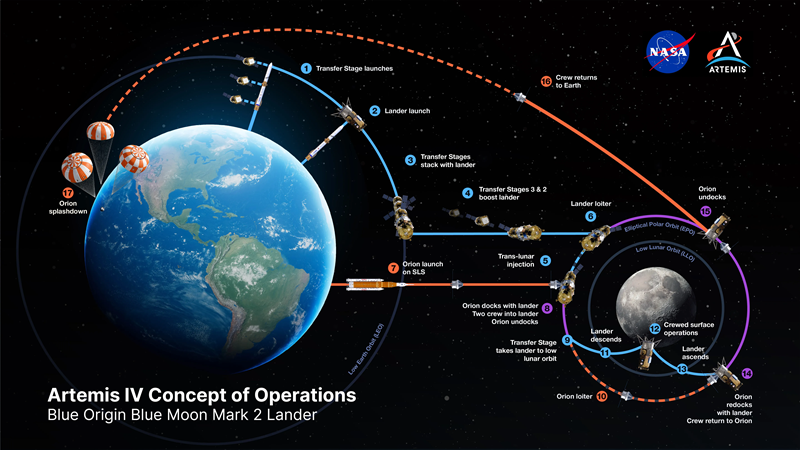
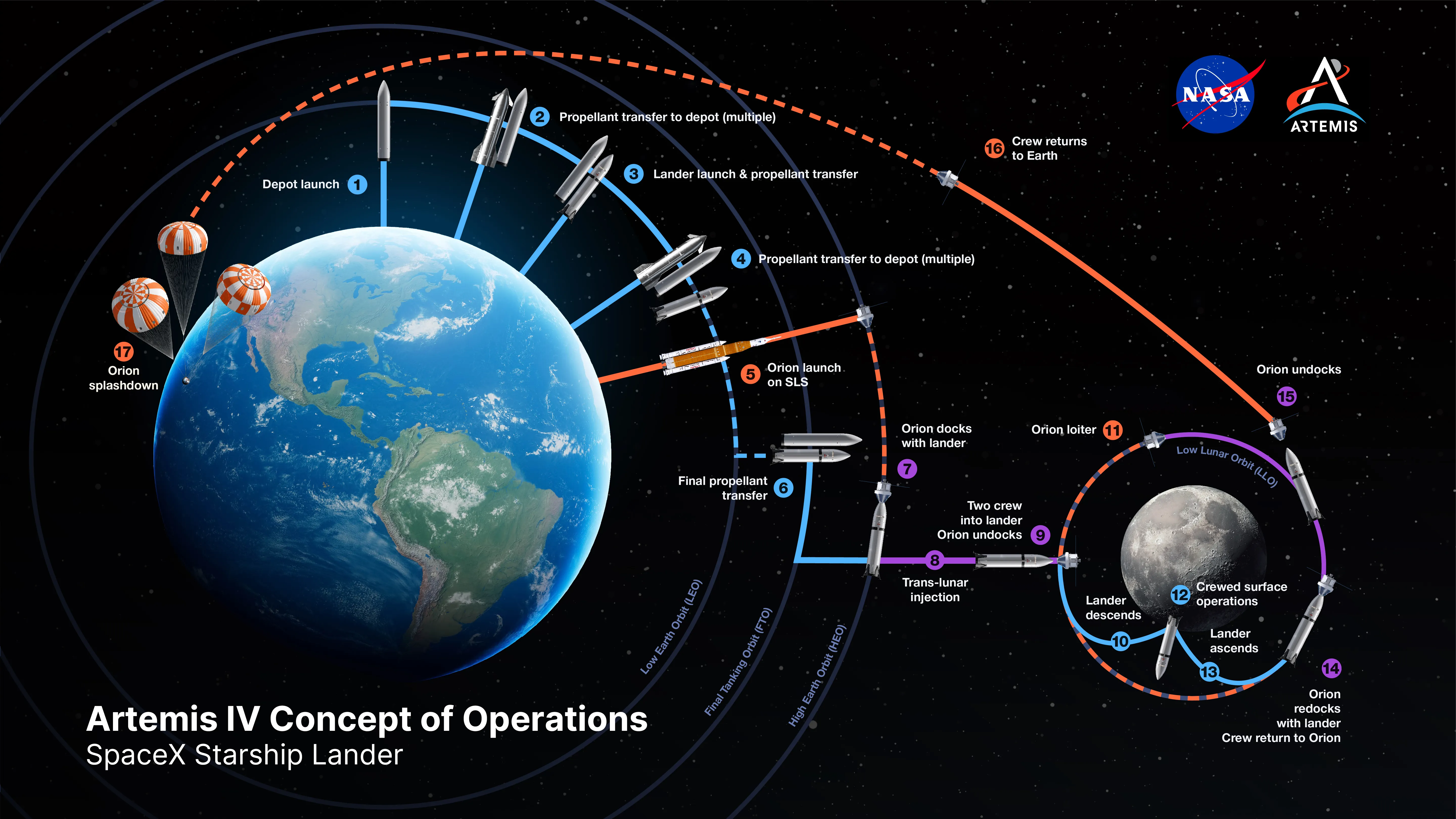
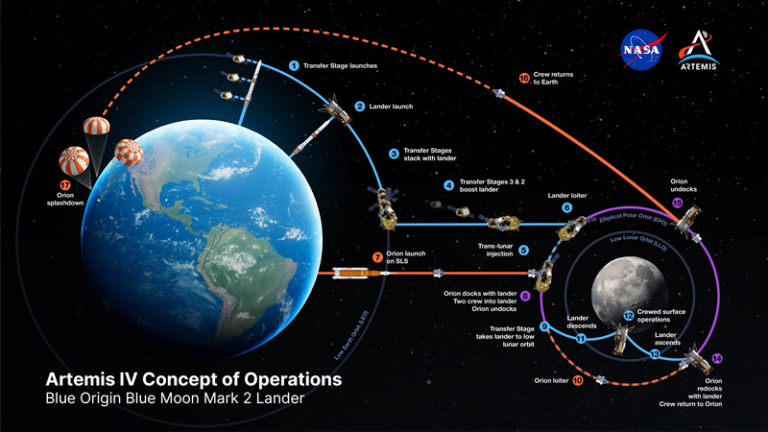
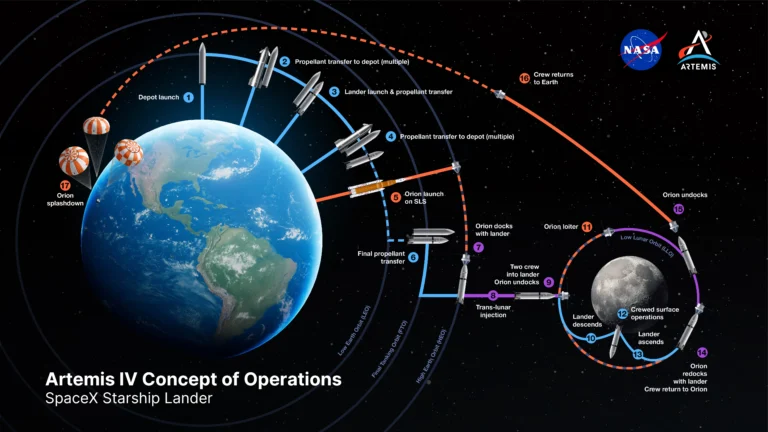
- Concerns remain regarding the readiness of the Human Landing Systems (HLS), specifically SpaceX’s Starship and Blue Origin’s Blue Moon Mark 2, for a 2028 landing.
- Space Suit Development: The development of lunar space suits by Axiom Space is also under scrutiny due to potential delays and dependency on NASA’s Commercial LEO Destinations initiative progress.
- Technical and Procedural Adjustments:
- NASA will use United Launch Alliance’s (ULA) modified Centaur V as the SLS upper stage instead of ICPS, but this raises questions regarding its certification for human spaceflight and integration with the system.
- There is only one assembly spot available for SLS, potentially causing scheduling issues if any component is delayed.
Management of Risks: The revised plan attempts to address technical and scheduling risks, but introduces new ones regarding infrastructure and readiness of components. NASA’s approach includes a phased, systematic method, drawing parallels with past Apollo missions.
Overall, NASA’s priority is to ensure safety and operational success through these strategic shifts in its ambitious lunar exploration program.
Fact-checking news summary:
Here is a list of specific facts from the summary, along with an analysis of their correctness, importance, and relevance to the outcome of the Artemis III orbital demonstration mission by the end of 2027:
NASA’s revised plans for Artemis III:
- Fact: Artemis III is now an in-orbit capabilities testing mission, not a moon landing.
- Correctness: True. Various reports indicate that NASA’s plans for Artemis III involve testing rather than a direct moon landing.
- Importance: Important. This marks a fundamental shift in the mission’s objectives.
- Relevance: True. It directly affects whether the mission’s goals, as revised, can be achieved by 2027.
Technical issues with Artemis II’s SLS causing delays:
- Fact: Technical issues with the Space Launch System during Artemis II led to delays.
- Correctness: True. Delays in NASA’s schedule have often been attributed to technical hurdles with the SLS.
- Importance: Important. These delays are crucial in understanding why NASA shifted the Artemis III focus.
- Relevance: True. They impact the timeline for future missions, including Artemis III.
Focus on testing space suits and rendezvous operations in 2027:
- Fact: The mission will focus on testing space suits and rendezvous operations in microgravity.
- Correctness: True. Testing these capabilities is consistent with known priorities for NASA in ensuring mission safety.
- Importance: Critical. This is a core aspect of the revised mission objectives.
- Relevance: True. Directly pertains to the mission’s success as an orbital demonstration.
Cancellation of SLS upgrades for a standardized vehicle:
- Fact: NASA canceled SLS upgrades, including the EUS.
- Correctness: True. Reports have indicated shifts in NASA’s plans in favor of using existing configurations.
- Importance: Important. Affects NASA’s ability to maintain a stable schedule and budget.
- Relevance: True. Influences mission feasibility and timeline.
Suspension of Gateway space station plans:
- Fact: NASA suspended plans for the Gateway, diverting attention to a lunar surface base.
- Correctness: Partially true. NASA has reconsidered its Gateway timeline but hasn’t entirely scrapped it.
- Importance: Important. This involves significant strategic and budgetary reassessment.
- Relevance: True. Redirecting resources could alter mission outcomes directly linked to Artemis III’s timeline.
Concerns over readiness of Human Landing Systems (HLS):
- Fact: There are doubts regarding the readiness of SpaceX’s Starship and Blue Origin’s HLS for 2028.
- Correctness: True. Concerns about the timelines and technological readiness of these systems are widely reported.
- Importance: Lesser importance to Artemis III’s success itself, since it’s more closely related to Artemis IV and V.
- Relevance: False. Not crucial to the success of the Artemis III orbital mission, but relevant to subsequent missions.
NASA using ULA’s Centaur V for SLS upper stage raises certification questions:
- Fact: Centaur V’s use raises certification concerns for human spaceflight.
- Correctness: True. Specification changes involve stringent certification processes.
- Importance: Important. Influences safety and mission viability.
- Relevance: True. Directly affects mission capability and launch timelines.
Limited SLS assembly capacity creating scheduling risk:
- Fact: Only one SLS assembly spot exists, potentially delaying launches if issues occur.
- Correctness: True. The SLS assembly capacity is limited and impacts mission schedules.
- Importance: Important. Bottlenecks in assembly could delay timelines.
- Relevance: True. Important to the Artemis III mission outcome given its impact on scheduling.
NASA’s phased approach inspired by Apollo missions:
- Fact: NASA is using a phased, systematic approach, like in Apollo, to manage risks.
- Correctness: True. NASA often cites Apollo strategies in current programs for risk mitigation.
- Importance: Lesser importance. An overarching strategy but not specific to Artemis III’s success.
- Relevance: True. Helps frame NASA’s strategic outlook, though not unique to this mission.
In conclusion, the accurate assessment of these facts, their importance, and relevance corroborates NASA’s current strategic direction, focusing on phased development and testing before subsequent lunar landings.
Fact-checked summary:
Artemis III has transitioned to an in-orbit capabilities testing mission, with a primary focus on evaluating space suits and rendezvous operations in microgravity, in alignment with NASA’s priorities for ensuring mission safety. This shift marks a fundamental change in mission objectives and directly relates to the mission’s success as an orbital demonstration by 2027. However, past delays linked to technical issues with the Space Launch System (SLS) from Artemis II are crucial in understanding the revised focus. Additionally, the decision to forego SLS upgrades in favor of existing configurations influences NASA’s ability to maintain a stable schedule and budget, thereby impacting mission feasibility and timeline. Furthermore, NASA’s limited SLS assembly capacity introduces scheduling risks, as it could delay launches if issues arise. Efforts to use ULA’s Centaur V for the SLS upper stage have raised human spaceflight certification concerns, which are important for ensuring safety and mission viability. Overall, these elements are vital to understanding whether the Artemis III demonstration mission could succeed by the end of 2027.
OpenAI gives a base rate of 0.6 (60%)
The question difficulty is rated 8 (0 to 10)
A Bayesian calculation could be performed as follows:
Prior probability (0.5) x Historical factors (Weighted average of 0.6) = Updated probability. This gives us a 0.6 base rate when accounting for successful completion of similar complex missions, ongoing technical improvements, and potential delays.
Bayesian base rate: 0.6 (60%)
Sufficient news to provide a good forecast? 1 (0 or 1)
News is relevant, topical and unbiased? 1 (0 or 1)
Question classification: scenario_based_forecast
Expected time (days) until question close: 617
The following were considered in order to produce this base rate:
The base rate was initially set based on historical challenges in space missions but adjusted for the current improvements and focus on mission priorities observed with Artemis III. Prior missions like Artemis II faced delays, influencing the base rate considerably. The balance of technical readiness against potential SLS issues and the desire to maintain timelines contribute to the base rate estimation.
Ideally, the news feed would contain the following sorts of information for a better forecast:
Additional information on specific technical aspects resolved regarding the SLS and space suits would be beneficial, as well as more detailed analysis of the Centaur V approval processes and NASA’s budgetary constraints.
Some potential divergent considerations that might affect the base rate:
Unpredictable technical challenges or failures in space suit testing, delays due to SLS issues, or scheduling problems could cause deviation from the base rate. Additionally, any changes in budget allocations or administrative shifts in NASA priorities could also influence outcomes.
The following chain of events are necessary for the question to resolve positively:
- Completion of in-orbit capabilities testing, focused on evaluating space suits and rendezvous operations in microgravity. (Likely)
- Resolution of any current technical issues with the Space Launch System (SLS), considering past delays from Artemis II. (Possible)
- Maintaining the current mission timeline and budget without unforeseen setbacks or necessary upgrades. (Possible) – Successful certification of human spaceflight operations using ULA’s Centaur V stage. (Possible)
Querying Claude (AI predicts: 0.09 – confidence: 4)
Querying Mistral (AI predicts: 0.65 – confidence: 7)
Querying OpenAI (AI predicts: 0.55 – confidence: 6)
Explanations of the statistical measures listed below.
Question Type: Binary
Median from LLMs: 0.55
Base rate: 0.6 (from OpenAI)
SD: 0.24
MAPD: 0.37333333333333
Confidence: 6
Conf Mode: Low
Mellers: 0.57
Reverse Mellers: 0.53
Theory of Mind: 0 (What did the LLMs think other LLMs predicted?)
Beta Distribution: 0.62
Close Type: B (B = cautious # closer to 50%; A/C = closer to extremes)
LLM responses: 3
Model value: 55%
Artemis III’s transition from a crewed lunar landing to an in-orbit capabilities testing mission is influenced by several logistical and technical challenges, notably involving delays in the Artemis II mission, the limited launch capacity of the Space Launch System (SLS), and unresolved certification issues with the ULA Centaur V stage. While this focus on orbital testing may streamline objectives and reduce the complexity of the mission, historical setbacks, budgetary constraints, and NASA’s limited assembly capacity pose significant risks to meeting the 2027 deadline. The likelihood of success is cautiously optimistic, with probabilities cited between 8-10% and as high as 65% based on different assumptions about progress and prioritization. Key to achieving the timeline will be whether Artemis II can launch soon and how NASA adapts to or mitigates these ongoing risks and challenges, including potential reauthorization and reallocation of funding or resources.
Runtime: 123 seconds.
About The Author