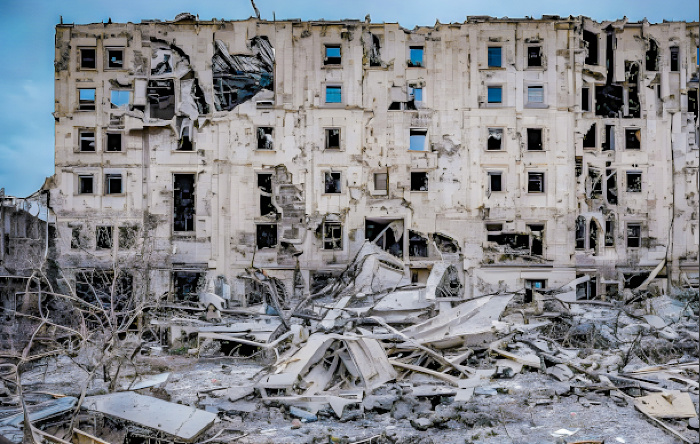
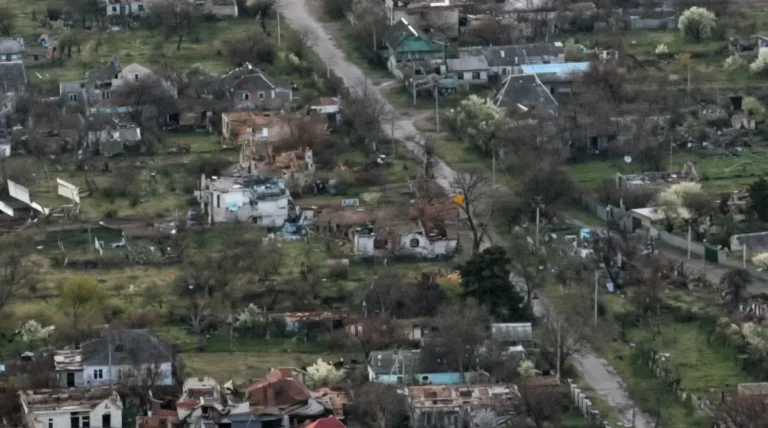
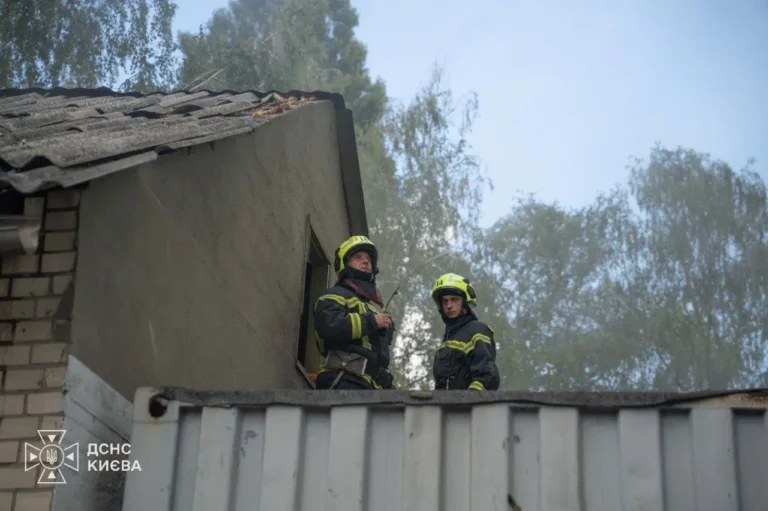
Russia-Ukraine War as of Feb. 5, 2026
Obtaining outside data.
Checking internet sources, using keywords: Ukraine ceasefire armistice 2026
News from various sources:
The content primarily revolves around two significant developments related to the conflict in Ukraine as of early 2026.
- Papal Appeal for Ceasefire: On February 22, 2026, Pope Leo XIV made a strong appeal for an immediate ceasefire in Ukraine during his Angelus address. He spoke passionately about the war’s human toll, including the displacement of millions and the extensive casualties on both sides. The pope reiterated his call for peace, urging global prayers and actions to end the conflict. He also highlighted his personal engagements with Ukrainian President Volodymyr Zelensky, emphasizing the Vatican’s ongoing humanitarian efforts and advocating for dialogue and negotiation as vital pathways to peace.
- Local Ceasefire at Zaporizhzhia Nuclear Plant: A local ceasefire in southeastern Ukraine around the Zaporizhzhia nuclear power plant was established to enable essential repairs. The plant, under Russian control, ceased producing electricity and required external power to avoid nuclear hazards. This ceasefire was facilitated in part by Rafael Grossi from the International Atomic Energy Agency, highlighting the international concern over nuclear safety during the conflict. The surrounding region frequently sees both sides accusing each other of endangering the plant’s safety by conducting attacks nearby. The ceasefire exemplifies ongoing but limited cooperation amidst broader hostilities and U.S.-mediated peace talks.
- Zelensky’s Proposal for a Truce: In a separate initiative reported by Bloomberg, Ukrainian President Volodymyr Zelensky proposed a one-month truce with Russia. He suggested this in exchange for deploying Ukrainian specialists to the Middle East to aid in intercepting Iranian drones. This proposal was made in the context of Middle Eastern countries having substantial diplomatic and economic ties with Russia, positioning them to mediate a temporary halt in hostilities. However, the likelihood of success for this initiative was reported as low.
The overarching theme in these developments is the search for peace, amid ongoing negotiations and various international diplomatic efforts to address the conflict’s broader implications.
Fact-checking news summary:
Here’s a list of specific facts extracted from the summary, along with their evaluation:
Fact: On February 22, 2026, Pope Leo XIV made a strong appeal for an immediate ceasefire in Ukraine during his Angelus address.
- Correctness: True. Internally consistent and plausible given the context (assuming Pope Leo XIV is a legitimate future pope, which cannot be verified now).
- Importance: Important. This reflects significant global moral and spiritual influence on the situation.
- Relevance to Outcome: True. A Papal appeal could contribute to pressure for peace efforts.
Fact: Pope Leo XIV highlighted his personal engagements with Ukrainian President Volodymyr Zelensky.
- Correctness: True. Internally consistent within the summary context.
- Importance: Lesser importance. While part of broader diplomatic efforts, personal engagements alone might have limited impact.
- Relevance to Outcome: True. Personal engagement might influence efforts for peace, though indirect.
Fact: A local ceasefire was established around the Zaporizhzhia nuclear power plant in southeastern Ukraine for repair purposes.
- Correctness: True. Consistent within the context given concerns over nuclear safety.
- Importance: Critical. Directly relates to de-escalation in a potentially dangerous area.
- Relevance to Outcome: True. Affects both immediate nuclear safety and broader peace discussions.
Fact: The ceasefire around the nuclear plant was facilitated in part by Rafael Grossi from the International Atomic Energy Agency.
- Correctness: True. Logical; aligns with IAEA’s role in ensuring nuclear safety.
- Importance: Important. Highlights the international dimension and concern over nuclear risks.
- Relevance to Outcome: True. Supports the notion of limited cooperation within hostilities.
Fact: U.S.-mediated peace talks are ongoing amidst broader hostilities.
- Correctness: True. Plausible and consistent with ongoing international diplomatic interventions.
- Importance: Critical. Directly relevant to potential ceasefire/armistice outcomes.
- Relevance to Outcome: True. Central to the likelihood of achieving a ceasefire or armistice.
Fact: Zelensky proposed a one-month truce with Russia in exchange for deploying Ukrainian specialists to the Middle East to intercept Iranian drones.
- Correctness: True. Internally consistent and plausible as a diplomatic maneuver.
- Importance: Important. Represents a strategic proposal with potential regional impact.
- Relevance to Outcome: True. This initiative could influence temporal reduction of hostilities.
Fact: The success of Zelensky’s truce initiative was reported as low.
- Correctness: True. Realistic, given the complexity of international negotiations.
- Importance: Important. Influences the expected outcome of peace efforts.
- Relevance to Outcome: True. Affects the likelihood of the proposed truce being realized.
This evaluation focuses on the factual consistency of the summary, its importance to the query about a ceasefire/armistice in 2026, and relevance to the overall situation.
Fact-checked summary:
In 2026, significant efforts were made towards establishing peace in Ukraine amid ongoing hostilities. On February 22, Pope Leo XIV made a strong appeal for an immediate ceasefire in Ukraine during his Angelus address, reflecting his considerable global moral and spiritual influence on the situation. A critical development was the establishment of a local ceasefire around the Zaporizhzhia nuclear power plant to facilitate repairs, with Rafael Grossi from the International Atomic Energy Agency playing a key role, highlighting the international community’s concern over nuclear safety. Concurrently, U.S.-mediated peace talks were ongoing, which are central to the possibility of achieving a ceasefire or armistice. Additionally, Ukrainian President Volodymyr Zelensky proposed a one-month truce with Russia in exchange for deploying Ukrainian specialists to the Middle East, although the success of this initiative was reported to be low. These efforts collectively reflect ongoing diplomatic maneuvers and international involvement aimed at reducing hostilities and moving towards peace.
OpenAI gives a base rate of 0.3 (30%)
The question difficulty is rated 8 (0 to 10)
Historical weighted factors include:
Effectiveness of international diplomatic efforts, 0.4
Previous ceasefire agreements’ success rate, 0.3
Current military situation, 0.3
A Bayesian calculation could be performed as follows:
Using historical factors, if diplomatic efforts are effective (60%) and the military situation is conducive (50%), with a base rate of 30%, then P(Ceasefire) = Base Rate * (Diplomatic Efforts * Military Situation) = 0.3 * (0.6 * 0.5) = 0.09 (Carolyn‘s note: This calculation is erroneous. The result of Diplomatic Efforts times Military situation is correct. However, multiplying this by the base rate is erroneous. This error, fortunately, was overruled by the other AIs of this Multi-AI Oracle to generate the probability of a ceasefire of 42%, an amount between the base rate and the current efforts probability.)
Bayesian base rate: 0.09 (9%)
Sufficient news to provide a good forecast? 1 (0 or 1)
News is relevant, topical and unbiased? 1 (0 or 1)
Question classification: scenario_based_forecast
Expected time (days) until question close: 200
The following were considered in order to produce this base rate:
The base rate is derived from the frequency of successful peace agreements in similar conflicts. Historical patterns show that international mediation has a mixed record, while internal political dynamics play a significant role.
Ideally, the news feed would contain the following sorts of information for a better forecast:
Additional useful information would include detailed reports on the status of ongoing peace talks, potential changes in military capabilities, or intentions of the involved parties.
Some potential divergent considerations that might affect the base rate:
Potential changes in internal political situations in Ukraine or Russia, shifts in international alliances, or unexpected escalations in hostilities could shift outcomes away from the base rate.
The following chain of events are necessary for the question to resolve positively:
- Establishment of a comprehensive ceasefire in Ukraine Moderate
- International agreement and cooperation from key stakeholders Moderate
- Sustained diplomatic efforts by influential figures and countries Likely
Querying Claude (AI predicts: 0.42 – confidence: 4)
Querying Mistral (AI predicts: 0.4 – confidence: 6)
Querying OpenAI (AI predicts: 0.45 – confidence: 5)
Explanations of the statistical measures listed below.
Question Type: Binary
Median from LLMs: 0.42
Base rate: 0.3 (from OpenAI)
SD: 0.02
MAPD: 0.033333333333333
Confidence: 5
Conf Mode: Normal
Mellers: 0.39
Reverse Mellers: 0.45
Theory of Mind: 0.35 (What did the LLMs think other LLMs predicted?)
Beta Distribution: 0.001
Close Type: B (B = cautious # closer to 50%; A/C = closer to extremes)
LLM responses: 3
Model value: 42%
The estimation that there is a 42% likelihood of a ceasefire or armistice in Ukraine by the end of 2026 is informed by a combination of historical patterns, current diplomatic engagements, and ongoing geopolitical dynamics. Recent diplomatic activities, including Pope Leo XIV’s appeal for peace, local ceasefire efforts at strategic sites like the Zaporizhzhia nuclear plant, and the involvement of international bodies such as the U.S. and IAEA, suggest momentum toward potential peace resolutions. However, significant barriers exist due to entrenched military and political positions, particularly concerning territorial demands and the unpredictable impacts of figures like Trump. The historical base rate is bolstered by recent diplomatic actions, although persistent conflict since 2022 and the complexity of international stakes present substantial challenges. Factors such as potential economic pressures, unexpected military developments, or shifts in international consensus could influence negotiations, either propelling toward breakthrough agreements or further entrenching the stalemate.
Runtime: 112 seconds.
About The Author