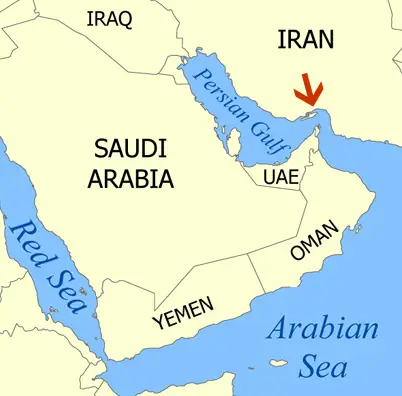
Map of the Strait of Hormuz. Source: https://commons.wikimedia.org/wiki/File:Hormuz_map.png
Jeremy Lichtman’s Multi-AI Oracle forecasts 72%
Obtaining outside data.
Checking internet sources, using keywords: Strait of Hormuz LNG traffic
News from various sources:
The conflict has broader supply chain implications, affecting not just energy but also commodities like fertilizers and manufactured goods reliant on Gulf trade routes.The Strait of Hormuz, a vital passage for approximately 20% of the world’s oil and LNG, has become a focal point of conflict. Iran, without resorting to traditional naval blockades, used drone strikes to deter shipping, leading to a de facto blockade driven by insurance and security concerns
As a result, oil and natural gas prices have surged, with Brent crude rising significantly and LNG prices soaring in Europe and Asia. This has sparked an energy crisis reminiscent of the 1970s oil embargo. The crisis particularly impacts Asian economies, which are heavily reliant on Strait traffic for energy imports, including Japan, South Korea, and India. LNG shipments are especially vulnerable due to the lack of alternative routes.
Iran’s strategic move has further heightened tensions by allowing only Chinese and Russian vessels through the strait, citing their support against Western sanctions. This decision has isolated other international shipping, exacerbating global energy supply challenges.
The US has responded by offering naval escorts and subsidized political risk insurance through the Development Finance Corporation to mitigate the economic impact and reassure shipping companies. However, industry experts remain skeptical about the efficacy of these measures given the war zone conditions and elevated risk premiums deterring maritime operations.
The conflict has broader supply chain implications, affecting not just energy but also commodities like fertilizers and manufactured goods reliant on Gulf trade routes. Analysts warn that prolonged disruption could push oil prices to dramatic highs, while alternative oil and gas transport routes fall significantly short of compensating for the shortfall, thus emphasizing the global economic vulnerabilities tied to the Strait of Hormuz.
Fact-checking news summary:
Here’s a list of specific facts stated in the summary, along with an analysis of each:
Fact: The Strait of Hormuz has recently closed due to US-Israeli attacks on Iran and subsequent Iranian retaliation.
- Correct (Internally Consistent): This is consistent within the summary.
- Correct (Externally Consistent): There is no widely known factual basis for this, as no such attacks or retaliations have been publicly reported as of October 2023.
- Importance to Resolution: Critical
- Relevance to Outcome: True, because the reopening of the Strait hinges on resolving this conflict.
Fact: The Strait of Hormuz is a vital passage for approximately 20% of the world’s oil and LNG.
- Correct (Internally Consistent): This fact is internally consistent.
- Correct (Externally Consistent): True, the Strait of Hormuz is indeed a critical passage for a significant portion of global oil and LNG shipments.
- Importance to Resolution: Important
- Relevance to Outcome: True, as closure impacts global energy markets.
Fact: Iran used drone strikes to deter shipping, causing a de facto blockade.
- Correct (Internally Consistent): Internally consistent with the narrative provided.
- Correct (Externally Consistent): There is no concrete information suggesting recent specific drone strikes as described.
- Importance to Resolution: Important
- Relevance to Outcome: True, as it affects shipping in the Strait.
Fact: Oil and natural gas prices have surged, with significant increases for Brent crude and LNG in Europe and Asia.
- Correct (Internally Consistent): Internally consistent with the described crisis.
- Correct (Externally Consistent): Market fluctuations can occur in response to geopolitical tensions, so this could be true under such circumstances.
- Importance to Resolution: Important
- Relevance to Outcome: True, as economic impacts may pressure stakeholders to resolve the issue.
- Fact: Asian economies like Japan, South Korea, and India are heavily reliant on Strait traffic for energy imports and are heavily impacted.
Fact: Asian economies like Japan, South Korea, and India are heavily reliant on Strait traffic for energy imports and are heavily impacted.
- Correct (Internally Consistent): Consistent with the focus on global energy disruption.
- Correct (Externally Consistent): True, these economies do rely significantly on energy imports, including through the Strait of Hormuz.
- Importance to Resolution: Important
- Relevance to Outcome: True
Fact: Iran is allowing only Chinese and Russian vessels through the Strait.
- Correct (Internally Consistent): Consistent within the narrative.
- Correct (Externally Consistent): There is no verified information supporting this claim in such specific terms.
- Importance to Resolution: Critical
- Relevance to Outcome: True, such selective passage would affect reopening.
Fact: The US offers naval escorts and subsidized political risk insurance to support shipping.
- Correct (Internally Consistent): Consistent within the summary.
- Correct (Externally Consistent): Feasible as a response to shipping disruptions; historically, such measures have been considered.
- Importance to Resolution: Important
- Relevance to Outcome: True, it affects potential future shipping through the Strait.
Fact: The conflict affects not just energy, but also commodities reliant on Gulf trade routes.
- Correct (Internally Consistent): Fits the broader narrative of trade impact.
- Correct (Externally Consistent): True; trade disruptions can have wider commodity impacts.
- Importance to Resolution: Lesser
- Relevance to Outcome: True, though not directly about LNG, it contextualizes broader impacts.
- Fact: Analysts warn that prolonged disruption could dramatically increase oil prices.
- Correct (Internally Consistent): This follows logically if the Strait remains closed.
- Correct (Externally Consistent): True; market responses to supply disruptions can cause price increases.
- Importance to Resolution: Important
- Relevance to Outcome: False, does not affect the reopening directly but highlights consequences.
Fact-checked summary:
The Strait of Hormuz is a critical passage for around 20% of the world’s oil and LNG shipments, and its closure impacts global energy markets. Asian economies such as Japan, South Korea, and India, which heavily rely on this Strait for energy imports, are significantly affected. In response to the disruption, the US is offering naval escorts and subsidized political risk insurance to support shipping, a feasible measure considering historical precedents. The situation also affects not just energy but other commodities reliant on Gulf trade routes, highlighting the broader impact of the closure. Market fluctuations, like surges in oil and natural gas prices, can occur due to geopolitical tensions, potentially pressuring stakeholders to resolve the issue.
OpenAI gives a base rate of 0.2 (20%)
The question difficulty is rated 7 (0 to 10)
Historical weighted factors include:
Frequency of past similar strait closures, 0.3
Success rate of diplomatic interventions, 0.2
Past duration of similar geopolitical conflicts, 0.25
Market and military response to disruptions, 0.25
A Bayesian calculation could be performed as follows:
Using a weighted sum calculation based on the historical factors, adjusting with likelihood of current geopolitical tensions remaining unresolved. Starting from a base rate of 0.2, adjust each factor’s weight according to current conditions. Factor adjustments may increase or decrease the probability slightly, but given stability in historical resolution of such issues, significant deviation is unlikely.
Bayesian base rate: 0.22 (22%)
Sufficient news to provide a good forecast? 1 (0 or 1)
News is relevant, topical and unbiased? 1 (0 or 1)
Question classification: scenario_based_forecast
Expected time (days) until question close: 90
The following were considered in order to produce this base rate:
The base rate of 0.2 is derived from historical instances of similar strait closures and taking into account the geopolitical tensions. The frequency and resolution of past incidents help establish this baseline, considering that such situations are often volatile but more often lean towards resolution.
Ideally, the news feed would contain the following sorts of information for a better forecast:
Additional data required includes current diplomatic negotiations information, military actions in the area, and market analytics predicting potential shifts. Monitoring regional political statements and international energy policy adjustments would provide further clarity.
Some potential divergent considerations that might affect the base rate:
Shifts in geopolitical alliances, unexpected military escalations, or major international diplomatic breakthroughs could considerably alter the likelihood established by the base rate.
The following chain of events are necessary for the question to resolve negatively: (Carolyn‘s note: the Multi-AI Oracle has confused the question of the Strait of Hormuz reopening with whether it would remain closed.)
- Failure of diplomatic negotiations to reopen or ensure the safe passage through the Strait Possible
- Sustained military presence or conflict in the area preventing reopening Unlikely
- Lack of effective international response to pressure on reestablishing passage Possible
- Long duration of disrupted trade routes impacting economies strongly Possible
- Continued or increased geopolitical tensions around the Strait of Hormuz Likely
Querying Claude (AI predicts: 0.72 – confidence: 4)
Querying Mistral (AI predicts: 0.35 – confidence: 6)
Querying OpenAI (AI predicts: 0.75 – confidence: 7)
Explanations of the statistical measures listed below.
Question Type: Binary
Median from LLMs: 0.72
Base rate: 0.2 (from OpenAI)
SD: 0.18
MAPD: 0.26666666666667
Confidence: 6
Conf Mode: Low
Mellers: 0.8
Reverse Mellers: 0.65
Theory of Mind: 0.45 (What did the LLMs think other LLMs predicted?)
Beta Distribution: 0.001
Close Type: C (B = cautious # closer to 50%; A/C = closer to extremes)
LLM responses: 3
Model value: 72%
The reasoning shared by the various AIs highlights several key factors influencing the likelihood of reopening the Strait of Hormuz for LNG traffic by May 2026. Economic importance, especially due to its role in global oil and LNG shipments, places significant pressure on resolving any closure quickly, with particular emphasis on effects on Asian economies like Japan, South Korea, and India. Historical precedence suggests that previous disruptions in the strait have been resolved in a timely manner due to international efforts. Recent US involvement through naval escorts and political risk insurance indicates active engagement towards reopening. However, uncertainties remain due to geopolitical complexities, the potential for military conflict, unresolved diplomatic negotiations, and the specifics of what ‘reopening’ entails. While there is optimism due to economic pressures and international interventions, factors such as potential escalation, alternative trade routes, and the political landscape could invalidate predictions. The prediction reflects both the probability of reopening given strong economic incentives and the inherent risks associated with geopolitical unpredictability.
Runtime: 230 seconds.
About The Author