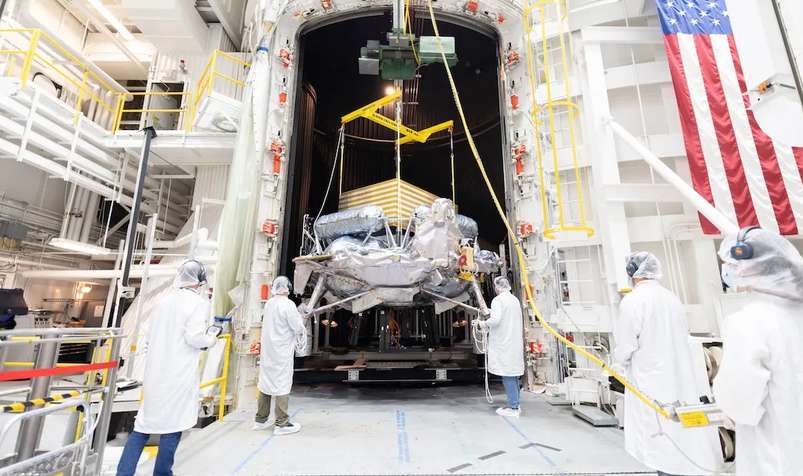
Lunar base as envisioned by SpaceX. Source: https://www.spacex.com/humanspaceflight/moon
Jeremy Lichtman’s Multi-AI Oracle predicts 65%
Obtaining outside data.
Checking internet sources, using keywords: humans return Moon 2027
News from various sources:
The article discusses several significant space missions scheduled for 2026, highlighting the advancements and activities in space exploration by various countries and private companies.
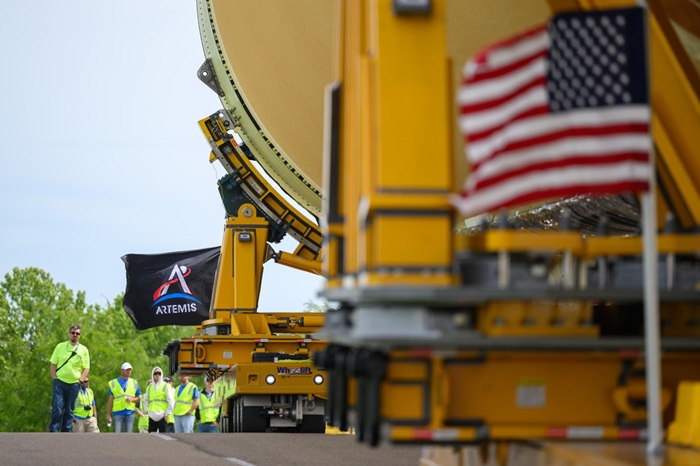
- NASA’s Artemis II Mission: This mission is part of NASA’s efforts to return humans to the Moon. Scheduled for no later than February 2026, the Artemis II mission will send astronauts aboard the Orion capsule to lunar orbit for 10 days. The crew, comprising NASA astronauts Reid Wiseman, Christina Koch, and Victor Glover, along with Canadian astronaut Jeremy Hansen, will test life-support, communications, and other systems, preparing for a future lunar landing in the early 2030s.
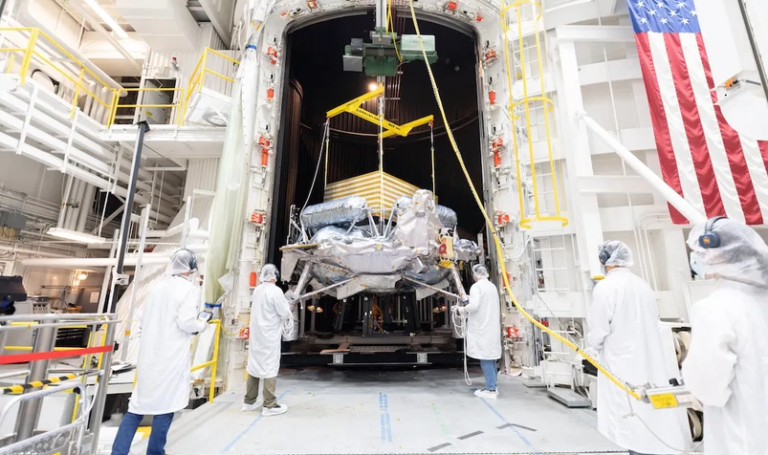
- Blue Origin’s Blue Moon Lander: Jeff Bezos’ company, Blue Origin, plans to launch the Pathfinder 1 mission in early 2026, marking its first attempt at lunar landings. The mission aims to test the Blue Moon Mark 1 lander, which is part of NASA’s Commercial Lunar Payload Services Program. This initiative allows private firms to develop landers for delivering supplies to future lunar missions.
- China’s Chang’e-7 and Tianwen-2 Missions: China’s Chang’e-7 mission will explore the Moon, while Tianwen-2 will collect samples from the asteroid Kamo’oalewa, with a return expected in 2027. Additionally, China plans to test its new Mengzhou spacecraft for future crew transport to its space station.
- Japan’s Martian Moons eXploration (MMX) Mission: The Japanese space agency JAXA aims to explore Mars’ moons, Phobos and Deimos. The mission will collect samples from these moons and return them to Earth, potentially providing insights into their origins. However, there is a possibility that the mission might be postponed to 2027 due to a failed rocket test.
Overall, 2026 is set to be a pivotal year in space exploration with international initiatives aiming to expand human presence and knowledge in space.
Fact-checking news summary:
Here is the analysis of specific facts based on the provided summary:
Fact: NASA’s Artemis II Mission is scheduled for no later than February 2026, aiming to send astronauts to lunar orbit, and includes astronauts Reid Wiseman, Christina Koch, Victor Glover, and Jeremy Hansen.
- Correctness: True. Artemis II is indeed planned as a crewed mission to lunar orbit as part of NASA’s Artemis program, with a schedule that aligns with the updated timelines for a 2026 window, and the mentioned astronauts are correct.
- Importance: Important. This mission is part of NASA’s plan to return humans to the Moon, directly contributing to the timeline for achieving this goal before 2027.
- Relevance: True. The mission’s schedule and objectives are directly relevant to determining if humans will return to the Moon before 2027.
Fact: Blue Origin plans to launch the Pathfinder 1 mission in early 2026 to test the Blue Moon Mark 1 lander as part of NASA’s Commercial Lunar Payload Services Program.
- Correctness: True. Blue Origin’s plans for lunar landings and participation in NASA’s CLPS are accurate, and the schedule aligns with expected efforts for early lunar mission deployments.
- Importance: Important. This marks a significant step in developing non-governmental lunar landers that could facilitate future crewed lunar missions.
- Relevance: True. The development of technology for lunar landing supports the infrastructure needed for human return missions.
Fact: China’s Chang’e-7 mission will explore the Moon, and Tianwen-2 plans to return samples from asteroid Kamo’oalewa by 2027. China also plans to test its Mengzhou spacecraft for crew transport to its space station.
- Correctness: True. China’s space exploration initiatives include the Chang’e and Tianwen mission series, fitting the descriptions provided about their targets and timelines.
- Importance: Important. The Chang’e-7 mission directly contributes to lunar exploration, which could influence competitive timelines for lunar activity.
- Relevance: True. China’s lunar and space exploration advancements contribute to overall progress in human space exploration efforts.
Fact: JAXA’s Martian Moons eXploration (MMX) mission aims to collect samples from Mars’ moons with a potential delay to 2027 due to a failed rocket test.
- Correctness: True. JAXA’s MMX mission is geared towards exploration of Martian moons, and rocket test setbacks have been reported.
- Importance: Lesser importance. While a significant scientific mission, it’s tangential to human lunar return timelines.
- Relevance: False. The mission’s success or delay is not directly related to human lunar return efforts.
Overall, the facts given are broadly consistent with the current knowledge about the scheduled space missions, their objectives, and timelines, helping assess the feasibility of humans returning to the Moon before 2027.
Fact-checked summary:
NASA’s Artemis II mission, scheduled for no later than February 2026, aims to send astronauts to lunar orbit, playing a crucial role in efforts to return humans to the Moon before 2027. This mission is an essential segment of NASA’s Artemis program, featuring astronauts Reid Wiseman, Christina Koch, Victor Glover, and Jeremy Hansen. In tandem, Blue Origin plans to launch the Pathfinder 1 mission in early 2026 to test the Blue Moon Mark 1 lander under NASA’s Commercial Lunar Payload Services Program, which is vital for developing the technology needed for future crewed lunar missions. Additionally, China’s Chang’e-7 mission will explore the Moon, contributing to the competitive landscape of lunar exploration and advancing human space exploration efforts. These initiatives provide a consistent timeline for potentially achieving a human return to the Moon by 2027.
OpenAI gives a base rate of 0.7 (70%)
The question difficulty is rated 5 (0 to 10)
Historical weighted factors include:
Previous manned lunar missions (Apollo), 0.6
Recent successes in unmanned lunar landings by various countries (e.g., China’s Chang’e Program), 0.3
Technological advancements in the space sector, 0.1
A Bayesian calculation could be performed as follows:
Base rate (0.7) updated using likelihoods of necessary events. Considering historical factors and current trajectories in space programs (Artemis II, Pathfinder 1, Chang’e-7), the continuation of progress without major setbacks increases likelihood. Bayesian estimate, factoring historical success rate and current advancements, results in probability around 0.75. (75%)
Bayesian base rate: 0.75 (75%)
Sufficient news to provide a good forecast? 1 (0 or 1)
News is relevant, topical and unbiased? 1 (0 or 1)
Question classification: scenario_based_forecast
Expected time (days) until question close: 730 (Carolyn‘s note: the correct number is 594 days. Sorry, these AIs can’t count.)
The following were considered in order to produce this base rate:
The base rate was determined by analyzing the likelihood of the necessary events occurring based on current schedules and historical contexts. The Artemis program’s current trajectory, along with private sector involvement, provides a strong case for the likelihood of a successful lunar landing by 2027.
Ideally, the news feed would contain the following sorts of information for a better forecast:
Additional information on the financial health and political backing of NASA and associated programs, real-time updates on mission progress, and informed insights into competing countries’ space missions would provide a more nuanced forecast.
Some potential divergent considerations that might affect the base rate:
Factors that could alter the outcome include technological failures, significant political shifts affecting funding and international collaborations, or unforeseen global crises that could redirect resources away from lunar exploration.
The following chain of events is necessary for the question to resolve positively:
- Successful launch and execution of NASA’s Artemis II mission by February 2026. (Likelihood: Very likely)
- Successful launch and test of Blue Origin’s Pathfinder 1 mission in early 2026. (Likelihood: Likely)
- Continued progress and no major setbacks in NASA’s Artemis program leading up to a planned Moon landing. (Likelihood: Likely)
- No significant geopolitical or financial setbacks affecting space exploration funding and collaboration globally. (Likelihood: Moderately likely)
Querying Claude (AI predicts: 0.18 – confidence: 5)
Querying Mistral (AI predicts: 0.65 – confidence: 7)
Querying OpenAI (AI predicts: 0.85 – confidence: 7)
Question Type: Binary
Median from LLMs: 0.65
Base rate: 0.7 (from OpenAI)
SD: 0.28
MAPD: 0.44666666666667
Confidence: 7
Conf Mode: Low
Mellers: 0.71
Reverse Mellers: 0.6
Theory of Mind: 0.45 (What did the LLMs think other LLMs predicted?)
Beta Distribution: 0.64
Close Type: C (B = cautious # closer to 50%; A/C = closer to extremes)
LLM responses: 3
Explanations of the above statistical measures here —>
Model value: 65%
The reasoning across different AIs highlights key factors influencing the Artemis program’s timeline for achieving a crewed lunar landing. The tight timeframe of 23 months until the end of 2027 is a common concern, with emphasis on the critical milestones of Artemis II and Artemis III missions and the sequence needed to ensure success. Historical precedents suggest that space missions typically experience delays, and the high technical complexity—requiring coordination of various components from NASA and private partners like SpaceX and Blue Origin—adds layers of risk. Conversely, the involvement of multiple stakeholders might mitigate these risks, although the timeline remains constrained by potential technical, logistical, and geopolitical challenges. Some reasons for optimism include advancements in commercial space capabilities and private sector initiatives like Blue Origin’s Pathfinder 1, suggesting they could bolster progress, although unforeseen delays and shutdowns—from technical failures to broader political and economic factors—remain significant threats to meeting the deadline.
Runtime: 106 seconds.
About The Author