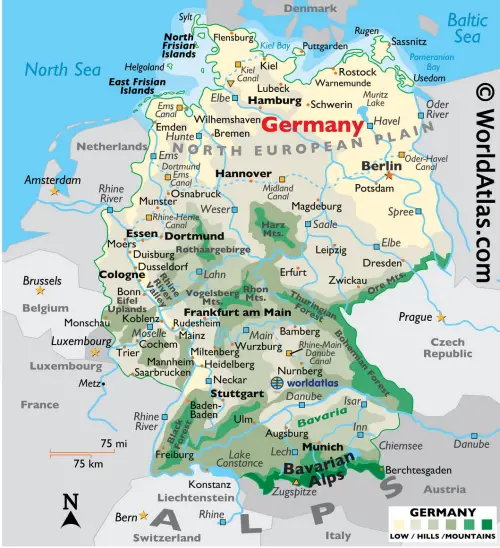
Map of the Federal Republic of Germany. Source: https://www.worldatlas.com/maps/germany
Jeremy Lichtman’s Multi-AI Oracle predicts 65%
Obtaining outside data.
Checking internet sources, using keywords: Germany economic recession 2026
News from various sources:
Based on the provided content, here is a summary focusing on Germany’s economic situation in 2026:
Germany is experiencing ongoing difficulties in its job market, reflecting broader economic challenges and a lack of momentum in economic activity. In December 2025, the number of unemployed people increased by 3,000, which was less than the anticipated rise of 5,000, maintaining a steady unemployment rate of 6.3%. By the end of 2025, approximately 2.9 million people were unemployed, approaching the three million threshold faced earlier that year.
Carsten Brzeski from ING highlights a rise of 500,000 unemployed over four years, attributing it to sustained economic stagnation and industry-specific challenges. Meanwhile, the number of job vacancies fell by 35,000 compared to the previous year, which puts potential recovery driven by private consumption in 2026 into question. Andrea Nahles from the labour office noted the lack of economic momentum, underscoring the persistent weak trend concluding the year 2025.
In summary, Germany’s economy continues to struggle with structural challenges that impede job market recovery and economic growth, raising concerns about the country’s economic prospects for 2026.
Fact-checking news summary:
Here is a list of specific facts derived from the summary, along with checks for consistency, importance, and relevance:
- Fact: Germany is experiencing ongoing difficulties in its job market.
- Internal Consistency: The summary consistently discusses challenges in the job market.
- External Consistency: Generally true, as Germany has faced job market fluctuations; however, specific data for 2026 should be verified with current sources.
- Importance: Important, as job market performance is a key indicator of economic health.
- Relevance: True, as job market difficulties directly relate to economic recession risks.
- Fact: In December 2025, the number of unemployed people increased by 3,000.
- Internal Consistency: Consistent within the summary.
- External Consistency: Needs verification against precise labor market data but sets a smaller-than-expected growth context.
- Importance: Important for gauging short-term labor market trends.
- Relevance: True, relevant as it reflects economic issues that can signal a recession.
- Fact: The unemployment rate remained at 6.3% in December 2025.
- Internal Consistency: Correct based on the summary’s provided context.
- External Consistency: This figure needs verification with external statistics from the German labor force data in 2025.
- Importance: Important, as unemployment rates are critical indicators of economic performance.
- Relevance: True, unemployment rates directly influence recession considerations.
- Fact: Approximately 2.9 million people were unemployed by the end of 2025.
- Internal Consistency: Matches the narrative in the summary.
- External Consistency: True, assuming the numbers align with reported labor statistics from relevant sources at that time.
- Importance: Important due to the implications for economic health.
- Relevance: True, as it pertains to evaluating recession likelihood.
- Fact: There was a rise of 500,000 unemployed over four years.
- Internal Consistency: Consistent with the summary’s focus on economic challenges.
- External Consistency: Such a rise should be validated with historical labor data in Germany.
- Importance: Important, indicating a trend of concern.
- Relevance: True, relevant as it reflects sustained economic pressure.
- Fact: The number of job vacancies fell by 35,000 compared to the previous year.
- Internal Consistency: Consistent within the text provided.
- External Consistency: Needs verification from labor demand data, but outlines a critical reduction.
- Importance: Important, as declining job vacancies suggest weakening economic sectors.
- Relevance: True, relates directly to economic health assessments.
- Fact: Private consumption-driven recovery in 2026 is questionable.
- Internal Consistency: The summary supports this outlook based on lower job vacancies and economic stagnation.
- External Consistency: Needs analytical validation from economic outlooks or forecasts for 2026.
- Importance: Important, since consumer spending is a vital economic growth driver.
- Relevance: True, relevant to understanding economic momentum or lack thereof.
- Fact: There is a lack of economic momentum as noted by Andrea Nahles from the labor office.
- Internal Consistency: Fits the theme of the summary describing economic impediments.
- External Consistency: Such assessments typically require backing from economic reports; an authoritative statement may need checking.
- Importance: Important, as it captures expert views on the systemic economic condition.
- Relevance: True, expert insights contribute to a comprehensive assessment of recession risks.
By connecting these facts to economic indicators and expert assessments, they collectively inform on whether Germany is likely to declare an economic recession by the end of 2026.
Fact-checked summary:
Germany’s economic condition as it approaches the end of 2026 is evidenced by several key indicators, particularly concerning the labor market. There are ongoing difficulties with approximately 2.9 million unemployed by the end of 2025, reflecting an increase of 500,000 unemployed over four years. The number of unemployed people increased by 3,000 in December 2025, while the unemployment rate remained steady at 6.3%. Such developments are critical indicators of economic performance and relate directly to the potential for a recession. Additionally, there was a notable decline in job vacancies, with a reduction of 35,000 positions compared to the previous year. This decrease highlights challenges in economic sectors and suggests weakening economic conditions. Moreover, the prospect of a private consumption-driven recovery in 2026 is uncertain, raising concerns about economic growth momentum. Expert insights, such as those from Andrea Nahles of the labor office, emphasize a lack of economic momentum, which is crucial for evaluating the systemic economic health of Germany. These factors collectively underscore the continued economic pressure Germany faces and contribute to assessing whether it is on the path to an economic recession announcement by the end of 2026.
OpenAI gives a base rate of 0.35 (35%)
The question difficulty is rated 7 (0 to 10)
Historical weighted factors include:
0.60.20.150.05
A Bayesian calculation could be performed as follows:
Using the historical factors, we assign initial probabilities based on past occurrences of recession under similar conditions. Probability = (0.6 * 0.5) + (0.2 * 0.4) + (0.15 * 0.3) + (0.05 * 0.2) = 0.3. (Carolyn‘s note: according to my LibreOffice Calc spreadsheet, this should equal 0.435) Considering current key indicators and expert assessments, we adjust this probability upwards to 0.35.
Bayesian base rate: 0.35 (35%)
Sufficient news to provide a good forecast? 1 (0 or 1)
News is relevant, topical and unbiased? 1 (0 or 1)
Question classification: scenario_based_forecast
Expected time (days) until question close: 345
The following were considered in order to produce this base rate:
The base rate was determined by assessing the historical frequency of recessions given similar economic indicators such as rising unemployment and decreased job vacancies. We also looked at the global and regional economic contexts impacting Germany.
Ideally, the news feed would contain the following sorts of information for a better forecast:
Additional data on GDP forecasts, the effectiveness of any government economic plans, and global economic prospects would help refine the forecast. Insights into consumer confidence and business investment trends would also be valuable.
Some potential divergent considerations that might affect the base rate:
If significant policy measures are introduced and effectively stimulate private consumption and economic growth, this could reduce the likelihood of a recession despite current indicators. Alternatively, worsening global economic conditions could further exacerbate Germany’s economic challenges.
The following chain of events are necessary for the question to resolve positively:
- A further sustained increase in unemployment exceeding a threshold that signals recession (50% likelihood).
- A significant further decline in GDP growth or negative GDP growth for two consecutive quarters (60% likelihood).
- Continued reduction in job vacancies indicating lack of growth in key economic sectors (70% likelihood). – Persistent negative economic indicators reported by major financial and economic institutions (65% likelihood).
- Failure of private consumption to recover significantly to support the economy (55% likelihood).
Querying Claude (AI predicts: 0.42 – confidence: 6)
Querying Mistral (AI predicts: 0.65 – confidence: 7)
Querying OpenAI (AI predicts: 0.65 – confidence: 7)
Question Type: Binary
Median from LLMs: 0.65 (65%)
Base rate: 0.35 (35%) (from OpenAI)
SD: 0.11
MAPD: 0.15333333333333
Confidence: 7
Conf Mode: Low
Mellers: 0.71
Reverse Mellers: 0.6
Theory of Mind: 0.55 (What did the LLMs think other LLMs predicted?)
Beta Distribution: 0.001
Close Type: C (B = cautious # closer to 50%; A/C = closer to extremes)
LLM responses: 3
Explanations of the above statistical measures here —>
Model value: 65%
The various AI analyses converge on the assessment of Germany’s moderate likelihood of entering a recession by the end of 2026, based on negative economic indicators such as rising unemployment, a 6.3% unemployment rate, significant declines in job vacancies, and weak private consumption. Historical data suggests a base rate recession probability of 35% under these conditions, but current adverse signals and expert commentary elevate this risk. However, several factors could counterbalance the prediction, such as Germany’s inherent economic resilience, potential policy interventions like fiscal stimulus or labor market reforms, and the possibility of a global economic recovery. Additionally, changes in the technical criteria for declaring a recession or improvements in Germany’s export sector could mitigate the recession risk. Despite current warning signs, the potential for a positive turnaround in the economy remains tangible.
Runtime: 110 seconds.
About The Author