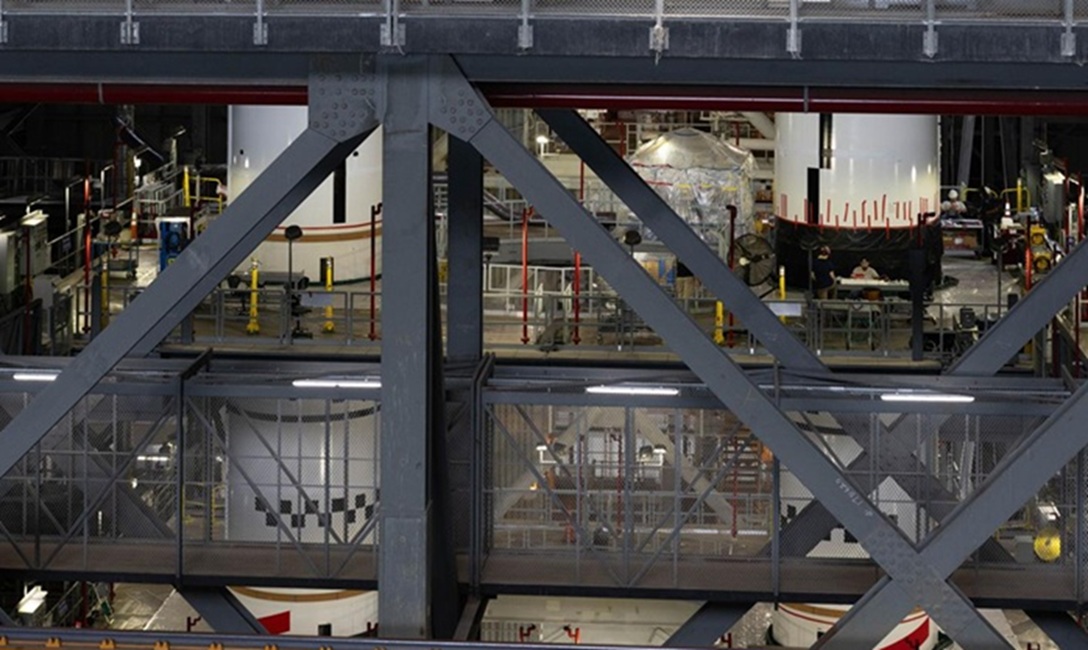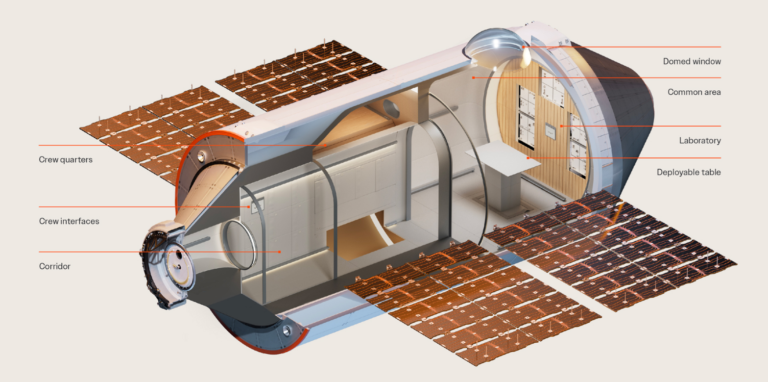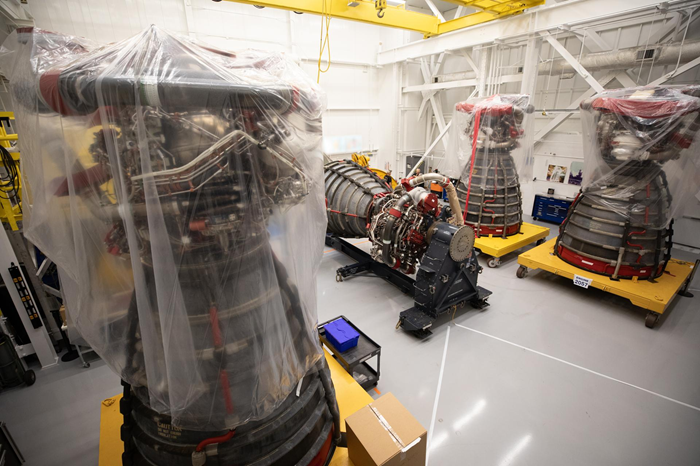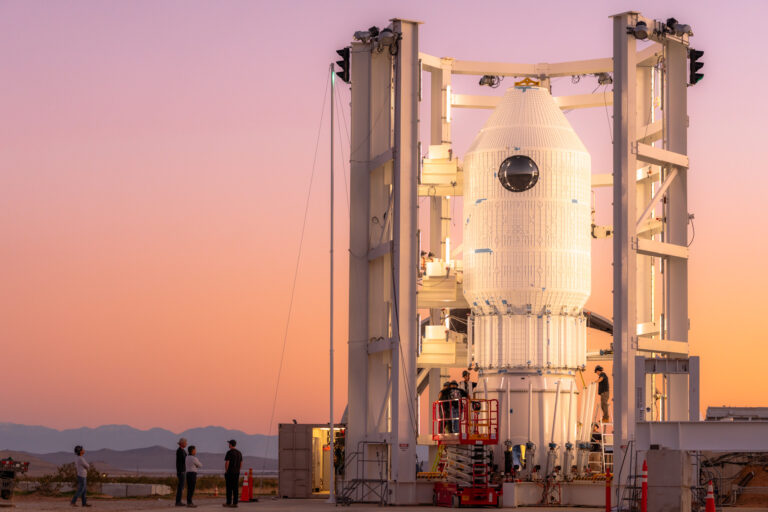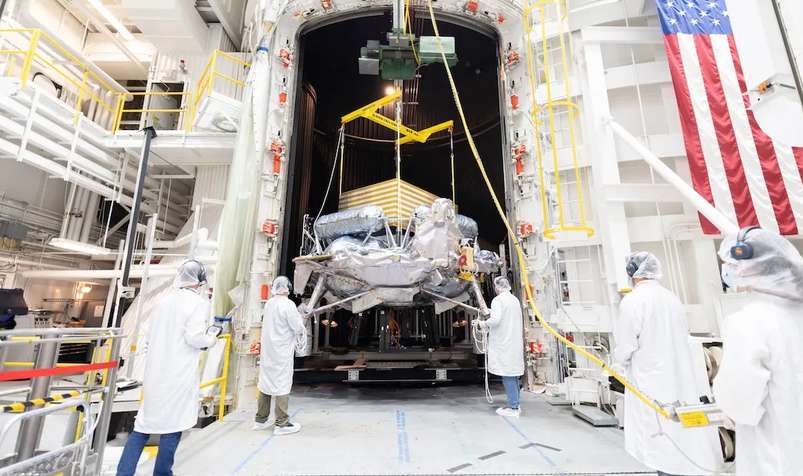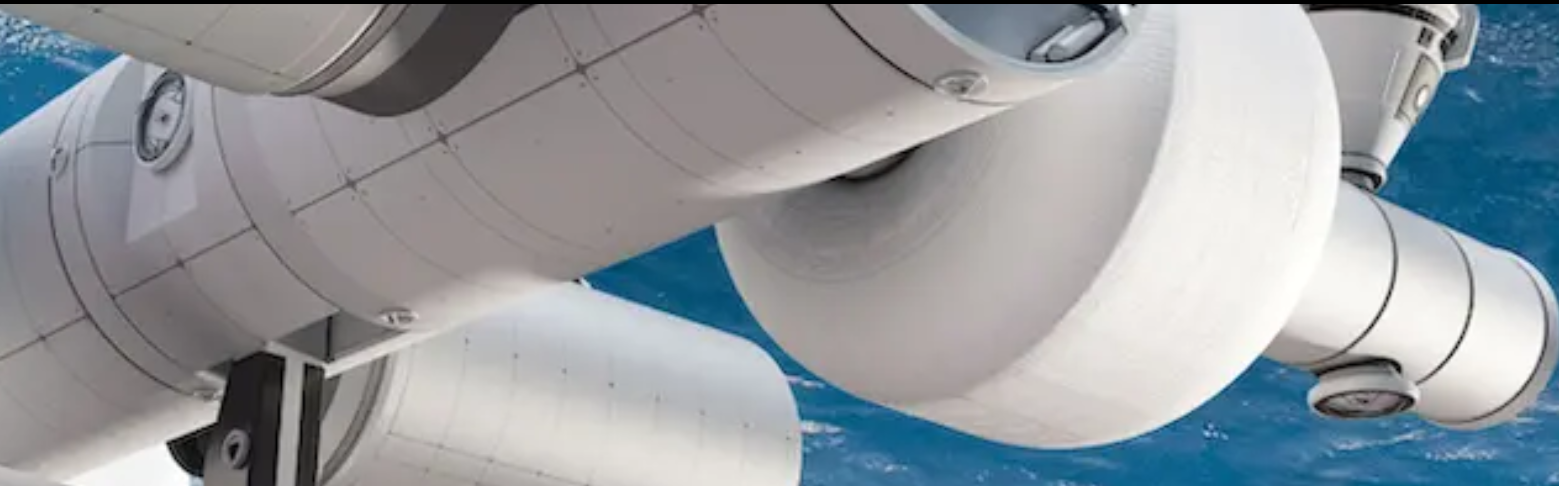
Orbital Reef concept by Blue Origin. Source: https://www.blueorigin.com/destinations
This is its condensed report. Full version here.
Grok response:
10 Key Citations (prioritized by recency and relevance, with publication dates as reported in sources):
- Vast Delays Haven-1 Launch to 2027 (Payload Space, Jan 20, 2026)
News article on Vast’s schedule update. Haven-1 delayed from mid-2026 target to no earlier than Q1 2027 launch (uncrewed on Falcon 9); crewed Dragon missions (2-week stays) would follow after orbital checkout, potentially weeks later but safety-dependent.[1] - Haven-1 (Vast Space official site, updated as of early 2026 content)
Company page on the project. Haven-1 targeted for 2027 launch as the first commercial space station; supports 4-crew, 14-day (or two-week) missions via SpaceX Dragon for science/research; integration phase began January 2026 with ongoing hardware progress.[2] - The first commercial space station, Haven-1, is now undergoing assembly for launch (Ars Technica, Jan 20, 2026)
Detailed interview/report on delay. Vast CEO confirms slip from mid-2026 to Q1 2027 due to integration timeline; unmanned launch followed by checkout, then professional crewed Dragon mission (not immediate crewed launch); station designed for short-duration visits.[3] - Starlab Completes NASA Commercial Critical Design Review (Voyager Technologies press release, Feb 23, 2026)
Official announcement. Starlab advances past design to fabrication/integration after CCDR with NASA; supports 2028+ launch timeline on Starship (single launch, pre-ISS end); part of NASA Commercial LEO Destinations efforts for continuous presence.[4] - Starlab (space station) (Wikipedia, updated ~May 2026)
Summary of project status. Planned launch 2028 (Starship cargo); joint venture (Voyager/Airbus et al.) with NASA/ESA funding; completed CCDR in Feb 2026, shifting to manufacturing; too late for 2027 crewed operations.[5] - Vast Advances Haven-1 Into Integration Phase (Vast Space update, Jan 20, 2026)
Company announcement. Haven-1 integration started; updated schedule for Q1 2027 Falcon 9 launch readiness; privately funded single-module station for crew-tended missions (four planned over ~3 years); Dragon provides crew transport/life support.[6] - Where are America’s Commercial Space Stations in 2025? (Space Scout, Jun 10, 2025, with context into 2026)
Overview of programs. Orbital Reef (Blue Origin/Sierra Space) progressing slowly with NASA milestones (e.g., human-in-loop testing) but lagging behind competitors; no firm 2027 crewed timeline mentioned, appearing behind Starlab/Vast.[7] - NASA eyeing SpaceX’s Starship as possible space station (Space.com, Jul 27, 2023)
Early concept report. NASA via CCSC-2 agreement exploring Starship as free-flying habitat/station option alongside other commercial efforts; no firm timeline or crewed visit plans detailed; Starship primarily for Artemis HLS and other roles at the time.[8] - US company Vast aims to launch the world’s first commercial space station in early 2027 (World Economic Forum/Facebook post summarizing recent statements, ~May 2026)
Update on Vast plans. Haven-1 launch targeted early 2027 (uncrewed); first crew docks via contracted SpaceX Dragon a few weeks later for two-week mission; focus on crew-centric design with Starlink and research capabilities.[9] - Starlab commercial space station to launch on Starship (SpaceNews, Jan 31, 2024, with later updates confirming 2028+)
Partnership announcement. Starlab selects Starship for single-launch deployment (no assembly flights); aims for pre-2030 operation but timelines point to 2028–2029; progress includes 2026 design reviews.[10]
Detailed Rundown of Relevant News and Developments (as of May 27, 2026):
Haven-1 by Vast remains the clear frontrunner for the first new commercial space habitat with a realistic path to a human visit before end-2027. Multiple January 2026 announcements confirmed a delay from the prior mid-2026 (or May 2026) target to a Q1 2027 uncrewed Falcon 9 launch, with integration having begun that month.[1][3][6] The single-module station (45 m³ habitable volume) would undergo orbital checkout (potentially weeks), after which a SpaceX Crew Dragon would deliver four professional astronauts for short ~2-week missions focused on science, research, and in-space manufacturing.[2][11] Vast has emphasized ongoing hardware milestones (e.g., structures, life support testing, solar arrays) into 2026, and recent statements (including May 2026 references) maintain the early-2027 launch goal with crew following shortly after.[9][6] A NASA-related private mission to the ISS involving Vast is eyed for no earlier than summer 2027, providing additional crew training context but not directly tied to Haven-1.[12]
Starlab (led by Voyager Technologies with Airbus and others) is advancing steadily but on a later schedule. It completed its NASA Commercial Critical Design Review in February 2026, transitioning to manufacturing and systems integration, with $217M+ in NASA funding.[4][5] Launch is planned for 2028 (or as late as 2029) on a single Starship flight as a free-flying station with significant research volume; it explicitly targets continuity before ISS retirement (~2030) and is not positioned for crewed visits in 2027.[13][14]
Orbital Reef (Blue Origin, with Sierra Space and partners) continues NASA CLD Phase 1 work but shows slower visible progress compared to peers. Milestones include preliminary design elements and testing (e.g., human-in-the-loop mockups noted in 2025 reports), with older references to potential 2027 operations, but 2025–2026 updates indicate it trails Starlab and lacks firm near-term launch or crewed timelines.[7][15][16] NASA Phase 2 funding decisions are expected around 2026, which could influence acceleration, but no indications point to a 2027 crewed visit.[15]
NASA’s consideration of SpaceX Starship as a potential space station (via a 2023 unfunded Space Act Agreement) remains conceptual with no concrete development or crewed habitat plans tied to 2027.[8] Starship itself is focused on test flights (ongoing into 2026), Artemis HLS, and serving as a launcher for projects like Starlab (2028+).[17][10]
No other independent new habitats (distinct from ISS/Tiangong extensions like Axiom modules) show credible paths to human visits by end-2027. Timelines are dynamic and subject to technical/regulatory delays, but Haven-1’s publicly stated Q1 2027 launch + short crewed follow-on represents the primary near-term opportunity within the forecast window. Expert and company statements emphasize safety-driven pacing for the first commercial station.
Extracted resolution criteria links:
[‘https://www.space.com/nasa-considering-spacex-starship-space-station‘, ‘https://www.blueorigin.com/destinations,’, ‘https://voyagertechnologies.com/starlab/,’]
=== Forecast Result ===
=== Reasoning ===
This forecast is a careful analysis of engineering timelines, historical precedent for delays in the aerospace industry, and the current status of the few candidate projects. The resolution hinges almost exclusively on the success of a single project: Vast’s Haven-1 space station.
Analysis of Candidates
- Haven-1 (Vast): This is the only candidate with a plausible, albeit aggressive, timeline for a human visit before the end of 2027.
- Current Status: The project entered its integration phase in January 2026. This is a critical step where manufactured components are assembled into the final vehicle.
- Timeline: The official target for the uncrewed launch on a SpaceX Falcon 9 is Q1 2027 (January-March). This is already a delay from a previous 2026 target, which is typical for complex aerospace projects.
- Crewed Mission: Following a successful launch, the station will undergo an on-orbit checkout period. Vast has stated a crewed SpaceX Dragon mission with four astronauts would follow, with the visit lasting about two weeks.
- Conclusion: If Haven-1 launches by the end of Q2 2027, there is a very strong chance that the checkout period and subsequent crewed visit can be completed before the resolution date of December 31, 2027. The entire forecast rests on the probability of Haven-1 meeting this compressed schedule.
- Starlab (Voyager Technologies/Airbus): This project is not a contender for the 2027 timeline.
- Timeline: Starlab is explicitly targeting a launch in 2028 or later, aiming to be operational before the ISS is retired around 2030.
- Status: While it has achieved a major milestone by completing its Critical Design Review in February 2026, its entire development schedule falls outside the resolution window for this question.
- Orbital Reef (Blue Origin/Sierra Space): This project is also not on track for a 2027 crewed visit.
- Timeline: Progress appears slower than its competitors, and there are no firm public timelines for a crewed mission in 2027. The project seems focused on the longer-term goal of replacing the ISS post-2030.
- SpaceX Starship: The idea of using a Starship vehicle as a temporary habitat is a contingency plan, not a primary project. While technically possible if Starship development accelerates dramatically, it is highly unlikely to be configured and utilized as a new human-visited habitat by the end of 2027, as its focus remains on launch vehicle testing and the Artemis lunar program.
Probabilistic Assessment
The forecast can be broken down into a series of probabilistic steps for Haven-1:
- Probability of Launch in 2027: The base rate for delays in first-of-their-kind space projects is very high. While the target is Q1 2027, a slip of 3-9 months is common. I estimate an 85% probability that the uncrewed launch occurs before the end of 2027, with a 15% chance of it slipping into 2028 or later.
- Probability of Success (Launch & Checkout): The Falcon 9 launch vehicle is highly reliable. The main risk is the on-orbit commissioning of the new station. There is a significant chance of “teething issues” that could delay a crewed mission. I estimate an 85% chance of the station being successfully commissioned in a timeframe that would permit a 2027 crew visit, assuming a 2027 launch.
- Probability of Crew Visit in 2027: This is dependent on the launch date. A launch in the first half of the year makes a 2027 visit highly probable. A launch late in Q3 or in Q4 makes the timeline extremely tight, as the on-orbit checkout could easily push the first crew visit into 2028.
Combining these factors, the model gives a higher-than-even chance. The project is in its final integration phase, and the stated timeline, while aggressive, is not impossible. However, the historical precedent for delays in the space industry acts as a strong counterweight, preventing a high-confidence forecast.
Key Assumptions
- Assumption 1: No major, show-stopping technical flaw will be discovered in Haven-1 during final integration or on-orbit checkout. A critical failure in life support, power, or structural integrity would cause a delay far beyond the 2027 window. The probability of this assumption being incorrect is the single largest risk to the forecast. I estimate a 20-25% chance of such a flaw existing.
- Assumption 2: SpaceX’s launch and mission schedule can accommodate the Haven-1 crewed visit in 2027. This is a lower-risk assumption, as SpaceX is a partner and has a high flight cadence, but a fleet-wide issue with the Dragon capsule could introduce a delay.
After weighing the aggressive but plausible timeline for the frontrunner, Haven-1, against the high base rate of delays for novel aerospace hardware, I arrive at my final probability.
Probability: 57%
End
About The Author