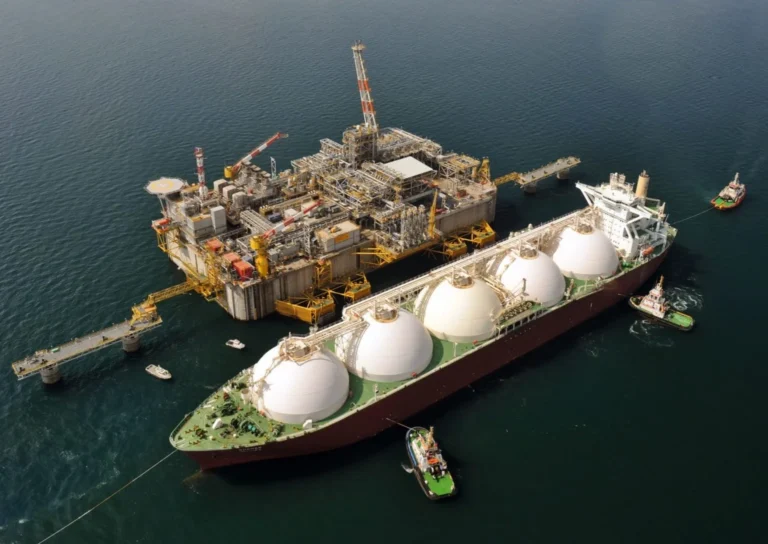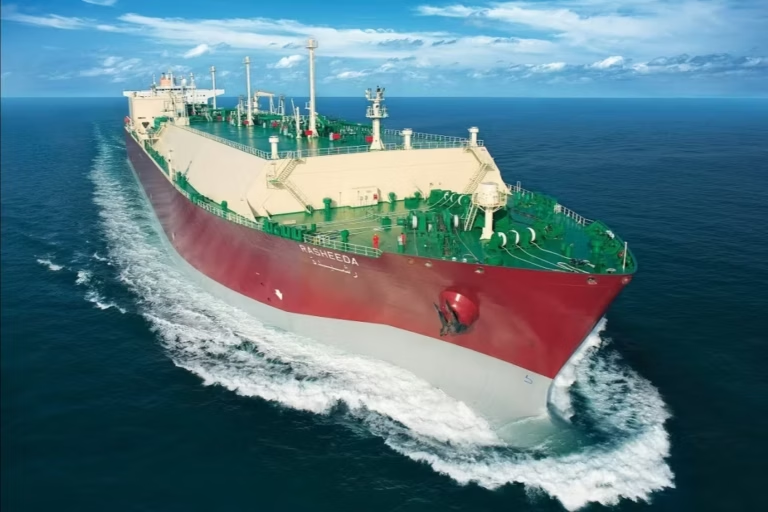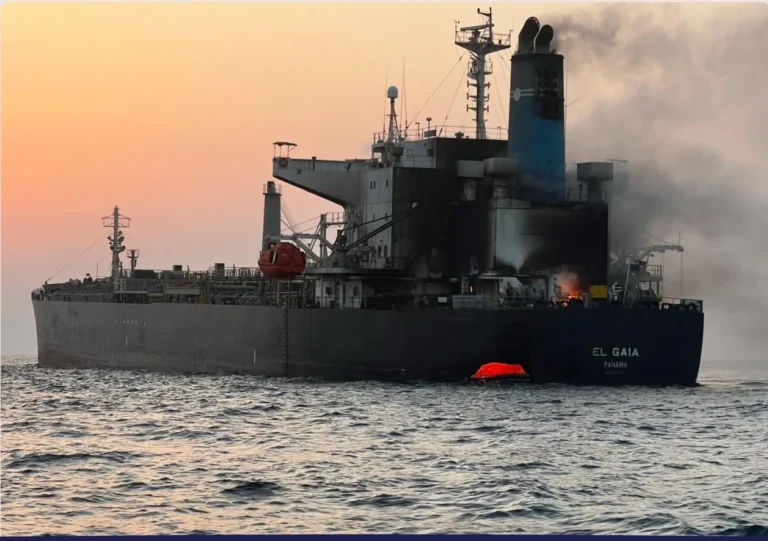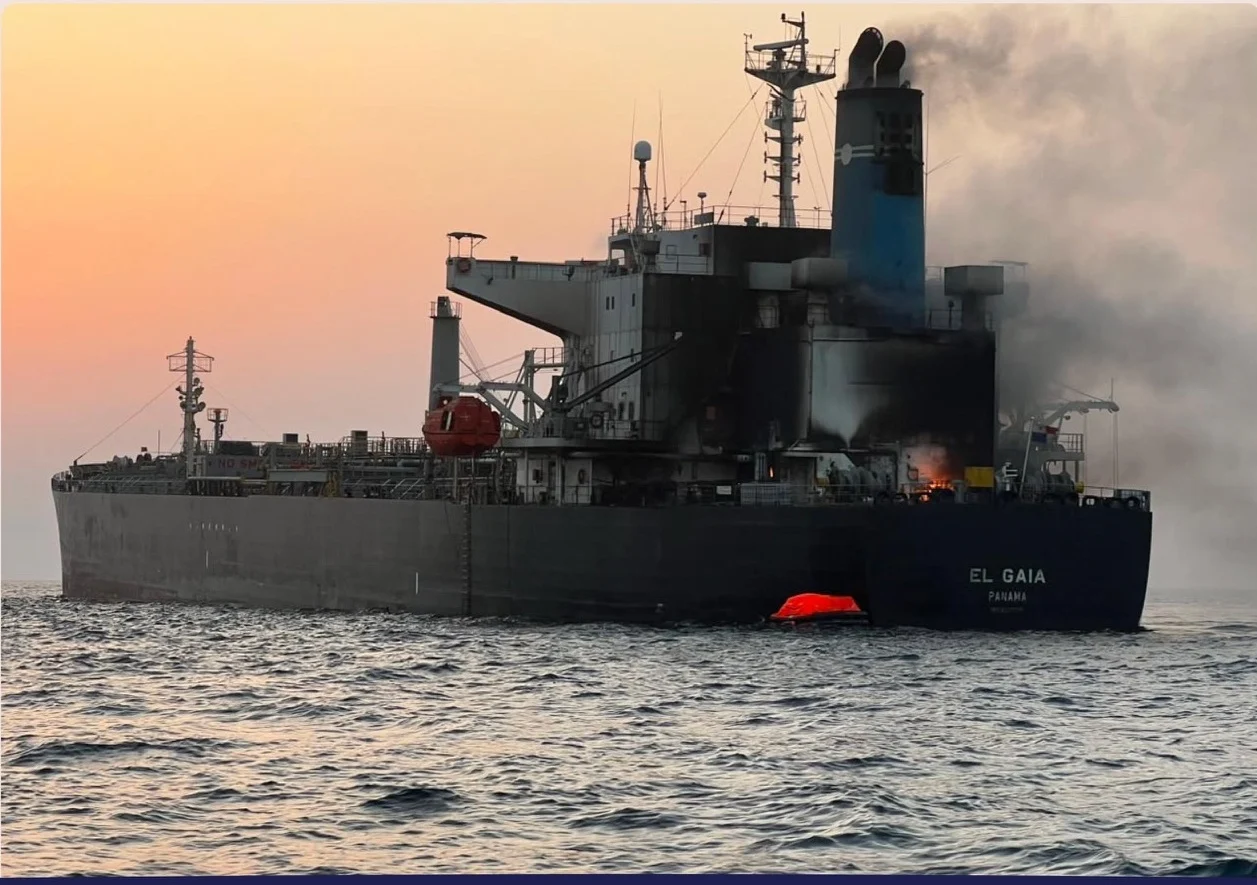
The tanker El Gaia sits off Oman with smoke and flames visible near the stern following an onboard fire. Photo: Oman Maritime Security Center. Oman Says ‘El Gaia’ Being Towed to Port; Two Crew Missing. Mike Schuler. Source: https://gcaptain.com/oman-says-el-gaia-being-towed-to-port-two-crew-missing/
Deepseek Binary response:
Current conditions are extremely far from the resolution threshold. As of mid-September 2026, gCaptain reports single-digit daily Hormuz transits, no LNG tankers in recent crossings, and a severe threat environment. Iran still formally claims the strait is closed and under IRGC control. LNG-specific traffic has been sporadic at best, with no sustained normal flow; Qatar’s exports have collapsed, force majeure has been extended, and infrastructure damage at Ras Laffan adds a structural bottleneck.
For the event to resolve Yes by December 31, 2026, there would need to be a rapid and durable regional de-escalation, restoration of commercial confidence for high-value LNG carriers, enough mine/security clearance or Iranian permission, and then gCaptain would need to characterize LNG traffic as no longer halted or severely restricted. That is a high bar in only about 15 weeks. Expert sources such as Mitsui OSK Lines and Kpler explicitly point away from LNG transit normalization before end-2026, with recovery more plausibly in 2027.
Base rates for chokepoint closures and severe maritime disruptions suggest persistence, not rapid normalization. The default remains No unless there is a dramatic breakthrough.
Data sufficiency: Sufficient
Probability: 4%
Grok response:
1. Strait of Hormuz Ship Crossings Remain in Single Digits, Data Shows
Description: gCaptain report on latest vessel tracking data for the waterway.
Date: September 16, 2026
Summary: Vessel transits through the Strait of Hormuz remained in the single digits at four on Tuesday, down from seven a day earlier and well below the 10-day average of 18, with no very large crude carriers or liquefied natural gas tankers involved. The drop follows intensified attacks in the region. Some ships may be sailing with transponders off and thus not counted.[1]
2. LNG Market Faces Extended Hormuz Outage, Japan’s Mitsui OSK Lines Says
Description: Bloomberg coverage of comments from a major Japanese shipping company at the Gastech conference.
Date: September 16, 2026
Summary: Mitsui OSK Lines chairman Takeshi Hashimoto stated it is almost impossible to carry LNG cargoes through the Strait of Hormuz as long as the current situation continues, expressing pessimism about the near future. A peace deal looks very, very difficult. The disruption has pushed Asian spot LNG prices to their highest since 2022, prompting buyers to scale back purchases.[2]
3. U.S. Rejects Iran’s Mine Claim as Hormuz Shipping Threat Remains Severe
Description: gCaptain article on recent incidents, US statements, and threat assessments.
Date: September 14, 2026
Summary: The Joint Maritime Information Center rates the threat to commercial shipping in the Strait of Hormuz as SEVERE, with deliberate hostile action highly likely; traffic remains about 90% below pre-conflict levels. Recent attacks include a tanker hit by projectile causing fire, and US-facilitated transits averaging far below the pre-war 138 vessels per day. Iran claimed a mine strike but the US disputed this.[3]
4. Mitsui OSK Lines expects LNG shipments through Strait of Hormuz to remain halted
Description: Report on Japanese shipping giant’s assessment of LNG transit feasibility.
Date: September 16, 2026
Summary: The company does not expect LNG shipments through the strait to resume anytime soon, describing conditions as making transit almost impossible and operations difficult to see resuming in any form by the end of the year. This pushes market expectations for normalization well beyond 2026. A handful of linked vessels have transited under heavily restricted conditions since April.[4]
5. Report: no LNG carriers passed through Hormuz since July 11
Description: LNG Prime summary of Kpler tracking data on LNG-specific transits.
Date: July 15, 2026
Summary: No LNG carriers have transited since July 11, with the last being the Adnoc-operated Al Hamra after loading at Das Island. This followed Iranian attacks on a Qatari LNG tanker and other vessels on July 7, after a June recovery of 40 LNG transits. 21 LNG carriers remain inside the Middle East Gulf.[5]
6. The Battle for Hormuz Will Reshape the Global LNG Market
Description: CSIS analysis of geopolitical scenarios and LNG market impacts.
Date: August 5, 2026
Summary: Strait of Hormuz crossings had fallen by 70 percent compared with the June-July truce period. QatarEnergy force majeure on LNG shipments was extended, with some reports of a new October target. Gulf producers attempt limited exports during openings but renewed attacks could close the route again within hours.[6]
7. Pakistan’s LNG Imports Under Pressure: Impacts of the Strait of Hormuz’s Closure and Pakistan’s Diplomatic Response
Description: CSIS report on regional LNG supply disruptions and Qatar’s situation.
Date: August 26, 2026
Summary: The Strait of Hormuz and Qatar’s Ras Laffan LNG export facility have been effectively shut for over five months due to the US-Iran war, impacting 20 percent of the world’s LNG supply. QatarEnergy extended force majeure through September and was preparing to extend into October. An early July attack on a Qatari LNG tanker highlighted Iran’s willingness to target vessels without approval.[7]
8. Strait of Hormuz Shipping Traffic Crisis 2026
Description: Discoveryalert overview of transit volumes, LNG status, and blockade effects.
Date: July 16, 2026
Summary: As of July 2026 the strait is effectively closed to standard commercial shipping, with transit volumes collapsed to near zero (less than 2% of normal). Qatar has not dispatched an LNG vessel since the July 7 attack on the Al Rekayyat; only one UAE LNG vessel completed a full transit after that. More than 150 ships are stranded.[8]
9. First Qatar LNG Shipment Moves Through Hormuz
Description: gCaptain/Bloomberg report on the initial post-war LNG transit attempt.
Date: May 10, 2026
Summary: A tanker carrying LNG from Qatar (Al Kharaitiyat) appears to have transited the Strait of Hormuz, marking the country’s first export out of the region since the Iran war began in late February. It used the Tehran-approved northern route hugging the Iranian coast. Qatar, which produced almost a fifth of global LNG last year, had not moved any LNG out of the Persian Gulf since the conflict started.[9]
10. LNG Vessels Return to the Strait of Hormuz Despite Tension
Description: Inspenet report on limited Qatari LNG carrier movements during a period of reduced overall traffic.
Date: June 22, 2026
Summary: Four Qatari LNG carriers (Wadi Al Sail, Mekaines, Al Sadd, and Mesaimeer) resumed transit through Hormuz via the Iranian route, the first such movement since military tensions involving the US, Israel, and Iran. This occurred amid drastically declining overall maritime traffic (only five vessels on Sunday vs. 26 the prior day). QatarEnergy was seeking to restore LNG export pace despite safety concerns.[10]
=== Forecast Result ===
Current State Analysis (as of Sept 17, 2026):
Historical Pattern:
Brief windows of partial LNG resumption occurred (May-June 2026, ~40 transits), but these collapsed after tanker attacks in early July, showing the situation is highly fragile and reversible even during improvement periods — and currently trending worse, not better.
Key Assumptions & Risk of Failure:
- Assumption: No major ceasefire/de-escalation occurs before Dec 31 — Probability this fails (sudden peace breakthrough): ~10-15%. Even if this happens, insurance/shipping normalization for high-value LNG cargo typically lags weeks-to-months behind political developments (per Mitsui commentary).
- Assumption: gCaptain resolution requires sustained high-volume, not just occasional cargoes — This is explicitly supported by resolution criteria language (“no longer halted or severely restricted”), and gCaptain’s own reporting style (emphasizing single-digit crossings) suggests they will continue documenting restriction until a clear shift occurs.
- Assumption: Structural bottlenecks (Ras Laffan damage) don’t block “unimpeded” transit even if capacity is reduced — this could marginally support YES if strait passage itself became safe even at lower cargo volumes, but current data shows zero transits, not just reduced volumes.
Given the accelerating negative trend (worse than the June/July peak), explicit expert predictions of no resolution by year-end, active war conditions with SEVERE threat ratings, and only ~3.5 months remaining, the probability of achieving “de facto unimpeded” status is low. This would require both a swift ceasefire AND rapid market/insurance normalization — a low-probability compound event in this timeframe.
Data sufficiency: Sufficient
Probability: 4%
About The Author