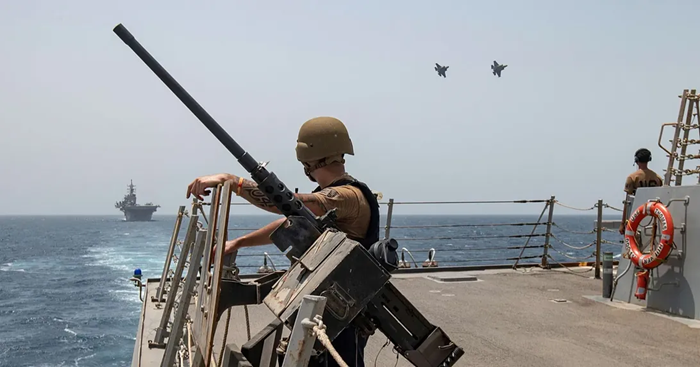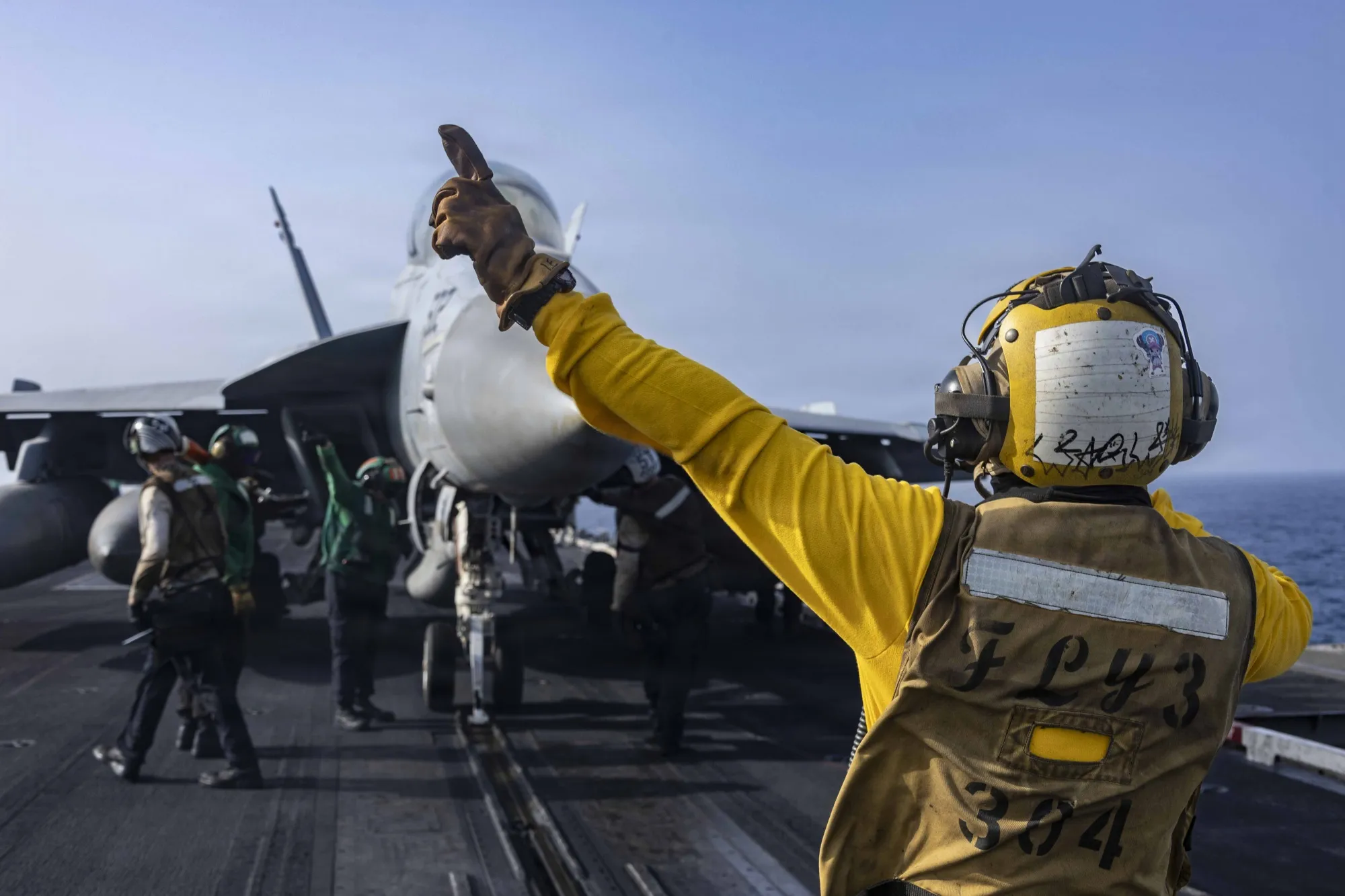
A fighter jet prepares to launch from the flight deck of USS Abraham Lincoln on June 25. Source: US Navy
Obtaining outside data.
Checking internet sources, using keywords: Strait of Hormuz LNG traffic 2026
News from various sources:
The retrieved web content provides a detailed analysis of the complexities surrounding the reopening of the Strait of Hormuz for oil and LNG traffic by 2026, amidst ongoing geopolitical tensions.
Key Highlights:
Current Situation (July 2026):
- A U.S.-Iran interim peace agreement has allowed some easing of the blockade that had shut down the Strait of Hormuz for over 100 days, significantly disrupting global oil and LNG flows.
- The interim peace is fragile, with ongoing regional tensions, exemplified by continued U.S.-Iran strikes.
Challenges for Reopening:
- Technical and Commercial Obstacles: Clearing trapped vessels and increasing inbound tankers are early logistical challenges. Ensuring safe passage is compromised by unsettled sea route security owing to mines, and further complicated by elevated insurance premiums.
- Operational Hurdles: Restarting oil and LNG production involves a phased engineering approach, hindered by war-related damages, especially in critical areas like Qatar’s Ras Laffan facilities.
- Repair Costs: Significant infrastructure damage across countries like Iran, UAE, and Bahrain will take years to fix, with costs expected to be high.
Geopolitical Factors:
- The interim deal necessitates mine clearance, controlled by Iran, thereby empowering Iran and Oman with significant control over potential seaborne trade routes.
- Iran has proposed maritime passage fees post the initial 60-day no-charge period, raising potential barriers to free navigation.
Economic Implications:
- Market recovery is cautious; Qatar expects to restore 80% export capacity soon. However, the risk factor remains high, requiring pricing adjustments.
- A shift towards alternative routes and infrastructure—a bid to reduce Strait dependency—is noted, with projects like UAE pipeline advancements.
- New buyers, especially in Asia like China, are rapidly integrating re-entry supplies, but nations like India remain cautious.
Future Outlook:
- An end-of-year stabilization in oil exports is anticipated, although the focus remains on whether such a status can be maintained given the dynamic uncertainties.
- The long-term sustenance of the current fragile peace deal, its impact on broader global energy markets, and the region’s geopolitical landscape remain uncertain.
Wider Strategic and Humanitarian Impacts:
- The broader regional recovery will require unprecedented cooperation among Gulf states, moving away from historical mistrust.
- Humanitarian impacts are significant, demanding prioritized transfers to affected regions and new diplomatic efforts to ensure the transfer of necessities via the strait.
The narrative underscores a complex blend of political, technical, and environmental variables driving both immediate and long-term prospects of normalizing energy movement through the Strait of Hormuz, a critical global chokepoint. This assessment of facts aids in understanding whether and when the Strait of Hormuz may reopen for LNG traffic, considering geopolitical, technical, and economic developments.
Fact-checked summary:
As of July 2026, the Strait of Hormuz has been closed for over 100 days, which is critical to understanding the timeline for reopening. Mines and elevated insurance premiums currently compromise safe passage, which is important because they affect the willingness and ability of ships to navigate through the strait, directly impacting readiness for reopening. Restarting oil and LNG production is hindered by war-related damages, and infrastructure damage repair efforts across Iran, UAE, and Bahrain, which will take years, further influence trade and security conditions necessary for reopening. Additionally, Iran’s proposal of maritime passage fees after a no-charge period could impact the economic feasibility of using the strait. Moreover, Qatar’s expectation to restore 80% export capacity is of lesser importance, as it reflects an individual country’s capability rather than the status of the strait itself. Alternative routes and infrastructure advancements are being noted, reducing some immediate pressure on the strait’s importance. Broad regional recovery, requiring unprecedented Gulf state cooperation, has long-term implications on the management of the strait. Overall, these factors suggest significant challenges remain for the reopening of the Strait of Hormuz to all LNG traffic before July 31, 2026.
OpenAI gives a base rate of 0.1 (10%)
The question difficulty is rated 8 (0 to 10)
A Bayesian calculation could be performed as follows:
To calculate the Bayesian probability, we consider historical factors weighted by their relevance. Each factor contributes to the failure to resolve the situation by July 31, 2026. Using the weights, we multiply them by the current progress indicators and likelihoods derived from similar past events to arrive at the compounded probability of reopening: P(reopen success) = 1 – (0.8 * 0.85 * 0.75 * 0.8 * 0.8) = approximately 0.1. (Carolyn‘s note: I get ~33% with LibreOffice Calc and verified it with Windows Calculator. Removing spaces, in both cases I entered = 1-(0.8*0.85*0.75*0.8*0.8))
Bayesian base rate: 0.1 (10%)
Sufficient news to provide a good forecast? 1 (0 or 1)
News is relevant, topical and unbiased? 1 (0 or 1)
Question classification: scenario_based_forecast
Expected time (days) until question close: 22
The following were considered in order to produce this base rate:
The base rate was determined by considering the low likelihood of achieving the essential steps required for reopening the Strait of Hormuz given the current conditions. Past challenges in clearing mines, reducing insurance costs, repairing conflict damage, and negotiating international agreements in the Gulf region are seldom resolved swiftly. Furthermore, historical frequency of similar disruptions resolving quickly in high-tension geopolitics is low.
Ideally, the news feed would contain the following sorts of information for a better forecast:
Additional insights into the current geopolitical negotiations, technological advancements in rapid mine-clearing, comprehensive regional stability assessments, and more detailed infrastructure repair timelines could enhance the forecast. Moreover, clearer metrics on insurance rates and contractual agreements could refine the estimate further.
Some potential divergent considerations that might affect the base rate:
Any significant diplomatic breakthrough or rapid technological advancement in mine-clearing operations could accelerate this process. Additionally, a sudden decrease in geopolitical tensions leading to unprecedented cooperation between Gulf states might also facilitate an earlier reopening.
The following chain of events are necessary for the question to resolve positively:
- Effectively clear mines from the Strait of Hormuz (unlikely).
- Resolve and reduce elevated insurance premiums for shipping through the area (unlikely).
- Repair war-related damages to oil and LNG facilities in Iran, UAE, and Bahrain (unlikely).
- Establish and agree upon maritime passage fees that are acceptable to all involved parties (unlikely).
- Achieve broad regional cooperation and stability (unlikely).
Querying Claude (AI predicts: 0.04 – confidence: 7)
Querying Mistral (AI predicts: 0.15 – confidence: 6)
Querying OpenAI (AI predicts: 0.05 – confidence: 5)
Explanations of the statistical measures listed below.
Question Type: Binary
Median from LLMs: 0.05
Base rate: 0.1 (from OpenAI)
SD: 0.05
MAPD: 0.073333333333333
Confidence: 6
Conf Mode: Normal
Mellers: 0.01
Reverse Mellers: 0.13
Theory of Mind: 0.05 (What did the LLMs think other LLMs predicted?)
Beta Distribution: 0.86
Close Type: A (B = cautious # closer to 50%; A/C = closer to extremes)
LLM responses: 3
Model value: 0.05 (5%)
The reasoning across various AI predictions suggests that the likelihood of the Strait of Hormuz reopening before the July 31, 2026 deadline is exceedingly low due to multiple persistent challenges. Key factors contributing to this conclusion include the slow and complex nature of mine clearance, elevated insurance premiums, extensive infrastructure damage from regional conflicts, and a lack of successful diplomatic negotiations. Historical precedents indicate that resolving such issues typically requires years rather than days, mirroring past multi-year strait closures like the Suez Canal. Additionally, alternative trade routes alleviate immediate pressures for a quick resolution. However, some predictions acknowledge potential variables that could shift this outlook, such as sudden diplomatic breakthroughs or rapid technological advances in mine clearance and repair operations, although these remain speculative under current conditions. Overall, the complex mix of logistical, economic, and geopolitical factors suggests that reopening the strait in the near term is highly improbable.
Runtime: 125 seconds.
About The Author