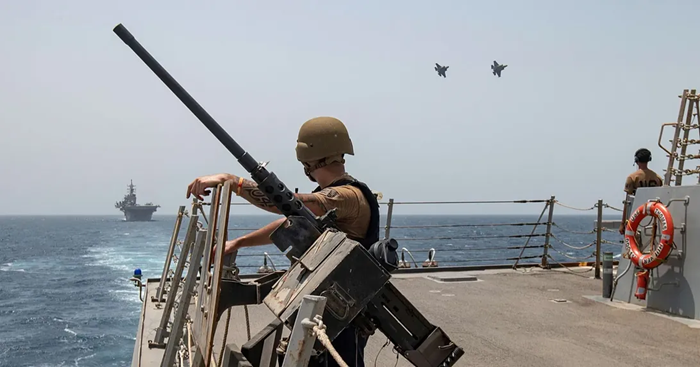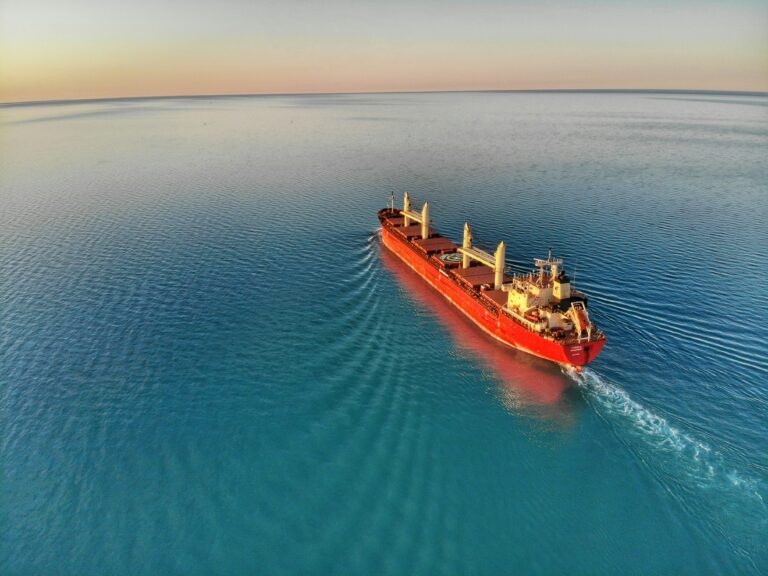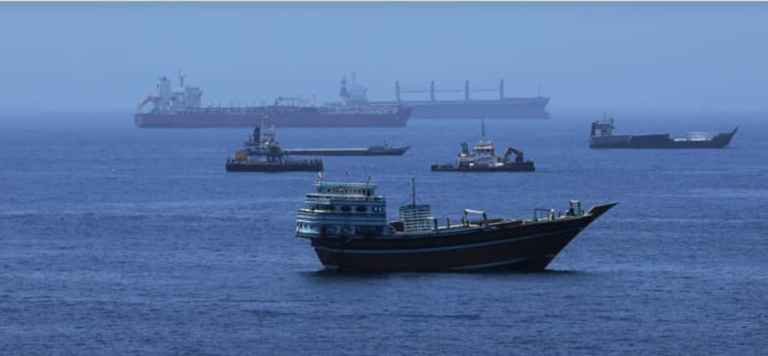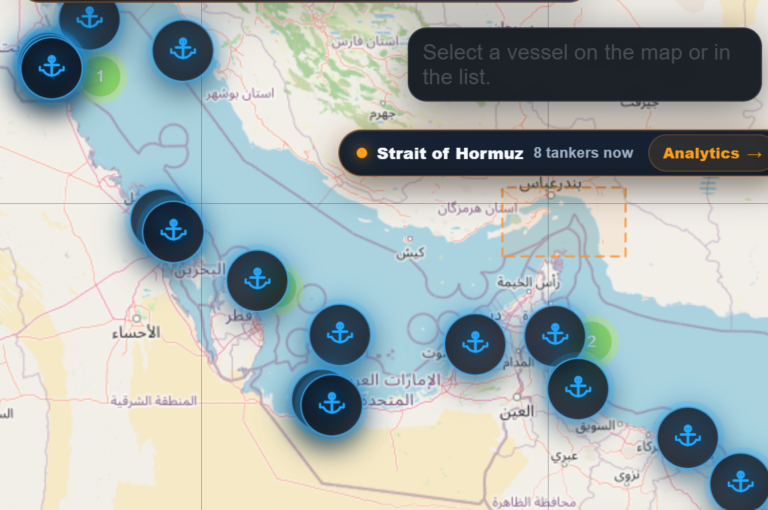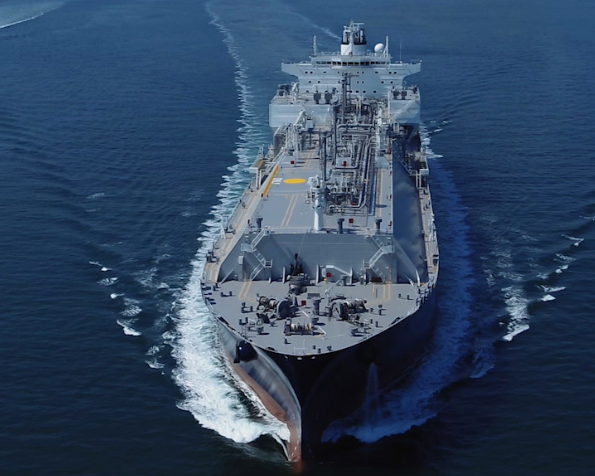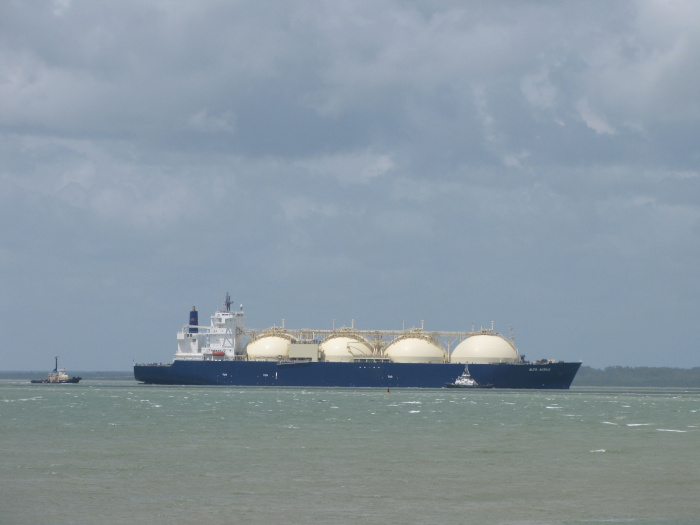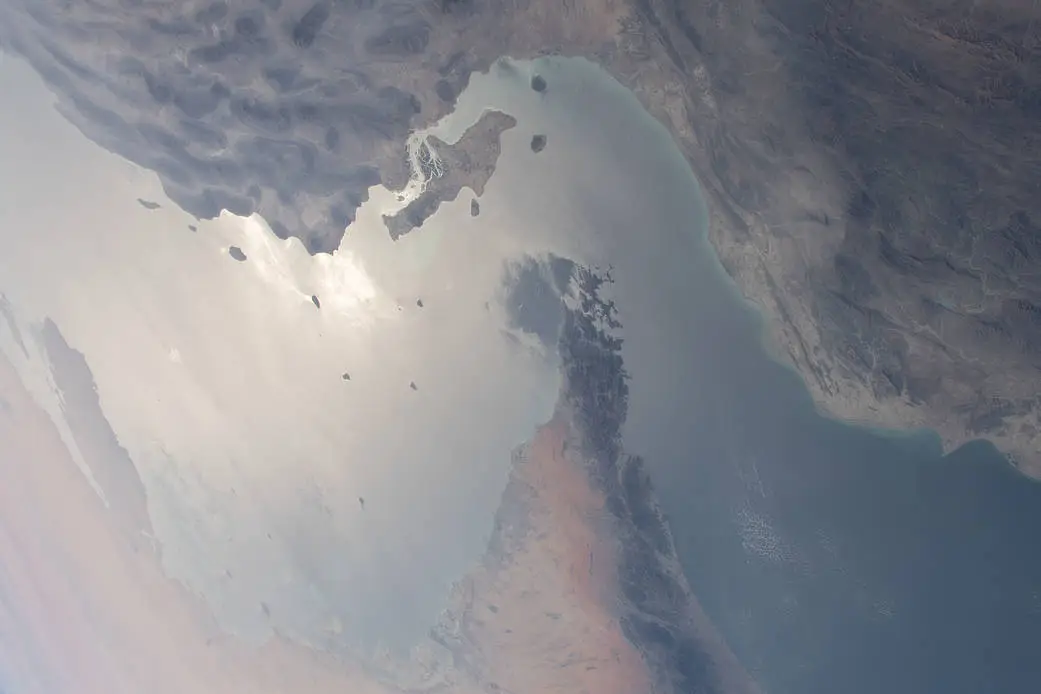
The strategically important shipping route of the Strait of Hormuz is pictured separating the nations of the United Arab Emirates and Iran. It also separates the main water bodies of the Persian Gulf and the Gulf of Oman.
Obtaining outside data.
Checking internet sources, using keywords: Strait of Hormuz LNG traffic reopening
News from various sources:
The Strait of Hormuz, one of the world’s key energy chokepoints, is gradually reopening following an interim peace agreement between the United States and Iran. This reopening is a significant development for the global oil and LNG markets, as approximately 20% of the world’s oil and a large portion of LNG, especially from Qatar, pass through this strategic waterway
Key Points:
- US-Iran Agreement: An agreement between the US and Iran has resulted in the easing of maritime traffic restrictions and the lifting of the US blockade on Iranian ports. This agreement seeks to restore shipping activity in the Strait of Hormuz to pre-conflict levels within 30 days.
- Impact on Oil and LNG Trade: The reopening of the Strait has allowed oil and gas tankers to begin resuming transit. This is expected to ease global energy supply concerns and reduce energy prices. For instance, oil prices have already started to drop as tanker traffic through the strait increases.
- Gulf Exporters: Major Gulf oil and gas producers like Saudi Arabia, Qatar, and the UAE faced significant export challenges during the conflict. With the reopening, these countries can resume their export activities, which is crucial for stabilizing global energy supply.
- Beneficiaries: India’s economy, which is heavily reliant on imported crude, could benefit substantially from the reopening. Sectors such as oil refining, city gas distribution, fertilizer production, and petrochemicals are expected to see improvement due to lower input costs and restored supply chains.
- Security and Economic Concerns: While the reopening is a positive development, security concerns remain, with continued clearance of mines and monitoring of traffic being necessary. Moreover, shipping and insurance industries are seeking further security guarantees.
- Qatar’s LNG Resumption: Qatar is preparing to quickly ramp up its LNG production and exports as the strait reopens. The country aims to restore a significant portion of its LNG export capacity within two months, helping alleviate global LNG supply issues.
Fact-checked summary:
An agreement between the United States and Iran has resulted in the easing of maritime traffic restrictions and the lifting of the US blockade on Iranian ports, a critical development that directly affects the reopening of the Strait of Hormuz for LNG traffic. The agreement seeks to restore shipping activity in the Strait to pre-conflict levels within 30 days, which is an important factor in determining whether the Strait will reopen to all LNG traffic before July 31, 2026. Approximately 20% of the world’s oil and a significant amount of LNG, particularly from Qatar, pass through the Strait, indicating its strategic importance for global energy commerce. Qatar also aims to restore a significant portion of its LNG export capacity within two months, directly impacting the throughput capacity through the Strait of Hormuz before the specified date. Despite the progress, continued security concerns, including the clearance of mines and monitoring of traffic, are important for the stable reopening of the Strait.
OpenAI gives a base rate of 0.75 (75%)
The question difficulty is rated 6 (0 to 10)
Historical weighted factors include:
Past agreements between the US and Iran, 30
Previous restoration efforts of the Strait of Hormuz, 30
Global demand for LNG, 20
Regional security and geopolitical tensions, 20
A Bayesian calculation could be performed as follows:
Using historical data, let’s assume past success rates of similar geopolitical agreements are around 0.6 for full implementation and restoration. Recent developments indicate a favorable trend. We assign a 0.9 probability to current, 0.7 probability to past. Bayesian update: P(current|news) = P(news|current) * P(current) / P(news) = 0.9 * 0.6 / (0.9*0.6 + (1-0.9)(1-0.6)) = 0.857 (Carolyn‘s note: Edited only to remove the spaces, 0.9*0.6/((0.9*0.6)+(1-0.9)*(1-0.6)) = 0.93 (93%))
Bayesian base rate: 0.857 (85.7%) (Carolyn calculates ~93%)
Sufficient news to provide a good forecast? 1 (0 or 1)
News is relevant, topical and unbiased? 1 (0 or 1)
Question classification: scenario_based_forecast
Expected time (days) until question close: 29
The following were considered in order to produce this base rate:
The base rate is derived from a combination of historical restoration attempts for strategic waterways such as the Strait of Hormuz and the geopolitical willingness for resolution between involved parties. Previous agreements have met with mixed success, and geopolitical factors play a significant role.
Ideally, the news feed would contain the following sorts of information for a better forecast:
Additional information needed includes updates on current in-field activities such as mine clearance and international verification of shipping activity normalization. Insight into domestic and foreign political stability concerning Iran and the US would also be valuable.
Some potential divergent considerations that might affect the base rate:
Potential impediments to this resolution include unexpected political or military developments, such as renewed hostilities or further sanctions. Global economic conditions could also affect the timely implementation of restoration efforts.
The following chain of events are necessary for the question to resolve positively:
- Full implementation of the US-Iran agreement highly likely
- Lifting of US blockade on Iranian ports highly likely
- Easing of maritime traffic restrictions highly likely
- Clearance of maritime mines in the Strait of Hormuz likely
- Restoration of shipping activity to pre-conflict levels likely – Ensuring security and monitoring of traffic in the Strait likely
- Qatar restoring a significant portion of its LNG export capacity highly likely
Querying Claude (AI predicts: 0.62 – confidence: 3)
Querying Mistral (AI predicts: 0.85 – confidence: 7)
Querying OpenAI (AI predicts: 0.85 – confidence: 7)
Explanations of the statistical measures listed below.
Question Type: Binary
Median from LLMs: 0.85
Base rate: 0.75 (from OpenAI)
SD: 0.11
MAPD: 0.15333333333333
Confidence: 7
Conf Mode: Normal
Mellers: 0.93
Reverse Mellers: 0.76
Theory of Mind: 0.55 (What did the LLMs think other LLMs predicted?)
Beta Distribution: 0.14
Close Type: C (B = cautious # closer to 50%; A/C = closer to extremes)
LLM responses: 3
Model value: 85%
The reasoning among the various AIs indicates a cautiously optimistic outlook for the reopening of the Strait of Hormuz to all LNG traffic by July 31, 2026. They emphasize the positive impact of the recent US-Iran agreement, which aims to restore maritime activity to pre-conflict levels within 30 days, and the easing of the US blockade on Iranian ports as critical steps forward. However, multiple concerns could hinder progress, including the tight timeline, the logistical challenges of mine clearance and security measures, and the potential fragility of US-Iran relations. Historical precedent supports a high probability (base rate of 0.75) of favorable outcomes for reopening strategic maritime routes, but unpredictability in geopolitical agreements in volatile regions like the Middle East and the high standard implied by ‘all LNG traffic’ pose significant risks. Finally, Qatar’s timeline to restore LNG capacity, extending potentially beyond the deadline, adds further uncertainty to the prediction.
Runtime: 123 seconds.
About The Author