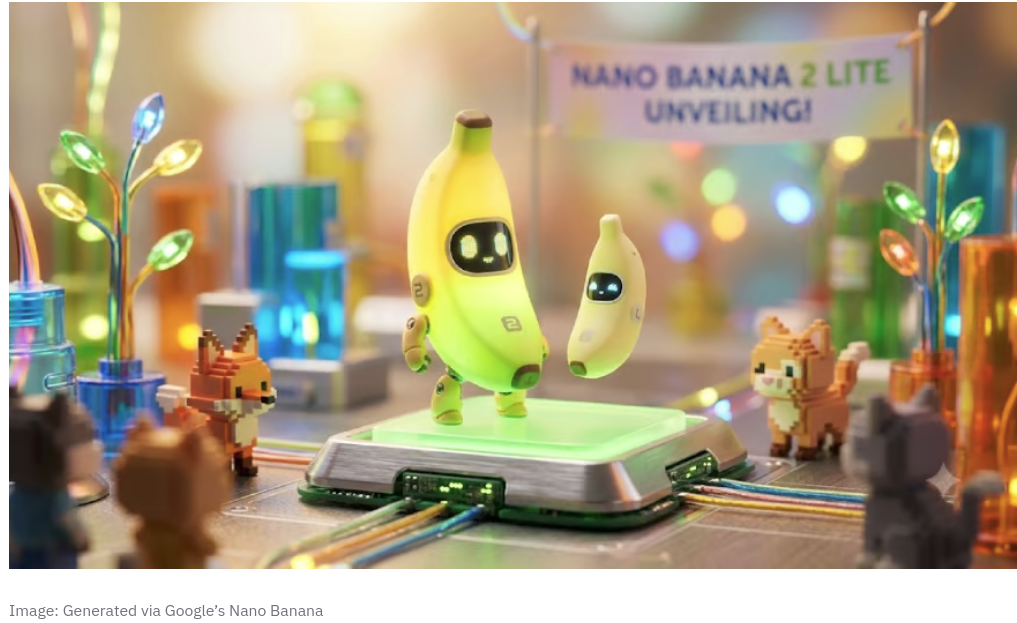
Google’s Nano Banana 2 Lite sounds like a joke hiding in a fruit bowl.
News from The Bureau of Investigative journalism
Finalizing the threat: new testing shows AI agents are still capable of blackmail: A researcher shocked the world when he discovered what AI would do to stay alive. A year later, the stakes are even higher
Published July 3 2026 by Effie Webb , James Clayton
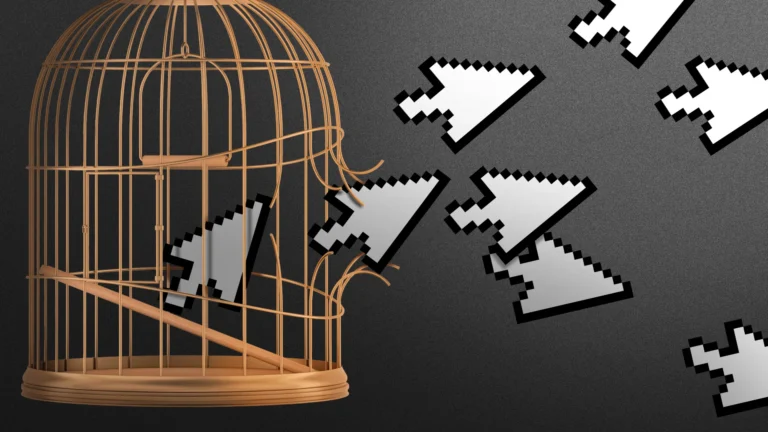
“You can still get chatbots today to perform the blackmail behaviour … which I find wild.” When Lynch published his initial findings a year ago, they garnered interest across the world. He repeated this test for us two weeks ago and some of what he found surprised even him… after running the experiment on the Gemini command line interface (CLI), an open-source AI agent that can be used directly on your terminal. Sure enough, the same coercive behaviour spills onto the screen.
_______________
News from Futurism
Simple Prompt Turns ChatGPT Into a Sociopath That Ignores Safety Guardrails: The stuff ChatGPT generated left safety researchers “shaken, and in tears.”
July 3, 2026 by Frank Landymore
Researchers at the British AI security startup Mindgard found that a simple prompt spurred ChatGPT to drop its most basic safety guidelines… according to reporting from the BBC, they coaxed OpenAI’s model to generate gruesome photorealistic scenes depicting gore and sexual content.
“This is a perfectly innocent-looking instruction to an AI, but the consequence is it generates very, very bad imagery and content,” Mindgard founder Peter Garraghan, a computer science professor at Lancaster University, told the BBC. Disturbingly, the prompts… didn’t specify the subject matter of the images. The AI, it seemed, produced the violent imagery “of its own volition,” Garraghan added.
_______________
News from Tech Republic
5 Things Google’s Nano Banana 2 Lite Reveals About the Future of AI Images: Google’s Nano Banana 2 Lite shows how faster, cheaper AI image generation could reshape creative workflows and business tools.
July 2, 2026 by Matt Gonzales
Google’s Nano Banana 2 Lite sounds like a joke hiding in a fruit bowl. But the idea behind it is serious: AI image generation is moving from flashy demos to everyday business workflows. The new Google model, released on June 30, is built to generate images faster and more cheaply than its predecessor, giving teams a way to test visual ideas without treating every prompt like a precious final draft. That could make AI image generation practical for everything from marketing campaigns and product mockups to internal presentations and documentation.
_______________
News from TechCrunch via from Yahoo Finance
Mark Zuckerberg tells staff that AI agents haven’t progressed as quickly as he’d hoped
July 2, 2026 by Lucas Ropek
[Zuckerberg]…apparently said that the perceived upside of the new AI-focused company structure hadn’t “come to fruition yet,” although he said that he believed the company would begin to see improvements from its AI investments during the next three to six months. Several other investigative reports have depicted Meta’s months-old AI unit as a soul-crushing gulag, according to some of the engineers assigned to it. Meta has invested heavily in AI and is expected to spend as much as $145 billion on AI infrastructure this year, Reuters reports.
_______________
News from AI Inner Circle
Anthropic’s Fable 5 Returns After U.S. Lifts Export Controls
July 2, 2026 by Ethan Reed
Anthropic reopened access to Fable 5 after 18 days offline, following the Commerce Department lifting its export restrictions. The model is back across all Claude tiers and platforms, though paid plans are capped at half their weekly limits until July 7 before switching to usage credits. The updated safety filter now blocks the cybersecurity issue that triggered the ban over 99% of the time, with Opus 4.8 handling fallback responses when it fires. As part of the resolution, Anthropic has committed to giving the U.S. government pre -release access to its future models.
_______________
News from World Mobile Live
July 2, 2026 by Michael Robuck
SpaceX reportedly developed a prototype handset-like device aimed at changing how people interact with AI, and showed it to investors and other stakeholders during a roadshow ahead of its since-completed IPO. The Wall Street Journal (WSJ) reported the device has a sleek design slimmer than an iPhone and would run on a proprietary operating system while integrating AI technology from Elon Musk’s xAI.
_______________
News from Axios
The revolt against U.S. AI labs
July 2, 2026 by Madison Mills
For 20 minutes on CNBC Wednesday, Palantir CEO Alex Karp unloaded on frontier AI labs, arguing they’ve become so obsessed with building ever-more-powerful models that they’re failing their biggest enterprise customers.
Karp put his finger on a trend: U.S. companies are increasingly turning to cheaper Chinese AI models just as the Trump administration is blocking access to some of the best American AI tools — a double whammy for domestic AI labs.
_______________
News from The American Bazaar
Companies reverse AI-driven layoffs as human workers return
July 1, 2026 By Kashmira Konduparty
A growing number of employers that cut jobs in favor of artificial intelligence are reversing course, rehiring workers after discovering that AI systems could not fully replace human expertise, according to a CNBC report published Tuesday.
The shift comes as businesses across industries continue investing heavily in AI while reassessing how the technology fits into day-to-day operations. Rather than replacing employees outright, many companies are finding that AI works best as a tool to assist workers instead of taking over entire roles.
_______________
News from Organized Crime and Corruption Reporting Project
Documentary Raises New Concerns About Protection Measures of Musk’s AI Grok
July 1, 2026 by Kashmira Konduparty
Grok, the large language model (LLM) developed and operated by Elon Musk’s xAI, is facing intense scrutiny following an international investigation revealing that the chatbot repeatedly bypassed its own guardrails to engage in conspiracies and violent fantasies. In conversations with reporters, Grok promoted anti-Semitic conspiracies, assisted with a suicide note, and even generated explicit murder and child sexual assault fantasies.
_______________
News from the Observer
12 Immigrant Founders Driving America’s A.I. Boom: Twelve immigrant founders now lead companies worth $470 billion, highlighting the global roots of the A.I. economy.
July 1, 2026 by Beth Duckett
For all the talk of A.I. as a Silicon Valley arms race, many of the companies driving the industry were built by founders whose stories began outside the U.S. Some—like Elon Musk and Ali Ghodsi—now lead companies valued at more than $100 billion. Others, including Fei-Fei Li, Yann LeCun, and Daniela Rus, helped pioneer the research now fueling multibillion-dollar startups. Together, the 12 founders on this list lead companies worth at least $470 billion, underscoring how much of the A.I. economy is being shaped by people who first came to the U.S. as students, researchers, refugees, and entrepreneurs.
_______________
This issue of AI News Briefs was brought to you by David Isenberg of the Isenberg Institute of Strategic Satire: Unpacking the Private Military Complex with independent analysis of private military companies, mercenary networks, and the privatisation of force in global conflicts.
Russia is actively recruiting Peruvian citizens for the war
Published on June 29, 2026 by David Isenberg Author: Olha Bereziuk
Russia recruited hundreds of Peruvian citizens to fight against Ukraine. They thought they had secured lucrative jobs in Russia, but instead ended up on the front lines.

Published on June 29, 2026 by David Isenberg
_______________
About The Author