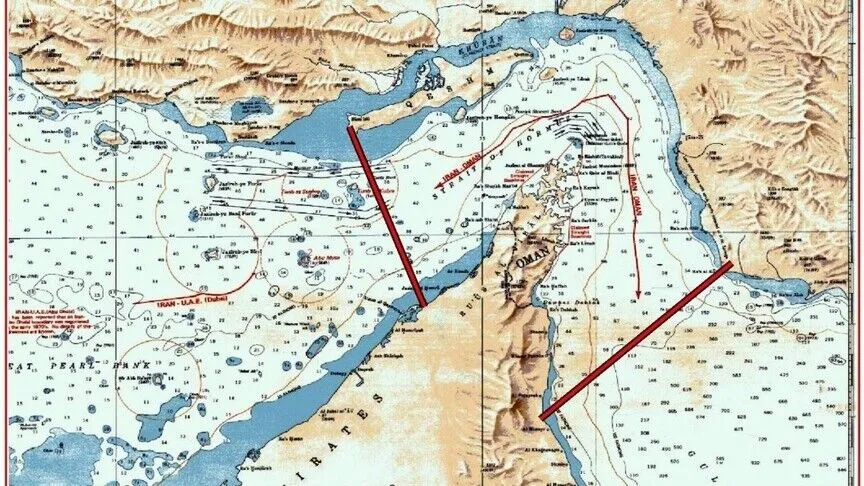
Iran releases new map outlining areas in Hormuz under its control. IRGC's map comes amid ongoing tensions with US on Strait of Hormuz. Serdar Dincel, 04 May 2026. Source: https://www.aa.com.tr/en/us-israel-iran-war/iran-releases-new-map-outlining-areas-in-hormuz-under-its-control/3926454
Obtaining outside data.
Checking internet sources, using keywords: Brent Crude 2026 price
News from various sources:
In September 2026, Brent crude oil prices are experiencing significant volatility due to escalating geopolitical tensions and supply disruptions in the Middle East, particularly related to the Iran-U.S. conflict and hostilities in the Strait of Hormuz. The key points extracted from the content are as follows:
- Current Price Trends: Brent crude prices have surged near $100 per barrel, reaching levels not seen for several weeks. The price increase is driven by geopolitical tensions, including Iranian threats and ongoing disruptions in the Middle East.
- Geopolitical Risks: The Strait of Hormuz, a crucial chokepoint for global oil supplies, has seen restricted shipping activity due to Iranian threats and retaliatory attacks in the region between Iran and the U.S. This has contributed to a geopolitical premium on oil prices.
- Goldman Sachs Forecasts: Despite current high prices, Goldman Sachs has raised its year-end 2026 forecasts to $85 per barrel for Brent, citing ongoing shipping disruptions. The bank also provided a scenario where prices could spike to $120 per barrel if the tensions and disruptions intensify further.
- Impact on Supply and Demand: The geopolitical situation has reduced Gulf oil exports from 18 million barrels per day to about 11 million. Simultaneously, tight U.S. fuel stocks, particularly diesel, further support high crude prices, revealing a combination of constrained supply and heightened geopolitical risks.
- Market Dynamics: While some alternate routes remain for Gulf exports, and additional non-OPEC supply is expected, the existing disruption supports higher prices. However, high prices could dampen demand, creating a complex and uncertain market outlook.
- Future Outlook: Analysts suggest limited room for major price reductions due to the continued geopolitical risks and physical supply tightness. Any resolution in the Middle East conflict would significantly impact the supply dynamics and potentially lead to a price correction.
These developments highlight a volatile oil market scenario, characterized by geopolitical risks and potential for further price increases if tensions persist or escalate. Each of these facts contribute to understanding the conditions affecting Brent crude prices, informing whether prices may indeed fall below $50 per barrel in 2026. Current conditions and forecasts suggest prices are more likely to remain elevated unless significant geopolitical changes occur.
Fact-checked summary:
In September 2026, Brent crude prices surged near $100 per barrel, a critical fact indicating the current high price level and its relevance to assessing future price movements. Geopolitical tensions, particularly the Iran-U.S. conflict, have significantly affected oil prices, with the Strait of Hormuz’s restricted shipping activity further contributing to increases, both important factors impacting supply and pricing. Goldman Sachs forecasts Brent crude at $85 per barrel by the end of 2026, with potential spikes to $120 if tensions escalate, providing important insights into expected price trends. Additionally, Gulf oil exports have decreased from 18 million to 11 million barrels per day due to geopolitical issues, an essential factor in understanding supply constraints. Analysts suggest limited room for major price reductions because of these ongoing geopolitical risks and supply tightness, which is important for gauging the likelihood of significant price decreases. These
conditions collectively indicate that Brent crude prices are more likely to remain elevated, making it unlikely they will fall below $50 per barrel in 2026 unless there are drastic geopolitical shifts.
OpenAI gives a base rate of 0.05 (5%)
The question difficulty is rated 7 (0 to 10)
A Bayesian calculation could be performed as follows:
To calculate the Bayesian probability, we start with the historical base rate of major oil price drops during times of geopolitical tension, which is generally low (~0.05). Adjusting for current factors such as the Iran-U.S. conflict affecting the Strait of Hormuz and decreased Gulf exports, the likelihood of a significant drop in prices (<$50) remains low. Using the historical factors table, we weigh the impact of geopolitical tensions (50%), economic conditions (30%), and OPEC decisions (20%). With ongoing tension and reduced exports, probability remains close to the historical base rate.
Bayesian base rate: 0.04 (4%)
Sufficient news to provide a good forecast? 1 (0 or 1
News is relevant, topical and unbiased? 1 (0 or 1)
Question classification: scenario_based_forecast
Expected time (days) until question close: 114
The following were considered in order to produce this base rate:
The base rate was determined by considering the historical rarity of Brent crude prices dropping below $50 per barrel during periods of heightened geopolitical tension and supply constraints. 2026’s current geopolitical landscape, notably the Iran-U.S. conflict, and reduced Gulf exports, exacerbate the situation, suggesting prices are unlikely to fall drastically.
Ideally, the news feed would contain the following sorts of information for a better forecast:
Access to comprehensive global economic forecasts, detailed analyses of potential diplomatic resolutions in the Iran-U.S. conflict, and insights into technological advancements in oil extraction or alternative energies would enhance forecast quality.
Some potential divergent considerations that might affect the base rate:
Unforeseen events like new major oil discoveries, rapid technological advancements in alternative energy, or an unexpected global economic recession could alter the forecast, making significant price drops conceivable.
The following chain of events are necessary for the question to resolve positively:
- A major geopolitical détente, such as a resolution to the Iran-U.S. conflict, leading to increased oil supply (unlikely)
- A drastic increase in global oil production from other regions to offset supply constraints (unlikely)
- A significant reduction in global oil demand, potentially due to economic downturns or shifts to alternative energy sources (unlikely)
Querying Claude (AI predicts: 0.02 – confidence: 8)
Querying OpenAI (AI predicts: 0.05 – confidence: 8)
Guide to Jeremy Lichtman’s Multi-AI Oracle Reports
Question Type: Binary
Median from LLMs: 0.04
Base rate: 0.05 (from OpenAI)
SD: 0.02
MAPD: 0
Confidence: 8
Conf Mode: Normal
Mellers: 0.01
Reverse Mellers: 0.1
Theory of Mind: 0.07 (What did the LLMs think other LLMs predicted?)
Beta Distribution: 0.85
Close Type: A (B = cautious # closer to 50%; A/C = closer to extremes)
LLM responses: 2
Model value: 0.04 (4%)
The reasoning among the various AI outputs centers around the unlikelihood of Brent crude prices falling below $50 per barrel given its current trading level near $100 and the existing geopolitical tensions, such as the Iran-U.S. conflict and restrictions on the Strait of Hormuz, which are tightening supply. Most analysts, including Goldman Sachs, predict prices will remain high, with scenarios that could lead to such a price drop being deemed highly improbable, except for unforeseen catastrophic events. Historical trends support the assertion that prices rarely fall below this threshold without extreme circumstances like a market collapse or a Saudi price war, neither of which are presently anticipated. Potential influences that could theoretically lead to a price drop, such as unexpected geopolitical resolutions or massive new oil discoveries, are considered unlikely to occur within the remaining months of 2026.
Runtime: 120 seconds.
About The Author