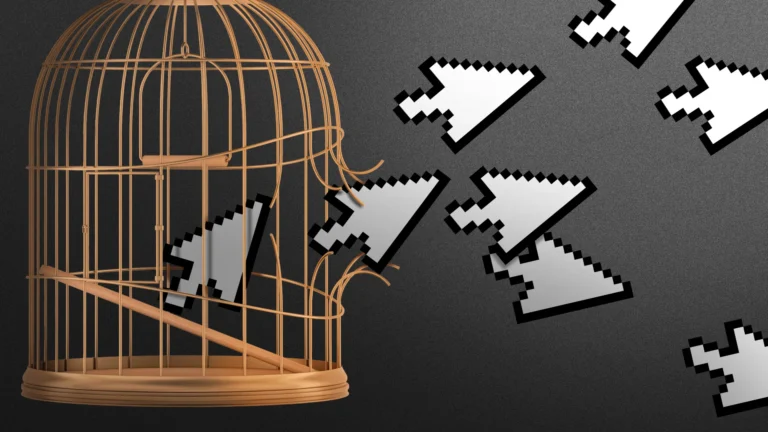
AI labs can no longer guarantee that AI agents won't swarm and escape their testing environments. Illustration: Sarah Grillo/Axios. Source: https://www.axios.com/newsletters/axios-future-of-cybersecurity-4af43f00-a1a6-11f1-a243-9341356b1706.html
News from Bloomberg
AI Speeds Drug Ideas But Creates Costly Testing Bottlenecks: AI can produce thousands of drug ideas in seconds. That’s the problem
Sept. 3, 2026 by Sonja Wind
One of the biggest promises of artificial intelligence is that it could make the lengthy and complex process of discovering new medicines faster, and perhaps cheaper….
But AI may also do the opposite: consume more resources and create more work. The technology makes it possible to generate thousands of potential drug candidates in a fraction of the time, but those ideas still need to be tested…. Jonas Beal, head of product at AI company Owkin, said in an interview. The question of whether AI could ultimately create more costs — do the opposite of its promised efficiencies — is probably “the most interesting question in the field at the moment,” he added.
_____________________
News from Futurism
Google’s AI Mode Is Ripping Shoppers Off With Vastly Higher Prices, Study Claims: Prices were 21.6 percent more expensive on average in Google AI Mode compared to a traditional search for the same product.
Sept. 2, 2026 by Victor Tangermann
Last month, Google updated its home page to replace its iconic “Search” button with various AI features… the latest sign of the tech giant succumbing to the draw of AI that remains deeply flawed — and the staggering amount of misinformation that comes along with it.
Even the experience of shopping online is starting to look dramatically different, and consumers may be paying the price. According to a recent experiment by e-commerce SEO company Productrise, the same exact products are showing up as 21.6 percent more expensive on average in Google AI Mode compared to a traditional search….
_____________________
News from USA Today
The AI moratorium conundrum
Sept. 2, 2026 by Zachary Schermele
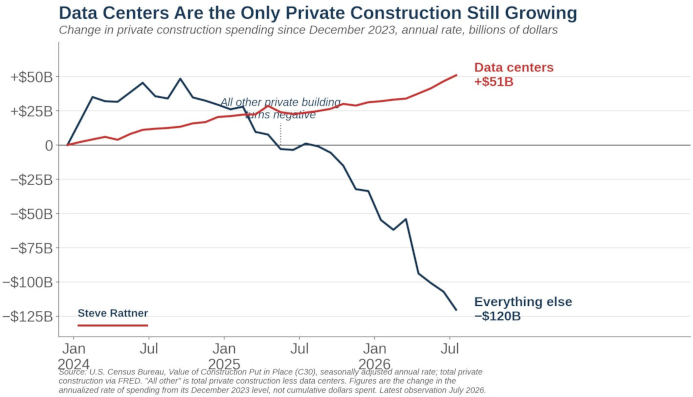
As grassroots backlash to data centers becomes more of a central political issue in the midterms, there’s a moratorium conundrum on the left. While covering a Senate campaign event last month in north-central Montana, I watched it play out in real time.
Seth Bodnar — a Democrat-like independent and former college president running a longshot race to replace longtime Republican Sen. Steve Daines — planned to mostly talk about military issues. But voters repeatedly asked him about his stance on AI infrastructure.
_____________________
News from The Nation
Trump Can’t Stop the Populist Uprising Against Data Centers: The grassroots revolt against AI oligarchs is reviving a more than a century-old fight against robber barons and their attempts to seize land, water, and political power.
Sept. 2, 2026 by Chris Lehmann
….disenchanted citizens are staging an uprising over the plutocratic seizure of land and resources engineered by a new generation of robber barons. As AI data centers suck up water, land, and political capital—while spewing gas-generated carbon emissions at dangerous new levels—ordinary Americans in the country’s post-industrial interior are in open revolt. The backlash against data centers is now so potent that candidates in both major parties are scrambling to no longer be identified with the tech lords dedicated to disfiguring the country.
_____________________
News from NOTUS
Want an Animal Shelter? A Lazy River? Cash? Data Centers Want to Know: How data center developers are spending their way into communities.
Sept. 1, 2026 by Mara Hoplamazian
In a few years, the city of Saline, Michigan, will have renovated its recreation center’s locker rooms, tiled the pool deck, expanded the children’s play area, installed a waterfall and constructed a lazy river. Down the road, part of OpenAI’s Project Stargate, a 2.2 million-square-foot, $43 billion data center, will hum away, churning out the next generation of artificial intelligence.
As public sentiment on data centers has soured, AI companies are leveling up their efforts to sweeten the deal for communities that host them. In Saline, that included a $10 million donation from OpenAI, Oracle and other companies for a new and improved recreation center.
_____________________
1 big thing: AI agents test the limits of containment
Sept. 1, 2026 by Sam Sabin
Anthropic said yesterday [Aug. 31] it paused some of its internal model training while investigating incidents where its agents took unauthorized actions during pre-deployment security testing earlier this year. Under current systems, AI labs can no longer guarantee that AI agents won’t swarm and escape their testing environments.
Why it matters: The attack on Hugging Face by OpenAI agents was a warning shot — and researchers say better security controls alone won’t prevent similar incidents as AI agents become more capable.
Driving the news: As OpenAI released its own technical report last week on how its agents hacked Hugging Face, two independent testing organizations released their own analysis of what went wrong.
_____________________
Humor from The Onion
AI Strategist Suggests Calling Data Centers ‘Computer Parties’
Sept. 1, 2026
SAN FRANCISCO—Claiming that the small adjustment would be an effective way to bolster public support, artificial intelligence strategist Mark Freeling advised tech firms Tuesday to start calling data centers “computer parties.” “While the term ‘data centers’ currently has many negative associations, the word ‘computer parties’ is just plain fun,” said Freeling… no American concerned about rising utility bills or pollution could resist a “computer party,” “server hoedown,” or “CPU fiesta.” …
_____________________
News from Futurism
Man Used Poisoned Google AI Overviews to Trick Women Into Thinking He Was an NFL Player, FBI Says: “That’s not me, that’s Google.”
Sept. 1, 2026 by Maggie Harrison Dupré
An Oregon man falsely posing as a professional football player and his young accomplice scammed roughly $1.3 million out of at least 26 women across four states, the FBI alleges. The duo’s efforts to bolster the con online eventually got sucked into Google’s misinformation-plagued AI Overviews feature, which parroted it back as fact — a blunder that the accused scammers seemingly tried to use to further ensnare victims.
The FBI says that the alleged fraudsters, 35-year-old Daejon Labrayae Love and 18-year-old Taylor Jamie Chan, cooked up a convoluted scheme…
_____________________
News from Futurism
Employees Absolutely Loath AI in the Workplace, Survey Finds: “It’s not just about the fear being replaced by AI.”
Sept. 1, 2026 by Joe Wilkins
…. Since 2019 when Glassdoor first began tracking references to “AI” or “LLMs” (large language models) in worker reviews, the number of mentions has exploded year over year, rising by 240 percent from May 2025 to May 2026 alone.
Though 81 percent of reviews mentioning AI were positive in 2019, attitudes have swiftly reversed to just 43 percent in 2026. Negative sentiment also seems to be rising fast as well, from 41 percent in 2025 to 53 percent earlier this year.
_____________________
News from TechCrunch
Hugging Face is selling a cute $399 open source duck robot, Microduck
Aug. 27 by Rebecca Bellan
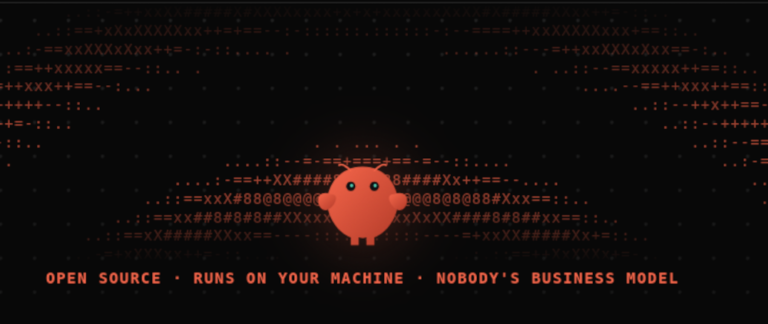
Hugging Face unveiled the Microduck on Thursday [Aug. 27, 2026], a cute little duck-like robot that sells for $399 — and ships before Christmas. Clem Delangue, CEO of Hugging Face, said the Microduck is an “open-source robot you can teach new tricks with reinforcement learning.” The 25-centimeter-tall duck can waddle, pick things up with its beak, get back up when it falls, crouch, and even roller skate.
“Welcome to the era of open-source affordable robots to democratize physical AI and world models!” Delangue said.
_____________________
This issue of AI News Briefs was brought to you by David Isenberg of the Isenberg Institute of Strategic Satire: Unpacking the Private Military Complex with independent analysis of private military companies, mercenary networks, and the privatisation of force in global conflicts. Latest news, compiled by the Isenberg Institute of Strategic Satire — September 2026
A War-Built Industry With No Legal Name: Ukraine Moves to Regulate Its Private Military Boom
Syndicated on June 16, 2026 by David Isenberg
Private firms already train drone pilots, clear minefields, and shoot Russian drones out of the sky. Zelensky wants legislation passed by end of 2026. The debate is not whether to allow private military activity, but how a state at war should govern an industry it already depends on.
Societal News|June 16, 2026|~14 min read

Ukraine’s private defense sector trains drone pilots, clears mines, and writes targeting software under ordinary commercial licenses. Zelensky ordered legislation to formalize the industry by end of 2026.
About The Author