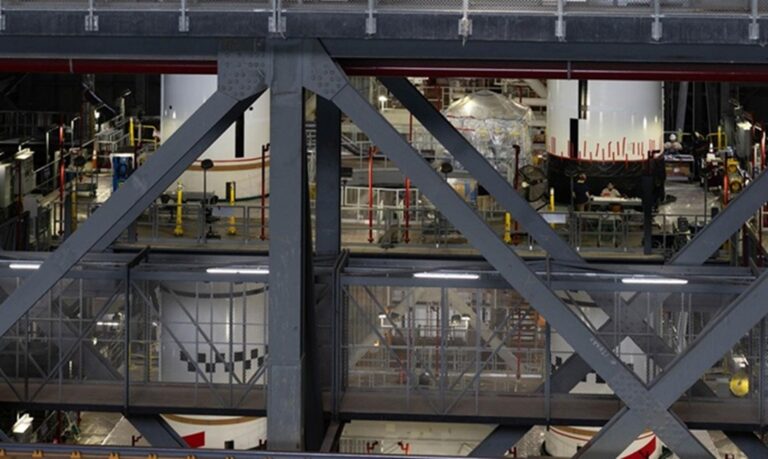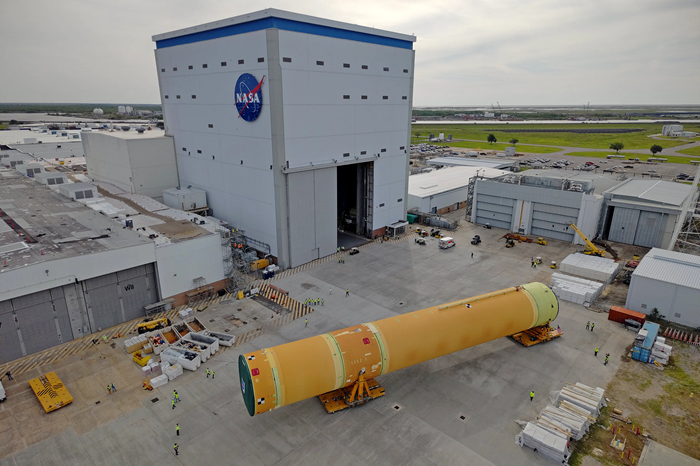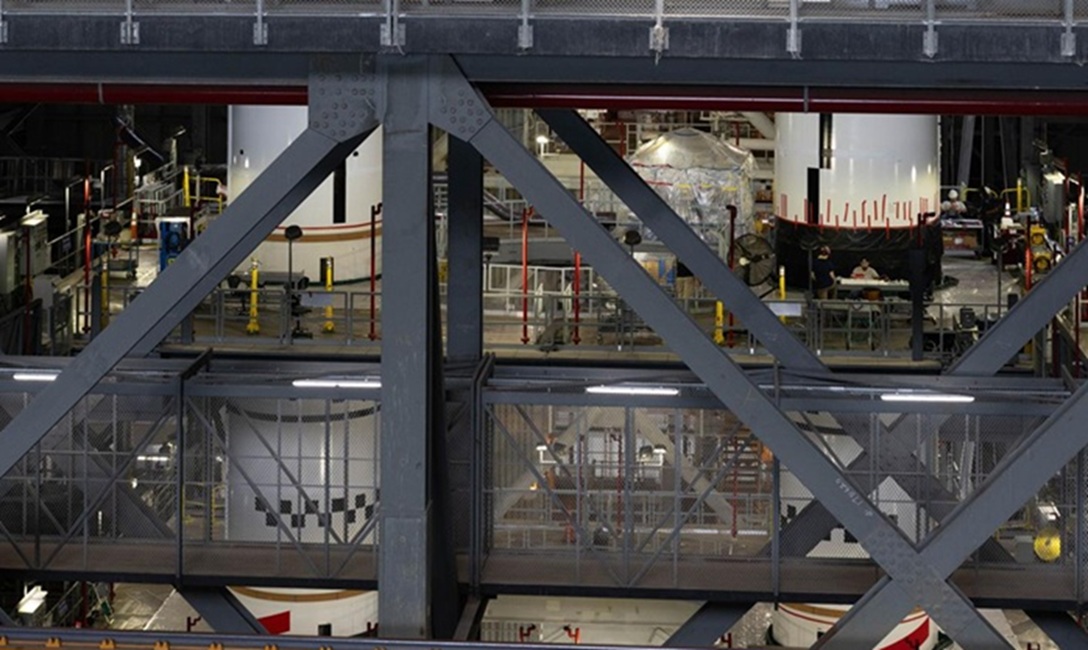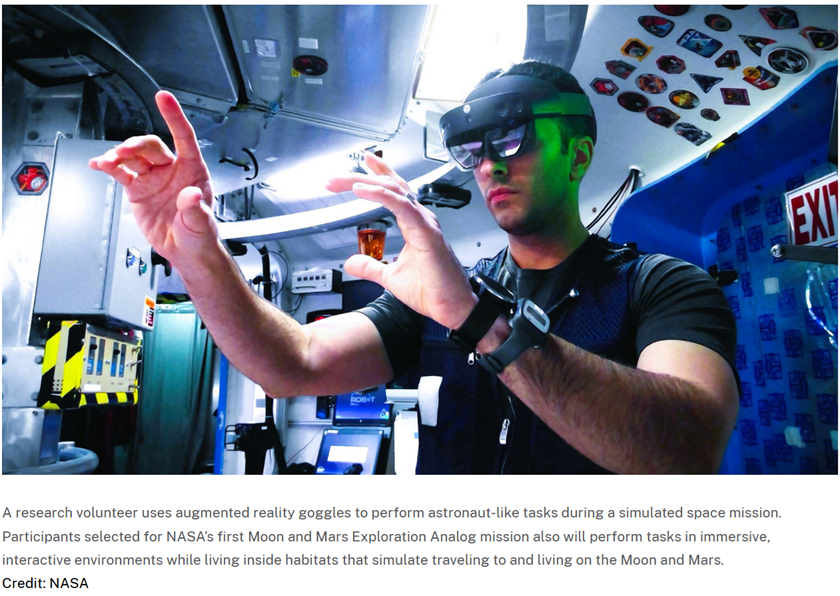
NASA is recruiting research participants for the agency’s next simulated deep space mission. Beginning no earlier than August 2027, research volunteers will spend one year living and working in interplanetary environments at the agency’s Johnson Space Center in Houston, operating under isolated conditions expected during crewed missions to the Moon or Red Planet.
Obtaining outside data.
Checking internet sources, using keywords: space habitat humans 2027
News from various sources:
The article discusses NASA’s plans for a space habitat simulation set to begin in August 2027 at the Johnson Space Center in Houston. This simulation aims to mimic the conditions astronauts might experience on missions to the moon and Mars, a part of NASA’s Artemis program. Volunteers will live in isolated habitats that replicate spacecraft and base environments for deep space missions, including mock Mars walks and rover use.
NASA seeks volunteers who meet specific criteria: being a U.S. citizen or green card holder, aged 30-55, no taller than 6’1″, proficient in English, and possessing a degree in engineering, biological science, physical science, or mathematics. Four participants will be chosen after a rigorous selection process involving physical and psychological tests.
The data collected from this simulation will aid NASA in preparing for permanent human missions to the moon and future manned Mars expeditions. The ultimate goal is to establish a moon base by 2032 to support long-term lunar and Martian exploration missions.
Fact-checked summary:
Based on the facts provided, there is no explicit indication that a new space habitat will be visited by humans before the end of 2027. Although NASA plans to conduct a space habitat simulation in August 2027 at the Johnson Space Center as part of the Artemis program’s preparation for future moon and Mars missions, these activities are simulations and do not involve actual visits to new space habitats before 2027. The simulation aims to replicate conditions for missions to the moon and Mars, with volunteers participating in isolated environments that mimic spacecraft and deep space environments. However, the primary goal remains preparing for permanent missions to these celestial bodies in the future. Therefore, the central question of visiting a new space habitat by 2027 is not directly addressed by these plans.
OpenAI gives a base rate of 0.1 (10%)
The question difficulty is rated 8 (0 to 10)
A Bayesian calculation could be performed as follows:
Using historical progress in space technology (0.3), previous mission execution (0.2), and considering current lunar and Mars mission priorities (0.3), multiplied by the current push for space exploration with a low prior of 0.1, the posterior is calculated as: Posterior = Prior * (0.3 * 0.2 * 0.2 * 0.3) = 0.1 * 0.0036 = 0.00036
Bayesian base rate: 0.00036 (0.036%)
Sufficient news to provide a good forecast? 1 (0 or 1)
News is relevant, topical and unbiased? 1 (0 or 1)
Question classification: scenario_based_forecast
Expected time (days) until question close: 529
The following were considered in order to produce this base rate:
The base rate is based mostly on the current prioritization of lunar and Mars missions over the construction of new space habitats, alongside the technological capabilities of current space programs. Historical execution rates of new space missions serve as additional factors supporting a low base rate.
Ideally, the news feed would contain the following sorts of information for a better forecast:
Further information on new space technology innovations or additional funding and prioritization announcements from major space agencies would provide more accuracy in forecasting.
Some potential divergent considerations that might affect the base rate:
If there emerges an international collaboration that prioritizes a new space habitat or there are breakthroughs in rapid construction and development of space technology within the next year, these events could dramatically increase the probability of resolution.
The following chain of events are necessary for the question to resolve positively:
- Construction of a new space habitat suitable for human visitation by 2027, which is unlikely given current timelines and technological capability.
- Availability and readiness of a space travel vehicle capable of reaching and supporting human life in the new habitat, which is possible but has a low likelihood given current schedules.
- Authorization and funding from space agencies such as NASA or international collaborations to prioritize a new space habitat mission by 2027, which is unlikely given current prioritization of lunar and Mars missions.
Querying Claude (AI predicts: 0.07 – confidence: 4)
Querying Mistral (AI predicts: 0.25 – confidence: 6)
Querying OpenAI (AI predicts: 0.05 – confidence: 7)
Explanations of the statistical measures listed below.
Question Type: Binary
Median from LLMs: 0.07
Base rate: 0.1 (from OpenAI)
SD: 0.09
MAPD: 0.13333333333333
Confidence: 6
Conf Mode: Normal
Mellers: 0.02
Reverse Mellers: 0.16
Theory of Mind: 0.12 (What did the LLMs think other LLMs predicted?)
Beta Distribution: 0.55
Close Type: A (B = cautious # closer to 50%; A/C = closer to extremes)
LLM responses: 3
Model value: 0.07 (7%)
The consensus among the AI outputs is that it is unlikely for humans to visit a new space habitat before the end of 2027 due to the absence of currently operational or nearly ready facilities. While projects like Axiom modules, Haven-1 by Vast, and other commercial stations are progressing, they face delays, funding challenges, and logistical hurdles within the tight timeline of 18 months. Historical data show new space habitats are rare, and current space agency priorities, such as NASA’s focus on lunar missions, further reduce the chances. The base rate of such developments is low, but considerations like potential private sector advancements and broad interpretations of what qualifies as a ‘new habitat’ introduce a small probability. In scenarios where urgent shifts in priorities, technological breakthroughs, or broad definitions are applied, such predictions might change. Nevertheless, these remain speculative given existing timelines and no concrete indications of a rapid push
for new orbital habitats.
Runtime: 72 seconds.
About The Author