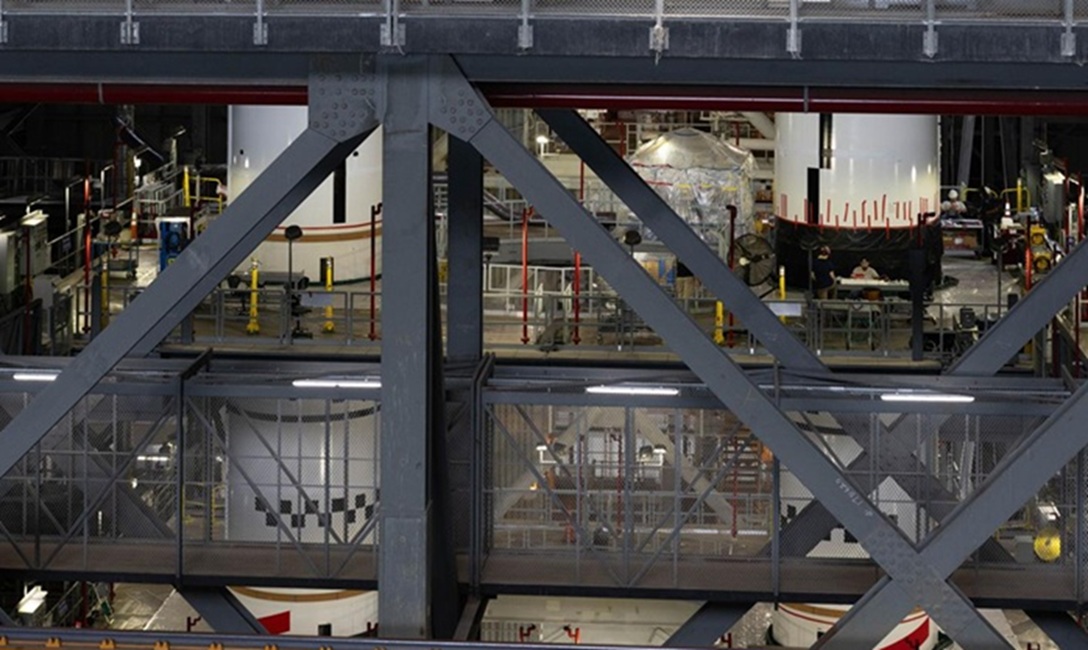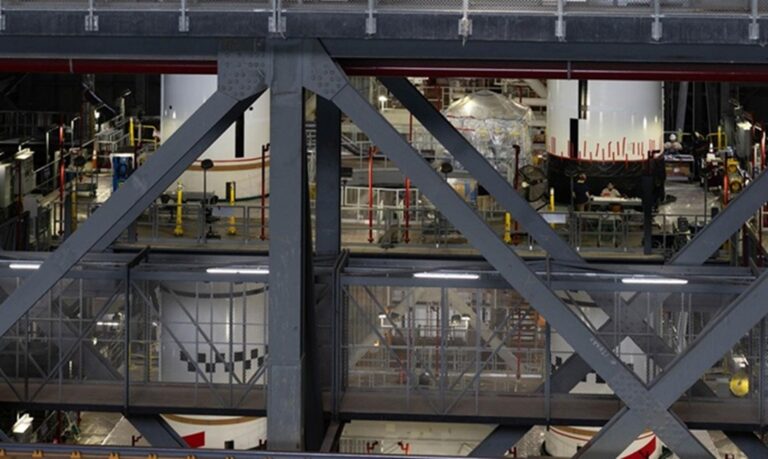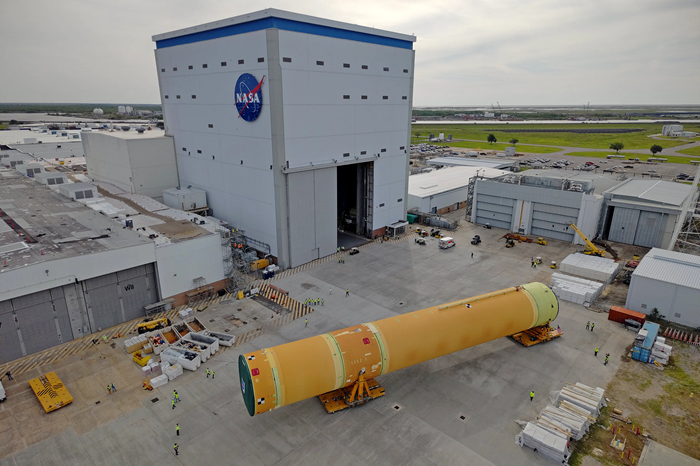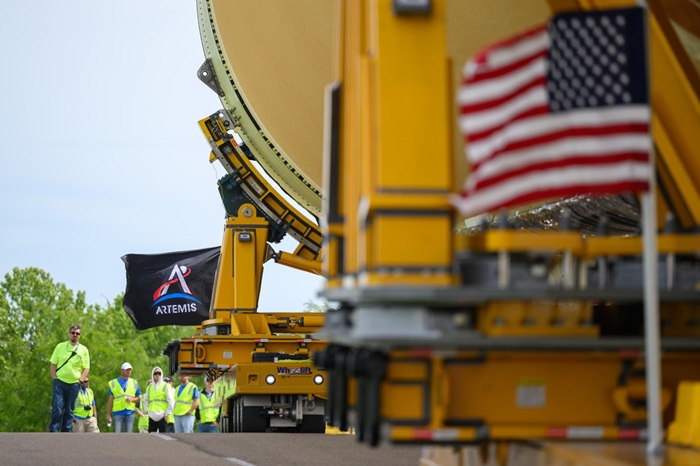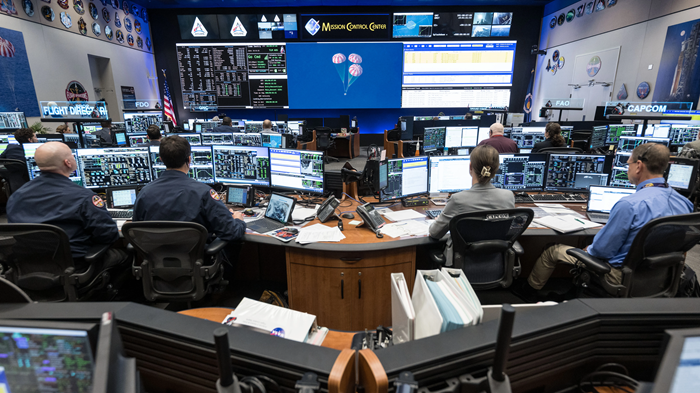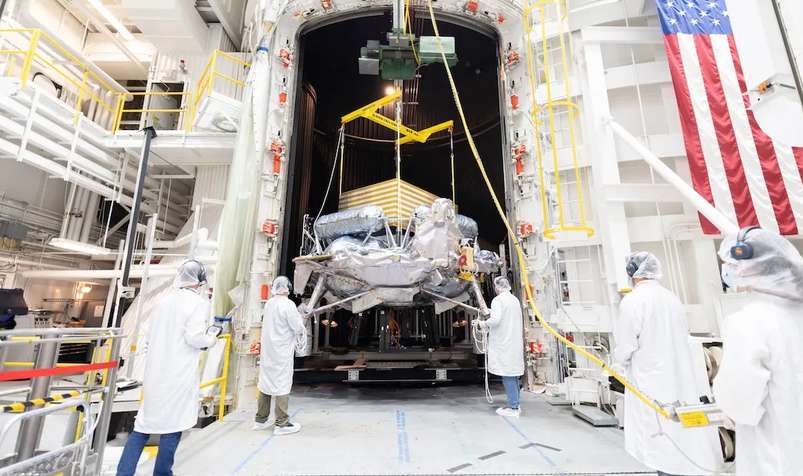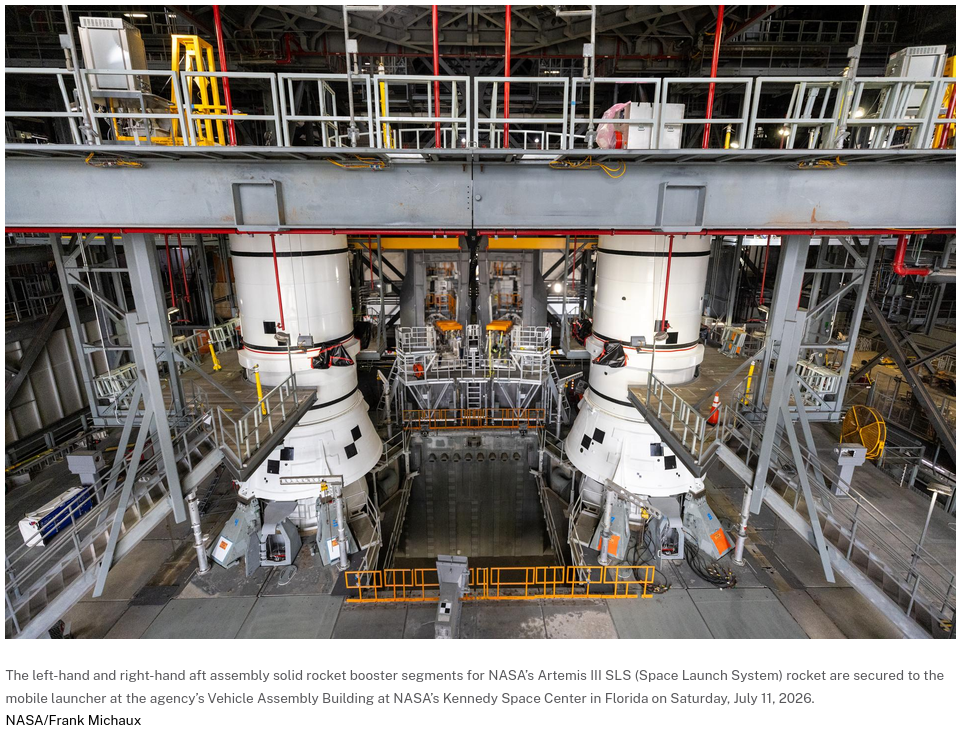
Less than three months after the safe return of the Artemis II crew, teams began stacking the twin SLS (Space Launch System) solid rocket booster segments inside Kennedy’s Vehicle Assembly Building (VAB) in July.
This is its condensed report. Full version here.
Grok response:
Here is a list of 10 relevant recent citations with titles, sources/descriptions, publication dates, and 3-sentence summaries:
- NASA Marches Toward Artemis III Mission in 2027, Names Crew Members (NASA news release) — June 9, 2026. NASA announced the Artemis III crew and detailed the 2027 LEO demonstration mission involving SLS/Orion launch followed by rendezvous and docking tests with commercial lander prototypes from SpaceX and/or Blue Origin. The mission is positioned as critical risk reduction for the Artemis IV lunar landing in 2028, with crew expected to spend about two weeks in orbit conducting tests including entering a lander. This follows the February 2026 program restructuring that added the demo flight.[1]
- NASA Outlines Preliminary Artemis III Mission Plans (NASA mission page) — May 13, 2026. The page describes Artemis III as a crewed LEO demonstration launching in 2027 on SLS/Orion to test rendezvous, docking, and interoperability with one or both commercial Human Landing System (HLS) vehicles. Objectives include evaluating Orion systems, propulsion, communications, and operational concepts ahead of lunar surface missions. The mission is explicitly framed as a risk-reduction step for Artemis IV.[2]
- Artemis III (Wikipedia entry) — Updated as of mid-2026. The entry notes the February 27, 2026, NASA announcement redesignating Artemis III as a 2027 crewed LEO demo rather than a lunar landing, involving up to three launches and docking demonstrations with Blue Origin and SpaceX test articles. Orion production is accelerating for a late-2027 target, with SLS core stage elements delivered in April 2026. Crew (Randy Bresnik, Luca Parmitano, Frank Rubio, Andre Douglas) was named in June 2026.[3]
- With Artemis II facing delays, NASA announces big structural changes to the lunar program (The Conversation) — March 4, 2026. NASA is increasing SLS launch cadence to roughly every 10 months starting April 2026 while adding the new Artemis III LEO demo mission. Artemis II continues to face technical issues (e.g., helium leaks, wet dress rehearsals) pushing its launch into April 2026 or later. The changes aim to standardize configurations and reduce uncertainty for subsequent missions.[4]
- Moon project delays among barrage of challenges for NASA (UPI) — March 12, 2026. Recurring SLS technical failures and cost overruns continue to affect the program, with Artemis II rolled back for helium system repairs and now targeting April 2026. The article highlights broader NASA challenges including slipping timelines for the overall Artemis effort. Artemis III is referenced in the context of the recent program overhaul.[5]
- NASA delays Artemis II moon mission launch (CNN) — February 3, 2026. Multiple problems during Artemis II wet dress rehearsals, including hydrogen leaks after cold weather delays, pushed the earliest launch target to March 2026 (later further adjusted). The article notes ongoing preparation for the first crewed deep-space flight since Apollo. These delays occurred around the same period as the Artemis III restructuring announcement.[6]
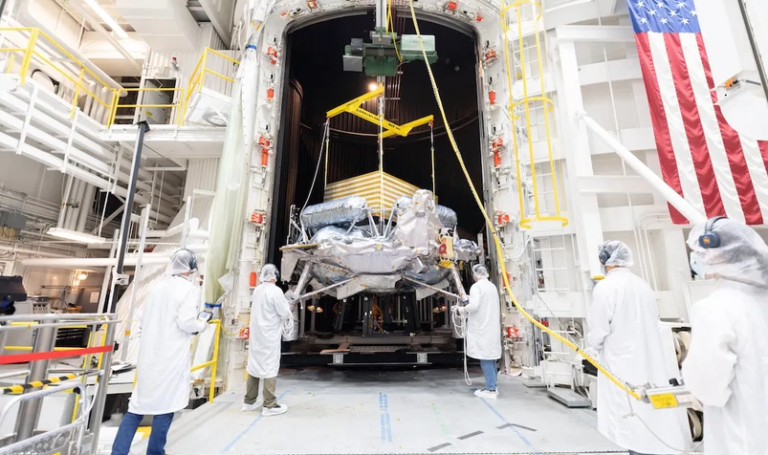
- Blue Origin Moon Lander Completes Testing at NASA Vacuum Chamber (NASA) — May 4, 2026. Blue Origin’s uncrewed Blue Moon Mark 1 (Endurance) completed thermal vacuum testing in NASA’s Chamber A, validating systems for future Artemis support. Lessons from MK1 testing will inform the larger crewed Mark 2 (MK2) human lander. A full-scale MK2 crew cabin prototype was also delivered to Johnson Space Center in 2026 for training.[7]
- SpaceX defends Starship lunar lander as it works on ‘simplified’ approach (SpaceNews) — October 30, 2025 (with ongoing relevance into 2026). SpaceX reported completing 49 HLS contract milestones on or ahead of schedule, focusing on subsystems like landing legs and docking adapters. Key upcoming HLS-specific tests (long-duration flight and in-space propellant transfer) are targeted for 2026, though overall lander development is behind earlier public schedules. The company is pursuing a simplified architecture amid progress on Starship V3.[8]
- Blue Moon (spacecraft) (Wikipedia) — Updated as of mid-2026. Blue Origin’s robotic MK1 lander (originally targeted for 2024) is now slated for no earlier than fall 2026, while the crewed MK2 remains in early development with a prototype cabin under test. Under the revised Artemis timeline, one or both HLS providers may be demonstrated in Earth orbit during the 2027 Artemis III mission.[9]
- SpaceX – Mission: Moon (SpaceX official page) — Current as of July 2026. The page outlines Starship’s role in landing humans on the Moon for Artemis, with cargo flights targeted no earlier than 2028. It emphasizes ongoing development of the reusable system for crewed lunar landings near the South Pole.[10]
Additional context from NASA’s Artemis program page (last updated April 10, 2026): Artemis III is explicitly listed as the 2027 LEO demonstration mission to test one or both commercial landers, while Artemis IV remains targeted for early 2028 as the first crewed lunar landing.[11]
As of July 2026, NASA continues to publicly advance the Artemis III mission with crew announcements and preliminary plans, while addressing Artemis II delays and supporting parallel HLS development by both providers. No recent reports indicate a shift away from the mid-2027 target or major new obstacles specific to the LEO demo.
Extracted resolution criteria links:
[‘https://www.nasa.gov/humans-in-space/artemis/‘]
=== Forecast Result ===
Systematic Analysis
Understanding the Mission Definition
Artemis III has been redefined (February 2026) from a lunar landing to a crewed LEO demonstration mission—Orion on SLS launches astronauts to rendezvous and dock with one or both commercial landers (SpaceX HLS/Starship or Blue Origin Blue Moon MK2). This is a lower technical bar than a lunar landing, but still requires:
- Successful Artemis II (prerequisite)
- SLS/Orion readiness for crewed LEO flight
- At least one commercial lander ready for rendezvous/docking in LEO
- Mission execution success
Key Data Points as of July 2026
- Vision analysis hints Artemis II may have already flown (reference to “Orion Lessons from Artemis II”)—if true, the major prerequisite is cleared
- Crew announced June 2026 (Bresnik, Parmitano, Rubio, Douglas)—strong institutional commitment signal
- SLS booster segments transported to Florida, July 2026—hardware integration underway
- Blue Origin MK1 completed thermal vacuum testing May 2026
- SpaceX completed 49 HLS milestones but simplified architecture is still maturing
- ~18 months remain until resolution date
Critical Assumption Analysis
Assumption 1: Commercial lander (at least one) will be ready for LEO demo by late 2027
- SpaceX’s Starship/HLS remains ambitious; even for a LEO demo (not full lunar landing), a test article or prototype must be flight-ready and in orbit simultaneously
- Blue Origin MK2 is in early development; MK1 (robotic) only recently completed vacuum testing
- P(at least one lander ready for LEO demo by Dec 2027) ≈ 50-60%—biggest uncertainty
Assumption 2: SLS/Orion will be launch-ready for crewed mission by end of 2027
- If Artemis II flew, Orion has crewed heritage; SLS hardware is in integration; crew is assigned
- Historical Artemis delays: Artemis I delayed ~1-2 years; Artemis II was delayed ~1 year
- P(SLS/Orion ready for late 2027 launch) ≈ 65-70%
Assumption 3: No major political/budget disruption cancels or delays mission
- Under current NASA restructuring, Artemis III is a prioritized risk-reduction step
- P(disruption sufficient to delay past 2027) ≈ 15-20%
Timeline Probability Modeling
- P(Artemis II has flown and cleared) ≈ 70% (based on VisionAnalysis hint and recent crew visit reports)
- P(SLS/Orion ready | Artemis II cleared) ≈ 65%
- P(≥1 commercial lander ready for LEO demo) ≈ 55%
- P(launch by Dec 2027) ≈ 0.70 × 0.65 × 0.55 ≈ 25%, but these are partially correlated (NASA can delay for lander readiness), so perhaps 30-35%
- P(mission success | launch) ≈ 80% (LEO mission with mature Orion, experienced crew)
- P(success by Dec 2027) ≈ 30-35% × 0.80 ≈ 24-28%
Base Rate Calibration
- Only ~35% of forecasting questions resolve positively; overconfidence is a known bias
- NASA’s Artemis program has consistently slipped by 6-18 months at each milestone
- The target window is “late 2027″—even slight slippage would miss the Dec 31, 2027 cutoff
- Program restructuring and lander dependency represent genuine downside risks not fully priced in positive signals
Balancing Factors
Positive signals (crew announcement, hardware progress, mission commitment, redesign to LEO) argue for ~35-40%. Historical delays, lander technical risk, and base rate conservatism argue toward ~20-25%. Averaging these with calibration: approximately 27%.
Probability: 27%
End
About The Author