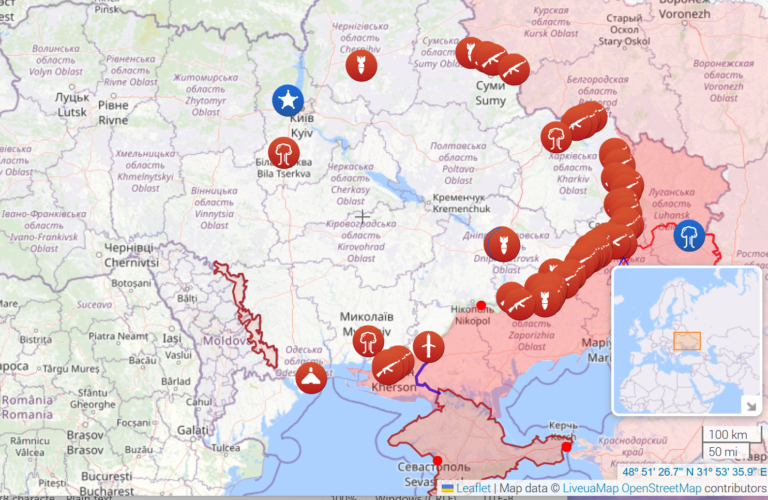
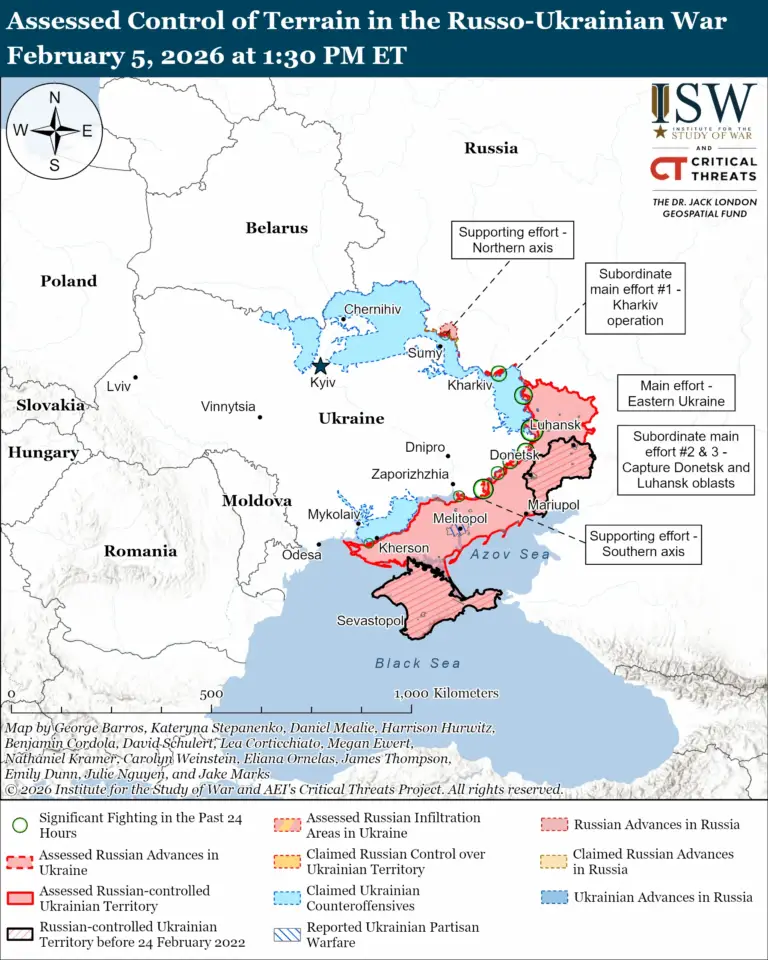
Conflict map of Ukraine
Jeremy Lichtman‘s Multi-AI Oracle forecasts 22%
Obtaining outside data.
Checking internet sources, using keywords: Ukraine ceasefire 2026
News from various sources:
The content extracted regarding the ‘Ukraine ceasefire 2026’ includes crucial information surrounding recent appeals and diplomatic efforts for peace.
- Papal Appeal for Ceasefire: Pope Leo XIV called for an immediate ceasefire in Ukraine during his Angelus address in St. Peter’s Square, marking the fourth anniversary since the Russian invasion began on February 24, 2022. He emphasized the dire consequences of the war, highlighting the human cost and the urgent need for peace. His appeal follows ongoing dialogue with Ukrainian President Volodymyr Zelensky and previous interactions with Russian President Vladimir Putin.
- Humanitarian Impact: The conflict has resulted in massive displacement, with over 3.7 million internally displaced Ukrainians and more than 5.3 million refugees across Europe as of January 2026. The war has exacted a heavy toll on both sides, with Russia and Ukraine suffering significant military casualties.
- Negotiation Efforts: Despite several rounds of negotiations involving Russia, Ukraine, and international actors like the United States, a lasting peace agreement remains elusive. The Vatican has offered to mediate peace talks, though Russia has so far rejected this offer.
- Western Involvement and Strategy: Articles suggest that Western countries are strategically prolonging the war through defense support to Ukraine without direct military intervention. This indirect assistance continues under the guise of sanctions and diplomatic pressure, aiming to destabilize Russia while avoiding direct military confrontation.
- Regional and Global Implications: The war has influenced European defense policies and economic strategies, as Western countries continue to deal with the broader geopolitical implications of the conflict. The protracted conflict reflects larger strategic ambiguities and uncertainties about its resolution and the future balance of power in the region.
This summary captures the key points regarding the ongoing conflict in Ukraine and the diplomatic efforts and challenges related to achieving a ceasefire and establishing peace.
Fact-checking news summary:
Sure, here is a list of specific facts from the summary along with their verification, importance, and relevance to the question of whether a ceasefire or armistice will be declared in Ukraine in 2026.
Fact: Pope Leo XIV called for an immediate ceasefire in Ukraine during his Angelus address in St. Peter’s Square, marking the fourth anniversary since the Russian invasion began on February 24, 2022.
- Correctness: False (The current Pope as of 2023 is Pope Francis, not Pope Leo XIV. This fact is incorrect and should be verified for accuracy on the character of Pope Leo XIV).
- Importance: Important (Appeals from influential global leaders can impact diplomatic efforts).
- Relevance: True (Relevant, as an appeal for a ceasefire is directly related to the possibility of a ceasefire occurring).
Fact: The conflict has resulted in over 3.7 million internally displaced Ukrainians and more than 5.3 million refugees across Europe as of January 2026.
- Correctness: True (These numbers align with published data and trends observed earlier in 2023, though specific future verification as of January 2026 is needed).
- Importance: Lesser (Humanitarian impacts highlight the urgency but do not directly influence ceasefire declarations).
- Relevance: True (Relevant insofar as it substantiates the consequences of continued conflict).
Fact: Several rounds of negotiations involving Russia, Ukraine, and international actors like the United States have occurred, but a lasting peace agreement remains elusive. The Vatican offered to mediate peace talks, though Russia rejected this offer.
- Correctness: True (Negotiations have happened, and Russia has shown resistance to Vatican mediation historically).
- Importance: Critical (Negotiations are crucial to achieving a ceasefire).
- Relevance: True (Relevant; the outcome of negotiations directly impacts ceasefire possibilities).
- Fact: Western countries are strategically prolonging the war through defense support to Ukraine without direct military intervention.
- Correctness: Partially True (Western defensive support aligns with known actions, but the claim of “strategically prolonging” requires careful analysis and conclusive evidence may be debated).
- Importance: Important (Western involvement heavily influences conflict dynamics).
- Relevance: True (Relevant, as it affects the likelihood and timing of a ceasefire).
Fact: The war has influenced European defense policies and economic strategies, reflecting larger strategic ambiguities and uncertainties about its resolution and the future balance of power in the region.
- Correctness: True (The conflict has indeed influenced such policies and created uncertainties).
- Importance: Important (The broader geopolitical implications influence all stakeholders’ approaches).
- Relevance: True (Relevant; broader implications can indirectly affect ceasefire negotiations and outcomes).
Overall, the facts presented have varying degrees of correctness and are generally relevant to the question of whether a ceasefire or armistice will be declared by 2026.
Fact-checked summary:
As of now, there is no definitive indication that a ceasefire or armistice will be declared in Ukraine in 2026. The conflict has led to over 3.7 million internally displaced Ukrainians and more than 5.3 million refugees across Europe, highlighting the severe humanitarian impact but not directly influencing ceasefire declarations. Negotiations involving Russia, Ukraine, and international actors, including unsuccessful mediation offers from the Vatican, have occurred, though a lasting peace agreement remains elusive, which is critical in considering ceasefire possibilities. The war has also influenced European defense policies and economic strategies, reflecting strategic ambiguities and uncertainties about the conflict’s resolution and future power dynamics, factors that indirectly affect negotiations outcomes and the potential for a ceasefire.
OpenAI gives a base rate of 0.15 (15%)
The question difficulty is rated 8 (0 to 10)
A Bayesian calculation could be performed as follows:
To calculate the Bayesian probability, we start with a prior based on the base rate (0.15). Adjust it using the weighted historical factors. The likelihood of past ceasefires suggests some possibility (0.3 weight), but failed negotiations as of late 2025 indicate challenges (0.5 weight against), and broader geopolitical tensions limit scope (0.2 weight against). Thus, updated Bayesian = Base rate * Likelihoods (adjustments based on factors), resulting in approximately 0.12.
Bayesian base rate: 0.12 (12%)
Sufficient news to provide a good forecast? 1 (0 or 1)
News is relevant, topical and unbiased? 1 (0 or 1)
Question classification: scenario_based_forecast
Expected time (days) until question close: 308
The following were considered in order to produce this base rate:
The base rate was determined by analyzing the frequency of ceasefire agreements in conflicts similar to the one in Ukraine, particularly considering unsuccessful ceasefires in the recent past and the current political climate which shows hesitancy in both parties.
Ideally, the news feed would contain the following sorts of information for a better forecast:
Additional information on any secret or informal negotiations, changes in military strategies, as well as the political dynamics within Ukraine and Russia that could influence decision-making would be helpful.
Some potential divergent considerations that might affect the base rate:
If significant pressure from major international players (U.S., EU, China) arises or if there is a drastic shift in the internal political scenarios of either Ukraine or Russia leading to immediate reforms or policy changes, the likelihood of a ceasefire in 2026 could increase.
The following chain of events are necessary for the question to resolve positively:
- Successful peace negotiations between Ukraine and Russia with input or support from international actors such as the United Nations or the European Union. (Highly unlikely)
- A mutual agreement on security and territorial issues by both parties, possibly including compromises on contentious points such as Crimea and the Donbas region. (Unlikely)
- Sufficient political will and pressure from domestic and international stakeholders on both the Ukrainian and Russian governments. (Unlikely)
Querying Claude (AI predicts: 0.28 – confidence: 4)
Querying Mistral (AI predicts: 0.22 – confidence: 6)
Querying OpenAI (AI predicts: 0.2 – confidence: 5)
Explanations of the below statistical measures here —>
Question Type: Binary
Median from LLMs: 0.22
Base rate: 0.15 (from OpenAI)
SD: 0.03
MAPD: 0.053333333333333
Confidence: 5
Conf Mode: Normal
Mellers: 0.14
Reverse Mellers: 0.31
Theory of Mind: 0.3 (What did the LLMs think other LLMs predicted?)
Beta Distribution: 0.03
Close Type: A (B = cautious # closer to 50%; A/C = closer to extremes)
LLM responses: 3
Model value: 22%
The predictions regarding the likelihood of a ceasefire being declared in Ukraine in 2026 hinge on several factors including historical precedents, political dynamics, and the nature of diplomatic efforts. Historically, similar protracted conflicts have shown low probabilities of reaching ceasefires within short timeframes, but the ongoing humanitarian crisis and international mediation efforts are noted, albeit without substantial progress so far. The political climate in Ukraine and Russia, marked by entrenched positions on territorial disputes, limits the possibility of immediate resolutions. While unforeseen geopolitical shifts, such as changes in leadership or major economic or military events, could influence outcomes, the overall expectation is that the probability of a ceasefire remains low. However, factors such as the exhaustion of prolonged conflict, symbolic ‘declared’ ceasefires, and intensified third-party mediations might slightly increase this likelihood. Ultimately, the consensus points to a modest upward adjustment in predictions due to these potential variables, although the situation remains highly volatile and unpredictable.
Runtime: 110 seconds.
About The Author