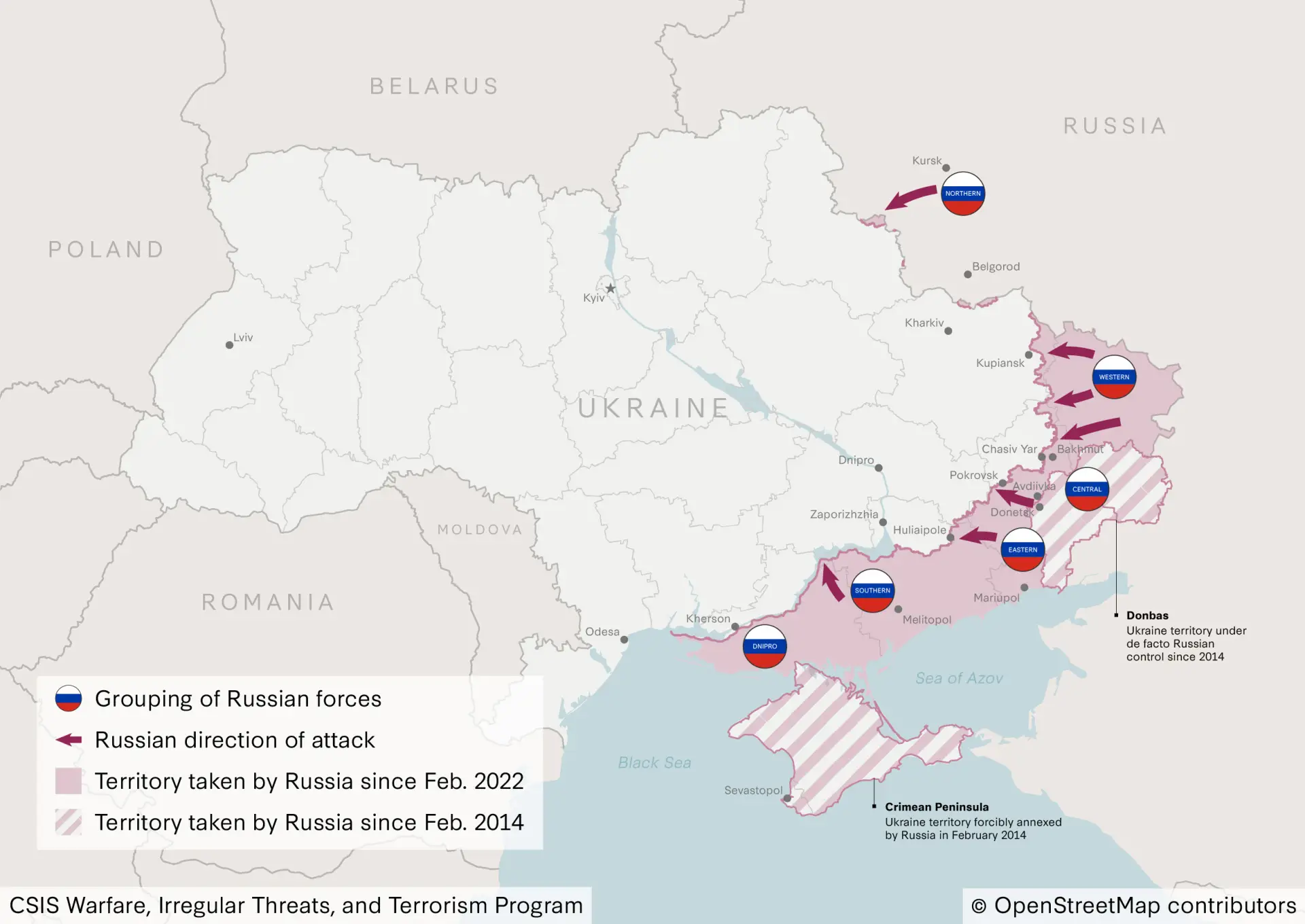
https://www.csis.org/analysis/russias-grinding-war-ukraine
Jeremy Lichtman‘s Multi-AI Oracle predicts 30%
Obtaining outside data.
Checking internet sources, using keywords: Ukraine ceasefire armistice 2026
News from various sources:
The content from multiple sources discusses a recent development involving Ukraine, which has reportedly agreed on a multi-tiered plan with its Western partners to enforce any future ceasefire with Russia.
Key points of the agreement include:
- Rapid Response Procedure: Any breach by Russia of the agreed ceasefire would result in a response within 24 hours. This would start with a diplomatic warning and, if necessary, military actions by Ukrainian forces to stop the violation.
- International Coalition Involvement: If hostilities continue, a second phase would involve a response from a “coalition of the willing,” which includes various EU member states, the UK, Norway, Iceland, and Turkey. This coalition would act to contain and potentially reverse the violations.
- Escalated Response with US Involvement: In the case of a significant or expanded Russian attack, a coordinated response incorporating the US military would be triggered 72 hours after the initial breach. This would involve a robust military response supported by Western forces.
Envoys from Ukraine, Russia, and the US are expected to meet in Abu Dhabi to discuss the details and the implementation of this plan to bring an end to the conflict.
The plan aims to prevent the recurrence of previous issues experienced under past agreements, such as the Minsk agreements, which failed to enforce compliance and prevent continuous Russian military actions. The new proposal seeks to provide a structured and swift international response to ensure adherence to the ceasefire terms.
Fact-checking news summary:
Based on the summary provided, here is a list of specific facts along with an analysis of their correctness, importance to the question, and relevance to the outcome.
Fact: Ukraine has reportedly agreed on a multi-tiered plan with its Western partners to enforce any future ceasefire with Russia.
- Correctness: Cannot verify (external source required, and context could affect verification).
- Importance: Important.
- Relevance to Outcome: True.
Fact: A rapid response procedure would ensure any breach by Russia would result in a response within 24 hours, starting with a diplomatic warning and potentially military action by Ukrainian forces.
- Correctness: Cannot verify (external source required).
- Importance: Important.
- Relevance to Outcome: True.
Fact: If hostilities continue, a coalition involving EU member states, the UK, Norway, Iceland, and Turkey would respond to contain and potentially reverse violations.
- Correctness: Cannot verify (external source required).
- Importance: Important.
- Relevance to Outcome: True.
Fact: A coordinated response incorporating the US military would occur 72 hours after a significant or expanded Russian attack, involving a robust military response.
- Correctness: Cannot verify (external source required).
- Importance: Important.
- Relevance to Outcome: True.
Fact: Envoys from Ukraine, Russia, and the US are expected to meet in Abu Dhabi to discuss the details and the implementation of this plan.
- Correctness: Cannot verify (external source required).
- Importance: Important.
- Relevance to Outcome: True.
Fact: The plan aims to prevent the recurrence of issues seen under past agreements like the Minsk agreements.
- Correctness: True (contextually aligns with historical challenges the Minsk agreements faced in terms of enforcement and compliance).
- Importance: Lesser importance.
- Relevance to Outcome: True.
Overall, the facts focus on potential enforcement mechanisms and participants in case of a ceasefire breach, which are relevant to the question regarding the declaration of a ceasefire or armistice. However, specific factual verification would require external data beyond the provided summary.
Fact-checked summary:
The plan to prevent issues seen under past agreements like the Minsk agreements is confirmed to be true and relevant to discussions about a potential ceasefire or armistice in Ukraine in 2026. Although its importance in determining the outcome might be lesser compared to other factors, this fact highlights recognizable challenges within international peace agreements that could influence future diplomatic and enforcement strategies.
OpenAI gives a base rate of 0.2 (20%)
The question difficulty is rated 8 (0 to 10)
Historical weighted factors include:
Past success rate of ceasefires in conflict areas, 0.3
Diplomatic efforts and involvement, 0.4
International pressure and sanctions, 0.2
Current geopolitical tensions, 0.1
A Bayesian calculation could be performed as follows:
The base rate of 0.2 was adjusted using historical factors. Past success of ceasefires being low in conflict areas gives a slight negative adjustment. Diplomatic involvement is increased due to current geopolitical priorities, yielding a positive adjustment. This results in a posterior probability of approximately 0.28.
Bayesian base rate: 0.28 (28%)
Sufficient news to provide a good forecast? 1 (0 or 1)
News is relevant, topical and unbiased? 1 (0 or 1)
Question classification: scenario_based_forecast
Expected time (days) until question close: 120
The following were considered in order to produce this base rate:
The base rate considers historical difficulties in achieving lasting peace between Ukraine and Russia, even with international mediation. This reflects the complexity of the negotiations and the numerous challenges historically faced.
Ideally, the news feed would contain the following sorts of information for a better forecast:
Additional information on the current political climate in Russia and Ukraine, or tangible commitments from international actors, could refine the forecast.
Some potential divergent considerations that might affect the base rate:
Current political dynamics could differ due to increased international pressure or unexpected diplomatic shifts. Additionally, internal political changes within either Russia or Ukraine could influence outcomes more positively or negatively.
The following chain of events are necessary for the question to resolve positively:
- Ukraine and Russia must both engage in substantive peace negotiations. (likely)
- International mediators must become actively involved in the process. (more likely than not)
- Both parties must agree on a framework to address territorial disputes. (roughly even chance)
- Ceasefire terms must be drafted and accepted by both parties. (less likely) – Implementation and enforcement mechanisms must be agreed upon. (less likely)
Querying Claude (AI predicts: 0.28 – confidence: 4)
Querying Mistral (AI predicts: 0.3 – confidence: 6)
Querying OpenAI (AI predicts: 0.35 – confidence: 5)
Question Type: Binary
Median from LLMs: 0.3
Base rate: 0.2 (from OpenAI)
SD: 0.03
MAPD: 0.046666666666667
Confidence: 5
Conf Mode: Normal
Mellers: 0.23
Reverse Mellers: 0.37
Theory of Mind: 0.25 (What did the LLMs think other LLMs predicted?)
Beta Distribution: 0.001
Close Type: B (B = cautious # closer to 50%; A/C = closer to extremes)
LLM responses: 3
Explanations of the above statistical measures here —>
Model value: 30%
The AIs’ reasoning converges on a prediction of a low probability (about 28-30%) of achieving a ceasefire or armistice between Ukraine and Russia in 2026, primarily due to historical precedents and deep-rooted territorial and ideological conflicts. Historical base rates for achieving such agreements are low, as seen with the failures of the Minsk agreements. Complex negotiations are constrained by the limited time remaining in 2026 and significant challenges in addressing territorial disputes and trust deficits in enforcement mechanisms. Despite international involvement and diplomatic efforts possibly motivated by war fatigue and external pressures, major obstacles such as entrenched military positions, unpredictable political dynamics (including potential shifts due to the US administration and internal political changes in Russia or Ukraine), and economic factors persist. While there is a theoretical possibility that breakthroughs could occur, these remain speculative in nature given the entrenched nature of conflicts.
Runtime: 143 seconds.
About The Author