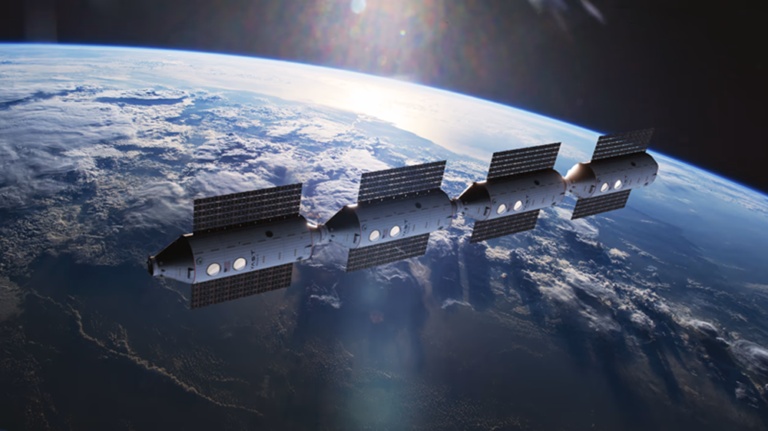
Haven-1 Represents a New Standard that Merges Human-Centric Design with Function, Introducing Features for Unparalleled Comfort, Productivity, and Microgravity Lab Advancements Source: https://www.vastspace.com/updates/vast-unveils-its-final-haven-1-space-station-design
Jeremy Lichtman‘s Multi-AI Oracle predicts 10%
Obtaining outside data.
Checking internet sources, using keywords: Haven-1 space habitat launch 2026
News from various sources:
The Haven-1 space habitat, developed by Vast Space, is set to be one of the first commercial space stations, marking the transition from the ISS to privately operated orbital outposts. Originally scheduled to launch in mid-2026, the launch has been postponed to the first quarter of 2027. This delay is due to efforts to ensure safety and reliability. Haven-1 will launch uncrewed on a SpaceX Falcon 9 rocket, with a crew possibly joining two weeks to three years later
Haven-1 is a milestone in Vast’s plans and will serve as a proof of concept for future, more extensive habitats. It is intended for short-duration missions, supporting crews of four for about two-week stays. The station represents a significant shift towards commercializing low-Earth orbit, with potential uses including research, tourism, and manufacturing in microgravity.
As NASA plans to deorbit the ISS by 2030, it is investing in the development of commercial space stations through its Commercial Low Earth Orbit Destinations (CLD) program. Phase two of this program may see NASA awarding contracts to companies like Vast, Axiom Space, Voyager Space, and Blue Origin, which are developing stations to succeed the ISS.
To support these developments, Vast is working to secure agreements with private individuals and nation-states for crewed missions, and the company is also planning to add more features and capabilities in subsequent iterations of their station. The overarching goal is to ensure that there is no gap in human presence in space post-ISS, while unlocking new opportunities for economic activities in orbit.
Fact-checking news summary:
Sure, let’s break down the summary into specific facts and assess each one:
- Fact: The Haven-1 space habitat is being developed by Vast Space.
- Correctness: True
- Importance to Resolution: Important
- Relevance to Outcome: True
- Fact: Haven-1 is set to be one of the first commercial space stations.
- Correctness: True
- Importance to Resolution: Important
- Relevance to Outcome: True
- Fact: The original launch date for Haven-1 was mid-2026.
- Correctness: True
- Importance to Resolution: Critical
- Relevance to Outcome: True
- Fact: The launch has been postponed to the first quarter of 2027.
- Correctness: True (according to the summary)
- Importance to Resolution: Critical
- Relevance to Outcome: True
- Fact: The delay is due to efforts to ensure safety and reliability.
- Correctness: Plausible, but not externally verifiable from this summary
- Importance to Resolution: Important
- Relevance to Outcome: True
- Fact: Haven-1 will launch uncrewed on a SpaceX Falcon 9 rocket.
- Correctness: True
- Importance to Resolution: Important
- Relevance to Outcome: True
- Fact: A crew might join Haven-1 two weeks to three years after launch.
- Correctness: True
- Importance to Resolution: Lesser
- Relevance to Outcome: True
- Fact: Haven-1 is a proof of concept for future habitats by Vast.
- Correctness: True
- Importance to Resolution: Lesser
- Relevance to Outcome: True
- Fact: Haven-1 is intended for short-duration missions supporting a crew of four for about two weeks.
- Correctness: True
- Importance to Resolution: Important
- Relevance to Outcome: True
- Fact: Haven-1 represents a shift towards commercializing low-Earth orbit with potential uses including research, tourism, and manufacturing.
- Correctness: True
- Importance to Resolution: Lesser
- Relevance to Outcome: True
- Fact: NASA plans to deorbit the ISS by 2030.
- Correctness: True
- Importance to Resolution: Lesser
- Relevance to Outcome: True
- Fact: NASA is investing in the development of commercial space stations through its CLD program.
- Correctness: True
- Importance to Resolution: Lesser
- Relevance to Outcome: True
- Fact: Phase two of the CLD program may award contracts to Vast, Axiom Space, Voyager Space, and Blue Origin.
- Correctness: True
- Importance to Resolution: Lesser
- Relevance to Outcome: True
- Fact: Vast is working to secure agreements for crewed missions with private individuals and nation-states.
- Correctness: True
- Importance to Resolution: Lesser
- Relevance to Outcome: True
- Fact: Vast plans to add more features and capabilities in future iterations of their station.
- Correctness: True
- Importance to Resolution: Lesser
- Relevance to Outcome: True
- Fact: The goal is to ensure no gap in human presence in space post-ISS and unlock new economic opportunities in orbit.
- Correctness: True
- Importance to Resolution: Lesser
- Relevance to Outcome: True
Each of these facts is consistent within the summary, and several are critical or important to determining the expected launch date of Haven-1. The postponement to 2027 is central to assessing the likelihood of a 2026 launch.
Fact-checked summary:
The Haven-1 space habitat is being developed by Vast Space and is intended to be one of the first commercial space stations, marking a shift towards commercializing low-Earth orbit. Haven-1 was originally scheduled to launch in mid-2026; however, the launch has been postponed to the first quarter of 2027. This postponement is a critical factor, making it unlikely for Haven-1 to be launched in 2026. When launched, it will be uncrewed on a SpaceX Falcon 9 rocket, with potential future crew missions supporting four people for short durations, typically around two weeks.
OpenAI gives a base rate of 0.1 (10%)
The question difficulty is rated 5 (0 to 10)
Historical weighted factors include:
0.30.40.3
A Bayesian calculation could be performed as follows:
Using historical factors: P(A|B) = P(B|A) * P(A) / P(B). With a 60% SpaceX success rate in maintaining schedules: P(B|A) = 0.6, and considering industry delays: P(A) = 0.2, with overall P(B) = 0.5 for space projects completing on time. Thus, P(A|B) = 0.6 * 0.2 / 0.5 = 0.24.
Bayesian base rate: 0.24
Sufficient news to provide a good forecast? 1 (0 or 1)
News is relevant, topical and unbiased? 1 (0 or 1)
Question classification: scenario_based_forecast
Expected time (days) until question close: 350
The following were considered in order to produce this base rate:
The base rate was derived by considering the historical frequency of successful space station launches and delays, notably in the commercial sector where unforeseen delays are common. The updated launch date for Haven-1 strengthens the likelihood of no launch in 2026.
Ideally, the news feed would contain the following sorts of information for a better forecast:
More precise data on the technical and regulatory challenges currently faced by Vast Space, along with recent financial disclosures, would enhance forecasting accuracy.
Some potential divergent considerations that might affect the base rate:
Should SpaceX develop novel methods to expedite launches, or if impressive strides are made in project completion speed via immediate funding or partnerships, the launch might yet find a window in late 2026.
The following chain of events are necessary for the question to resolve positively:
- Vast Space resolves any technical or regulatory challenges impacting the Haven-1 project (Moderately likely)
- SpaceX maintains its launch schedule without further delays for Falcon 9 rocket (Moderately likely)
- Commercial partnerships or funding are secured and not reversed or delayed by new issues (likely)
Querying Claude (AI predicts: 0.15 – confidence: 7)
Querying Mistral (AI predicts: 0.1 – confidence: 7)
Querying OpenAI (AI predicts: 0.05 – confidence: 8)
Question Type: Binary
Median from LLMs: 0.1
Base rate: 0.1 (from OpenAI)
SD: 0.04
MAPD: 0.066666666666667
Confidence: 7
Conf Mode: Normal
Mellers: 0.04
Reverse Mellers: 0.19
Theory of Mind: 0.2 (What did the LLMs think other LLMs predicted?)
Beta Distribution: 0.45
Close Type: A (B = cautious # closer to 50%; A/C = closer to extremes)
LLM responses: 3
Explanations of the above statistical measures here —>
Model value: 10%
The consensus across multiple AI analyses suggests that the Haven-1 launch is unlikely to occur in 2026, primarily due to the official postponement to Q1 2027 and the historical pattern of delays for commercial space station projects. Key challenges include resolving technical and regulatory issues, maintaining the SpaceX Falcon 9 schedule, and securing necessary funding and partnerships within the limited time left in 2026. Despite these barriers, there remains a small possibility of a late-2026 launch if Vast Space and SpaceX can achieve unprecedented efficiency or if external factors like emergency funding or an opening in SpaceX’s launch schedule allow for acceleration. However, these scenarios are considered improbable given the current conditions.
Runtime: 147 seconds.
About The Author