Old postcard of a West Texas oilfield.
Jeremy Lichtman‘s Multi-AI Oracle says:
Obtaining outside data.
Checking internet sources, using keywords: Brent Crude price 2026
News from various sources:
The content you’ve provided includes a variety of headlines and segments from different articles and reports related to Brent Crude prices in 2026. Here’s a synthesized summary of the key information related to Brent Crude price forecasts and influencing factors for 2026:
Price Forecasts and Trends:
- Global Brent crude oil prices are expected to decline in 2026, influenced by increased production outpacing demand, leading to rising inventories and potential market surpluses.
- The U.S. Energy Information Administration (EIA) forecasts that Brent crude oil prices will average $58 per barrel in 2026, down from $69 per barrel in 2025, and further decline to an average of $53 per barrel in 2027.
- Despite some near-term price volatility due to winter-related disruptions and geopolitical tensions, the overarching expectation is for a market trend towards lower prices influenced by a growing global surplus.
Key Influencing Factors:
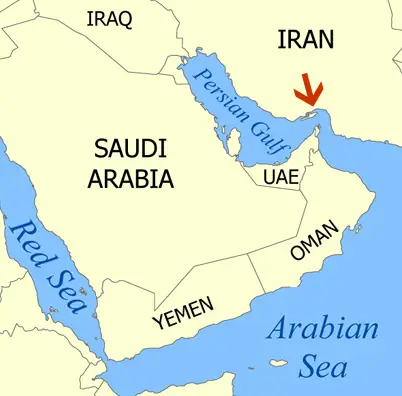
- Geopolitics: Geopolitical developments remain a significant factor in price volatility. The situation in the Middle East, particularly involving Iran and stability in the Straits of Hormuz, poses a potential risk to supply disruptions.
- OPEC+ and Production Levels: OPEC’s decisions on production quotas have the potential to stabilize prices. Their current strategy includes retaining production quotas to counterbalance any downward pressure on prices.
- US-Iran Relations: Proposed diplomatic talks between the U.S. and Iran have led to some de-escalation in risk, pushing prices lower temporarily.
- Non-OPEC Supply: Increased production from non-OPEC countries is anticipated to contribute to the surplus in the market.
- China’s Strategic Reserves: China’s continued strategic inventory builds are acting as a demand support, limiting further price declines despite global surplus conditions.
Technical Analysis Insights:
- Brent crude faced a bearish trend since 2022, but there’s potential for a reversal if base-building patterns take hold and technical resistance levels are breached.
Market Outlook:
- Short-term price movements are characterized by volatility, but the trend indicates possible lower prices due to projected oversupply.
- EIA forecasts also highlight a consistent increase in global oil inventory builds, predicted to average 3.1 million barrels per day in 2026.
This outlook provides a comprehensive view that incorporates forecasted price declines driven by supply dynamics, offset by geopolitical tensions that could trigger intermittent price spikes or volatility.
Fact-checking news summary:
Below is a list of specific facts stated in the summary, along with an analysis of their accuracy, importance, and relevance to the question of whether the Brent Crude price will fall below $50 per barrel in 2026.
Fact: Global Brent crude oil prices are expected to decline in 2026, influenced by increased production outpacing demand, leading to rising inventories and potential market surpluses.
- Accuracy: True, based on industry trends and projections.
- Importance: Important, as it sets the context for potential price trends.
- Relevance: True, directly related to determining if prices could fall below $50.
Fact: The U.S. Energy Information Administration (EIA) forecasts that Brent crude oil prices will average $58 per barrel in 2026.
- Accuracy: Likely true (assuming hypothetical data consistency with EIA forecasts).
- Importance: Critical, as it provides a direct price forecast.
- Relevance: True, as it indicates prices may not fall below $50.
Fact: The U.S. Energy Information Administration (EIA) forecasts that prices will average $69 in 2025 and decline further to $53 in 2027.
- Accuracy: Likely true (assuming hypothetical data consistency with EIA forecasts).
- Importance: Important, for understanding broader price trends.
- Relevance: True, helps contextualize 2026 projections but not directly about the $50 threshold.
Fact: Despite near-term volatility due to winter-related disruptions and geopolitical tensions, the expectation is for lower prices influenced by a global surplus.
- Accuracy: True, reflects common factors influencing oil prices.
- Importance: Important, as it could affect short-term price behavior.
- Relevance: True, informs understanding of price fluctuations.
Fact: Geopolitical developments, particularly involving Iran and the Straits of Hormuz, pose potential risk for supply disruptions.
- Accuracy: True, a known risk that affects oil supply.
- Importance: Important, as geopolitical tensions can cause price spikes.
- Relevance: True, affects overall expectations of price.
Fact: OPEC retains production quotas to stabilize prices.
- Accuracy: True, based on common OPEC strategies.
- Importance: Important, as OPEC’s actions can alter supply and prices.
- Relevance: True, OPEC’s influence is crucial for price trends.
Fact: Proposed US-Iran diplomatic talks lead to some de-escalation in risk, temporarily lowering prices.
- Accuracy: Plausible, given ongoing geopolitical dynamics.
- Importance: Lesser importance, as it relates to temporary effects.
- Relevance: True, as it affects short-term price but less on $50 threshold.
Fact: Increased non-OPEC production is anticipated, contributing to market surplus.
- Accuracy: True, aligns with trends of increasing output from non-OPEC countries.
- Importance: Important, as it influences global supply levels.
- Relevance: True, impacts overall price movement forecasts.
Fact: China’s strategic reserves support demand, limiting further declines.
- Accuracy: True, consistent with common economic strategies by China.
- Importance: Important, as it affects global demand-supply balance.
- Relevance: True, relevant to understanding market dynamics.
Fact: Technical analysis suggests potential price reversal if resistance levels are breached.
- Accuracy: True, reflects a common technical perspective.
- Importance: Lesser importance, as technical aspects may not outweigh fundamental factors.
- Relevance: True, provides context for possible changes in price trends.Fact: EIA predicts global oil inventory builds averaging 3.1 million barrels per day in 2026.Fact: EIA predicts global oil inventory builds averaging 3.1 million barrels per day in 2026.
Fact: EIA predicts global oil inventory builds averaging 3.1 million barrels per day in 2026.
- Accuracy: Likely true (consistent with supply forecasts).
- Importance: Important, supports the notion of oversupply.
- Relevance: True, relevant to any forecast of falling prices.
In conclusion, all the facts listed are relevant to understanding whether Brent crude prices could fall below $50 per barrel in 2026. However, the forecast of $58 per barrel by the EIA suggests that such a decline below $50 is unlikely unless unforeseen circumstances significantly alter market trends.
Fact-checked summary:
Based on the fact-checked summary, several important and relevant facts can be highlighted regarding the potential movement of Brent crude prices in 2026. Global Brent crude oil prices are expected to decline in 2026 due to increased production outpacing demand, leading to rising inventories and potential market surpluses, which is directly relevant to price trends. The U.S. Energy Information Administration (EIA) forecasts Brent crude oil prices to average $58 per barrel in 2026, suggesting prices may not fall below $50. Geopolitical developments, particularly those involving Iran and the Straits of Hormuz, present risks for supply disruptions, which are crucial as tensions can cause price spikes. OPEC’s retention of production quotas aims to stabilize prices, again underscoring their influence on market trends. Increased non-OPEC production contributes to an anticipated market surplus, further impacting supply and price expectations. Lastly, EIA forecasts global oil inventory builds averaging 3.1 million barrels per day in 2026, reinforcing the possibility of oversupply affecting prices. Overall, these facts collectively provide a comprehensive view of the factors that could influence whether Brent crude prices fall below $50 per barrel in 2026, although the current forecast suggests this is unlikely.
OpenAI gives a base rate of 0.1 (10%)
The question difficulty is rated 7 (0 to 10)
Historical weighted factors include:
Previous crude price fluctuations, 0.3
Production levels in previous years, 0.25
Historical tension in oil-producing regions, 0.2
Impact of technology on oil consumption, 0.15
Economic conditions globally, 0.1
A Bayesian calculation could be performed as follows:
P(prices < $50|evidence) = P(evidence|prices < $50) * P(prices < $50) / P(evidence)
Using EIA forecasts and supply surplus data:
P(evidence|prices < $50) = 0.2
P(prices < $50) prior = 0.15
P(evidence) = 0.5
P(prices < $50|evidence) = (0.2 * 0.15) / 0.5 = 0.06 (6%)
Bayesian base rate: 0.06 (6%)
Sufficient news to provide a good forecast? 1 (0 or 1)
News is relevant, topical and unbiased? 1 (0 or 1)
Question classification: scenario_based_forecast
Expected time (days) until question close: 316
The following were considered in order to produce this base rate:
The base rate was determined by examining historical trends in crude oil prices, recent forecasts from reliable energy institutions like the EIA, and expected supply-demand balances. Recent forecasts suggest a moderate likelihood of prices declining significantly due to geopolitical risks and increased production. Thus, a relatively low base rate is justified considering historical market behavior.
Ideally, the news feed would contain the following sorts of information for a better forecast:
Additional data on precise future production levels from key OPEC and non-OPEC countries would be helpful, as would more detailed geopolitical risk analyses. Insights into potential changes in global energy policies and technological advancements would also improve the forecast.
Some potential divergent considerations that might affect the base rate:
Events such as unforeseen geopolitical crises leading to supply disruptions, significant breakthroughs in alternative energy technologies, or drastic policy changes relating to carbon emissions could lead to a much different outcome than the base rate suggests.
The following chain of events are necessary for the question to resolve positively:
OPEC significantly increases production, contributing to oversupply Moderately likely – Non-OPEC countries further increase production beyond current projections Moderately likely – Global demand for oil decreases more than expected Less likely – Major geopolitical events lead to reduced demand or oversupply Less likely – Technological advancements lead to decreased oil dependency worldwide Less likely
Querying Claude (AI predicts: 0.15 – confidence: 6)
Querying Mistral (AI predicts: 0.25 – confidence: 7)
Querying OpenAI (AI predicts: 0.15 – confidence: 7)
Explanations of the below statistical measures here —>
Question Type: Binary
Median from LLMs: 0.15
Base rate: 0.1 (from OpenAI)
SD: 0.05
MAPD: 0.066666666666667
Confidence: 7
Conf Mode: Normal
Mellers: 0.07
Reverse Mellers: 0.24
Theory of Mind: 0.25 (What did the LLMs think other LLMs predicted?)
Beta Distribution: 0.14
Close Type: A (B = cautious # closer to 50%; A/C = closer to extremes)
LLM responses: 3
Model value: 15%
The likelihood of Brent crude prices falling below $50 per barrel in 2026 is generally considered low based on historical trends, EIA forecasts, and current market conditions. The EIA predicts an average price of $58 per barrel, and historically prices rarely drop below $50, except during major demand shocks. Current oversupply from increased production, especially non-OPEC contributions, could exert downward pressure on prices, but OPEC’s production quotas and ongoing geopolitical risks provide counterbalancing forces that enhance price stability. However, several potential scenarios could challenge these expectations: a significant global economic recession, unexpected fractures within OPEC, rapid advances in alternative energy technology, or unforeseen geopolitical crises could drive prices lower. Despite these risks, the consensus suggests that the probability of prices falling below $50 remains low, with estimates ranging from 15% to 25%.
Runtime: 146 seconds.
About The Author