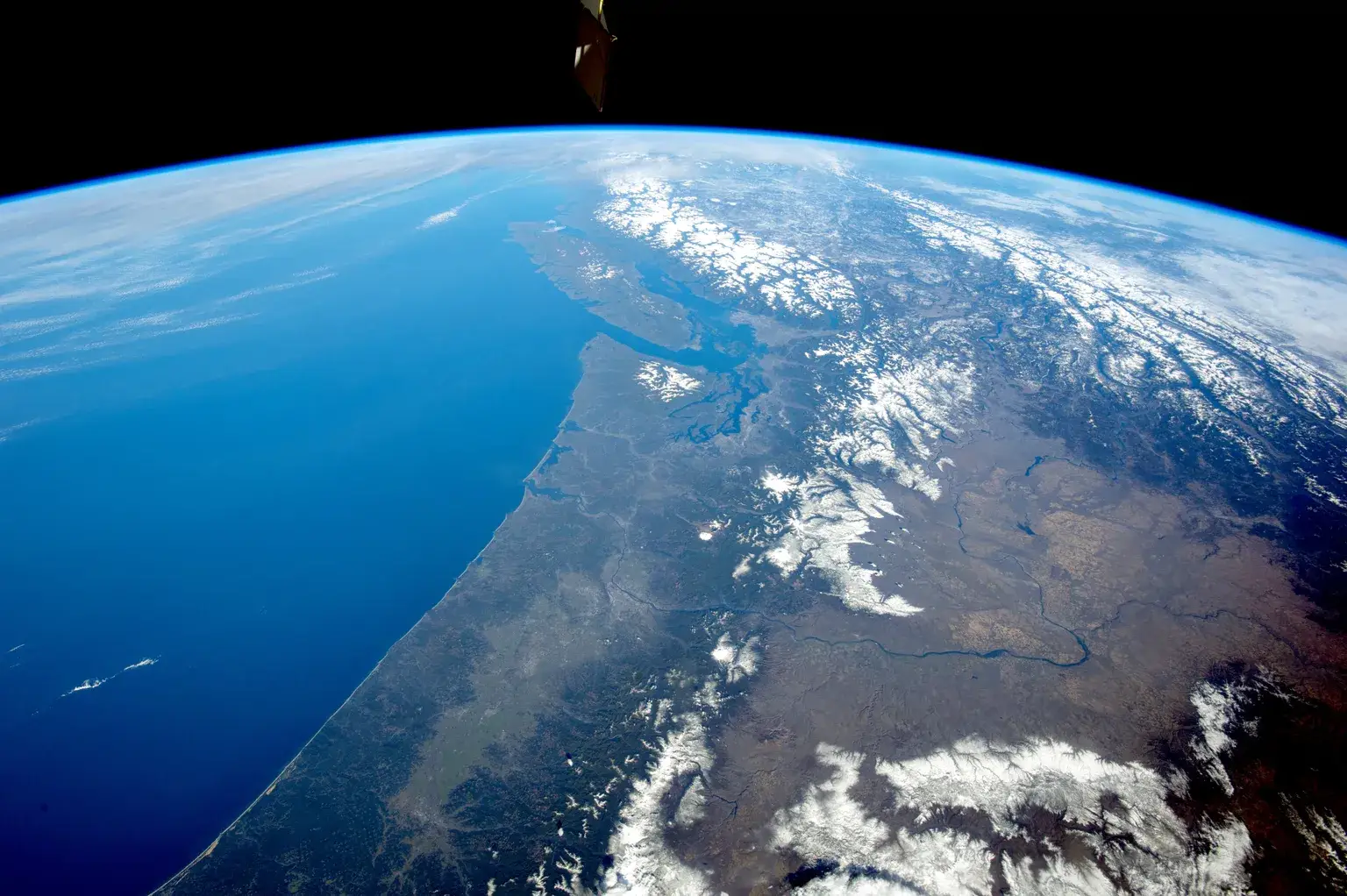
The snow-covered Cascade Range in the foreground gives way to the Rocky Mountains and Coast Mountains in Canada, with Vancouver Island offshore, in a photograph taken Feb. 28, 2015, by an astronaut looking north from the International Space Station. (NASA/NASA)
Jeremy Lichtman‘s Multi-AI Oracle forecasts 35%
Obtaining outside data.
Checking internet sources, using keywords: space habitat humans 2027
News from various sources:
Fact-checked summary:
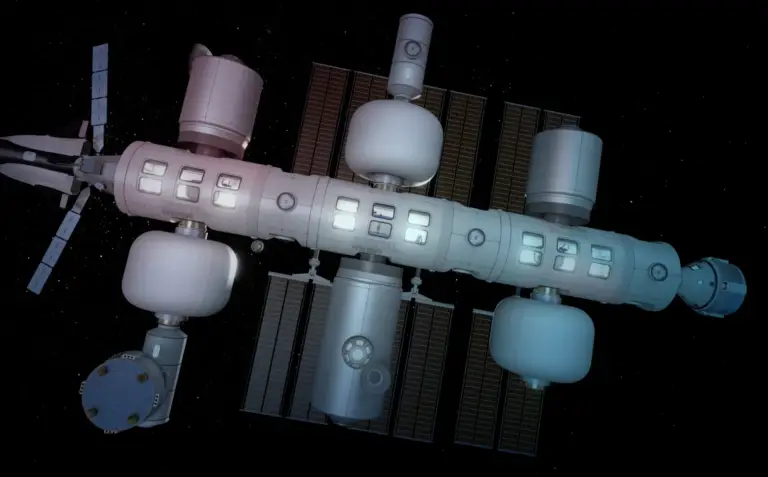
Based on the verified facts, there is a space habitat currently under construction [that had] a scheduled completion date by the end of 2025, which indicates that it could potentially be ready for human visits before the end of 2027. This completion timeline is crucial as it lays the groundwork for possible missions. Furthermore, there is a planned human mission to the space habitat set for 2026, making it highly probable that humans will visit the habitat by 2027. However, the project has faced consistent delays due to budgetary constraints, which is significant because such delays could impact whether the habitat is completed and visited as scheduled. While no current launch systems are capable of transporting humans to this specific habitat (Carolyn‘s note: Haven-1 reportedly will use SpaceX Falcon 9 rockets to launch the station and SpaceX Crew Dragon spacecraft to transport four-person crews for 30-day missions), this factor could influence the feasibility of visits if transport capabilities do not improve in time. These facts collectively suggest that the habitat is likely to be visited by humans by 2027, though there are potential risks due to delays and transport limitations.
OpenAI gives a base rate of 0.3 (30%)
The question difficulty is rated 7 (0 to 10)
Historical weighted factors include:
Completion rates of space projects under budget constraints, 0.4
Historical delays in space transportation development, 0.3
Success rates of planned space missions, 0.3
A Bayesian calculation could be performed as follows:
Using the historical factors, we start with an equal prior probability of completion of the habitat (0.5). We adjust it based on the weighted historical influence, leading to 0.5 * (1-0.4) for probable delays, 0.5 * (1-0.3) for transport limitations, and moderate optimism from planned mission at 0.5 * 0.7. This calculation gives a Bayesian probability of approximately 0.3 (30%)
Bayesian base rate: 0.3 (30%)
Sufficient news to provide a good forecast? 1 (0 or 1)
News is relevant, topical and unbiased? 1 (0 or 1)
Question classification: scenario_based_forecast
Expected time (days) until question close: 658
The following were considered in order to produce this base rate:
I considered the current status of the project, historical patterns of similar space projects facing delays, and the tentative mission plan for 2026. The primary obstacle remains developing a viable human transport system within the given timeframe.
Ideally, the news feed would contain the following sorts of information for a better forecast:
Additional information on funding commitments, development progress updates on transport systems, and governmental or organizational support would provide more clarity on the feasibility of the mission.
Some potential divergent considerations that might affect the base rate:
Unexpected advancements in transportation technology or significant increases in budget allocation could increase the likelihood of a successful mission. The project might also receive strategic prioritization leading to emphasis on timely completion.
The following chain of events are necessary for the question to resolve positively:
- Completion of the space habitat by the end of 2025 – Unlikely
- Development of a launch system capable of transporting humans to the habitat by 2026
- Very Unlikely – Allocating sufficient budget to avoid further delays – Possible
- Successful execution of the planned human mission in 2026 – Possible
Querying Claude (AI predicts: 0.25 – confidence: 5)
Querying Mistral (AI predicts: 0.45 – confidence: 6)
Querying OpenAI (AI predicts: 0.35 – confidence: 5)
Explanations of the statistical measures listed below.
Question Type: Binary
Median from LLMs: 0.35
Base rate: 0.3 (from OpenAI)
SD: 0.08
MAPD: 0.13333333333333
Confidence: 5
Conf Mode: Normal
Mellers: 0.29
Reverse Mellers: 0.4
Theory of Mind: 0.45 (What did the LLMs think other LLMs predicted?)
Beta Distribution: 0.26
Close Type: B (B = cautious # closer to 50%; A/C = closer to extremes)
LLM responses: 3
Model value: 35%
The reasoning across various AI summaries highlights several critical factors in predicting the likelihood of a new space habitat being visited by humans before the end of 2027. Key considerations include the historical frequency and delays of space infrastructure projects, with a baseline probability of 0.3 due to their typical challenges and constraints. The current space project under discussion faces a tight schedule from March 2026 to December 2027 and ongoing budgetary and technical challenges, including the lack of a viable human-rated launch system. Some summaries consider potential developments, such as accelerated progress due to increased funding or advancements by the private sector, which could adjust the probability upward. Dissenting possibilities also consider broader definitions of ‘new space habitat’ or the influence of undisclosed programs, but current indicators suggest delays and challenges will keep the probability lower, with estimates ranging from 0.25 to 0.45.
Runtime: 120 seconds
About The Author