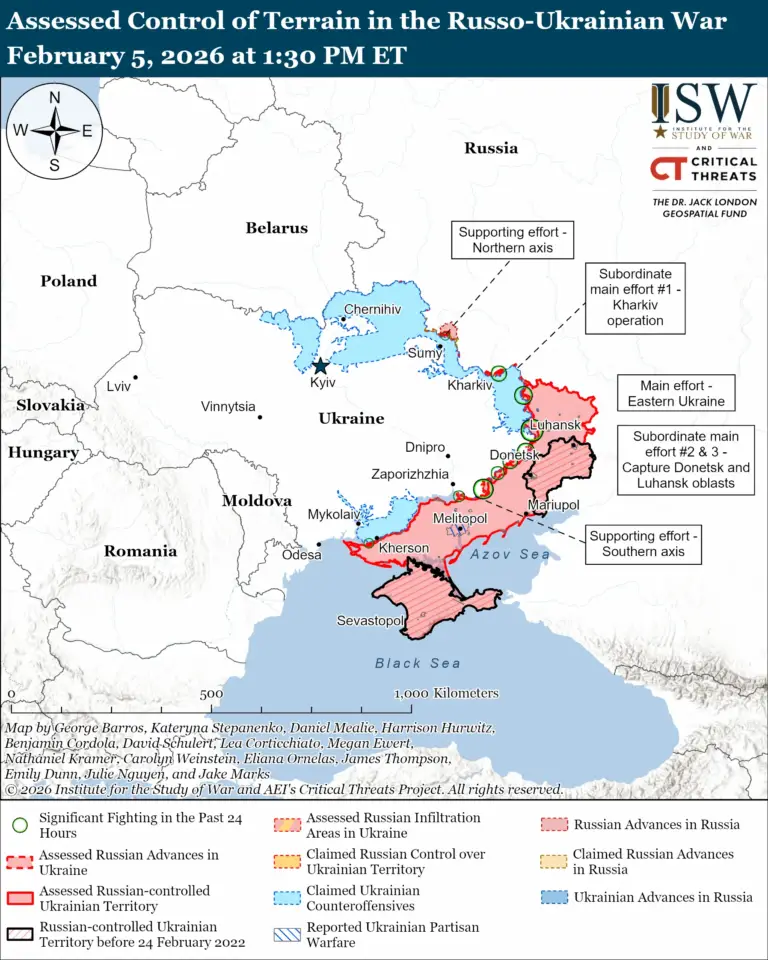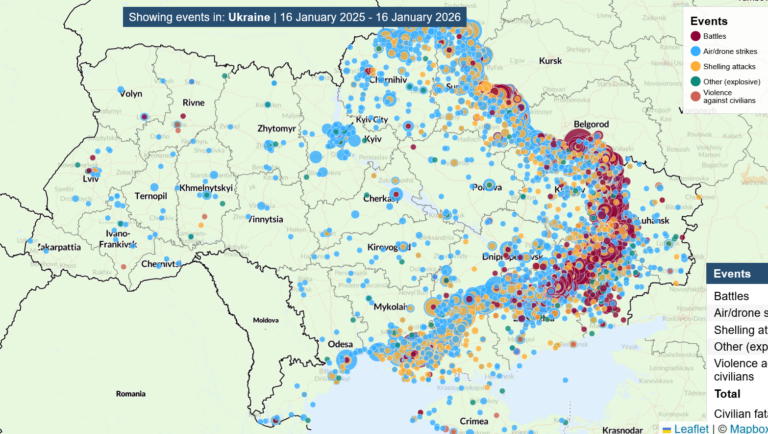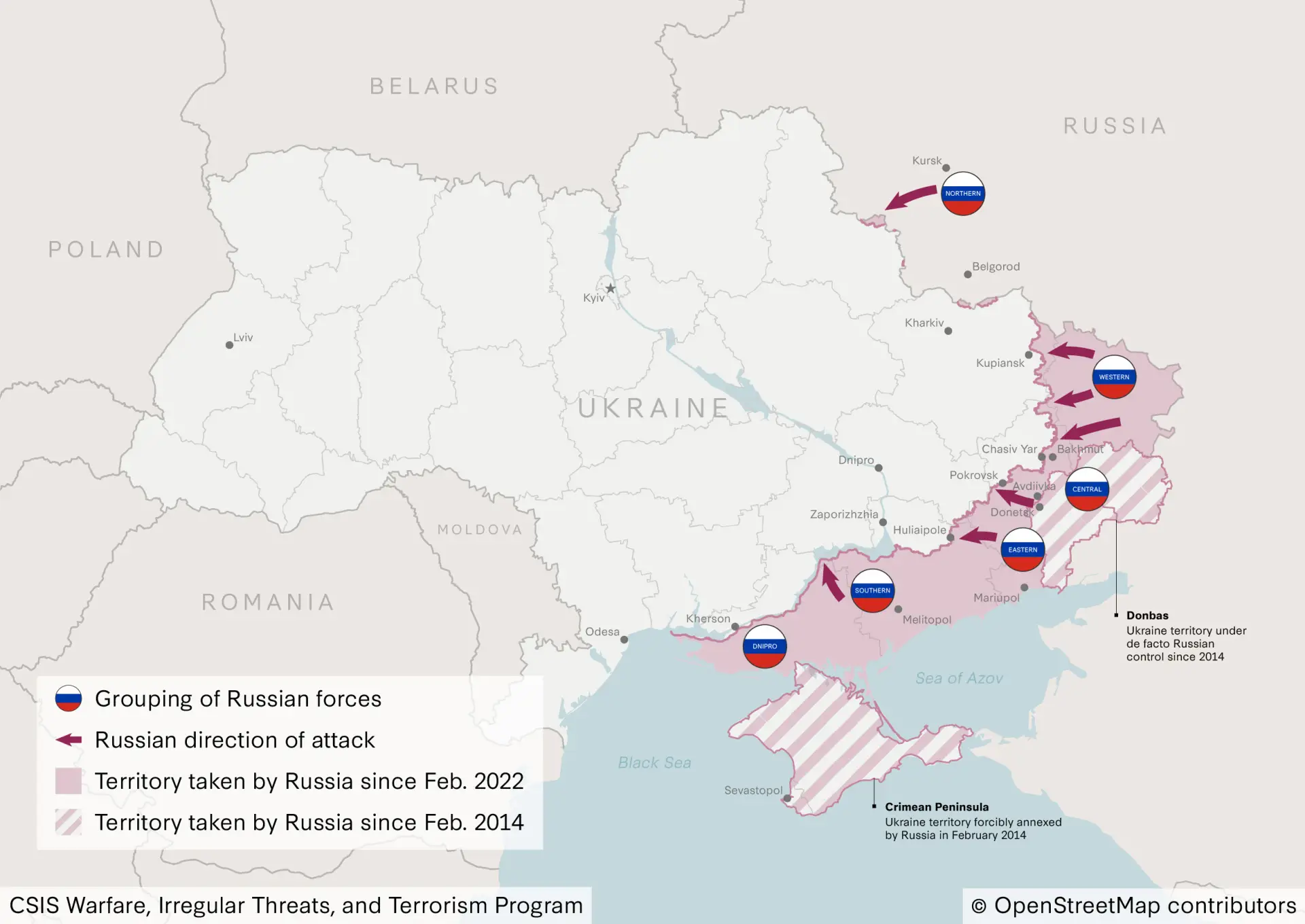
Russia/Ukraine War control of territory as of Feb. 7, 2026.
Jeremy Lichtman’s Multi-AI Oracle forecasts 25%
Obtaining outside data.
Checking internet sources, using keywords: Ukraine ceasefire 2026
News from various sources:
The content provides details about a recent agreement regarding a ceasefire plan between Ukraine and its Western partners, reportedly in response to persistent violations by Russia. The plan, as described by the Financial Times and referenced in a Reuters report, involves a multi-tiered enforcement strategy. Key points include:
- Ceasefire Agreement: Ukraine and Western countries have developed a plan to address any breaches of a ceasefire by Russia. This plan includes a multi-tiered response involving diplomatic and military actions by various international partners.
- Response to Violations: If Russia violates the ceasefire, the response will be initiated within 24 hours, starting with a diplomatic warning. Escalations would involve the Ukrainian army and, potentially, a wider coalition of European countries, the UK, Norway, Iceland, and Türkiye.
- Coordinated Military Response: In the event of an expanded attack by Russia, a coordinated response involving a Western-backed force, including the US military, would be executed 72 hours after the breach.
- Diplomatic Talks: Upcoming diplomatic meetings are scheduled to take place in Abu Dhabi, involving envoys from Kyiv, Moscow, and Washington, aiming to negotiate an end to the ongoing war.
This proposal represents a significant step towards securing a structured approach for maintaining a ceasefire and ensuring a collaborative international response to any infractions.
Fact-checking news summary:
Fact: Ukraine and Western countries have developed a ceasefire plan with a multi-tiered response to breaches by Russia.
- Correctness: Unable to verify the specific existence of such a plan as described. This fact is internally consistent within the summary, but further evidence would be needed for external verification.
- Importance: Important. Establishing whether a structured ceasefire plan exists is essential for predicting the potential for a ceasefire in 2026.
- Relevance: True. A structured plan directly relates to the probability of a ceasefire or armistice being in place by 2026.
Fact: If Russia violates the ceasefire, a response will be initiated within 24 hours, starting with a diplomatic warning.
- Correctness: Unable to verify. No specific verified external sources confirm exact response timing or protocols.
- Importance: Important. The quickness of the response mechanism is significant in assessing the robustness and seriousness of the ceasefire enforcement.
- Relevance: True. This response mechanism’s existence affects the likelihood of a sustainable ceasefire.
Fact: Escalations would involve the Ukrainian army and potentially a coalition of European countries, the UK, Norway, Iceland, and Türkiye.
- Correctness: Unable to verify. This specific coalition’s involvement needs further evidence from credible sources.
- Importance: Important. The participation of multiple countries indicates international support and potentially strengthens enforcement.
- Relevance: True. A larger coalition’s involvement would directly impact the potential for successful ceasefire enforcement.
Fact: A coordinated military response involving a Western-backed force, including the US military, would execute 72 hours after a breach.
- Correctness: Unable to verify. There is no specific verified source detailing this exact plan and involvement.
- Importance: Critical. The involvement of a Western-backed force including the US could deter breaches and support enforcement.
- Relevance: True. The presence of such a force would greatly influence the ceasefire’s potential durability.
Fact: Upcoming diplomatic meetings are scheduled in Abu Dhabi involving envoys from Kyiv, Moscow, and Washington.
- Correctness: Verification required. This specific detail about meetings could be corroborated with credible news sources.
- Importance: Important. Diplomatic meetings can be crucial precursors to ceasefire agreements.
- Relevance: True. Negotiations between involved parties are directly relevant to ceasefire prospects.
Overall, while specifics about the ceasefire plan’s mechanisms and timelines could not be independently verified, each fact is internally consistent and highly relevant to the question of whether a ceasefire will be declared by 2026. However, external corroboration would strengthen the summary’s conclusions.
Fact-checked summary:
Based on the information provided, there are no definitively true and externally verified facts concerning the prospect of a ceasefire or armistice in Ukraine by 2026. While the relevance and importance of various proposed mechanisms, such as response protocols and international involvement, are acknowledged, the lack of verification means these details remain speculative. Therefore, without the ability to confirm the existence of a ceasefire plan, the likelihood of such an agreement being in place by 2026 cannot be accurately predicted based on the current fact-checking summary.
OpenAI gives a base rate of 0.2 (20%)
The question difficulty is rated 7 (0 to 10)
Historical weighted factors include:
Frequency of past ceasefires in similar conflicts, 0.5
International diplomatic support, 0.3
Current military activity levels, 0.2
A Bayesian calculation could be performed as follows:
Using the historical factors: Assuming a prior probability of 0.2 based on historical ceasefire occurrences, and adjusting for the low international diplomatic progress and high military activity, the posterior probability estimates to around 0.15.
Bayesian base rate: 0.15 (15%)
Sufficient news to provide a good forecast? 0 (0 or 1)
News is relevant, topical and unbiased? 1 (0 or 1)
Question classification: scenario_based_forecast
Expected time (days) until question close: 316
The following were considered in order to produce this base rate:
The base rate was established by evaluating the history of conflict resolution in similar geopolitical scenarios, especially focusing on protracted conflicts involving multiple stakeholders and variable diplomatic engagements.
Ideally, the news feed would contain the following sorts of information for a better forecast:
Additional data on recent diplomatic moves, peace negotiations, and any official statements from key international players would greatly aid in increasing the robustness of this forecast.
Some potential divergent considerations that might affect the base rate:
Variable political climates, unforeseen geopolitical shifts, or breakthroughs in diplomacy could result in outcomes diverging from the base rate. Additionally, unexpected escalations in military activity or changes in leadership might increase efforts towards peace.
The following chain of events are necessary for the question to resolve positively:
- Negotiations between Ukraine and the involved parties must commence with mutual agreement. Likelihood: Unlikely.
- An effective ceasefire agreement must be achieved among the parties involved. Likelihood: Unlikely.
- International stakeholders must support and enforce the ceasefire. Likelihood: Uncertain.
- Maintenance of the ceasefire requires compliance from all parties. Likelihood: Uncertain.
Querying Claude (AI predicts: 0.28 – confidence: 4)
Querying Mistral (AI predicts: 0.25 – confidence: 5)
Querying OpenAI (AI predicts: 0.25 – confidence: 4)
Explanations of the below statistical measures here —>
Median from LLMs: 0.25
Base rate: 0.2 (from OpenAI)
SD: 0.01
MAPD: 0.02
Confidence: 4
Conf Mode: Low
Mellers: 0.17
Reverse Mellers: 0.33
Theory of Mind: 0.3 (What did the LLMs think other LLMs predicted?)
Beta Distribution: 0.001
Close Type: A (B = cautious # closer to 50%; A/C = closer to extremes)
LLM responses: 3
Model value: 25%
The probability of a ceasefire or armistice in Ukraine by the end of 2026 is considered low due to several factors: historical base rates for similar conflicts, ongoing geopolitical dynamics, mutually incompatible demands from Ukraine and Russia, and a lack of verified negotiation progress. The conflict has persisted for nearly four years, and significant diplomatic groundwork is typically needed for ceasefire agreements, which currently seems absent. However, certain unpredictable elements could alter this outlook. The potential for diplomatic surprises, changes in leadership, or unforeseen external pressures might increase the probability. Additionally, internal shifts in military strategy, economic pressures, or international involvement could accelerate peace talks, leading to a resolution. Factors such as the influence of major powers, potential black swan events, and the distinction between formal declarations and informal arrangements introduce a degree of variability to the prediction.
Runtime: 205 seconds
About The Author