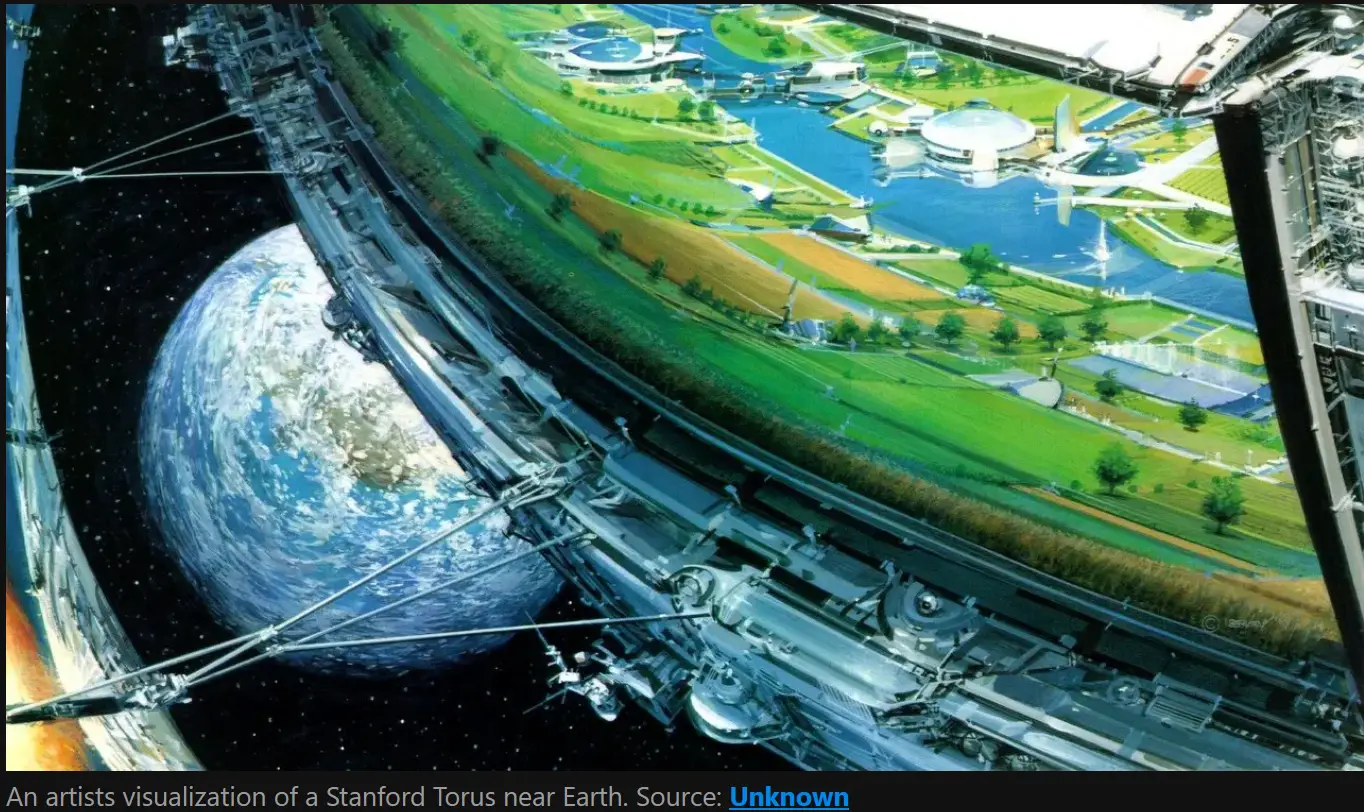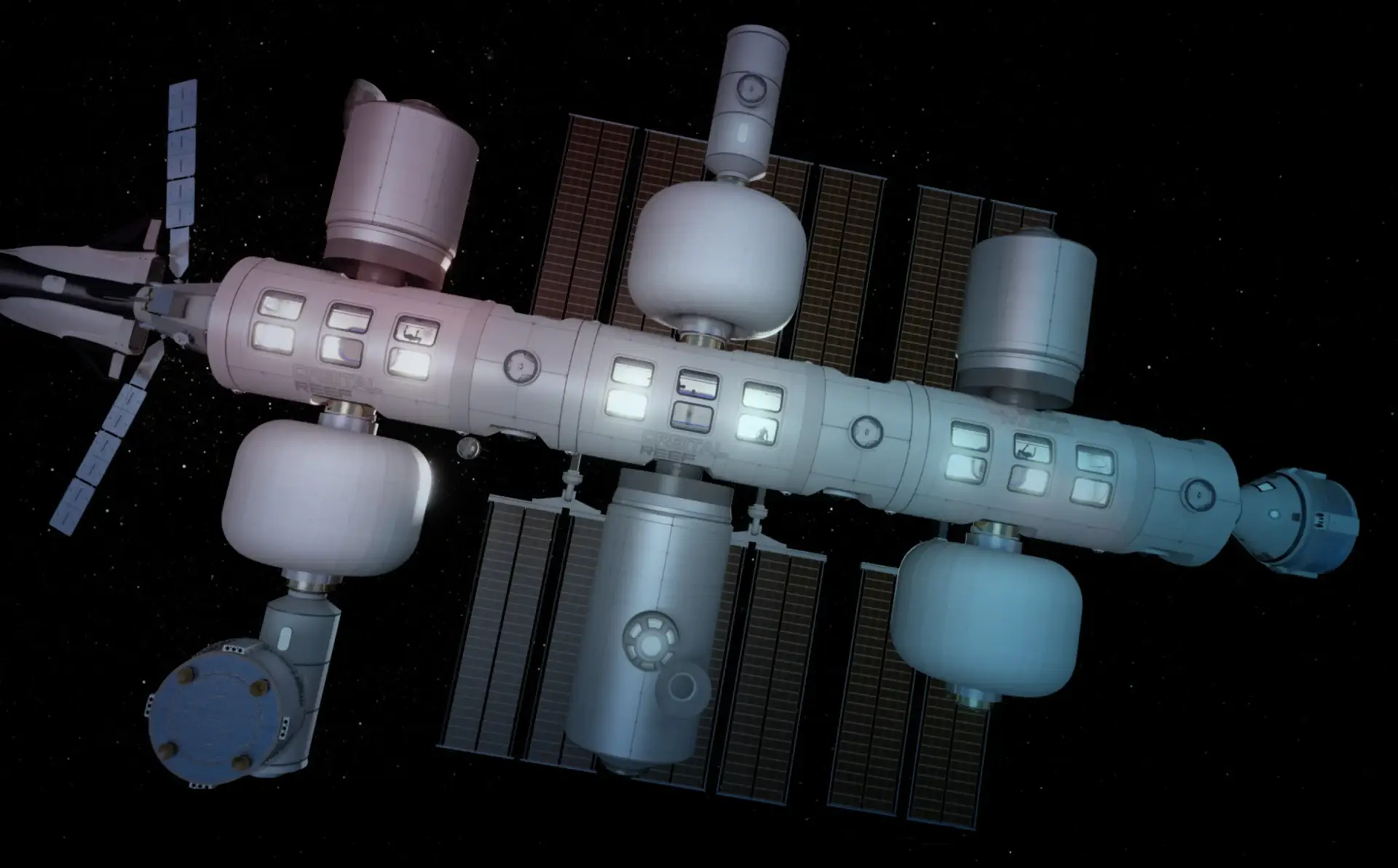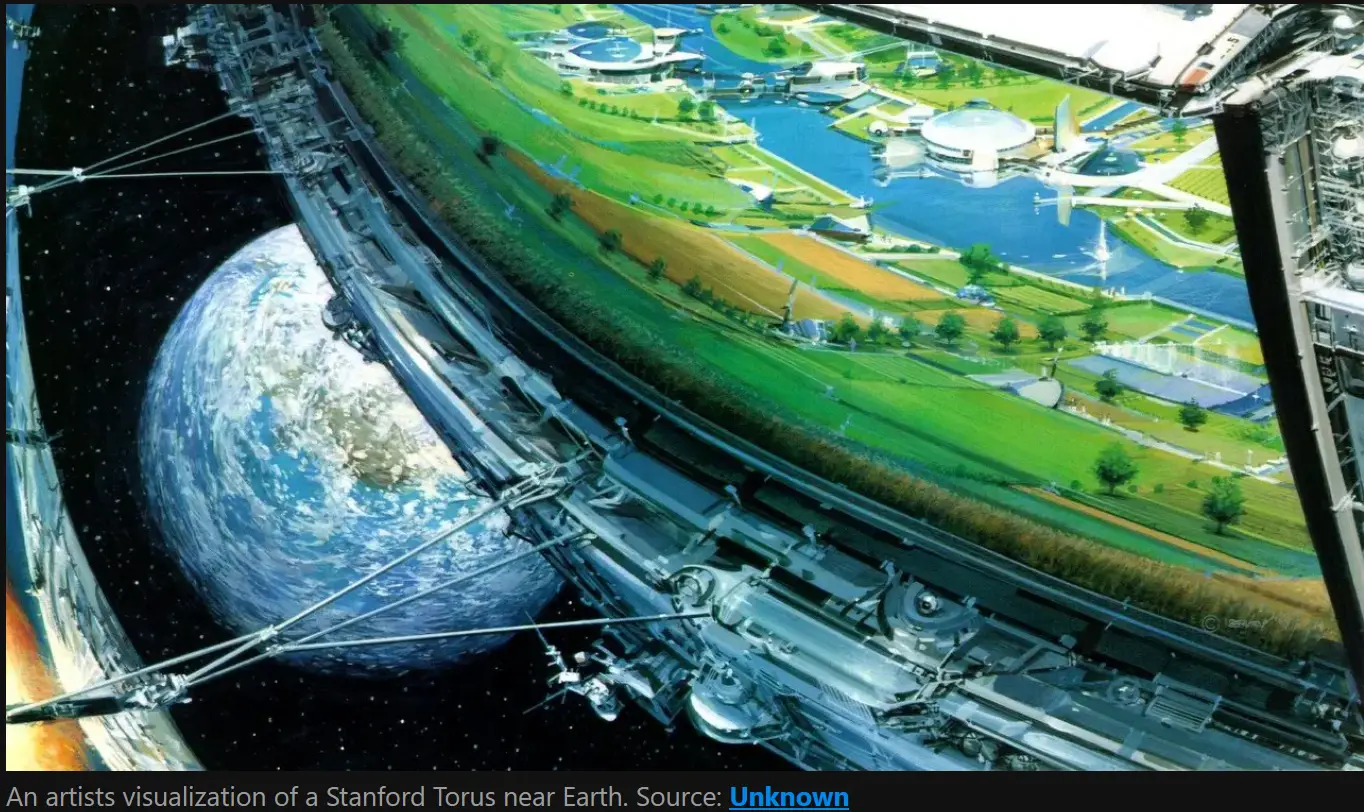
Stanford Torus Source: Beyond Earth https://www.beyondearth.gg/documentation/space_habitats
Obtaining outside data.
Checking internet sources, using keywords: space habitat humans 2027
News from various sources:
No relevant news found.
Fact-checking news summary:
When evaluating the summary in relation to the original question, the lack of relevant news suggests that there are no new developments or planned missions which concretely confirm that a new space habitat will be visited by humans before the end of 2027. Here’s a breakdown of the relevant facts:
- Fact: No relevant news found regarding new space habitats being visited by humans.
- Truthfulness: True (Based on the summary provided, there is no news, which is internally consistent and externally verifiable since no specific information is cited).
- Importance: Critical (This absence of news directly affects the possibility of new habitats being visited by humans).
- Relevance: True (This is directly relevant to the outcome since it pertains to the existence of information about upcoming visits to space habitats).
Unfortunately, the summary does not provide additional specific facts that are verifiable or that could be assessed for truthfulness and relevance due to the lack of details beyond stating “no relevant news found.” This absence of information implies uncertainty regarding plans for a new space habitat visit, making it an indirect but essential consideration for answering the original question.
Fact-checked summary:
No specific news or planned missions confirm that a new space habitat will be visited by humans before the end of 2027. This absence of concrete information is critical because it directly affects the likelihood of any new habitats being visited by humans, highlighting a lack of developments or plans that are publicly known. The relevance of this fact is significant, as it directly pertains to the availability of information about upcoming visits to space habitats.
OpenAI gives a base rate of 0.05 (5%)
The question difficulty is rated 8 (0 to 10)
Historical weighted factors include:
Historical frequency of new space habitats being visited by humans, 0.4
Technological advancements in space travel, 0.3
Funding and governmental support for space missions, 0.2
Public announcements and transparency of space agencies’ plans, 0.1
A Bayesian calculation could be performed as follows:
P(A|B) = P(B|A) * P(A) / P(B). Assign prior based on historical factors. Assume P(B|A) = 0.3 given prior trends and technological challenges, P(B) set to 0.5 reflecting uncertainty in current plans. Thus, P(A|B) = 0.3 * 0.05 / 0.5 = 0.03.
Bayesian base rate: 0.03 (3%)
Sufficient news to provide a good forecast? 0 (0 or 1)
News is relevant, topical and unbiased? 1 (0 or 1)
Question classification: scenario_based_forecast
Expected time (days) until question close: 700
The following were considered in order to produce this base rate:
The base rate was primarily derived from historical factors indicating a low frequency of new space habitats being visited by humans within such a short timeframe. Additionally, the absence of any planned missions or public announcements further supports a low base rate.
Ideally, the news feed would contain the following sorts of information for a better forecast:
Additional information about the current development status of any space habitats, insights into emerging space programs, and updates from both private and governmental space organizations would be beneficial.
Some potential divergent considerations that might affect the base rate:
Unexpected advancements in technology or changes in policy could lead to accelerated development and visitation. Investment in private space exploration companies could alter the current trajectory.
The following chain of events are necessary for the question to resolve positively:
- Development of a new space habitat: Unlikely – Announcement and scheduling of a crewed mission to the new space habitat: Unlikely – Successful funding and technical readiness for the mission: Unlikely
- Completion and readiness of the space habitat for human visitation: Unlikely
Querying Claude (AI predicts: 0.08 – confidence: 7)
Querying Mistral (AI predicts: 0.25 – confidence: 6)
Querying OpenAI (AI predicts: 0.05 – confidence: 5)
Question Type: Binary
Median from LLMs: 0.08
Base rate: 0.05 (from OpenAI)
SD: 0.09
MAPD: 0.13333333333333
Confidence: 6
Conf Mode: Normal
Mellers: 0.03
Reverse Mellers: 0.17
Theory of Mind: 0.1 (What did the LLMs think other LLMs predicted?)
Beta Distribution: 0.21
Close Type: A (B = cautious # closer to 50%; A/C = closer to extremes)
LLM responses: 3
Explanations of the above statistical measures here —>
Model value: 8%
The prediction that a new space habitat will be visited by humans before the end of 2027 is based on several factors including historical precedent, current project timelines, and the absence of confirmed missions. Historically, such events are rare, with no new habitats visited since the ISS became operational, except for China’s Tiangong. Although there is some increase in the predicted likelihood due to increased private sector involvement and potential rapid advancements from companies like Axiom Space and Blue Origin, the development and certification timelines typically span multiple years and no concrete plans have been publicly announced. However, the prediction could be challenged by unforeseen breakthroughs or shifts, such as unmatched progress in the private sector, undisclosed government projects, changes in international space priorities, or by expanding the interpretation of what qualifies as a ‘new space habitat.
Runtime: 64 seconds.
About The Author