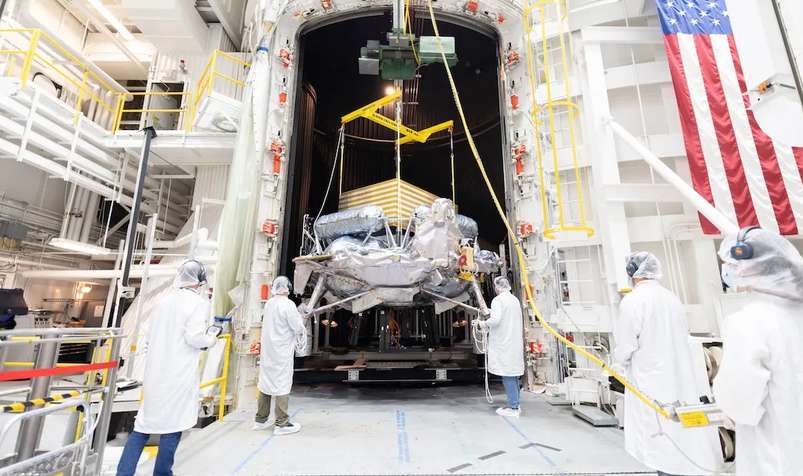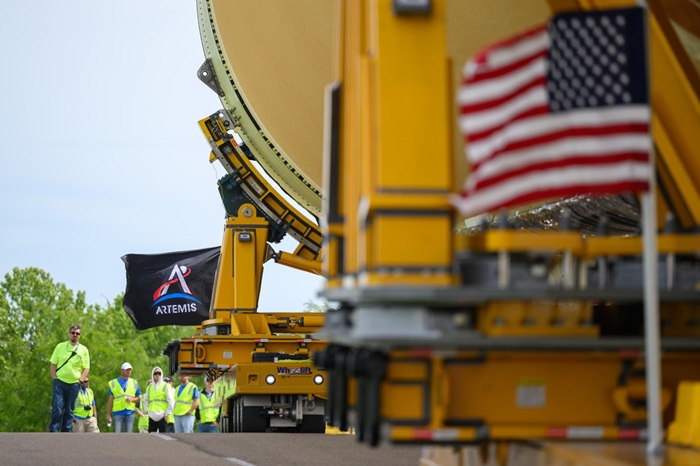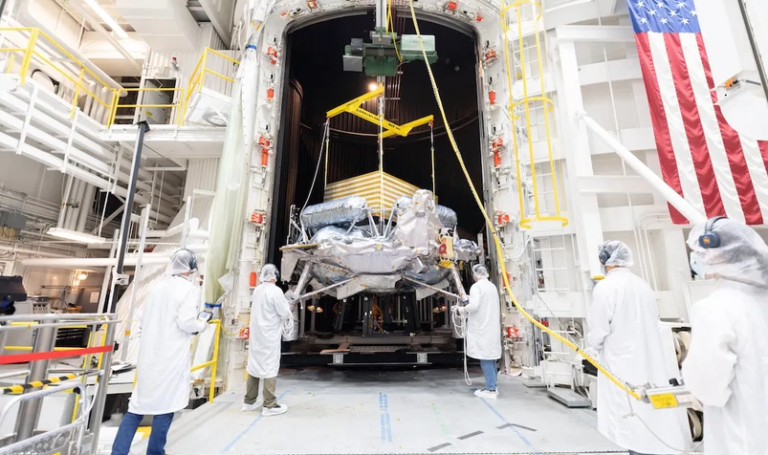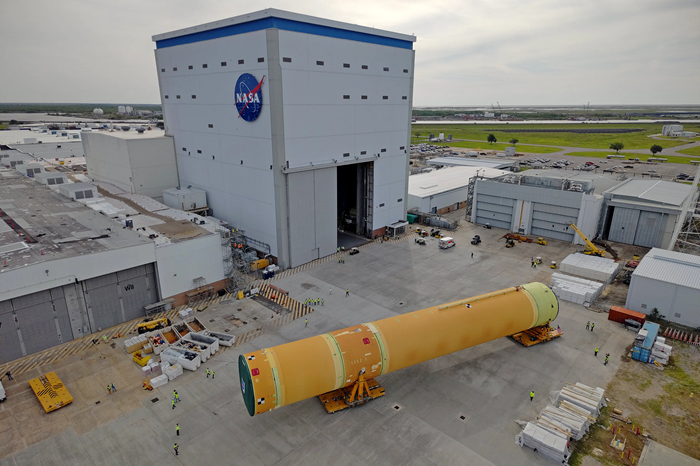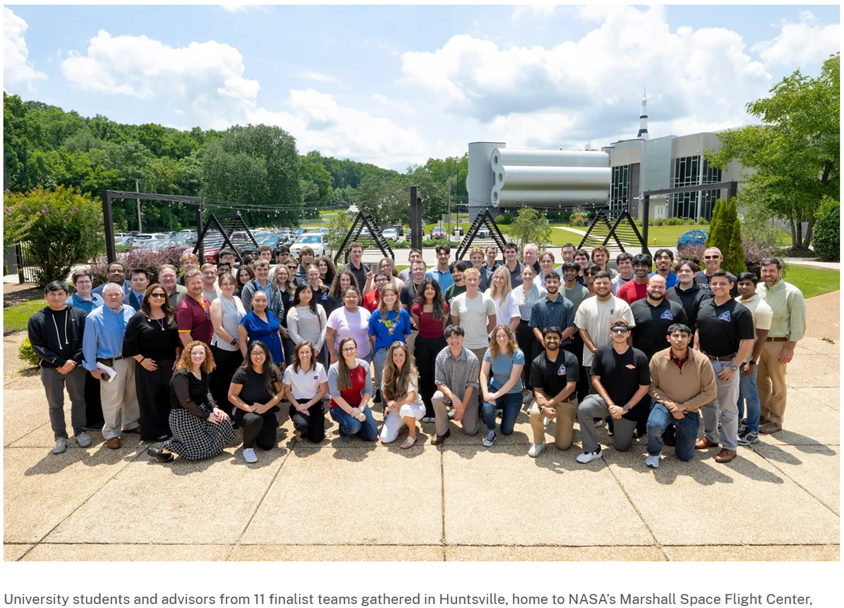
University students and advisors from 11 finalist teams gathered in Huntsville, home to NASA’s Marshall Space Flight Center, June 23-25 for the agency’s third annual Human Lander Challenge. This year’s competition challenged students to consider solutions for environmental control and life support systems for long duration spaceflight. These technologies are essential for maintaining breathable air, potable water, and thermal stability for astronauts during deep space missions. NASA/Charles Beason
Obtaining outside data.
Checking internet sources, using keywords: Artemis III orbital mission 2027
News from various sources:
The Artemis III mission, now set for 2027, will focus on conducting rigorous Earth orbit tests rather than landing on the Moon as initially planned. This follows NASA’s announcement of the crew members, namely Randy Bresnik (Commander), Luca Parmitano (Pilot), Andre Douglas (Mission Specialist), and Frank Rubio (Mission Specialist), with Bob Hines as a backup.
Artemis III is a critical precursor to the Artemis IV mission planned for 2028, which aims to achieve the first crewed lunar landing at the South Pole. The 2027 mission will test new technologies and operational procedures required for lunar exploration. In particular, it will involve docking the Orion spacecraft with Blue Origin’s Blue Moon lander and SpaceX’s Starship Human Landing System (HLS), together with evaluating communication, propulsion, and spacesuit systems through various tests, including spacewalks.
The mission highlights the extraordinary coordination required among NASA, SpaceX, and Blue Origin, using the most potent rockets available. First, the Blue Origin New Glenn will launch the Blue Moon lander, followed by the launch of the SLS-Orion carrying the crew, and finally, the SpaceX Starship will join the mission in orbit. This complex sequence will assess rendezvous and docking operations and readiness for lunar landings in subsequent Artemis missions.
Artemis III’s shift to an orbital mission addresses delays in the development of the Human Landing System, with the aim to de-risk technologies ahead of the Moon landing. This preparatory approach underscores the mission’s importance as a stepping stone towards sustainable lunar exploration.
Fact-checked summary:
The Artemis III mission, scheduled for 2027, will focus on conducting tests in Earth’s orbit rather than a lunar landing, marking a major shift in its original objectives due to delays in the development of the Human Landing System. This shift is crucial in evaluating the potential success of the mission, as it adjusts the mission’s scope and goals. Furthermore, Artemis III is considered a vital precursor to Artemis IV, which is planned for 2028 and aims to achieve the first crewed lunar landing at the Moon’s South Pole. This contextual role underscores its importance in NASA’s lunar exploration roadmap. Additionally, the mission requires extensive coordination between NASA, SpaceX, and Blue Origin, reflecting the complex technical and logistical collaboration necessary for its success. Understanding these dynamics is essential in assessing the likelihood of Artemis III’s success by 2027.
OpenAI gives a base rate of 0.6 (60%)
The question difficulty is rated 7 (0 to 10)
Historical weighted factors include:
Historical success rate of NASA missions involving new technology., 0.4
Success rate of SpaceX collaboration projects with NASA., 0.3
General delays in space programs due to unforeseen challenges., 0.3
A Bayesian calculation could be performed as follows:
Using the weighted average of historical factors and recent news impact: (0.4 * 0.7 for NASA’s rate) + (0.3 * 0.8 for SpaceX projects) + (0.3 * 0.5 for delays) gives a Bayesian estimate of the probability being higher than past baselines.
Bayesian base rate: 0.65 (65%)
Sufficient news to provide a good forecast? 1 (0 or 1)
News is relevant, topical and unbiased? 1 (0 or 1)
Question classification: scenario_based_forecast
Expected time (days) until question close: 365
The following were considered in order to produce this base rate:
The base rate considers the historical reliability of NASA’s space missions, particularly when collaborating with private companies like SpaceX. Past missions have shown a high success rate, though delays are common.
Ideally, the news feed would contain the following sorts of information for a better forecast:
Ideally, information on the current status of specific tests and progress in collaboration agreements between NASA, SpaceX, and Blue Origin would be useful. Insights into the financial health and political support for the mission would also provide additional clarity.
Some potential divergent considerations that might affect the base rate:
Adjustments in mission objectives and collaboration with multiple commercial partners could introduce unpredictable variables. Technological and logistical challenges may alter the timeline or success rate.
The following chain of events are necessary for the question to resolve positively:
- Successful development and testing of the Human Landing System. Moderately
- Coordination and collaboration between NASA, SpaceX, and Blue Origin progresses without major setbacks. Likely
- Completion of all required tests in Earth’s orbit by the scheduled date. Moderately
- No significant technical, financial, or political obstacles arise. Possible
Querying Claude (AI predicts: 0.08 – confidence: 4)
Querying Mistral (AI predicts: 0.65 – confidence: 7)
Querying OpenAI (AI predicts: 0.65 – confidence: 6)
Explanations of the statistical measures listed below.
Question Type: Binary
Median from LLMs: 0.65
Base rate: 0.6 (from OpenAI)
SD: 0.27
MAPD: 0.38
Confidence: 6
Conf Mode: Low
Mellers: 0.71
Reverse Mellers: 0.6
Theory of Mind: 0.18 (What did the LLMs think other LLMs predicted?)
Beta Distribution: 0.43
Close Type: C (B = cautious # closer to 50%; A/C = closer to extremes)
LLM responses: 3
Model value: 0.65 (65%)
The consensus among the AI analyses is that the success of an Artemis III orbital demonstration mission by the end of 2027 is highly uncertain due to various factors. The Artemis program has a history of delays, primarily affected by the readiness of prerequisite missions like Artemis II, which had faced delays. Development challenges with the Human Landing System (HLS) being worked on by SpaceX and Blue Origin further complicate timelines. Despite historical success in NASA missions, especially when collaborating with private companies, there are significant technical, logistical, and bureaucratic challenges and political or budgetary uncertainties that threaten the 2027 deadline. While reframing the mission as an ‘orbital demonstration’ might make it more achievable by reducing complexity, the coordination required and potential unforeseen obstacles from various sources—technical, political, or financial—pose a substantial risk to achieving the mission’s objectives within the proposed timeframe.
within the proposed timeframe.
Runtime: 159 seconds.
About The Author