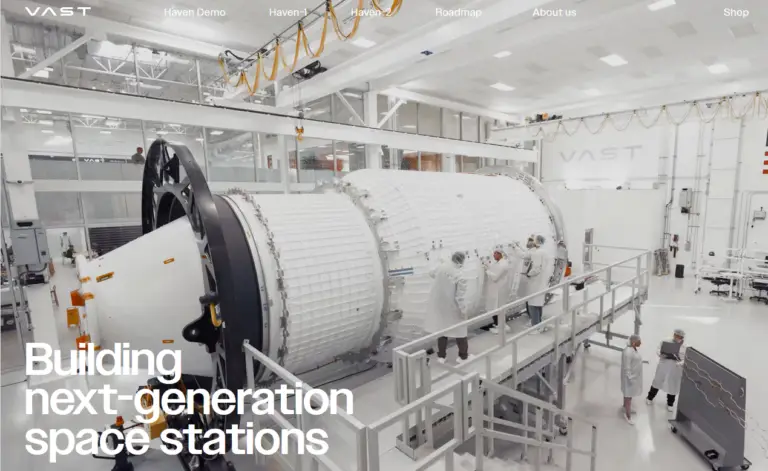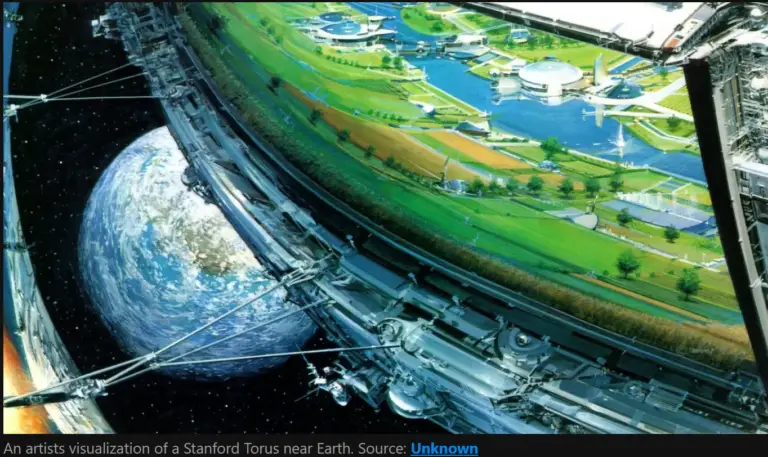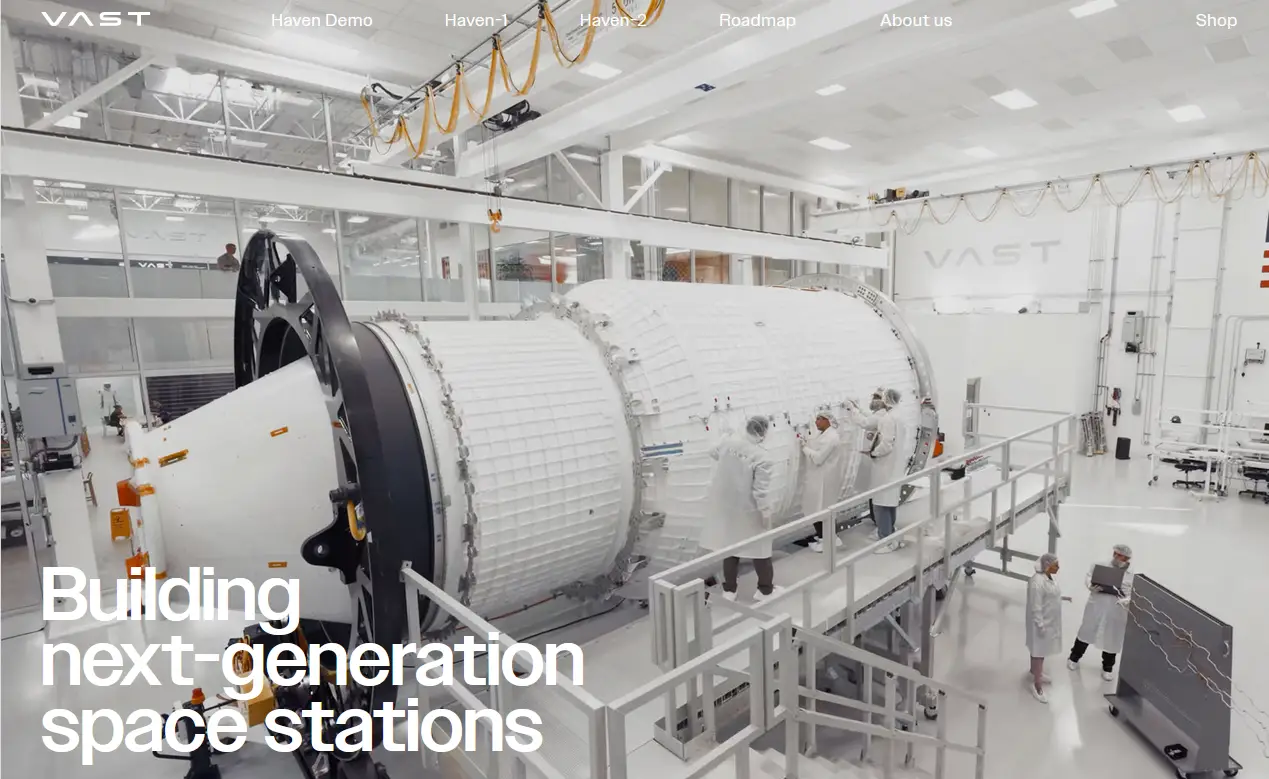
Haven-1, under construction. Source: https://www.vastspace.com/
This is its condensed report. Full version here.
GPT Binary response:
This is mostly a Haven-1 question.
Why:
- Orbital Reef and Starlab look like late-2020s / early-2030s programs, not something I’d want to lean on for a crewed visit by end-2027.
- Starship-as-station is still too conceptual for this window.
- So the positive path is mainly: Vast gets Haven-1 launched, functioning, and then visited by crew within the next 21 months.
My base view is:
- Default outcome is still No.
New human-rated orbital habitats are hard, and space-station schedules historically slip. This requires not just launch, but also enough on-orbit performance and confidence for a human visit before deadline. - But the window is long enough that Yes is real.
We are not asking about the next 3-6 months. There is nearly two years. Haven-1 is comparatively simple versus a large station, and using existing transport infrastructure helps. - The event only needs one success.
Even if Orbital Reef/Starlab are low-probability for 2027, they add a small tail. There is also some ambiguity around what would count if something like an attached module or ad hoc Starship habitat emerged, though I would not rely on that.
A rough decomposition:
- Haven-1 crewed by end-2027: about one-in-three.
- Any other qualifying habitat by end-2027: small single-digit to low-double-digit add-on.
- After overlap / ambiguity adjustments, I land below even odds, but materially above a trivial number.
Time-slice sanity check:
- By end-2026: about 15%
- By mid-2027: about 24%
- By end-2027: about 38%
- By end-2028: about 57%
That shape makes sense: the risk is not “impossible,” but schedule slip is the modal outcome.
Most important assumptions that could break:
- Haven-1 remains the only serious near-term candidate.
Chance this assumption is wrong: 25%
If wrong, the probability rises somewhat because an omitted/ambiguous candidate could matter. - Commercial habitat timelines continue to slip in the usual way.
Chance this assumption is wrong: 30%
If wrong on the optimistic side, the probability rises a lot. - Haven-1 avoids a major technical/financing/regulatory setback.
Chance this assumption is wrong: 40%
If wrong, the probability falls sharply, because the rest of the field is weak for this deadline.
Given the weak real-time sourcing here, I want extra humility. My instinctive number was a bit above 40, but adjusting for overconfidence and the very poor base rate of ambitious space timelines, I come down slightly.
Probability: 38%
Median reasoning:
This is mostly a question about Haven-1.
The other named candidates look much less likely inside this window:
- Orbital Reef: still feels like a late-2020s program, not a “humans aboard before end-2027” program.
- Starlab: same basic story; the likely operational timeline is later than this market’s window.
- Starship as a space station: still too conceptual for me to put meaningful weight on before end-2027.
So the forecast is not “what are the odds some space habitat eventually exists?” It is closer to:
What are the odds that Haven-1, or a low-probability surprise/ambiguity case, gets a human visit within the next 21 months?
That is a much tougher bar.
My base-rate view is pretty skeptical. New human spaceflight hardware slips a lot, and “new station plus human visit” requires multiple things to go right in sequence:
- station/module readiness
- launch readiness
- orbital checkout
- life-support / safety validation
- crew transport readiness and mission approval
- actual crewed mission before the deadline
Even if a station launches, the market does not resolve Yes unless humans actually visit it.
What pushes upward is that Haven-1 is simpler than a full multi-module station and uses more mature transportation architecture than its competitors. That makes it the only plausible near-term path. If there is a Yes, I think Haven-1 is overwhelmingly the modal route.
My rough decomposition:
- Haven-1 resolves Yes by end-2027: about 22%
- Any other named candidate resolves Yes by end-2027: about 3%
- Other/ambiguous surprise route: about 3%
After adjusting for overlap / dependence and for my own tendency toward overconfidence, I end up in the mid-20s rather than low-30s.
Useful timeline check:
- By end-2026: about 9%
- By end-2027: about 26%
- By end-2028: about 43%
That shape makes sense to me: low in the next 9 months, materially higher with another full year, but still well below even odds because station timelines usually slip.
The assumptions that matter most:
- Haven-1 is the only genuinely credible path in-window.
Chance this assumption is wrong: about 20%
If wrong, the probability rises modestly. - Haven-1 is sufficiently delayed / risky that crewed visitation by end-2027 is still clearly below 1-in-3.
Chance this assumption is wrong: about 35%
If wrong, this forecast should be materially higher. - Resolution won’t be broadened by an ambiguous case such as an attached module or a non-obvious habitat interpretation.
Chance this assumption is wrong: about 10%
If wrong, the probability rises a bit, but this is not the main driver.
Overall, the default outcome is still No. The window is long enough for a breakthrough, but short enough that I should heavily privilege schedule slippage and aerospace execution risk.
Probability: 26%
=== Forecast Result ===
This is mostly a question about Haven-1.
The other named candidates look much less likely inside this window:
- Orbital Reef: still feels like a late-2020s program, not a “humans aboard before end-2027” program.
- Starlab: same basic story; the likely operational timeline is later than this market’s window.
- Starship as a space station: still too conceptual for me to put meaningful weight on before end-2027.
So the forecast is not “what are the odds some space habitat eventually exists?” It is closer to:
What are the odds that Haven-1, or a low-probability surprise/ambiguity case, gets a human visit within the next 21 months?
That is a much tougher bar.
My base-rate view is pretty skeptical. New human spaceflight hardware slips a lot, and “new station plus human visit” requires multiple things to go right in sequence:
- station/module readiness
- launch readiness
- orbital checkout
- life-support / safety validation
- crew transport readiness and mission approval
- actual crewed mission before the deadline
Even if a station launches, the market does not resolve Yes unless humans actually visit it.
What pushes upward is that Haven-1 is simpler than a full multi-module station and uses more mature transportation architecture than its competitors. That makes it the only plausible near-term path. If there is a Yes, I think Haven-1 is overwhelmingly the modal route.
My rough decomposition:
- Haven-1 resolves Yes by end-2027: about 22%
- Any other named candidate resolves Yes by end-2027: about 3%
- Other/ambiguous surprise route: about 3%
After adjusting for overlap / dependence and for my own tendency toward overconfidence, I end up in the mid-20s rather than low-30s.
Useful timeline check:
- By end-2026: about 9%
- By end-2027: about 26%
- By end-2028: about 43%
That shape makes sense to me: low in the next 9 months, materially higher with another full year, but still well below even odds because station timelines usually slip.
The assumptions that matter most:
- Haven-1 is the only genuinely credible path in-window.
Chance this assumption is wrong: about 20%
If wrong, the probability rises modestly. - Haven-1 is sufficiently delayed / risky that crewed visitation by end-2027 is still clearly below 1-in-3.
Chance this assumption is wrong: about 35%
If wrong, this forecast should be materially higher. - Resolution won’t be broadened by an ambiguous case such as an attached module or a non-obvious habitat interpretation.
Chance this assumption is wrong: about 10%
If wrong, the probability rises a bit, but this is not the main driver.
Overall, the default outcome is still No. The window is long enough for a breakthrough, but short enough that I should heavily privilege schedule slippage and aerospace execution risk.
Probability: 26%
About The Author