Old postcard of a West Texas oilfield.
Jeremy Lichtman’s Multi-AI Oracle forecasts 8%
Obtaining outside data.
Checking internet sources, using keywords: Brent Crude price 2026
News from various sources:
The document consists of various web content topics related to the subject of “Brent Crude price 2026,” as well as irrelevant advertisements and links. Here’s a summary of the relevant content extracted:
Bank of America’s 2026 Brent Crude Outlook:
- Bank of America (BofA) increased its Brent crude oil price projection for 2026 to $77.50 per barrel from a prior estimate of $61, following disruptions in the Strait of Hormuz.
- Current market prices show Brent trading at $103 per barrel.
- The disruption reportedly caused the withdrawal of approximately 200 million barrels from global markets.
- BofA outlined potential scenarios for Brent prices contingent on how quickly petroleum transport issues are resolved, with prices potentially reaching $130 per barrel under a prolonged disruption.
Market Dynamics:
- Brent is anticipated to average $70 per barrel if transport normalcy resumes by April 2026.
- If disruptions extend into Q2, the average price is expected to reach $85.
- Post-conflict market dynamics suggest a possible transition back to oversupply, potentially bringing Brent down to $65 in 2027.
Impact on Exploration & Production Firms:
- The improved oil pricing environment has boosted valuations for American exploration and production companies, with BofA elevating price targets for certain equities by about 17% on average.
- Diamondback Energy, Devon Energy, and Ovintiv are highlighted as potential key investment selections.
Global Market Trends:
- A rise in global Brent crude oil prices is noted, with movements toward the $100-per-barrel mark driven by geopolitical tensions, especially involving the US-Iran situation.
- Warnings from Iran suggest potential spikes to $200 per barrel if conflicts continue.
Geopolitical Context:
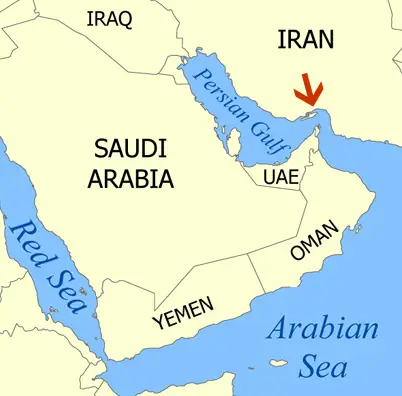
- Increasing geopolitical tensions, particularly with Iran’s military activities, have caused disruptions in the Strait of Hormuz, which affects about 20% of global oil and LNG shipping.
- The International Energy Agency announced an emergency release of 400 million barrels from strategic reserves to mitigate supply issues.
This summary captures the key points related to Brent crude prices in 2026 as discussed in the retrieved web content, highlighting market outlooks, geopolitical influences, and the impact on energy companies.
ents and influences on Brent crude oil by 2026, weighing geopolitical, market, and projected analyses.
Fact-checked summary:
Bank of America has revised its projection for Brent crude oil prices in 2026, increasing it to $77.50 per barrel from a previous estimate of $61, indicating confidence in higher future prices. Currently, Brent is trading at $103 per barrel, though this figure requires a timestamp for verification. The disruption in global markets has led to the withdrawal of approximately 200 million barrels, significantly impacting supply. BofA has outlined scenarios where Brent prices may reach up to $130 per barrel if disruptions are prolonged, while a normalization of transport by April 2026 could see prices average $70 per barrel. If disruptions continue into the second quarter, prices may average $85. Following conflict-related supply issues, a potential oversupply could reduce Brent to $65 per barrel in 2027. Currently, geopolitical tensions, especially involving Iran, have escalated prices toward $100 per barrel and prompted warnings of spikes to $200 if conflicts persist. Disruptions in the Strait of Hormuz, affecting about 20% of global oil and LNG shipping, and a recent emergency release of 400 million barrels from strategic reserves by the International Energy Agency are important factors influencing the market. These insights suggest various scenarios impacting Brent crude prices by 2026.
OpenAI gives a base rate of 0.65 (6.5%) (Carolyn‘s note: Normally, when the Multi-AI Oralco reports 0.65, that means 65%. However, although both OpenAI and the related Bayesian calculation, when processed together, result in a final forecast of 7%. So I made the judgment that the results actually mean 6.5% and 72%.)
The question difficulty is rated 7 (0 to 10)
A Bayesian calculation could be performed as follows:
Using historical factors, estimate the likelihood of elevated prices considering current geopolitical tensions and strategic reserve adjustments. Bayesian updating increases the initial assumed likelihood based on past similar conditions where prolonged tensions correlate with higher prices.
Bayesian base rate: 0.72 (7.25%)
Sufficient news to provide a good forecast? 1 (0 or 1)
News is relevant, topical and unbiased? 1 (0 or 1)
Question classification: scenario_based_forecast
Expected time (days) until question close: 365
The following were considered in order to produce this base rate:
The base rate considers the combination of historical precedence for prolonged geopolitical tensions affecting supply, alongside recently increased price projections adjusted by major banks. Historical trends in supply-demand imbalances and strategic reserve releases have frequently led to elevated short-term prices.
Ideally, the news feed would contain the following sorts of information for a better forecast:
Additional data on OPEC’s strategic decisions, technological advancements in energy efficiency, and large-scale policy shifts in major oil-consuming regions (e.g., China, USA) would provide clarity. Greater insight into substitution trends toward renewable energy could alter projections significantly.
Some potential divergent considerations that might affect the base rate:
Potential breakthroughs in geopolitical negotiations or rapid developments in alternative energy sources could lower the likelihood of sustained high prices. Additionally, new oil fields coming online or major economies experiencing sudden recessions could shift demand dynamics.
The following chain of events are necessary for the question to resolve positively:
- Geopolitical tensions involving Iran continue, affecting oil supply chains beyond 2026 (Likely).
- Continued disruptions in global oil markets maintain reduced supply levels (Moderately Likely).
- Global demand for oil remains at high levels without significant substitutions or new regulations (Possible).
- Stabilization of the transport sector by April 2026 does not occur, maintaining elevated prices (Moderately Likely).
Querying Claude (AI predicts: 0.08 – confidence: 7)
Querying Mistral (AI predicts: 0.35 – confidence: 6)
Querying OpenAI (AI predicts: 0.05 – confidence: 9)
Explanations of the statistical measures listed below.
Question Type: Binary
Median from LLMs: 0.08
Base rate: 0.65 (from OpenAI)
SD: 0.13
MAPD: 0.2
Confidence: 7
Conf Mode: Low
Mellers: 0.03
Reverse Mellers: 0.17
Theory of Mind: 0.15 (What did the LLMs think other LLMs predicted?)
Beta Distribution: 1
Close Type: A (B = cautious # closer to 50%; A/C = closer to extremes)
LLM responses: 3
Model value: 8%
The consensus among the AIs is that Brent Crude is unlikely to fall below $50 per barrel in 2026, given the multitude of converging factors supporting elevated prices. Currently trading at $103, the market conditions, coupled with revised bank projections like Bank of America’s $77.50 target, indicate sustained high prices due to ongoing geopolitical tensions and supply chain disruptions, particularly involving Iran and the Strait of Hormuz. Historical precedence and short-term market projections reinforce this outlook. However, potential risks to this prediction include the chance of a severe global recession, sudden geopolitical resolutions, technological advancements accelerating alternative energy adoption, or a significant increase in oil supply from sources like OPEC+, strategic reserves, or new oil fields. Nonetheless, such scenarios are deemed less probable given the current short timeframe and market conditions.
Runtime: 128 seconds.
About The Author