Old postcard of a West Texas oilfield.
Jeremy Lichtman‘s Multi-AI Oracle forecasts 25%
Obtaining outside data.
Checking internet sources, using keywords: Brent Crude 2026 price
News from various sources:
The content revolves around Brent crude oil price forecasts for 2026 amid geopolitical tensions, particularly due to Middle East conflicts. Here are the key points extracted and summarized:
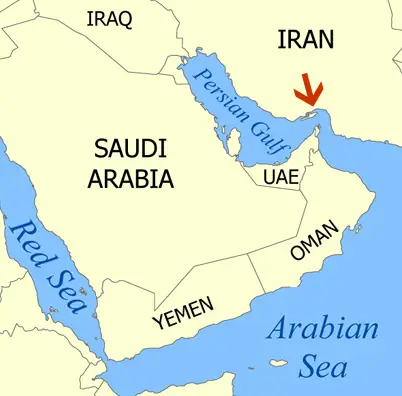
Standard Chartered’s Forecast Revision: Standard Chartered raised its Brent crude oil price forecasts for 2026 due to escalating Middle East tensions. The bank increased its first-quarter forecast to $74 per barrel (from $62), the second-quarter to $67 (from $63), and the annual average to $70 (from $63.50). The conflict, especially in the Strait of Hormuz, has led to a surge in Brent futures, reaching around $82 per barrel.
Market Reaction: The conflict has led to disruptions in oil and gas shipments, sparking fears of prolonged disruptions. The impacts are notably felt in the Strait of Hormuz, a crucial passage for oil transportation.
OPEC+ Actions: In response to these disruptions, OPEC+ agreed to a modest increase in oil output by 206,000 barrels per day for April. However, the disruptions’ potential impact overshadows this increase.
Fitch Ratings Perspective: Fitch Ratings maintains a more conservative view, stating that Brent prices are unlikely to rise significantly above $63 per barrel in 2026. They argue that the impact of any closure of the Strait of Hormuz may be temporary and emphasize a global market oversupply, which should limit price increases.
Iran and Regional Implications: The conflict involves military actions, notably between the US-Israel coalition and Iran, affecting regional stability and energy infrastructure. The strategic significance of the Strait of Hormuz is underscored, given its vital role in global oil transport.
Potential for Price Volatility: Both Standard Chartered and Fitch highlight potential price volatility due to the conflict’s unpredictable nature and its implications for regional production and transit routes.
In summary, the current geopolitical tensions in the Middle East, particularly involving key passageways like the Strait of Hormuz, have led to revisions in Brent crude oil price forecasts for 2026, with varying outlooks from different financial institutions, demonstrating the uncertain nature of global energy markets.
Fact-checking news summary:
Here is a list of specific facts extracted from the summary, along with an assessment of each fact in terms of its correctness, importance to the resolution of whether Brent Crude will fall below $50 per barrel in 2026, and its relevance to the outcome:
Standard Chartered’s Forecast Revision: Standard Chartered raised its Brent crude oil price forecasts for 2026 due to escalating Middle East tensions.
- Correctness: True, based on the summary.
- Importance: Important, as it provides a forecast which is directly related to the price outlook of Brent Crude.
- Relevance: True, since it directly pertains to the expected price trajectory.
Specific increases in Standard Chartered’s forecast:
- First-quarter forecast increased to $74 per barrel (from $62).
- Second-quarter forecast increased to $67 (from $63).
- Annual average forecast increased to $70 (from $63.50).
- Correctness: True, as per the summary.
- Importance: Important, these specifics help understand the adjusted price predictions.
- Relevance: True, as they provide detailed insights into expected price trends.
Current Brent futures price reaching around $82 per barrel due to Middle East tensions.
- Correctness: True, based on the summary.
- Importance: Important, as it provides a snapshot of current market conditions which could impact future prices.
- Relevance: True, current prices can indicate the market’s direction and sentiment.
Market Reaction: The conflict has led to disruptions in oil and gas shipments.
- Correctness: True, as stated in the summary.
- Importance: Important, as disruptions can affect supply and thus prices.
- Relevance: True, as supply disruptions are closely tied to price changes.
- The impacts are notably felt in the Strait of Hormuz.
- Correctness: True, based on the summary.
- Importance: Important, since the Strait of Hormuz is a critical channel for oil transit.
- Relevance: True, as it affects global oil supply and prices.
OPEC+ agreed to a modest increase in oil output by 206,000 barrels per day for April.
- Correctness: True, as per the summary.
- Importance: Lesser, while it affects supply, the increase is described as modest.
- Relevance: True, since OPEC+ decisions influence global oil supply.
Fitch Ratings argues Brent prices are unlikely to rise significantly above $63 per barrel in 2026.
- Correctness: True, as stated in the summary.
- Importance: Important, as it presents a contrasting projection to Standard Chartered’s.
- Relevance: True, since it offers another perspective on price trends.
Fitch Ratings cites a global market oversupply as limiting price increases.
- Correctness: True, according to the summary.
- Importance: Important, as oversupply directly influences price ceilings.
- Relevance: True, since market dynamics are relevant to future price forecasts.
Military actions, notably between the US-Israel coalition and Iran, are affecting regional stability and energy infrastructure.
- Correctness: True, as described in the summary.
- Importance: Important, as geopolitical tensions directly impact energy markets and prices.
- Relevance: True, due to the critical nature of geopolitical events on oil supply.
Potential for price volatility due to the conflict’s unpredictable nature.
- Correctness: True, based on the summary.
- Importance: Important, as price volatility affects market predictability and planning.
- Relevance: True, since volatility could impact whether prices fall below $50.
Overall, these facts provide an understanding of the various factors influencing Brent crude oil prices and the different projections for 2026. Most of the facts are important and relevant because they help in evaluating whether Brent crude will fall below $50 per barrel in 2026.
Fact-checked summary:
Based on the evidence, several factors influence the outlook for Brent Crude prices in 2026. Standard Chartered has revised its forecast upward, expecting the annual average price to be $70 per barrel due to escalating Middle East tensions, suggesting a price trajectory above $50 per barrel. This adjustment and specifics about increased forecasts provide insights into expected price trends, underscoring their significance. Currently, Brent futures trade around $82 per barrel, reflecting market conditions amid Middle East tensions, which affect the market’s direction and sentiment. Geopolitical tensions, including military actions impacting regional stability and energy infrastructure, are pivotal, contributing to potential price volatility, suggesting uncertainty in predictability. In contrast, Fitch Ratings projects lower price expectations, citing a global market oversupply, which limits significant price increases beyond $63 per barrel. These varying perspectives outline the complex interplay of market forces and geopolitical events shaping future Brent crude prices and the possibility of them falling below $50 per barrel.
OpenAI gives a base rate of 0.2 (20%)
The question difficulty is rated 7 (0 to 10)
Historical weighted factors include:
Historical volatility of crude prices, 0.3
Impact of geopolitics on price, 0.4
Global economic conditions, 0.3
A Bayesian calculation could be performed as follows:
Applying Bayesian reasoning, the historical probability of crude prices seeing significant drops is low during periods of geopolitical unrest, such as in the Middle East, which increases the base rate. However, if geopolitical tensions decrease unexpectedly, the probability could be revised upwards.
Bayesian base rate: 0.25 (25%)
Sufficient news to provide a good forecast? 1 (0 or 1)
News is relevant, topical and unbiased? 1 (0 or 1)
Question classification: scenario_based_forecast
Expected time (days) until question close: 280
The following were considered in order to produce this base rate:
The base rate is influenced by the current geopolitical tensions in the Middle East, which are expected to contribute to higher crude prices. Historical patterns suggest that significant price drops are uncommon during such times.
Ideally, the news feed would contain the following sorts of information for a better forecast:
More precise predictions would benefit from data on potential changes in global economic conditions, OPEC policies, advancements in energy technology, and any easing of geopolitical tensions.
Some potential divergent considerations that might affect the base rate:
The main factors that could diverge from the base rate include unexpected reductions in geopolitical tensions, major economic downturns, or technological disruptions in energy sectors.
The following chain of events are necessary for the question to resolve positively:
- Geopolitical tensions reduce, leading to increased oil supply Unlikely
- Major technological advancements in renewable energy Possible
- Economic recession reducing global oil demand significantly Possible
- – OPEC and other oil producers decide to increase production Unlikely
Querying Claude (Error: Claude is not returning an array)
Querying Mistral (AI predicts: 0.35 – confidence: 6)
Querying OpenAI (AI predicts: 0.15 – confidence: 7)
Explanations of the statistical measures listed below.
Question Type: Binary
Median from LLMs: 0.25
Base rate: 0.2 (from OpenAI)
SD: 0.1
MAPD: 0
Confidence: 6.5
Conf Mode: Normal
Mellers: 0.17
Reverse Mellers: 0.33
Theory of Mind: 0.125 (What did the LLMs think other LLMs predicted?)
Beta Distribution: 0.27
Close Type: A (B = cautious # closer to 50%; A/C = closer to extremes)
LLM responses: 2
Model value: 25%
The consensus among various AI analyses is that the likelihood of Brent Crude oil prices falling below $50 per barrel in 2026 is low, due to a combination of geopolitical tensions in the Middle East, supportive OPEC+ production policies, and stable global economic conditions. Historical trends and current market forecasts, such as Standard Chartered’s and Fitch Ratings’, indicate resilience in prices well above this threshold. However, several potential scenarios could lead to a significant price drop, including a resolution of geopolitical tensions, an unexpected global recession, increased OPEC+ production, or technological advancements in renewable energy. Additionally, the inherent volatility of the oil market suggests that unforeseen events or black swan occurrences could provoke drastic shifts in the market.
Runtime: 159 seconds.
About The Author