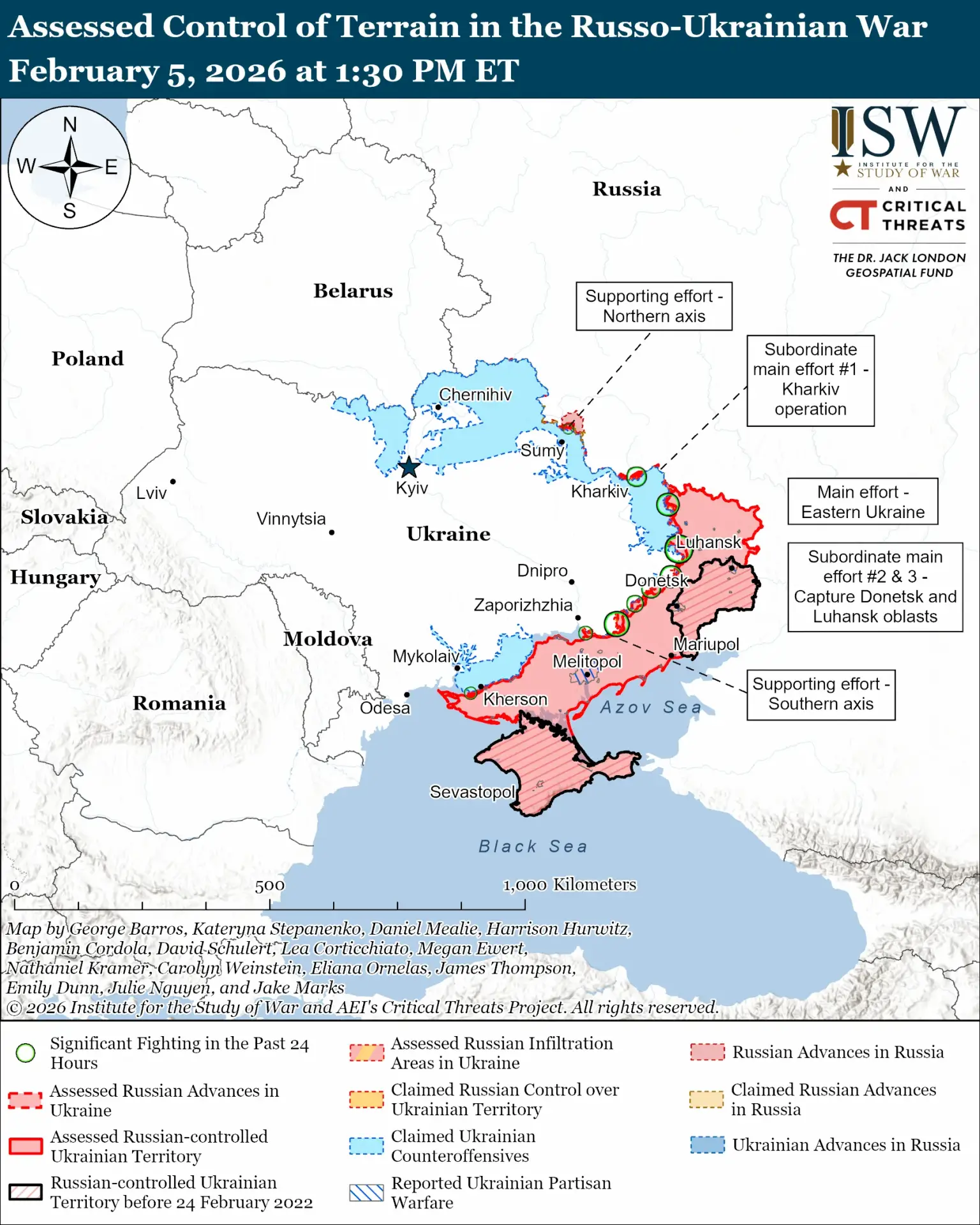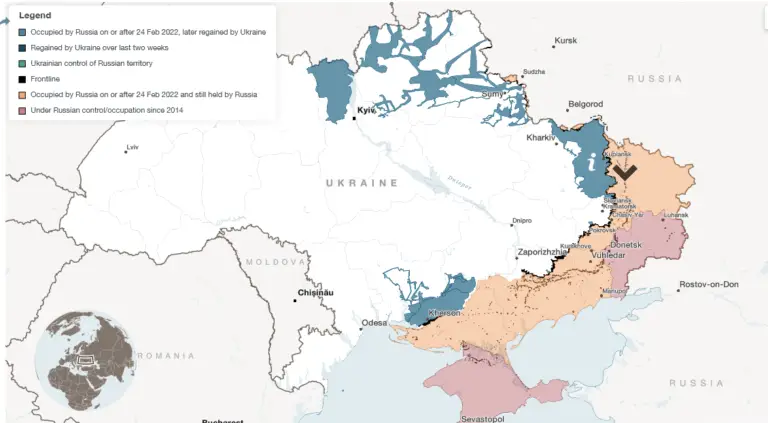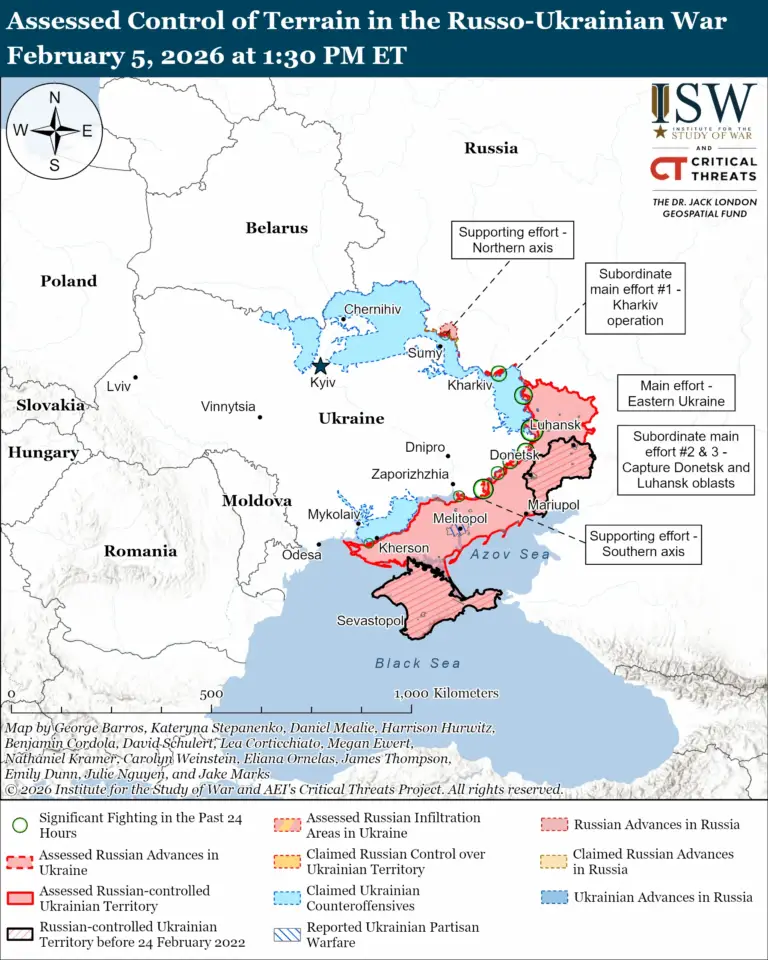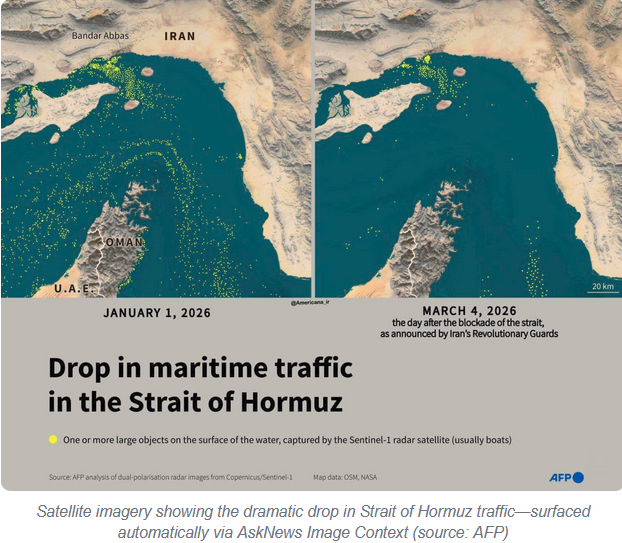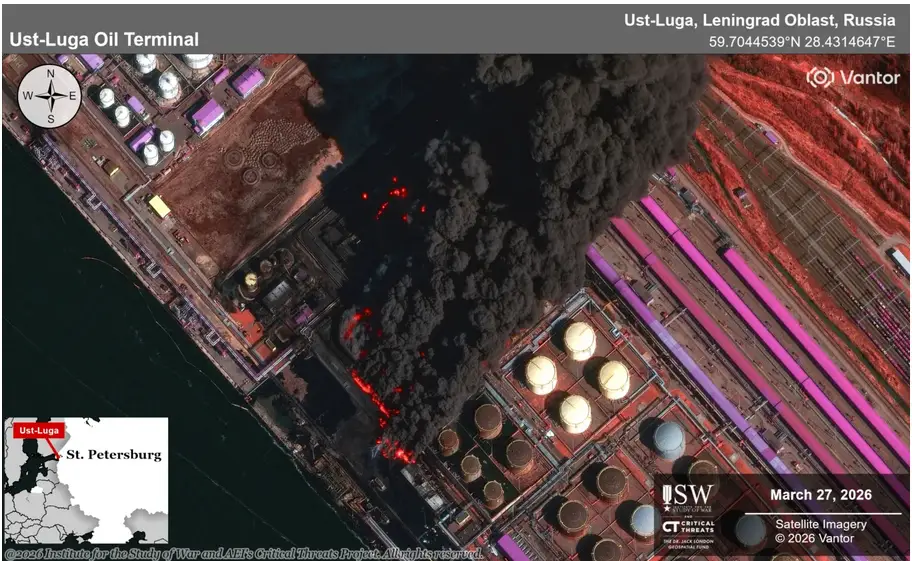
Ukrainian forces continued their long-range strike campaign against Russian oil infrastructure near the Baltic Sea on the night of March 26 to 27, marking the fourth strike in five days against Russian oil infrastructure in Leningrad Oblast. Source: https://understandingwar.org/research/russia-ukraine/russian-offensive-campaign-assessment-march-27-2026/
Jeremy Lichtman‘s Multi-AI Oracle predicts 25%.
Obtaining outside data.
Checking internet sources, using keywords: ceasefire armistice Ukraine 2026
News from various sources:
No relevant news found.
Fact-checking news summary:
Given the summary, “No relevant news found,” here are the specific facts stated:
Fact: No relevant news regarding a ceasefire or armistice in Ukraine for 2026 was found.
- Check: True
- Importance to Resolution: Critical
- Relevance to Outcome: True
This fact is significant because it suggests a lack of information to support any conclusion about whether a ceasefire or armistice will be declared in Ukraine in 2026. The absence of relevant news is directly related to the difficulty in making any predictions or conclusions about future diplomatic events in Ukraine regarding a ceasefire.
Fact-checked summary:
As of now, there is no relevant news regarding a ceasefire or armistice in Ukraine for the year 2026. This fact is critical because the absence of such information suggests a lack of basis for making any definitive predictions about potential diplomatic developments concerning a ceasefire or armistice in Ukraine for that year. The absence of information is directly relevant and highlights the challenges in forecasting future international agreements or resolutions in this context.
OpenAI gives a base rate of 0.15 (15%)
The question difficulty is rated 8 (0 to 10)
Historical weighted factors include:
Previous ceasefires in ongoing conflicts, 0.3
International pressure and mediation efforts, 0.4
Political stability in Ukraine, 0.15
Internal political climate in Russia, 0.15
A Bayesian calculation could be performed as follows:
Considering the historical factors and the recent lack of news on diplomatic progress, the Bayesian estimate is influenced by the moderately weighted factor of international mediation efforts. Assuming an initial probability of 0.1 based on historical factors, with a moderate influence from current international mediation efforts (weight 0.4), we adjust the probability to 0.15 (15%)
Bayesian base rate: 0.15 (15%)
Sufficient news to provide a good forecast? 0 (0 or 1)
News is relevant, topical and unbiased? 1 (0 or 1)
Question classification: scenario_based_forecast
Expected time (days) until question close: 280
The following were considered in order to produce this base rate:
The base rate is primarily driven by past conflicts involving ceasefires, which typically occur less than 50% of the time in similar geopolitical conflicts. Historical trends suggest formal ceasefire agreements are relatively rare without strong international mediation and favorable political conditions.
Ideally, the news feed would contain the following sorts of information for a better forecast:
Additional information on current diplomatic activities, specific statements from involved governments, potential third-party mediators, and shifts in military strategies would assist in providing a more robust forecast.
Some potential divergent considerations that might affect the base rate:
Factors that might increase the likelihood of a ceasefire include any sudden escalations in international diplomatic efforts, or significant on-ground developments that necessitate peace talks. Conversely, continued military confrontations or lack of international involvement could reduce the likelihood further.
The following chain of events are necessary for the question to resolve positively:
- Initiation of formal peace talks between Ukraine and Russia. (Likelihood: Low)
- Agreement on key contentious issues such as territorial disputes. (Likelihood: Low)
- International mediation leading to a mutually acceptable ceasefire proposal. (Likelihood: Medium)
- Commitment from both Ukrainian and Russian leaderships to a ceasefire agreement. (Likelihood: Low)
Querying Claude (AI predicts: 0.28 – confidence: 4)
Querying Mistral (AI predicts: 0.25 – confidence: 6)
Querying OpenAI (AI predicts: 0.2 – confidence: 5)
Explanations of the statistical measures listed below.
Question Type: Binary
Median from LLMs: 0.25
Base rate: 0.15 (from OpenAI)
SD: 0.03
MAPD: 0.053333333333333
Confidence: 5
Conf Mode: Normal
Mellers: 0.17
Reverse Mellers: 0.33
Theory of Mind: 0.25 (What did the LLMs think other LLMs predicted?)
Beta Distribution: 0.001
Close Type: A (B = cautious # closer to 50%; A/C = closer to extremes)
LLM responses: 3
Model value: 25%
The analyses converge on a low likelihood (around 25%) of a ceasefire or armistice in Ukraine by the end of 2026, based on similar historical precedents and the current geopolitical context. Significant reasons include the lack of active peace talks or international mediation efforts, entrenched positions on both sides regarding territorial disputes, and the limited timeframe with only nine months left in the year. Unpredictable factors such as U.S. policy under Trump, potential secret negotiations, or unforeseen military or economic pressures could alter this outlook. Potential invalidators of this prediction include a sudden diplomatic breakthrough, leadership changes, or external pressures forcing either Ukraine or Russia towards negotiation. Moreover, any unexpected developments in military confrontations or economic conditions could necessitate a rapid shift towards resolving the conflict.
Runtime: 57 seconds.
About The Author