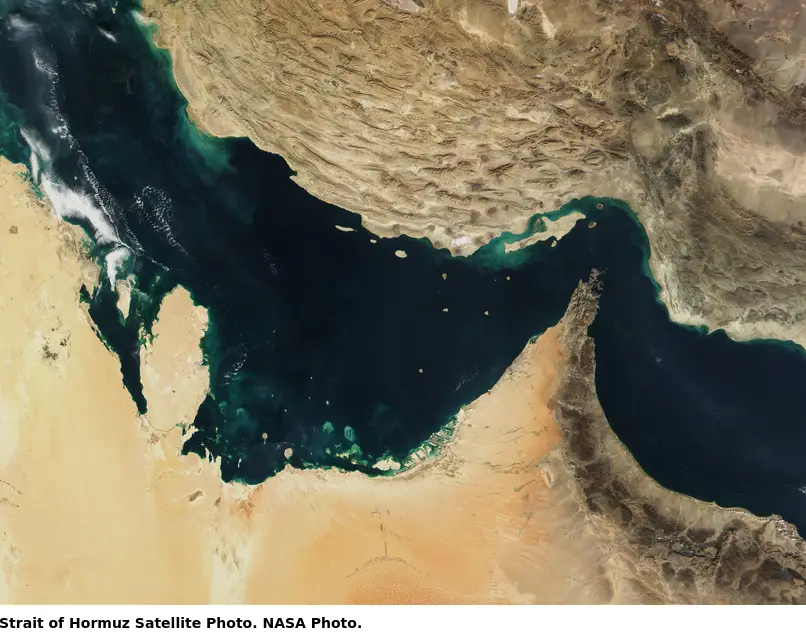
Strait of Hormuz satellite photo. Source: NASA
Jeremy Lichtman’s Multi-AI Oracle forecasts 35%
Obtaining outside data.
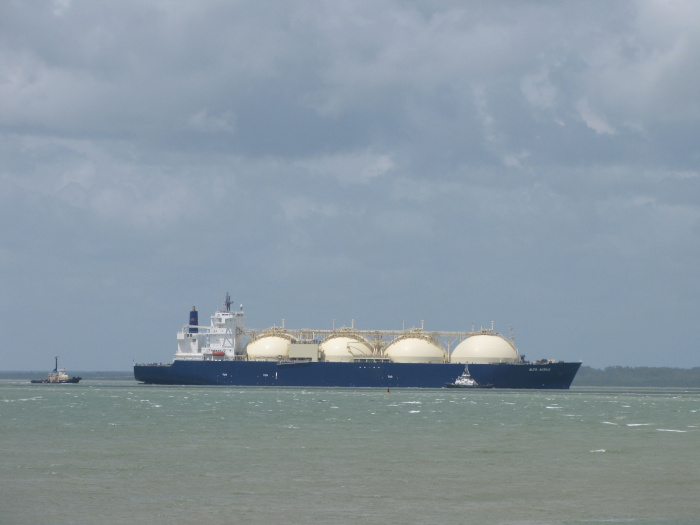
Checking internet sources, using keywords: Strait of Hormuz LNG traffic 2026
News from various sources:
The document provides detailed information about the impacts of military conflicts in the Strait of Hormuz on global oil and LNG markets as of 2026. Here are the key points:
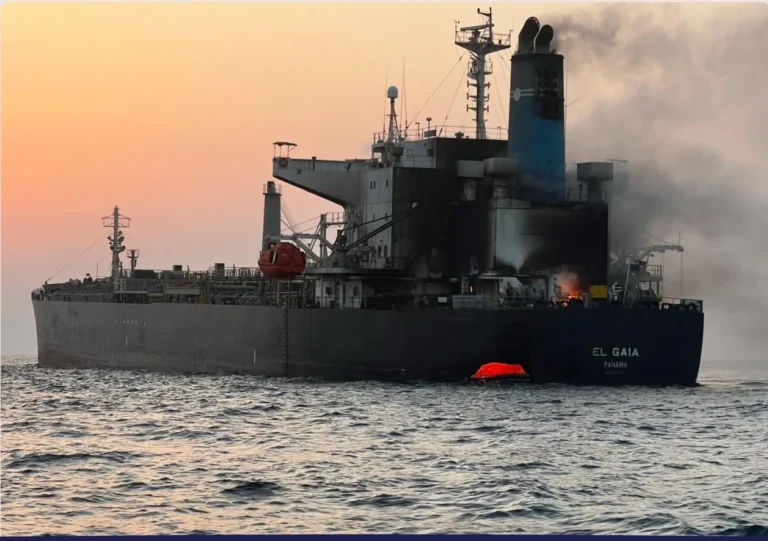
- Conflict and Closure: The Strait of Hormuz, a crucial passage for global oil and LNG trade, has been effectively “closed” due to military actions involving the US, Israel, and Iran since February 2026. This has almost halted all shipping traffic through the strait, severely impacting global energy markets.
- Market Impact: The closure has led to a significant increase in oil and LNG prices. Brent crude oil surged past $100 per barrel, and Asian spot LNG prices shot up to $14 per MMBtu from $10 per MMBtu pre-conflict, with potential to reach $30 per MMBtu if disruptions continue.
- Impact on Regional LNG Supplies: LNG production in Qatar and UAE was severely impacted but is expected to normalize by the second half of May 2026. The disruption also poses risks to supply chains from Oman and affects LNG deliveries within the Gulf region, particularly to Kuwait.
- Global Energy Security Concerns: The situation underscores the vulnerability of energy routes and may lead to changes in long-term energy procurement strategies. Countries may look to diversify their sources to avoid chokepoints like the Strait of Hormuz.
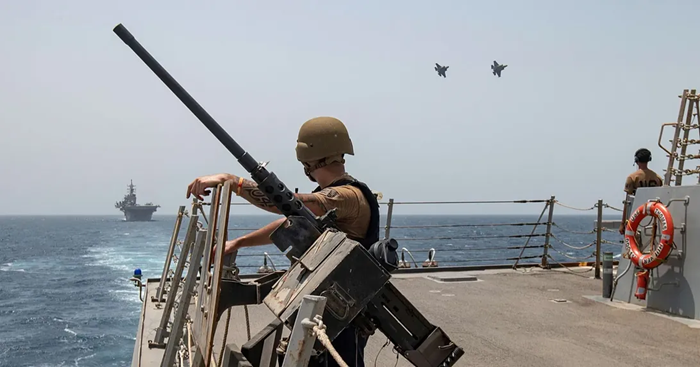
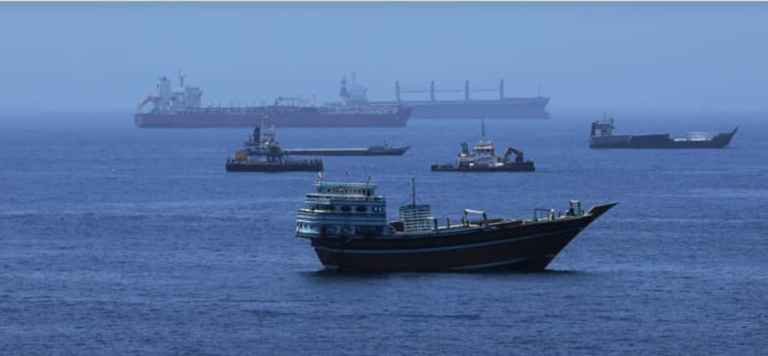
- Insurance and Shipping Risks: The risk of shipping through the Strait has led to a surge in insurance costs, and ships have employed tactics like altering tracking information to evade targeting. The US Navy has offered to escort ships, but many companies are still hesitant to operate in the war zone.
- Strategies and Alternatives: While alternatives are being explored for redirecting oil and LNG supplies, the situation stresses urgency in addressing broader geostrategic supply concerns. The US Development Finance Corporation has offered “political risk insurance” as part of mitigation efforts, but challenges remain because the strait is a critical bottleneck for world energy trade.
The ongoing closure of the Strait of Hormuz could potentially lead to one of the most significant energy crises since the oil embargo of the 1970s, emphasizing the need for diversified, secure energy procurement strategies and infrastructure resilience.
Fact-checked summary:
The Strait of Hormuz has been effectively closed due to military actions involving the US, Israel, and Iran, which are critical factors affecting the reopening of LNG traffic before May 2026. This closure is significant because it has caused a noticeable increase in oil and LNG prices, thereby illustrating the economic impact of such disruptions. Furthermore, as LNG production in Qatar and the UAE is expected to normalize by the second half of May 2026, this suggests a potential resolution to regional supply issues. The situation underscores vulnerabilities in global energy routes, emphasizing the need for strategic shifts in energy procurement worldwide. Additionally, increased shipping risks have led to higher insurance costs and vessels altering their routing to avoid conflict zones. Finally, alternative strategies to redirect oil and LNG supplies are being explored, highlighting ongoing efforts to mitigate the closure’s effects on the supply chain. These facts collectively provide a comprehensive understanding of the current scenario and potential reopening of the strait.
OpenAI gives a base rate of 0.4 (40%)
The question difficulty is rated 7 (0 to 10)
Historical weighted factors include:
Past conflicts involving the Strait of Hormuz, 0.3
Diplomatic resolution patterns in the region, 0.4
Effectiveness of international intervention, 0.3
A Bayesian calculation could be performed as follows:
Considering the historical factors, a Bayesian update involves adjusting the base rate (0.4) based on new evidence: military actions and geopolitical instability. Given the current status and historical resolution rates, adjust the probability upwards to account for these factors. Probabilitycurrent = 0.4 * (0.3 + 0.4 + 0.3), Probabilityprevious = 0.4, Margin of error is calculated using the geometric mean: (0.4*0.4)^0.5 = 0.4.
Bayesian base rate: 0.4 (40%)
Sufficient news to provide a good forecast? 1 (0 or 1)
News is relevant, topical and unbiased? 1 (0 or 1)
Question classification: scenario_based_forecast
Expected time (days) until question close: 60
The following were considered in order to produce this base rate:
The base rate was determined by examining historical instances of conflicts affecting the Strait of Hormuz, coupled with patterns of diplomatic resolutions and international interventions in Middle Eastern geopolitical issues.
Ideally, the news feed would contain the following sorts of information for a better forecast:
Additional insight into the ongoing diplomatic conversations and military strategies, as well as intelligence reports on the likelihood of continued conflict or resolution, would provide a more accurate risk assessment.
Some potential divergent considerations that might affect the base rate:
Factors such as increasing global tensions, prolonged military engagements, or failure of diplomatic negotiations could significantly delay the reopening of the Strait. Additionally, unpredictable regional politics may lead to unexpected developments.
The following chain of events are necessary for the question to resolve positively:
Diplomatic agreements or interventions to ensure safe passage through the Strait of Hormuz. Moderate – Stabilization of oil and LNG prices indicating a resolution to the regional supply issues. Moderate – Normalization of LNG production in Qatar and the UAE by the second half of May 2026. High – Reduction in shipping insurance costs and alteration of vessel routes back to normal. Low – Resolution of military conflicts involving the US, Israel, and Iran. Moderate
Querying Claude (AI predicts: 0.28 – confidence: 4)
Querying Mistral (AI predicts: 0.65 – confidence: 6)
Querying OpenAI (AI predicts: 0.35 – confidence: 5)
Explanations of the statistical measures listed below.
Question Type: Binary
Median from LLMs: 0.35
Base rate: 0.4 (from OpenAI)
SD: 0.16
MAPD: 0.24666666666667
Confidence: 5
Conf Mode: Low
Mellers: 0.29
Reverse Mellers: 0.4
Theory of Mind: 0.45 (What did the LLMs think other LLMs predicted?)
Beta Distribution: 0.62
Close Type: A (B = cautious # closer to 50%; A/C = closer to extremes)
LLM responses: 3
Model value: 35%
The analysis of various AIs regarding the closure of the Strait of Hormuz outlines several critical factors affecting the predicted outcomes. The closure, resulting from military conflicts involving the US, Israel, and Iran, poses a significant challenge with a very constrained time frame for resolution, set at 43 days until May 2026. Historical precedents indicate that such conflicts typically take months to years to resolve, thus complicating the swift reopening of the strait needed for normal LNG traffic. Heightened shipping insurance costs and route changes demonstrate market expectations for a prolonged closure, while unconventional diplomatic interventions, possibly from the Trump administration, offer a potential yet uncertain path to resolution. Meanwhile, the historical base rate for conflict resolution (0.4) appears optimistic considering the current context, although economic incentives from rising LNG prices may drive diplomatic efforts. Some AIs suggest that if sudden diplomatic breakthroughs occur or geopolitical pressures escalate, these could lead to faster de-escalation or even temporary safe passage agreements, but these remain speculative against the backdrop of entrenched regional tensions and strategic interests.
About The Author